The Peneda-Gerês National Park: A Visitor’s Guide
Disclosure: This article contains affiliate links. If you buy through them, we may earn a commission at no extra cost to you. Read our full disclosure.
Most visitors to Northern Portugal see a stunning photo of a turquoise lagoon on social media and decide to "do Gerês" in a day trip from Porto, only to find themselves lost on a terrifyingly narrow mountain road with no cell service and no idea which of the five main gates they actually entered. This guide solves the logistical nightmare of Peneda-Gerês by providing a deep, veteran-perspective on how to navigate, stay, and actually enjoy Portugal’s only National Park without the typical tourist frustrations.
Navigating the Gateway to the Wilderness
The first thing you need to understand about Peneda-Gerês is that it is not a single destination, but a massive, horseshoe-shaped territory covering over 700 square kilometers. It spans across the districts of Viana do Castelo, Braga, and Vila Real. Many expats try to "wing it" only to realize that driving from one side of the park to the other can take three hours due to the winding, mountainous terrain. You cannot simply put "Gerês" into your GPS and expect a smooth ride; you need to choose a specific entry gate based on what you want to see.
Choosing Your Entry Gate and Base
The park is officially divided into five main entry gates (Portas), each with its own visitor center and distinct vibe. If you are coming for the lush forests and the famous waterfalls, the Porta do Campo do Gerês is your most likely bet. This area is the most "touristy" but also the most practical for those who aren't seasoned hikers. For a more cultural experience, where you can see the famous stone granaries, you should head toward the Porta do Lindoso or Porta do Mezio.
Lamas de Mouro is the northernmost gate, offering a much more rugged, high-altitude experience that feels almost like the Scottish Highlands. When I first moved here, I made the mistake of staying in a hotel near the Lindoso gate while wanting to hike the trails near Vila do Gerês—it was a two-hour commute each way. Check the Living in Portugal Guide 2027: The Complete Relocation Manual for Expats to understand how regional geography impacts your travel plans in the north.
The Reality of Driving in the Mountains
Driving in Gerês is a rite of passage for any foreigner living in Portugal. The roads are often "one-and-a-half" lanes wide, meaning if you meet a local farmer in a tractor or a wayward cow, someone is backing up. You will encounter steep gradients and switchbacks that will test your brakes and your nerves. It is essential to ensure your car is in top shape before heading up. If you are renting, I highly recommend an automatic transmission unless you are a pro at hill-starts on a 20% incline.
Also, be mindful of the toll roads leading to the park. If you are driving up from Lisbon or Porto, you’ll be using the A3 or A11. Make sure you understand the Navigating the Portuguese Toll System: Via Verde and Electronic Tolls to avoid those pesky fines that often catch expats off guard weeks after their trip. Parking is another hurdle; in the peak of summer, the popular spots like the Mata da Albergaria have strict "no parking" zones to protect the environment, and the GNR (police) are extremely proactive with fines.
Public Transport vs Private Tours
Can you visit Gerês via public transport? Technically, yes, but I wouldn't recommend it if you want to see anything beyond the main village of Vila do Gerês. You can use Omio to book a train or bus to Braga, which is the closest major city. From Braga, there are local buses (operated by companies like Transdev) that head to the village of Gerês. However, once you are in the village, you are essentially stranded unless you are prepared to hike 10+ kilometers to reach the best viewpoints.
For those without a car, booking a guided excursion through GetYourGuide is often the most empathetic advice I can give. These tours usually leave from Porto or Braga and use 4×4 vehicles to reach the lagoons and waterfalls that are inaccessible to standard rental cars. It saves you the stress of navigating the narrow tracks and ensures you actually find the "hidden" spots that aren't marked on Google Maps. If you do choose to drive yourself, make sure you have read up on Public Transport and Driving in Portugal: Trains, Tolls, and Licenses to stay legal and safe.
Where to Stay: Finding the Right Base for Your Style
Choosing where to sleep in Gerês is the difference between a relaxing nature retreat and a logistical headache. The accommodation options are as varied as the landscape, ranging from high-end spa hotels to converted stone "casas" in tiny villages that have more goats than people. You should consult Booking.com to compare prices, but pay close attention to the actual map location rather than just the "Gerês" label.
Vila do Gerês vs Campo do Gerês
Vila do Gerês is the central hub. It’s a thermal spa town that feels a bit like a time capsule from the 1970s. It’s great because it has pharmacies, small supermarkets, and plenty of restaurants where you can practice your Portuguese Coffee Culture and Restaurant Etiquette: Ordering Like a Local. However, it is at the bottom of a valley, meaning you have to drive "up" every time you want to go anywhere.
Campo do Gerês, on the other hand, sits higher up and provides more immediate access to the Vilarinho da Furna dam and the Mata da Albergaria forest. It has a more "outdoorsy" feel. Visitors from abroad are often advised to look for a "Turismo Rural" property near Campo do Gerês. These are often family-run guesthouses that offer a much more authentic look at Portuguese mountain life than a standard hotel.
Rural Tourism and Village Stays
If you really want to lean into the expat lifestyle, look for accommodation in the "Aldeias" (villages) like Soajo, Lindoso, or Pincães. This is what we call "Turismo de Aldeia." You can rent entire stone houses that have been modernized inside. Living in these villages for a few days gives you a glimpse into a communal way of life that is fast disappearing.
Be warned: these villages have very narrow streets. If you booked a large SUV, you might literally get stuck between two 300-year-old stone walls. The benefit, however, is waking up to the sound of cowbells and being able to start your hikes right from your doorstep. This kind of travel is often more affordable, fitting well within the Cost of Living in Portugal 2026: Detailed Budgets for Singles and Families.
Camping and Wild Camping Rules
A common frustration for foreigners is the strict regulation regarding wild camping. In some countries, you can pitch a tent anywhere; in Portugal’s National Park, this is strictly forbidden and heavily policed. You must use designated campsites. There are excellent ones in Campo do Gerês (Vidoeiro) and near the Ermida village. These sites often offer "Glamping" options as well, which are perfect if you want the nature experience without the sore back.
The park rangers (Sapadores) are very serious about fire safety, especially during the "August Shutdown" when the risk of wildfires is at its peak. If you are caught wild camping or making an unauthorized fire, the fines are astronomical. It’s always better to stay in an established park where you have access to water and proper waste disposal.
Must-Visit Spots and Hidden Gems
Gerês is famous for its "Lagoas" (lagoons) and "Casccatas" (waterfalls). But because these are so popular, they can become overcrowded and, frankly, a bit dangerous if you don't know what you're doing. The granite rocks around the water are incredibly slippery, and every year, several people have to be rescued.
The Iconic Waterfalls: Tahiti, Arado, and Pincães
The Fecha de Barjas waterfall is commonly known as the "Tahiti" waterfall because of its tropical appearance. It is stunning, but the descent is steep and treacherous. Newcomers are advised: do not attempt this in flip-flops. Wear proper hiking boots. If you do get into trouble, you'll need to know about Emergency Medical Care in Portugal: Calling 112 and Going to the Hospital, though cell service is notoriously spotty in these ravines.
Cascata do Arado is more accessible, with a viewing platform, but if you want to reach the upper lagoons, you’ll need to do some scrambling. For a quieter experience, head to the Pincães waterfall. It requires a 20-minute walk through a beautiful village and along an old water levada. It feels much more "undiscovered" than the others, provided you don't go on a Sunday afternoon in July.
Roman History and the Geira Way
One of the most fascinating aspects of Peneda-Gerês is the Geira, an ancient Roman road that connected Bracara Augusta (Braga) to Asturica Augusta (Astorga in Spain). You can still see the original stone mileposts (miliários) along the path. Walking the Geira is like stepping back 2,000 years.
The most beautiful stretch is through the Mata da Albergaria, an ancient oak forest that is a protected "Reserva Integral." To drive through here, you have to pay a small fee during the summer months, and you are strictly forbidden from stopping your car. This is to protect the delicate ecosystem. It’s better to park outside the zone and walk in. If you're planning on moving to the area and doing this often, make sure you have handled your Driving in Portugal: Exchanging Your Foreign License to a Portuguese One so you can drive legally.
Soajo and Lindoso: The Granaries of the North
You cannot visit the park without seeing the "Espigueiros." These are stone granaries built on stilts to keep rodents out of the corn and grain. In the villages of Soajo and Lindoso, you will find clusters of these stone structures that look like miniature tombs or temples.
The Soajo cluster is particularly impressive, perched on a large granite threshing floor with views over the valley. Lindoso also features a medieval castle that sits right next to its sixty-plus espigueiros. It’s a fantastic spot for photography and provides a deep sense of the agrarian history of the Minho region.
| Region | Best For | Key Landmark | Accessibility |
|---|---|---|---|
| Vila do Gerês | Spas & Dining | Thermal Baths | High (Paved roads) |
| Campo do Gerês | Hiking & History | Vilarinho da Furna | Medium (Winding roads) |
| Soajo / Lindoso | Culture & Heritage | Espigueiros (Granaries) | Medium (Village streets) |
| Lamas de Mouro | Rugged Wilderness | Peneda Sanctuary | Low (Remote/High Alt) |
| Terras de Bouro | Waterfalls | Cascata do Arado | Medium (Steep tracks) |
Hiking and Outdoor Activities
Gerês is a hiker's paradise, but the trails are not always well-marked by international standards. You will find "PR" (Short Route) and "GR" (Long Route) markings, but they can be faded or obscured by overgrown gorse.
Popular Trails and Navigation Challenges
The "Trilho da Preguiça" is a great introductory hike near Vila do Gerês. It offers incredible views and isn't too taxing. For the more adventurous, the "Trilho dos Currais" takes you into the high pastures where shepherds still take their cattle in the summer.
I highly recommend using an app like Wikiloc or AllTrails, but—and this is crucial—download the maps for offline use. You will lose GPS signal in the deep valleys. Also, let someone know where you are going. The weather in the mountains can change in minutes; clear blue skies can turn into a thick "nevoeiro" (fog) that makes navigation impossible. For more on staying safe, check out Safety and Emergency Preparedness in Portugal for Foreign Residents.
Wildlife Spotting: Garrano Horses and Iberian Wolves
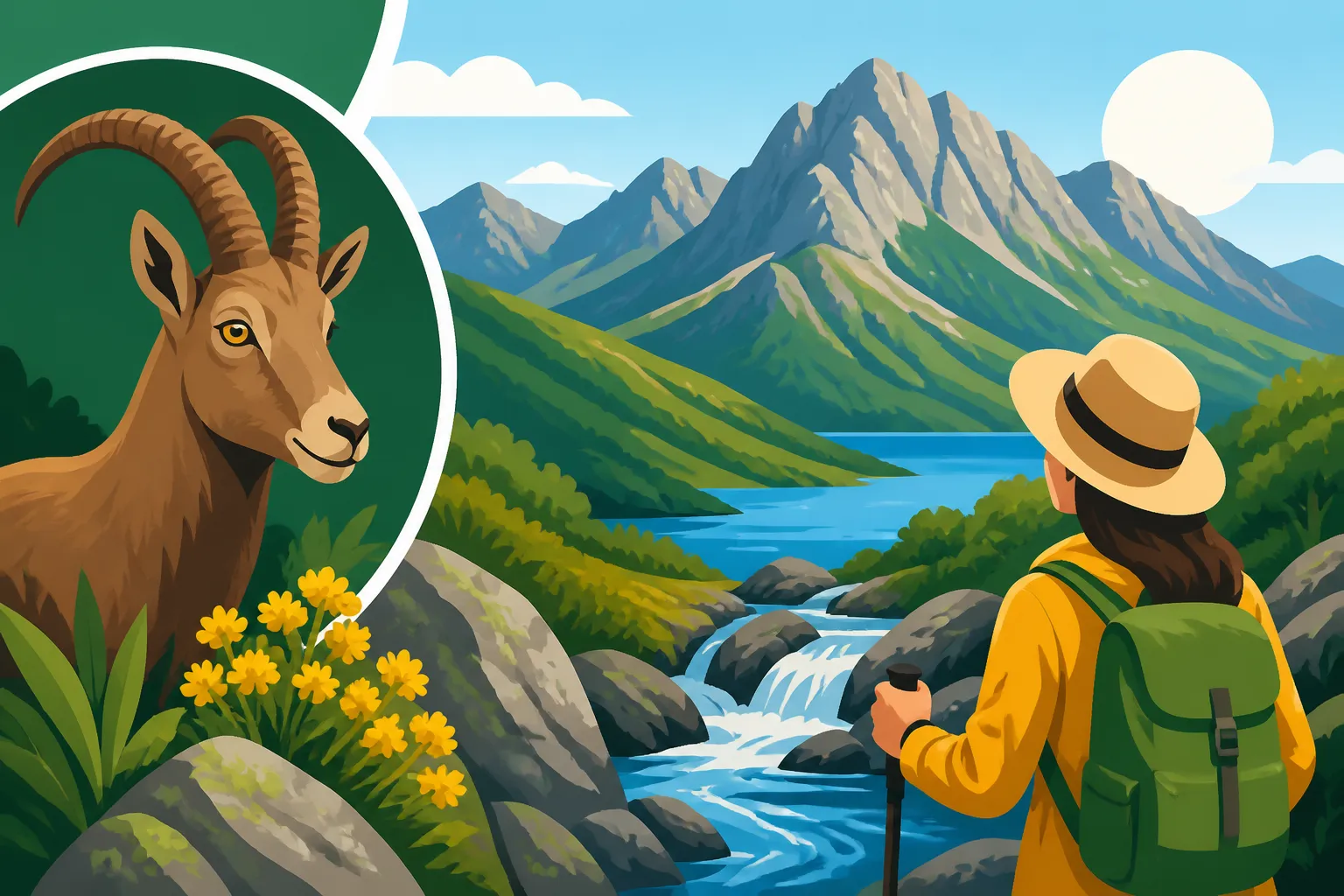
One of the magical things about Gerês is the chance to see the "Garranos," a breed of small, wild horses that has lived in these mountains since the Paleolithic era. They are generally shy, but you can often see them grazing on the high plateaus. Please, do not try to feed them; they are wild animals and part of a delicate balance.
The park is also one of the last strongholds of the Iberian Wolf. While you are highly unlikely to see one (they are incredibly elusive), you might see their tracks or hear about them from local shepherds. There is a "Wolf Center" in the park that works on conservation and education. Spotting a Golden Eagle or a Peregrine Falcon is much more common, so bring binoculars if you’re a birdwatcher.
Water Sports and the Cávado River
If you aren't a hiker, the Albufeira da Caniçada (the large reservoir near the park entrance) offers plenty of water-based fun. You can rent kayaks, stand-up paddleboards, or even take a boat trip. It’s a great way to cool off when the summer heat in the valley becomes oppressive.
There are several "river beaches" (Praias Fluviais) around the lake. These are much safer and more comfortable for families than the rocky waterfalls. Alqueirão is one of the most popular, with cafes and lifeguards on duty during the season. If you're a retiree or moving with family, this area is much more accessible than the rugged interior of the park. See Healthcare in Portugal for Expats: The Complete 2026 Medical Guide for peace of mind regarding local medical facilities should you have a minor mishap.
Practical Tips for the Savvy Traveler
Living here as an expat teaches you that "Portuguese Time" and "Mountain Time" are two different things. You need to plan for delays, whether it's a herd of goats blocking the road or a local cafe owner who wants to tell you the entire history of the village before serving your soup.
Connectivity and Offline Maps
Do not rely on your mobile data. Even if you have a great plan from MEO or Vodafone, the granite mountains act as a natural shield. Before you leave your accommodation (which should ideally have Wi-Fi), download your maps and your Booking.com confirmation details.
I also recommend carrying a physical map, which you can buy at any of the five "Portas." They are much more detailed regarding the smaller tracks (caminhos) that don't appear on digital maps. If you are a digital nomad, don't expect to be able to "work from the trail"—save the emails for when you're back in the village.
When to Visit (Avoiding the Summer Crowds)
If you can, avoid Gerês in August. It is the month when the "Emigrantes" (Portuguese living abroad) return home, and the park becomes incredibly crowded. Traffic jams on mountain roads are not my idea of a vacation.
The best times to visit are May/June or September/October. In the spring, the waterfalls are at their most powerful, and the wildflowers are in bloom. In the autumn, the oak forests turn a spectacular gold and orange, and the temperature is perfect for long-distance hiking. Winter is beautiful but can be harsh; it does snow in the higher elevations, and many of the smaller restaurants and guesthouses close for the season.
Mountain Safety and Etiquette
Finally, please respect the locals. These mountains are not just a park; they are a workplace for shepherds and farmers. If a gate was closed, leave it closed; if it was open, leave it open. This keeps the livestock from wandering where they shouldn't.
If you are hiking and feel unwell, don't push it. Heatstroke is a real risk in the exposed granite areas. If there is an actual emergency, the number is 112. They do have English-speaking operators, but being able to give your coordinates or the name of the nearest village is vital. You should review Emergency Medical Care in Portugal: Calling 112 and Going to the Hospital before your trip just to be safe.
Disclaimer
The information provided in this guide is for informational purposes only. While we strive to provide the most accurate and up-to-date advice for travelers and expats in Portugal, park regulations, road conditions, and safety guidelines can change. Always check with local authorities, such as the ICNF (Institute for Nature Conservation and Forests) or the GNR, before embarking on mountain activities. Outdoor activities in Peneda-Gerês involve inherent risks, including difficult terrain and unpredictable weather; ensure you have appropriate insurance and equipment before your visit.