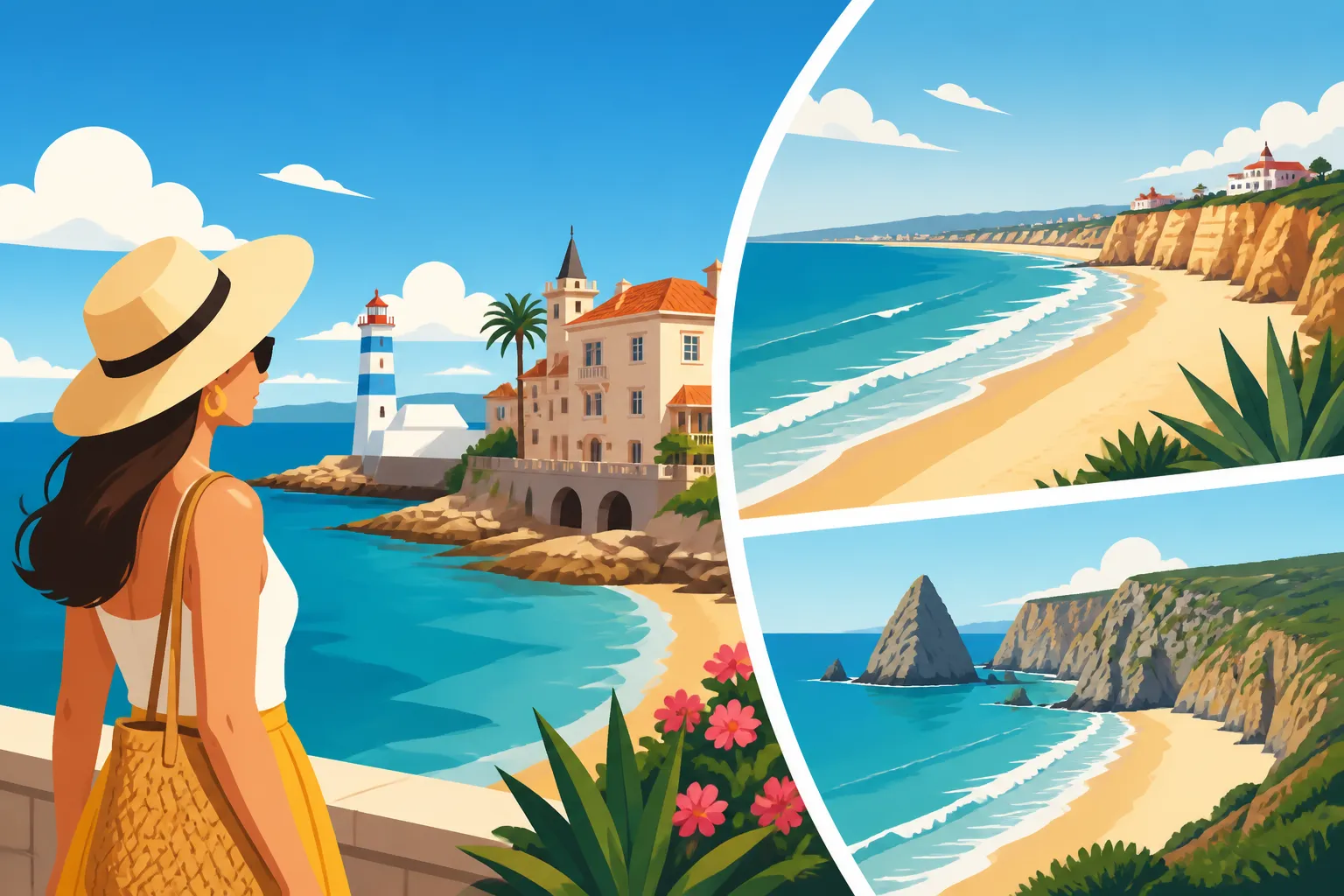
Lisbon’s Beaches: Cascais, Costa da Caparica, and Beyond
Disclosure: This article contains affiliate links. If you buy through them, we may earn a commission at no extra cost to you. Read our full disclosure.
Every summer weekend, thousands of people in Lisbon crowd onto the Cais do Sodré platform at 10 AM, each hoping to beat everyone else to the sand. The commonest mistake is choosing a beach by name alone instead of by wind, water, transport and crowd. This guide explains how Cascais, Costa da Caparica and the wilder coves beyond them actually work, so you can pick the right one.
Understanding Lisbon’s Beach Geography Before You Go
The first thing I tell friends who visit is that “Lisbon beaches” is a slightly misleading phrase. The city itself sits on the Tagus estuary, and the riverfront in neighbourhoods like Belém or Alcântara is not where anyone swims. The real beaches start where the river meets the Atlantic. They fan out in three directions: west along the Cascais line, south across the river to Costa da Caparica, and further afield to the Sintra coast and the Arrábida hills near Setúbal.
Each zone has its own personality, and they differ more than you might expect. In my first summer I treated them as interchangeable. I dragged a visiting friend to Guincho on a gusty July afternoon and we spent the whole day being sandblasted. A short train ride away at Tamariz, people were floating calmly in sheltered water. Once you understand the logic of the coastline, you stop making that kind of mistake. If you want a regional overview before you plan, see Greater Lisbon: Sintra, Cascais, and the Setúbal Peninsula.
The Estuary Line Versus the Open Atlantic
The beaches between Lisbon and Cascais face south, toward the mouth of the Tagus. The coastline shields them from the worst of the Atlantic swell, so the water tends to be calmer, the waves smaller and the atmosphere more relaxed. They suit families, swimmers who just want to cool off, and anyone who prefers a beach bar within a short walk.
Once you round the corner past Cascais toward Guincho, or head down the long Caparica coast, you face the open ocean directly. The waves get bigger and the currents stronger, and the wind can be relentless. These beaches are glorious, wide and dramatic, and they are where surfers go. But you need to respect them. Lifeguards on the open coast are not being dramatic when they raise the red flag.
Wind, Fog and the Cold Water Reality
Nobody warns newcomers about the water temperature, so let me be blunt: the Atlantic around Lisbon is cold, even in August. You will hear grown adults shriek as they wade in. Locals simply accept it. The cold is refreshing on a hot day, but if you come from the Mediterranean or the Caribbean, adjust your expectations. A short wetsuit makes a huge difference if you plan to spend long periods in the water.
Wind is the other factor that ruins days. In summer a northerly wind the Portuguese call the nortada often picks up in the afternoon. It hits exposed west-facing beaches like Guincho and parts of the Sintra coast hardest. The sheltered Cascais line beaches and the Arrábida coves usually escape the worst of it. Morning fog can also roll in on the Atlantic coast. It sometimes burns off by lunchtime and sometimes stays all day. My rule is simple: check a wind forecast app before you leave home. If it is windy, head for the estuary side or Arrábida.
Cascais and the Estoril Coast: The Easy Train Escape
The Cascais line is the reason so many people living in Lisbon never bother with a car for beach days. Suburban trains leave from Cais do Sodré and run along the waterfront. They stop at a string of beach towns, and many stations sit almost on the sand. You get off the train, cross a road or an underpass, and you are there.
Trains get packed on sunny weekends, especially in the late morning and late afternoon. If you can go on a weekday or catch an early train, you will have a much more pleasant ride and an easier time finding space on the beach. For a step-by-step look at the journey itself, see How to Visit Cascais and Estoril From Lisbon.
Carcavelos and Oeiras for Space and Surf
Carcavelos is the big one. It is a long, wide stretch of sand a short walk from its station. It has enough waves for beginner surf lessons, and a mix of students, families and young professionals fills it on hot days. Surf schools line the promenade, and renting a board for an hour is easy. It is also the beach I recommend to friends who want space, because even on busy days the sheer size means you can usually find a patch.
Closer to Lisbon, Santo Amaro de Oeiras offers a calmer, more local feel. The water is gentler, and a promenade lined with cafés makes it pleasant for an evening walk after work. Praia da Torre, beside the São Julião da Barra fortress, is smaller and popular with residents of Oeiras. If you live in the western suburbs, these become your after-work dip spots during the long summer evenings.
Estoril, Tamariz and the Paredão Promenade
Further along, the beaches around Estoril and Monte Estoril are smaller and more sheltered. Praia do Tamariz sits right below the station. A seawater pool sits on the rocks at one end, and the water is often calm enough for children. The gardens leading up to the old casino give the area a slightly glamorous, old-world atmosphere.
The real highlight here is the Paredão, a seafront promenade that runs from São João do Estoril to Cascais. It takes a relaxed walk of under an hour, with cafés and small beaches along the way where you can stop for a swim. One of my favourite lazy Sundays is to take the train to São João do Estoril, walk the Paredão to Cascais with swim breaks, eat lunch in town, and catch the train home from Cascais station.
Cascais Town Beaches and Guincho
Cascais itself has several small, pretty beaches. Praia da Conceição and Praia da Duquesa are steps from the station. Praia da Rainha is a tiny, sheltered cove that fills up quickly but looks beautiful. Praia da Ribeira sits in front of the old fishing harbour. These are perfect when you want sand, a stroll through the old town and a long seafood lunch on the same day.
Guincho is a different world. Several kilometres beyond Cascais, it faces the open Atlantic beneath the Sintra hills. It is famous for kitesurfing and windsurfing because the wind there is so reliable. You can reach it by local bus or by cycling the coastal path from Cascais. On a calm day it is breathtaking. On a windy day it is best left to the kitesurfers. Strong currents here mean you should only swim near lifeguards.
Costa da Caparica and the South Bank Coast
Costa da Caparica is where much of Lisbon goes when it wants a “proper” beach day. It runs for kilometres along the Atlantic south of the river. Long, golden sand stretches all the way down to Fonte da Telha, backed by dunes and cliffs. It feels more open and wild than the Cascais line, with a more laid-back, slightly bohemian atmosphere, especially further south.
The main town area is lively and practical, with restaurants, surf shops and plenty of beach bars. The Portuguese call the small concession buildings on the sand “apoios de praia”, and they usually rent sunbeds and parasols and serve drinks and grilled fish. Walk or ride further south and things get quieter, with long stretches of sand where you can spread out properly.
Getting There Without a Car
Car-free access to Caparica is very doable, but it takes a bit more planning than hopping on the Cascais train. Carris Metropolitana buses run from several points in Lisbon across the 25 de Abril Bridge to Caparica. You can also combine a ferry with a bus, which I find far more pleasant on a hot day. Here is a route often suggested to newcomers:
- Take a ferry from Cais do Sodré across the river to Cacilhas, or from Belém to Trafaria or Porto Brandão.
- Enjoy the river views on the crossing, which are one of the underrated pleasures of living here.
- At the ferry terminal, catch a connecting Carris Metropolitana bus to Costa da Caparica.
- Get off in the town centre if you want restaurants and lively beaches, or keep going toward the southern end for more space.
- For the return trip, head back to the bus stop well before sunset on weekends, as buses and ferries can get crowded in the evening.
For timetables and route details on the crossings, see Taking the ferry in Lisbon: Cacilhas, Trafaria, and Barreiro routes. If you are coming from further afield, a booking platform like Omio can help you compare train and bus connections into the Lisbon area before you plan the final leg.
The Transpraia and the Southern Beaches
In summer a small open-air beach train called the Transpraia runs along the coast from Caparica town toward Fonte da Telha. It stops at a series of beaches along the way. It is slow, a bit rickety and completely charming. Riding it with a cool bag on your lap and sand on your feet is a rite of passage. The stops further south get progressively quieter, and the dunes behind them make the area feel far from the city.
Fonte da Telha, at the end, sits beneath tall fossil cliffs. It has a handful of simple seafood restaurants where you can eat grilled fish with sand still between your toes. Some beaches in this area are known as naturist-friendly, so do not be surprised if you see people sunbathing without swimwear. It is a normal, accepted part of beach culture here, and nobody makes a fuss either way.
The Sunday Bridge Traffic Problem
Anyone who has driven to Caparica on a summer weekend has a horror story about the drive back. On Sunday evenings the return over the 25 de Abril Bridge can turn into a crawl. It is made worse by everyone leaving the beach at the same moment, just after the sun drops. Parking near the beaches on hot weekends is also a real headache, especially close to the town centre.
If you must drive, go early and leave either well before sunset or late in the evening after the rush. Many expats who live south of the river or in central Lisbon switch to the ferry-and-bus route or to ride-hailing for summer beach days. For help weighing those apps, see Using Bolt vs Uber in Portugal: Which ride-hailing app is cheaper?.
Beyond the Obvious: Sintra Coast, Arrábida and Hidden Coves
Once you have done Cascais and Caparica a few times, the urge to explore further kicks in. This is where the Lisbon region really shines, because within a reasonable drive you have some of the most dramatic coastline in the country. These beaches need more effort, and some need a car or careful timing, but they reward you with scenery that feels a world away from the city.
The Sintra Coast: Praia Grande, Adraga and Ursa
The beaches west of Sintra face the full force of the Atlantic, framed by cliffs and rock formations. Praia Grande is large and popular with surfers and bodyboarders, and an ocean pool sits next to the beach. Praia das Maçãs is a lively village beach with restaurants. In summer you can reach it on a historic tram from near Sintra, which is a lovely way to arrive. Azenhas do Mar, just north, is the clifftop village you have probably seen in photos. Its seawater pool fills at high tide.
Praia da Adraga is a small, beautiful cove with rock arches and a beloved restaurant on the sand. Praia da Ursa, near Cabo da Roca, is often called one of the most beautiful beaches in Portugal. It deserves the title, but the path down is steep, loose and genuinely tiring on the way back up. Wear proper shoes, carry water and do not attempt it with small children or in flip-flops. For quieter spots like these, see Hidden and Quiet Beaches in Portugal.
Arrábida, Sesimbra and Troia
South of the river, the Serra da Arrábida natural park drops down to a coastline of turquoise, sheltered water. That colour surprises everyone who expects Atlantic grey. Portinho da Arrábida, Praia da Figueirinha and Galapinhos are protected from the northerly wind. They are often the best choice on days when the west coast is unbearable, and the water is clear and usually calm.
During peak summer, car access to some Arrábida beaches is restricted, and shuttle arrangements may run instead. Check the local council information for Setúbal before you go, as the rules can change from season to season. Sesimbra, a fishing town with a town beach and excellent grilled fish restaurants, is a good alternative base. Across the water from Setúbal, a ferry takes you to the Troia peninsula, with its long, calm, white-sand beaches. Kayak and boat trips along the Arrábida coast, often including dolphin spotting in the Sado estuary, are easy to find on GetYourGuide if you would rather someone else handle the logistics.
Ericeira and the Surf Coast to the North
North of Lisbon, Ericeira is a whitewashed fishing town that has become a magnet for surfers and remote workers. Its coastline is a recognised surf reserve. Beaches like Ribeira d’Ilhas and Foz do Lizandro range from beginner-friendly to seriously challenging. It works well as a weekend trip rather than a quick dip, and many people fall for it so hard they end up moving there.
If surfing is your main goal, see Surfing in Portugal: Ericeira, Peniche, and Nazaré for the wider picture. Complete beginners will get a lot out of How to Learn to Surf in Portugal as a Beginner before booking their first lesson.
Comparing Lisbon’s Beaches at a Glance
After years of trial and error, I have found that the best beach depends entirely on your priorities that day. A parent with toddlers, a surfer and someone who just wants a long lunch with a sea view will choose very different places. This table summarises the main options so you can decide quickly.
| Beach or Area | Best For | Car-Free Access | Typical Conditions | Weekend Crowds |
|---|---|---|---|---|
| Carcavelos | Space, beginner surf, young crowd | Cascais line train, short walk | Moderate waves, open sand | Very busy but large |
| Santo Amaro de Oeiras | Calm swims, evening walks | Cascais line train | Usually gentle | Busy with locals |
| Tamariz and Estoril | Families, sheltered water, promenade | Train station beside beach | Calm, seawater pool | Busy, small beaches |
| Cascais town beaches | Beach plus old town and lunch | Train to Cascais | Sheltered, small coves | Very busy in summer |
| Guincho | Kitesurfing, dramatic scenery | Bus or bike path from Cascais | Very windy, strong currents | Moderate |
| Costa da Caparica town | Lively beach bars, long sand | Bus, or ferry plus bus | Open Atlantic waves | Very busy |
| Fonte da Telha and south | Quiet, dunes, seafood | Transpraia in summer or bus | Open Atlantic waves | Quieter |
| Praia da Ursa | Scenery, adventure | Car or tour recommended | Rough sea, steep path | Moderate |
| Arrábida coves | Calm turquoise water | Seasonal shuttle, check locally | Sheltered from wind | Busy, access limited |
Matching a Beach to Your Situation
If you have small children, the sheltered Cascais line beaches, especially around Tamariz and Santo Amaro, and the calm Arrábida coves are the safest bets. For more ideas, see Family Beaches and Calm Water in Portugal. If you are a confident swimmer who loves wide, empty sand, the southern stretch of Caparica toward Fonte da Telha will make you happiest. If you want to combine a beach with sightseeing, Cascais town gives you the most for a single train ticket.
For visitors staying only a few days, it works well to plan one Cascais line day and one Caparica or Arrábida day. That way you experience both the calm estuary side and the wild Atlantic. If you want to wake up by the sea rather than commute, Booking.com lists plenty of guesthouses and apartments in Cascais, Ericeira and Sesimbra. Staying there makes early swims and sunset walks effortless. For a broader shortlist, see What Are the Best Beaches Near Lisbon?.
Choosing When to Go
The official bathing season, the época balnear, is when lifeguards are on duty and beach facilities are fully open. The dates are set for each beach every year, so check before assuming a beach is supervised. Outside those dates, beaches are still open to walk and enjoy, but swimming is at your own risk.
Early summer and early autumn are, in my experience, the sweet spot. The crowds are thinner, the light is beautiful and the sea is often at its warmest in early autumn. Mid-summer weekends are the busiest by far. For a detailed look at timing, see When Is the Best Time for a Beach Holiday in Portugal?.
Practical Beach Etiquette, Safety and Local Habits
Portuguese beach culture is relaxed, but a few habits and rules are worth knowing. They help you fit in and stay safe. Families often arrive with full picnics, umbrellas and folding chairs and stay all day, while younger crowds gather around the beach bars in the late afternoon. Lunch is a big deal, and the beach restaurants fill up quickly at the traditional lunch hour.
Flags, Lifeguards and Rip Currents
The flag system is simple, and you should take it seriously. A green flag means swimming is allowed. Yellow means caution: you can paddle, but you should not swim out. Red means no swimming at all. A chequered flag means the lifeguard post is temporarily unattended. On the open Atlantic beaches, rip currents are a real danger, and every summer brings sad stories of people caught out.
If you are caught in a current, do not swim against it. Swim parallel to the shore until you are out of the pull, then head back in, or float and raise your arm for help. Always swim within the supervised zone in front of the lifeguard post, especially at Guincho, Caparica and the Sintra coast. In an emergency, call 112.
Sun, Belongings and Beach Bar Habits
The Portuguese sun is stronger than it feels, because the breeze and cold water trick you into thinking you are not burning. Use high-factor sunscreen, reapply after swimming and seek shade around midday. Many beach bars rent parasols, and finding shade on the wider beaches is otherwise difficult.
Beaches near Lisbon are generally safe, but opportunistic theft of unattended bags happens, particularly on crowded weekends and around busy stations. Bring only what you need, keep your phone and keys with you or with someone in your group, and never leave valuables on your towel while everyone swims. For more general advice, see Avoiding Pickpockets and Scams in Portugal.
Respecting the Dunes and the Environment
The dunes along Caparica and other coastal areas are fragile, protected ecosystems. Use the marked boardwalks and paths rather than walking across them. Take all your rubbish home or use the bins provided. The Portuguese care deeply about their coastline, and littering earns you disapproving looks.
Smoking rules on beaches are changing in some areas, and many people now use portable ashtrays to avoid leaving cigarette ends in the sand. A little consideration goes a long way. Locals are friendly and welcoming, and treating their beaches with respect is the quickest way to feel like you belong here.
Disclaimer
This article is for general informational purposes only and does not constitute professional advice. Laws, prices and regulations vary by location and change over time. Consult a qualified professional for guidance on your specific situation.