Avoiding Pickpockets and Scams in Portugal
Disclosure: This article contains affiliate links. If you buy through them, we may earn a commission at no extra cost to you. Read our full disclosure.
Picture this: you step off Tram 28 in Lisbon’s Alfama, reach for your phone to photograph the view, and your pocket is empty. It happens to visitors in Portugal every day, usually in under three seconds. This guide shows you where pickpockets and scammers operate, how their tricks work, how to protect yourself without paranoia, and what to do if something goes wrong.
Why Petty Crime in Portugal Catches Visitors Off Guard
I’ve lived in Portugal for years. Friends who visit tend to arrive with one of two mindsets. Some have read that Portugal is one of the safest countries in Europe and relax completely. Others have read horror stories online and clutch their bags like they’re crossing a war zone.
Neither approach helps. The truth sits in the middle. Violent crime against tourists is genuinely rare here. Opportunistic theft and small-time scams, however, are a real and well-organized part of life in the busiest tourist areas.
The Real Risk Level for Tourists and New Expats
Most crime affecting foreigners in Portugal is crime of opportunity. Nobody is going to mug you at knifepoint on a quiet residential street in Campo de Ourique. Someone may well lift your wallet from an open backpack while you squeeze onto a packed tram, or charge you for bread you never asked for. It’s annoying and occasionally expensive, but it’s preventable.
The frustration is real, and I want to validate it. Losing a phone in a foreign country isn’t just about the device. Your boarding passes, banking apps, two-factor codes, photos and maps go with it. One friend from Manchester lost her phone at Miradouro de Santa Luzia on day two of a week-long trip. She spent most of day three in a police station and a phone shop instead of at the Gulbenkian. The theft took seconds. The recovery took a full day.
If you want the broader picture before zooming in on scams, see Is Portugal Safe for Tourists?. The short version is that Portugal rewards common sense. Thieves here rely on distraction and crowds, not force. Remove the distraction and the crowd advantage, and you’ve eliminated most of the risk.
Where and When Theft Actually Happens
Pickpocketing in Portugal clusters heavily in places tourists gather and lose focus. That means trams, metro platforms, viewpoints (miradouros), busy shopping streets, train stations and festival crowds. The quiet neighborhood café where locals read the newspaper is almost never where trouble starts.
Timing matters too. Summer is peak season for both tourists and thieves, and the June Santos Populares street parties in Lisbon and Porto are classic hunting grounds. Packed streets, loud music, plastic cups of beer and grilled sardines in hand: it’s a pickpocket’s dream. Evenings in Bairro Alto and Cais do Sodré also bring a wave of drunk, distracted visitors and the people who target them.
A recurring pattern is this: the moment you’re juggling something, you become a target. That might be a map, a pastel de nata, a selfie stick, luggage or a child. Pickpockets watch for split attention far more than they watch for expensive watches.
Pickpocket Hotspots in Lisbon, Porto, and the Algarve
Every city has its own rhythm of petty crime. Knowing the specific places where thieves concentrate lets you switch on your guard at the right moments and enjoy yourself the rest of the time.
Lisbon: Tram 28, Baixa, and the Viewpoints
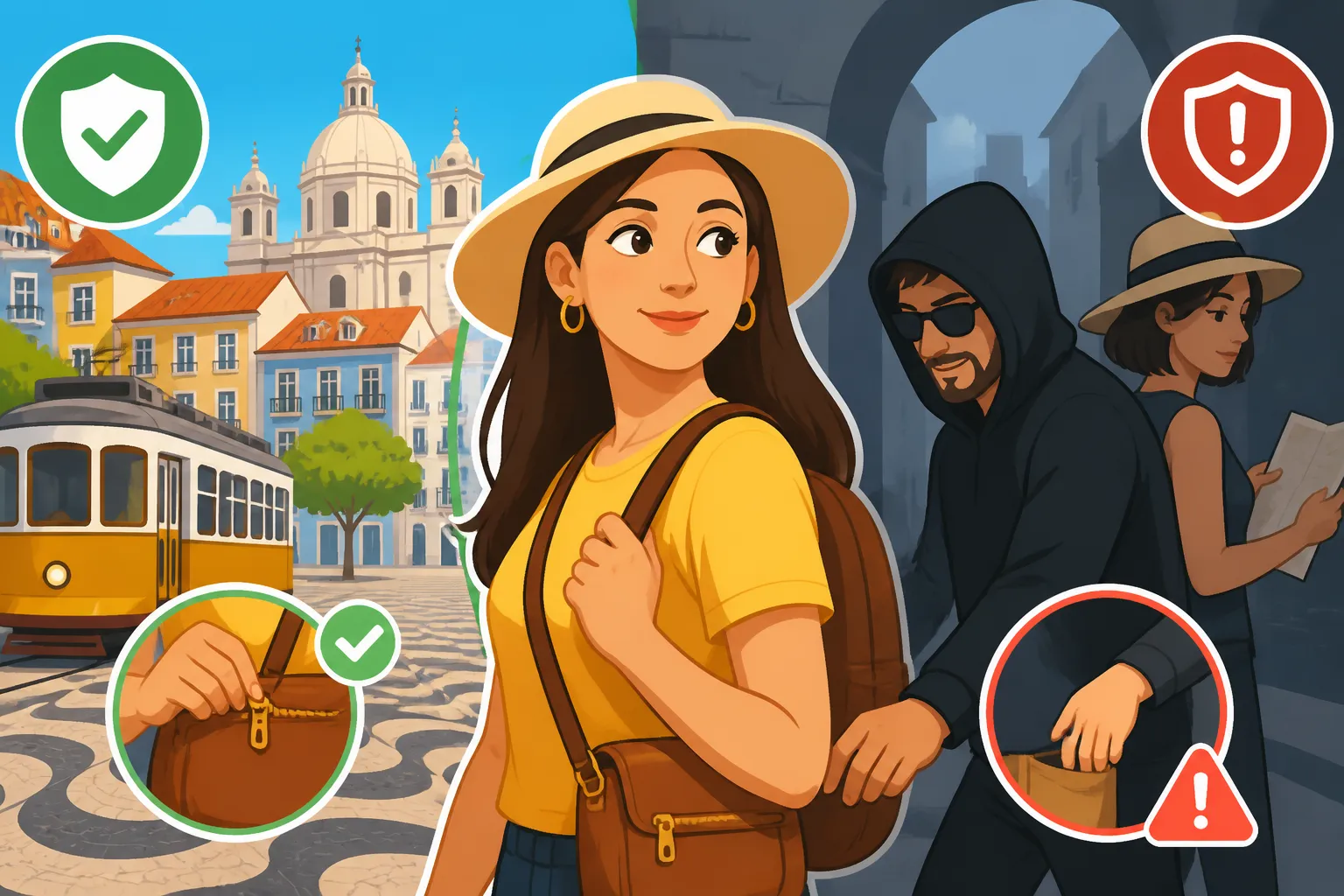
Tram 28 is the single most notorious pickpocketing spot in Portugal. The old yellow carriages are tiny, the route is iconic, and queues at Martim Moniz and Praça da Figueira stretch long in summer. Once aboard, you’re pressed shoulder to shoulder with strangers on a vehicle that lurches around every corner. Professional teams work this route daily. Often one person creates a jostle at the door while another lifts a wallet. For a full breakdown of how they operate, see Common tourist scams in Lisbon: Pickpockets on Tram 28 and fake hash sellers.
Beyond the tram, watch yourself in the Baixa, especially along Rua Augusta and around Rossio. Be careful at Miradouro da Senhora do Monte and Santa Luzia, and on the Metro, particularly the red line from the airport and the blue line through Baixa-Chiado. Belém is another hotspot. Crowds outside Jerónimos Monastery and the Pastéis de Belém queue create perfect cover.
Visitors are often advised to ride Tram 28 early in the morning or to board at less crowded stops. Locals who need the route for daily errands do exactly that. Practical tactics are covered in How to Ride Tram 28 in Lisbon Without the Crowds. Also consider tram 12 or 24 for the same old-world charm with a fraction of the crush.
Porto: Ribeira, São Bento, and the Bridge
Porto feels more relaxed than Lisbon, and in many ways it is. But the riverside Ribeira district draws huge crowds in summer, and the waterfront terraces are prime territory for phone snatching. A phone left face-up on a café table near the river is an open invitation. Someone walks past, drops a leaflet or map over it, apologizes, and picks up both.
São Bento station is worth a special mention. Visitors crane their necks at the famous azulejo-covered hall and forget about their bags entirely. The Dom Luís I Bridge, especially the upper deck where Metro trains and pedestrians share space, is also a place where people stop, photograph and stop paying attention. Rua de Santa Catarina, the main shopping street, and the area around the Livraria Lello queue round out the list.
Porto’s Metro and buses get busy around football matches at the Dragão stadium and during the São João festival in June. Treat those crowds exactly as you would Lisbon’s Tram 28. For tips that apply to both cities, see How to Avoid Pickpockets in Lisbon and Porto.
The Algarve, Sintra, and Day-Trip Destinations
In the Algarve, the risk shifts from pickpocketing to theft from beaches and cars. Bags left on the sand while everyone swims are a constant temptation in Lagos, Albufeira and Praia da Rocha. Car break-ins at popular beach car parks and clifftop viewpoints are an ongoing problem. Ponta da Piedade, the trailheads near Benagil and the car parks along the Costa Vicentina all see it.
Sintra is a special case. The train from Rossio to Sintra is often packed, and the crowds at the station exit, the bus stops for Pena Palace and the town center squeeze people together. Cabo da Roca, the westernmost point of mainland Europe, has a reputation for car break-ins because tourists park, walk to the cliff edge, and leave cameras and bags on the back seat.
Even sleepier destinations like Óbidos, Nazaré and Évora have their moments during festivals or summer weekends. The rule is consistent: wherever tour buses unload, a few opportunists are watching.
Common Scams in Portugal and How They Play Out
Pickpocketing is theft. Scams are a different flavor of frustration, because you technically hand over the money yourself. Knowing the scripts in advance is the best defense, because each one depends on catching you unprepared.
Street Hustles: Fake Drugs, Petitions, and Overly Helpful Strangers
Walk down Rua Augusta or through Rossio and a man will almost certainly murmur “hashish, cocaine?” as you pass. This is one of the strangest sights for first-time visitors. These sellers are overwhelmingly selling fakes, such as pressed bay leaves, flour or crushed aspirin. Whatever is in the bag, buying drugs on the street is illegal in Portugal. Just keep walking, don’t make eye contact, and don’t engage. They’re persistent but rarely aggressive.
The clipboard petition is another classic, especially around Belém and Parque das Nações. A young person approaches with a clipboard claiming to collect signatures for a deaf or disabled charity. After you sign, they demand a donation. Meanwhile, the clipboard is held at chest height, perfect for covering a hand slipping into your bag. Politely say “não, obrigado” (or “obrigada” if you’re a woman) and keep moving.
Then there are the “helpers”: the person who points out bird droppings on your jacket and offers to wipe it off, the stranger who helps you buy a Metro ticket from the machine, the man who insists on carrying your suitcase up the hill in Alfama. Some are genuinely kind, because Portuguese people often are. But if help arrives unasked during a stressful moment, guard your valuables first and accept the help second.
Restaurant and Tourist Trade Traps
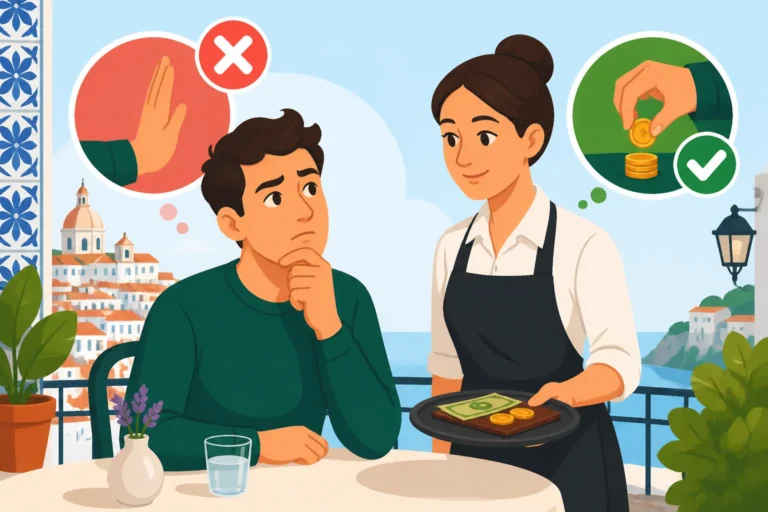
The couvert confuses almost every new arrival. When you sit down, the waiter may bring bread, olives, butter, cheese or small pastries without being asked. These aren’t free. They’ll appear on your bill if you eat them. This is a normal part of Portuguese dining culture, not a scam in itself, but some tourist-zone restaurants push it hard with expensive cheeses or fish pâtés. You’re entitled to send it back untouched and not pay. The full explanation is in What Is the Couvert on a Portuguese Restaurant Bill?.
The genuine traps are restaurants with no prices on the menu, waiters who recommend “today’s special fish” sold by weight without mentioning the weight or price, and bills padded with items you didn’t order. Always ask “quanto custa?” (how much does it cost?) for anything priced by the kilo. Check your bill before paying. If something seems wrong, every business in Portugal must keep a Livro de Reclamações, the official complaints book, and simply asking for it often resolves disputes on the spot.
Tuk-tuks in Lisbon and Sintra are another gray area. Most operators are licensed and honest. Some drivers quote vague prices, take shorter routes than promised or add surprise charges at the end. Agree on the total price, the route and the duration before you get in, and confirm whether the price is per person or per vehicle.
Money Scams: ATMs, Card Terminals, and Taxis
Here’s a trap that costs visitors far more than pickpockets ever do. Throughout tourist areas you’ll find standalone ATMs from independent operators, most famously the blue-and-yellow Euronet machines. They aren’t technically scams, but they charge steep withdrawal fees. They also push “dynamic currency conversion”, offering to charge you in your home currency at a poor exchange rate. Always choose to be charged in euros. Look for ATMs labeled Multibanco, which belong to the national banking network. See How to avoid ATM withdrawal fees from Euronet machines in tourist areas for a step-by-step guide.
The same currency conversion trick appears on card terminals in shops and restaurants. The screen may ask whether you want to pay in euros or your home currency. Always pick euros. Watch the waiter too. In Portugal, the card machine should come to your table, and your card should never disappear from view.
Taxi overcharging is less common than it used to be, but it still happens, particularly from the airport and cruise terminals. Official taxis use meters, and you can ask for a receipt. Plenty of residents now rely on ride-hailing apps because the price is fixed upfront; see Using Bolt vs Uber in Portugal: Which ride-hailing app is cheaper?. If you’re arriving by plane, How to Get From Lisbon Airport to the City Center lays out the Metro, bus and taxi options so you don’t get hustled at the arrivals hall.
Online and Booking Scams Targeting Travelers
Not every scam happens on the street. More and more of the money stolen from travelers vanishes through a phone screen before or during the trip. These scams are harder to spot because they look professional.
Fake Rentals and Accommodation Phishing
Fake holiday rentals are a serious problem in Portugal, especially in Lisbon and the Algarve during summer. The pattern is familiar: a beautiful apartment at an attractive price, a host who is “currently abroad”, and a request to pay by bank transfer to secure the booking. Once you pay, the host disappears. This often happens through social media groups and classified sites. How to spot a fake Airbnb rental scam on Facebook Expat Groups covers the red flags in detail.
A newer variation targets people who’ve already made legitimate bookings. Criminals compromise hotel or guesthouse accounts and send messages through official channels, sometimes even through the Booking.com messaging system. The message says your card was declined and asks you to “re-verify” payment through an external link. It looks convincing because it arrives in the same thread as your real booking. Never enter card details through a link sent in a message. Log in to the platform directly through the app and check whether there’s actually a payment issue.
My rule, learned the hard way by a neighbor who lost a deposit, is simple. If anyone asks you to pay outside the platform where you found the listing, or to send money by transfer before seeing the property, walk away. A real host has no reason to move you off the platform that protects both of you.
Fake Tickets, Tours, and Transport Bookings
Popular attractions like Pena Palace, Jerónimos Monastery, Livraria Lello and port wine cellar tours attract ticket resellers. Some operate websites that look almost official but charge far more, or sell tickets that don’t exist. Outside the attractions themselves, touts sometimes offer “skip-the-line” access that turns out to be a regular entry ticket at an inflated price.
Stick to the official site of the attraction, or to well-known platforms with clear refund policies and verified reviews, such as GetYourGuide for guided tours and day trips. Before booking any tour, check that the operator has a real address and recent reviews from multiple sources. Also check that the cancellation terms are spelled out clearly.
For trains and buses, you can buy directly from Comboios de Portugal or Rede Expressos, or compare routes on an aggregator like Omio. What you shouldn’t do is buy from strangers at station entrances. In Sintra especially, people outside the station sometimes sell “bus passes” or tour packages that are either overpriced or useless. Buy from official ticket windows, machines or verified apps.
Text Message and Email Phishing
Portugal has seen waves of SMS phishing that target both residents and visitors. Common versions claim to be from CTT, the postal service, asking for a small customs fee to release a parcel. Others pretend to be from toll operators about unpaid highway charges, or from banks about “suspicious activity”. Because these messages often arrive in Portuguese, visitors sometimes assume they must be legitimate.
They aren’t. Real organizations don’t ask you to pay through a link in an unexpected text. If you’ve rented a car, deal with any tolls through the rental company. If you’re expecting a parcel, track it directly on the official carrier’s app or website, which you navigate to yourself.
A good habit is to treat any message that creates urgency (pay now, verify now, your account will be blocked) as fake until proven otherwise. Scammers rely on panic. Taking thirty seconds to check independently defeats nearly all of them.
Building Your Personal Anti-Theft Setup
You don’t need to travel in fear. You just need a setup that makes you a harder target than the person next to you. Pickpockets are efficient. They pick the easiest option and move on.
What to Carry and How to Carry It
Start by carrying less. Leave your passport in the hotel safe and carry a photocopy or a photo on your phone, unless you need the original for something specific like a car rental. Split your money and cards. Keep one card and a little cash on you, and leave a backup card locked away. That way a single theft doesn’t leave you stranded.
Choose bags that close fully with zips, and wear crossbody bags in front of your body, not on your hip or back. Backpacks are the easiest target of all. If you must use one, wear it on your front in crowded places like the Metro and Tram 28. Front trouser pockets are safer than back pockets, and zipped jacket pockets are better still.
Here’s a quick comparison of common carrying options, based on research into common tourist experiences in Lisbon and Porto:
| Carrying Option | Theft Risk in Crowds | Best Used For | Weak Spot |
|---|---|---|---|
| Back trouser pocket | Very high | Nothing valuable | Easy lift in any crowd |
| Backpack worn on back | High | Day hikes, beaches with care | Zips opened from behind |
| Open tote bag | High | Groceries only | No closure at all |
| Crossbody bag worn in front | Low | City sightseeing | Strap can be cut if worn loosely |
| Zipped front jacket pocket | Low | Phone and single card | Limited space |
| Money belt under clothing | Very low | Backup cash and cards | Awkward to access quickly |
| Phone on a lanyard or tether | Low | Photos on viewpoints and trams | Visible, may attract attention |
Habits on Trams, Terraces, and Viewpoints
Your phone on the café table is the most common item stolen from tourists in Portugal. Lisbon’s terraces and Porto’s Ribeira cafés are lovely places to linger, and that’s exactly why thieves work them. Keep your phone in your pocket or bag while you sit. Loop your bag strap around your leg or chair rather than hanging it over the back of the seat.
On public transport, stand with your back to a wall or window when possible, and keep your hand on your bag through doors and turns. Be extra alert at the exact moment the doors open and close. That’s when organized teams create a jostle, grab, and step off as the doors shut behind them. If someone bumps hard into you, immediately check your pockets. The bump is often the theft itself.
At miradouros, be mindful of people standing too close while you take photos. Hold your phone with both hands or use a wrist strap, especially at the edges of viewpoints in Alfama and Graça. Thieves sometimes snatch phones and run downhill through the maze of alleys, where catching them is almost impossible.
Protecting Rental Cars and Beach Belongings
If you’re road-tripping, the most important rule is to leave nothing visible in the car. That includes chargers, sunglasses, jackets, shopping bags and anything else that might suggest valuables inside. Thieves at Cabo da Roca, the Algarve clifftops and Arrábida beach car parks will smash a window for a hoodie on the back seat on the chance there’s a wallet underneath. Put luggage in the boot before you arrive, not after you park, because people do watch.
At the beach, bring only what you need. A small waterproof pouch you can wear while swimming means you don’t have to leave your phone and keys on the sand. If you’re in a group, take turns swimming so someone always stays with the bags. Some Algarve beaches have small lockers or beach bars where you can leave things, which is worth asking about.
It’s also smart to choose accommodation with secure parking if you’re driving. When filtering listings on Booking.com or similar sites, look specifically for private or garage parking. A car parked overnight on a quiet street in a tourist town is more vulnerable than one behind a gate. Travel insurance matters here too; Travel Insurance for Trips to Portugal explains what to look for in theft cover.
What to Do If You Are Robbed or Scammed in Portugal
Even careful travelers sometimes get unlucky. If it happens to you, take a breath. It’s frustrating, but it’s fixable. The steps below will save you time and protect your money.
Immediate Steps in the First Hour
Speed matters most with cards and phones. Here’s the order I recommend, based on helping several friends through it:
- Move somewhere safe and calm, such as a café, a hotel lobby or a shop, and borrow a phone or use a travel companion’s device if yours is gone.
- Freeze or cancel your bank cards through your banking app or by calling your bank’s emergency line.
- Use your phone’s location service from another device to locate, lock or remotely erase your stolen phone.
- Change the passwords for your email and banking accounts, starting with the email linked to your phone.
- Contact your mobile carrier to block the SIM card so it can’t be used to receive verification codes.
- Write down exactly what happened: the time, location, what was taken and any description of the people involved.
- Report the theft to the police and get a written record, which you’ll need for insurance and replacement documents.
If you’re ever in physical danger, or if a crime involves violence or threats, call 112. This is the single European emergency number, and it connects you to police, ambulance and fire services. Operators in Portugal can usually help in English. For more on what to expect when you call, see Calling 112: Do Portuguese emergency dispatchers speak fluent English?. Reserve 112 for real emergencies. A pickpocketing discovered an hour later should be reported in person at a police station or online instead.
Reporting to the Police and Your Insurer
In cities, crime is handled mainly by the PSP (Polícia de Segurança Pública). In rural areas it’s handled by the GNR (Guarda Nacional Republicana). In Lisbon, the PSP runs a tourist police station at Palácio Foz in Praça dos Restauradores, a short walk from Rossio. Officers there are used to dealing with foreign visitors and can take your report in English. Porto has a dedicated tourist police service in the city center as well. Any regular PSP or GNR station will also take a report.
Portugal also has an online complaint system, Queixa Eletrónica, run by the Ministry of Internal Administration. It lets you report certain crimes such as theft without violence over the internet, with an English option. It’s useful if you discover the theft later or don’t want to spend half a day in a station. You’ll receive a reference you can use for insurance purposes. Either way, ask for a copy of the report, sometimes called the “auto de denúncia”, because insurers almost always require it.
Contact your travel insurer as soon as possible, as most policies have a time limit for reporting theft. Keep receipts for anything you have to replace, like phone chargers, a new SIM card or emergency clothing. If you were scammed through a booking platform or card payment, report it to the platform and your bank immediately. Card issuers can sometimes reverse fraudulent payments if you act quickly.
Replacing a Stolen Passport and Getting Home
A stolen passport is the most stressful scenario, but your embassy or consulate in Lisbon deals with it routinely. You’ll generally need the police report, passport photos, proof of identity such as a photocopy of the stolen passport or a driving licence, and your travel details. Many embassies can issue an emergency travel document that lets you fly home or continue your trip. The full process is covered in What to Do If You Lose Your Passport in Portugal.
Call the embassy before you show up. Many require appointments and have specific opening hours, and some smaller countries handle Portugal through a consulate in another city or even another country. If your flight is soon, tell them. Emergency documents can often be processed quickly when travel is imminent.
Once the immediate crisis is over, try not to let one bad moment define your trip. Many visitors to Portugal lose a phone on day two and still leave Portugal raving about the food, the people and the light over the Tagus. Theft here is an inconvenience, not a reflection of the country. With a few sensible habits, you can make it very unlikely to happen to you in the first place.
Disclaimer
This article is for general informational purposes only and does not constitute professional advice. Laws, prices and regulations vary by location and change over time. Consult a qualified professional for guidance on your specific situation.