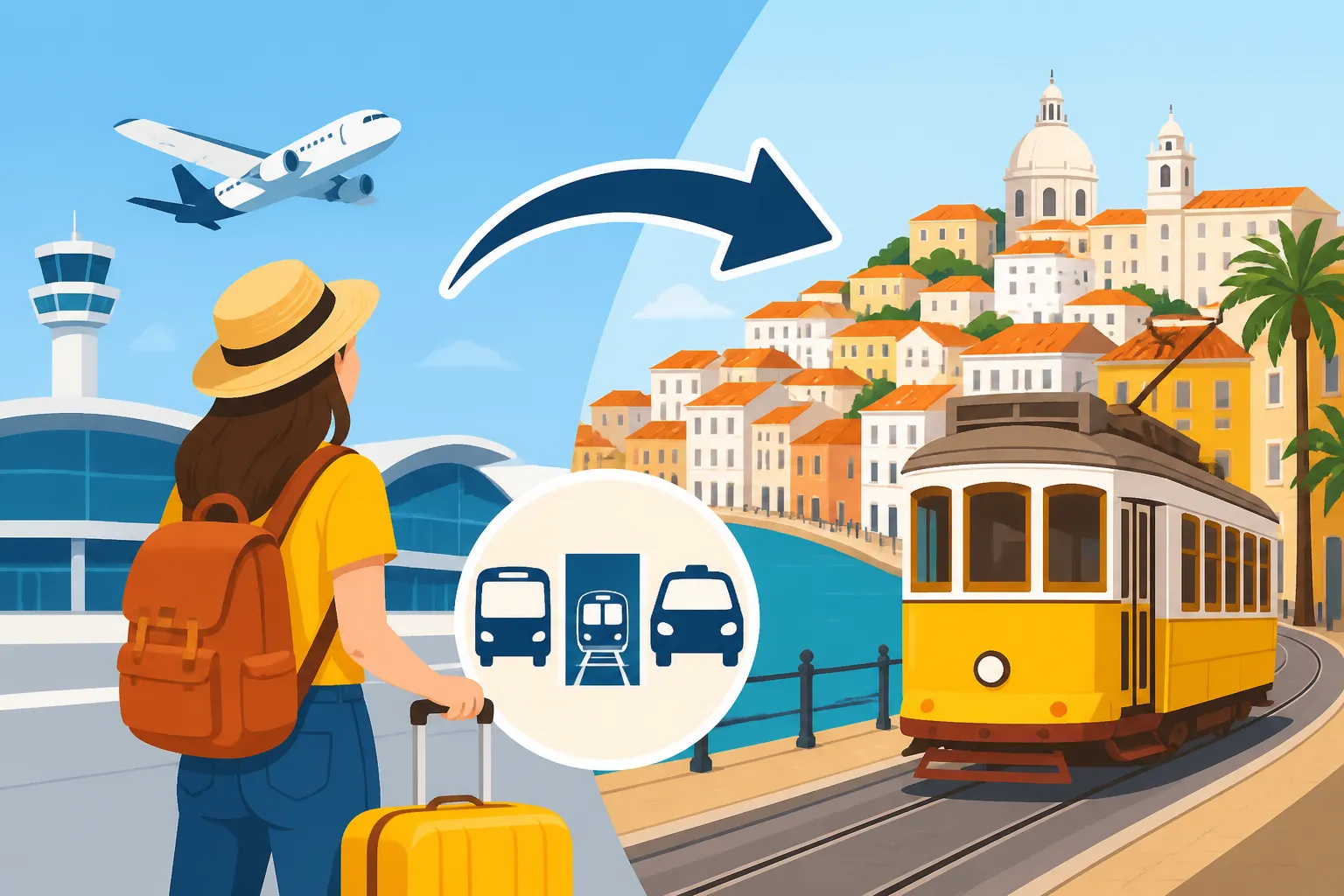
How to Get From Lisbon Airport to the City Center
Disclosure: This article contains affiliate links. If you buy through them, we may earn a commission at no extra cost to you. Read our full disclosure.
Landing at Lisbon's Humberto Delgado Airport (LIS) after a long journey can be a mix of excitement and exhaustion, often leaving you wondering, "How on earth do I get into the city center from here?" It's a question many expats and tourists grapple with, trying to decipher foreign public transport systems or avoid potential taxi scams while battling jet lag and heavy luggage. This comprehensive guide is designed to cut through the confusion, providing you with all the practical, real-world information you need to navigate your journey from the airport to the heart of Lisbon smoothly and confidently, just like a seasoned local.
Public Transport: Your Budget-Friendly Gateway to Lisbon
For many, especially those arriving in Portugal with an eye on the Cost of Living in Portugal 2026: Detailed Budgets for Singles and Families , public transport is the most sensible and economical choice to reach the city center. Lisbon's public transport network is relatively efficient, and getting from the airport to various central hubs is quite manageable once you understand the system. The key here is to get yourself set up with a Viva Viagem card as soon as you land. This reusable, rechargeable card is your passport to Lisbon's entire public transport network – metro, bus, tram, and even some funiculars. You can purchase one at any metro station from vending machines or ticket counters. Don't forget to keep it safe; it's what you'll use for all your subsequent travels around the city.
The Metro: Fast, Efficient, and Straightforward
When you first step out of the arrivals hall at Lisbon Airport, you’ll immediately notice signs pointing towards the "Metro." This is often the quickest and most hassle-free way to get to many parts of the city. The airport has its own Metro station, conveniently located just outside the Terminal 1 building. If you land at Terminal 2, don't fret; there's a free shuttle bus that runs frequently between the two terminals.
The Metro station at the airport is on the Red Line (Linha Vermelha). From here, you can easily reach some major transport hubs, like Alameda or São Sebastião, where you can transfer to other lines (Green, Blue, Yellow) to reach virtually any neighborhood in central Lisbon. For instance, if your accommodation is in Baixa-Chiado or Rossio, you'd take the Red Line to Alameda, then switch to the Green Line. If you're heading towards Marquês de Pombal or Avenida da Liberdade, you'd transfer at São Sebastião to the Blue Line. It feels like a small puzzle at first, but trust me, it’s quite intuitive once you’re on the ground.
To use the Metro, you'll need that Viva Viagem card. A single trip costs around €1.80 if you buy it directly as a one-way ticket on the card, but the smartest move is to load it with a 'Zapping' balance. Zapping is a pre-paid amount of money you load onto the card, and it offers slightly cheaper fares for individual journeys across different transport modes. For example, a single journey with Zapping credit on the Metro typically costs €1.61. The card itself costs €0.50 for a one-time purchase.
The journey time from the airport to central areas like Baixa or Cais do Sodré (with one transfer) usually takes about 25-35 minutes, depending on your connection. Trains run frequently, typically every 6-9 minutes during peak hours, and less often late at night or early morning. The Metro generally operates from 6:30 AM to 1:00 AM daily. While it's incredibly efficient, be prepared for crowds during rush hour, and if you have multiple large suitcases, navigating the turnstiles and escalators can be a bit of a dance. Keep your belongings close, as with any busy public space.
Carris Buses: Slower but More Scenic
While the Metro is often the go-to, don't discount Lisbon's extensive bus network, especially if your final destination isn't directly on a Metro line or if you simply prefer to see the city as you travel. For quite a while, there was a dedicated "Aerobus" service that catered specifically to airport transfers, but that service was discontinued in 2021. Now, you'll be using the regular Carris public bus lines, which require a bit more local knowledge but are perfectly viable.
Several Carris bus lines connect the airport to various parts of Lisbon. Some popular routes include:
- Bus 744: Connects the airport to Marquês de Pombal and further into the city, including Cais do Sodré. This is a common choice for many visitors.
- Bus 705: An express bus, but with fewer stops and specific operating hours, usually during weekdays.
- Bus 783: Travels to Amoreiras and Campolide.
Like the Metro, you'll use your Viva Viagem card loaded with Zapping credit for bus journeys. A single bus fare using Zapping is typically €1.47, making it slightly cheaper than the Metro. If you don't have a Viva Viagem card and pay the driver directly, a paper ticket costs €2.10, which is considerably more, so getting that reusable card is truly the way to go from day one. You can read more about the general Public Transport and Driving in Portugal: Trains, Tolls, and Licenses for a deeper dive into city-wide transit.
Bus stops are located just outside the airport terminals. Travel times will vary significantly depending on traffic, but expect anywhere from 30 minutes to an hour to reach central Lisbon. While slower than the Metro, taking a bus offers you a glimpse into Lisbon's charming streets and neighborhoods as you pass through. It’s a more relaxed pace, which can be lovely if you’re not in a huge rush. However, luggage space on regular buses is limited to what you can comfortably hold or place on your lap, unlike the Metro's more generous standing areas. If you're laden with bags, this might not be your top choice.
Private and On-Demand Options: Comfort and Convenience
Sometimes, after a long flight, all you want is the ease of a door-to-door service without wrestling with public transport maps or heavy luggage. Lisbon offers several excellent private and on-demand options that provide comfort and convenience, albeit at a higher price point than public transit. These methods are particularly appealing if you’re traveling with family, have lots of luggage, or are arriving late at night when public transport options might be less frequent.
Taxis: The Traditional Choice (with a Caveat)
Lisbon's cream-colored taxis, often adorned with green roofs or classic black and green livery, are plentiful at the airport. You'll find the official taxi stand directly outside the arrivals area. It's usually well-organized, with a queue system. This is the traditional, straightforward way to get to your accommodation.
The journey to the city center typically costs between €15-€25, depending on your exact destination, traffic, and any applicable surcharges. It’s important to be aware of a few things:
- Metered Fares: Taxis operate on a meter, but there are standard surcharges. Luggage placed in the boot (trunk) often incurs an extra fee (around €1.60 per item).
- Night/Weekend Rates: Fares are slightly higher during nights (after 9 PM) and on weekends/public holidays.
- Tolls: If the taxi uses a toll road (e.g., the Vasco da Gama Bridge), you'll be responsible for that cost.
- Scams: Unfortunately, some unscrupulous drivers might try to take a longer route or quote a fixed, inflated price. Always insist on the meter (o taxímetro, por favor) and ask for a receipt (o recibo, por favor) at the end of the journey. While most drivers are honest, a little vigilance goes a long way. Having your destination address written down or open on your phone can also prevent misunderstandings, especially if there's a language barrier. For general advice on navigating cultural nuances like this, check out our guide on Daily Life in Portugal: Supermarkets, Language, and Cultural Etiquette.
Despite the potential for minor hiccups, taxis offer a direct, comfortable ride, and drivers are generally quite knowledgeable about the city's labyrinthine streets.
Ride-Hailing Apps: Uber, Bolt, and FREENOW
For many expats and tourists, ride-hailing apps like Uber and Bolt have become the preferred method for airport transfers. They offer price transparency and convenience, often at a more competitive rate than traditional taxis, especially during non-surge periods. FREENOW is also popular, often integrating both ride-hailing services and traditional taxis into one platform.
Here's how they work from Lisbon Airport:
- Pickup Points: Both Uber and Bolt have designated pickup points, usually clearly marked outside the arrivals area. You'll request your ride through the app, and it will direct you to the correct pickup zone. This system helps manage traffic and makes it easier to find your driver.
- Pricing: The apps provide an estimated fare upfront, so you know what to expect. Fares generally range from €10-€20 to the city center. Be mindful of "surge pricing" during peak times (e.g., late nights, bad weather, or major events) when prices can temporarily increase.
- Convenience: The biggest advantage is the cashless payment and the ability to track your driver. It eliminates language barriers and the worry of being overcharged.
To use these services, you’ll need a working phone and the app downloaded. If you haven't sorted out your local connectivity yet, consider getting a Portuguese SIM card upon arrival, which you can learn more about in our guide: Getting a Portuguese SIM card at Lisbon Airport: Vodafone vs NOS vs MEO. Having a local number can sometimes make pickup coordination easier. Overall, these apps offer a fantastic balance of cost, convenience, and peace of mind.
Private Transfers and Shuttles: Pre-Booked Peace of Mind
For those who prioritize seamless, stress-free travel, especially after a long flight, private transfers are an excellent option. These services allow you to pre-book a car and driver who will meet you directly in the arrivals hall, often holding a sign with your name. This is particularly good for families with young children, larger groups, or anyone who wants absolute certainty upon arrival.
You can book private transfers through various platforms. Major travel sites like Booking.com often offer airport transfer options when you book your accommodation. Dedicated transfer companies or tour operators like GetYourGuide also provide reliable services. When booking, you typically provide your flight details, and the company monitors your flight for delays, adjusting the pickup time as needed.
- Cost: Private transfers are the most expensive option, typically ranging from €25-€50 to the city center, depending on the vehicle size and company.
- Advantages: No waiting in queues, no navigating public transport, direct door-to-door service, and often a more comfortable, spacious vehicle. This option is also great if you're heading to a specific apartment and will need to immediately begin the process of Renting an Apartment in Portugal: Contracts, Fees, and Tenant Rights. It means one less thing to worry about on what can be a hectic day.
- Disadvantages: Higher cost. However, the convenience and reduction in stress can be well worth the extra euros for many travelers.
Many families travelling to Portugal find this option invaluable for starting their trip on a relaxed note. For general travel planning and comparing various transport options for onward journeys within Portugal, platforms like Omio can be useful for booking bus or train tickets if your final destination is beyond Lisbon.
Making the Right Choice for Your Arrival
Deciding on the best way to get from Lisbon Airport to the city center truly depends on your individual circumstances. There's no single "best" option, but rather the best option for you at that particular moment. Let's break down the key factors to consider.
Factors to Consider: Luggage, Time, Budget, and Destination
Your choice of transport will largely hinge on a few critical elements:
-
Luggage Load: If you're traveling light with just a backpack or a small carry-on, the Metro or a regular Carris bus is perfectly manageable. However, if you're moving to Portugal with your entire life packed into several large suitcases (as many expats do when making the big leap after getting their The 120-Day Entry Visa: What to Do Once You Arrive in Portugal ), navigating the Metro's turnstiles, escalators, and crowded carriages can be a true test of patience and physical strength. In this scenario, a taxi, ride-hailing service, or pre-booked private transfer becomes much more appealing.
-
Time of Arrival: Arriving in the middle of the day during rush hour (roughly 8 AM to 9:30 AM and 5 PM to 7 PM on weekdays) can make Metro and bus journeys crowded, but they are still generally fast. Late-night arrivals (after 1 AM) will find the Metro closed, leaving taxis, ride-hailing apps, or pre-booked transfers as your only motorized options. If you're a night owl, factor this into your planning.
-
Budget: This is often the primary driver for many decisions. The Metro offers the best value for a solo traveler or couple, costing just a few euros. Taxis and ride-hailing apps provide a good middle ground, while private transfers are the most expensive but offer unparalleled convenience. If you're on a tight budget, mastering the Viva Viagem card and the Metro is your best bet.
-
Final Destination within Lisbon: Where are you actually staying?
- If your accommodation is near a Metro station, especially on the Red, Green, or Blue lines, the Metro is probably your fastest option. Popular expat neighborhoods like Alameda, São Sebastião, Baixa-Chiado, and Cais do Sodré are very well-connected by Metro. For more insights into these areas, check out our Lisbon Neighborhood Guide: Best Areas for Expats and Digital Nomads.
- If you're staying in an area less accessible by Metro, like parts of Alfama, Graça, or certain residential zones up the hills, a bus might get you closer, or a taxi/ride-hailing service will be the most direct door-to-door solution.
Practical Tips for a Smooth Journey
Here are a few nuggets of wisdom from someone who’s been there, done that, and probably got lost a few times in the process:
- Get Your Viva Viagem Card Early: As mentioned, this is non-negotiable for public transport. You can buy it right in the Metro station at the airport. Load it with at least €10-€15 of 'Zapping' credit to start, as this will cover several journeys and provide the best per-ride value across different transport types.
- Download Essential Apps: Having the official "Metro Lisboa" app can be incredibly helpful for real-time train schedules and route planning. Google Maps is generally reliable for public transport directions in Lisbon. For ride-hailing, ensure you have Uber and Bolt downloaded and set up before you land.
- Have Small Bills/Coins: While most things are cashless these days, especially with apps like MB Way (which you can learn more about in our guide to The Multibanco System and MB Way: Portugal's Unique Payment Network ), it’s always wise to have some small euro notes (€5 or €10) or coins for emergencies, a quick coffee, or if a bus driver only accepts exact change (though most have machines that take card or larger bills now).
- Know Your Address (and a Landmark): Especially if taking a taxi, have your full accommodation address written down clearly. Mentioning a nearby landmark (a famous square, a large hotel) can also help.
- Don't Be Afraid to Ask: Portuguese people are generally very friendly and helpful. If you look lost, someone might offer assistance, or you can politely ask for directions (even a "Metro?" or "Táxi?" with a questioning look can work wonders). Many younger people, especially those working in tourism-related roles at the airport, will speak English.
Remember, the initial journey from the airport is just the first step in your exciting new adventure in Portugal. Choose the option that best suits your needs and budget for a hassle-free start.
Comparison Table: Airport Transport Options
To help you visualize your choices, here’s a quick overview of the main transport options from Lisbon Airport to the city center:
| Transport Option | Estimated Cost (to city center) | Estimated Time | Convenience Level | Luggage Friendliness | Best For |
|---|---|---|---|---|---|
| Metro | €1.61 (with Zapping) | 25-35 min | High | Medium | Budget travelers, light luggage, avoiding traffic |
| Carris Bus (e.g., 744) | €1.47 (with Zapping) | 30-60 min | Medium | Low | Budget travelers, scenic route, specific destinations |
| Taxi | €15-€25 | 15-30 min | High | High | Comfort, heavy luggage, direct door-to-door, late nights |
| Uber/Bolt | €10-€20 | 15-30 min | High | High | Comfort, heavy luggage, price transparency, late nights |
| Private Transfer | €25-€50 | 15-30 min | Very High | Very High | Ultimate convenience, groups, families, fixed price |
This table should give you a clearer picture when weighing your options. No matter what you choose, a little planning goes a long way to ensure your arrival in Lisbon is as smooth as possible.
Disclaimer
The information provided in this guide is for general informational purposes only and is subject to change. While we strive to keep it accurate and up-to-date, transport prices, routes, and regulations in Portugal can change without prior notice. Always confirm the latest details with official sources or service providers before making your travel arrangements.