Getting a Portuguese SIM card at Lisbon Airport: Vodafone vs NOS vs MEO
Disclosure: This article contains affiliate links. If you buy through them, we may earn a commission at no extra cost to you. Read our full disclosure.
Landing at Humberto Delgado Airport and realizing your home SIM card has zero signal—or worse, is already racking up massive roaming charges—is a rite of passage for every newcomer. I remember standing in the arrivals hall, sweating in the Lisbon humidity, trying to load a map to my Airbnb while my screen just spun endlessly. This guide solves that immediate panic by breaking down exactly where to go, which provider to choose, and how to get connected before you even leave the terminal.
The Arrival Hustle: Locating SIM Card Providers at Lisbon Airport
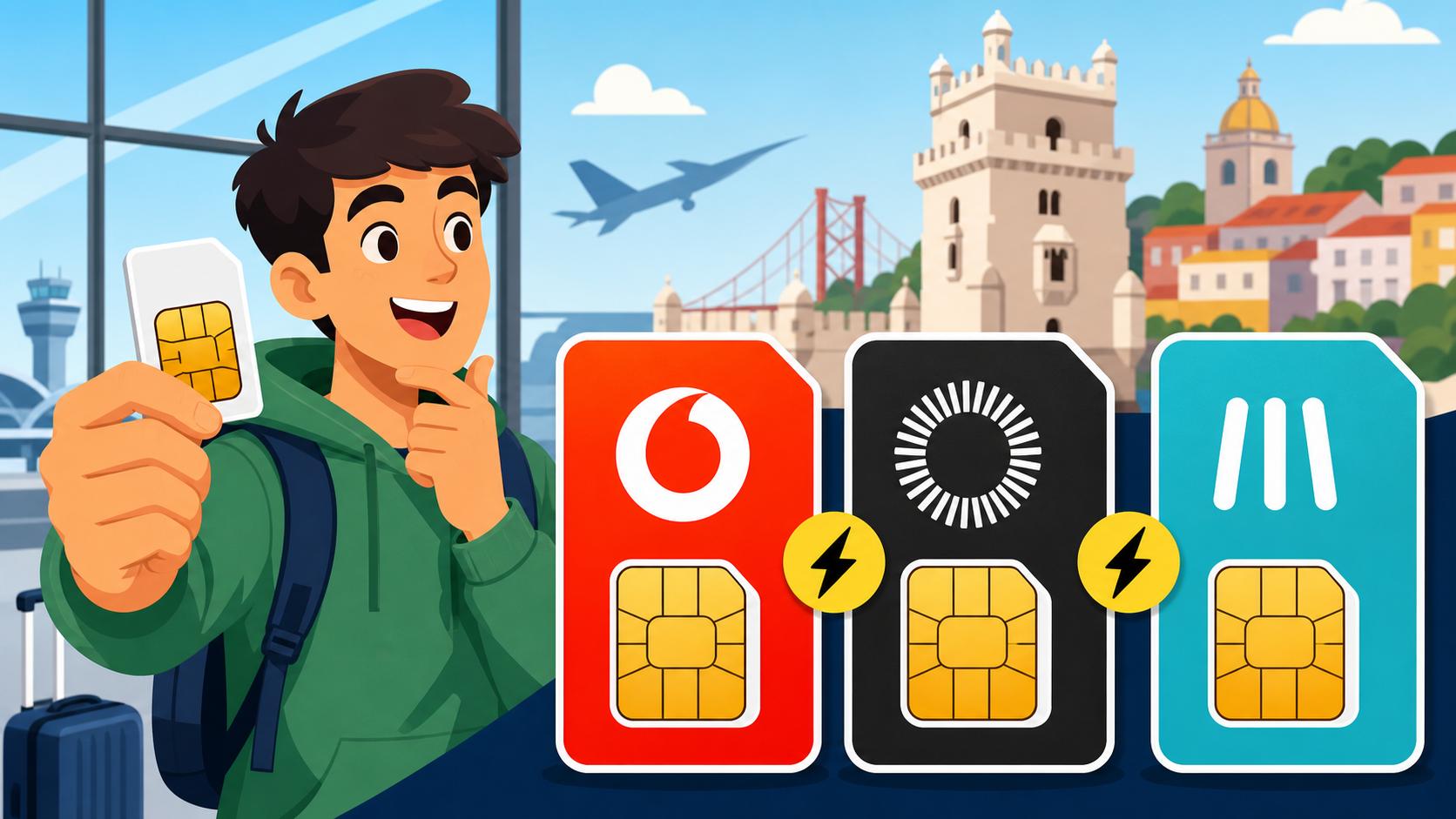
When you walk through the sliding glass doors of the arrivals gate at Lisbon Airport (Terminal 1), you are immediately greeted by a wall of people holding signs and the general hum of a busy European hub. For an expat or tourist, the first mission is data. In Portugal, the telecommunications market is dominated by three main players: Vodafone, MEO, and NOS. Each has a presence at the airport, but their visibility varies.
The most prominent shop you will see is the Vodafone store. It is located directly to your right as you exit the secure baggage claim area. Because of its prime real estate, it almost always has a queue. That line can stretch twenty people deep during the peak summer months. If you are in a rush to call a car, you might want to consider the alternatives. Using Bolt vs Uber in Portugal: Which ride-hailing app is cheaper? is a question you will likely be asking yourself while waiting in that line, and you will need a working data connection to check the prices on both apps.
Slightly further into the arrivals hall, near the tourism office and the exit toward the metro, you will find kiosks for MEO and sometimes NOS. These are often less crowded than the main Vodafone store. MEO is the legacy provider (formerly Portugal Telecom) and generally offers the widest coverage across the country. If you are planning to head straight to a more remote area, perhaps checking out the Digital Nomad communities: Madeira's Nomad Village vs Lisbon hubs, having a MEO SIM might be your safest bet for consistent signal in the mountains or on the islands.
Comparing the Big Three: Vodafone vs MEO vs NOS
Choosing between these three providers at the airport usually comes down to the specific "Tourist" or "Traveler" packs they are promoting that week. Unlike the long-term contracts you might sign later, these are pre-paid, no-contract SIMs designed to last between 15 and 30 days.
Vodafone: The Reliable Expat Choice
Vodafone is often the go-to for foreigners because their staff at the airport are exceptionally used to dealing with non-Portuguese speakers. Their "Vodafone Travelers" plan is usually the flagship offering. It typically includes a generous amount of data (often 30GB or more) and a bucket of international minutes. The primary advantage of Vodafone is their 5G network, which is arguably the most robust in Lisbon’s city center. If you are moving into a temporary rental found through Uniplaces, you will want that high-speed data to bridge the gap until your home internet is installed.
MEO: Maximum Coverage
MEO is everywhere. If you find yourself in a tiny village in the Alentejo or a surf shack in Ericeira, MEO often has the only tower in sight. Their airport plans are very similar to Vodafone's in price, usually hovering around €15 to €25 for a month of service. One unique feature of MEO is their extensive network of Wi-Fi hotspots across Portugal, which you can often access for free as a customer. This can be a lifesaver if you are trying to stick to a strict budget while managing the Real cost of living in Lisbon 2026: Rent, groceries, and eating out breakdown.
NOS: The Entertainment and Bundle King
NOS is a strong competitor, especially if you plan on staying long-term and eventually bundling your mobile phone with home internet and television. At the airport, their kiosks often focus on "unlimited" data plans for a set number of days. While "unlimited" often has a hidden fair usage policy, it is excellent for those first few days when you are downloading maps, translating every menu, and video calling home to show off the Tagus River. Once you are settled, you might even find yourself using Amazon Spain to order a local 4G router to use with a NOS SIM if your apartment's Wi-Fi is flaky.
| Feature | Vodafone | MEO | NOS |
|---|---|---|---|
| Airport Store Location | Right of Arrivals Exit | Near Tourism Office | Kiosks in Arrivals |
| Typical Tourist Price | €20 – €25 | €15 – €20 | €15 – €25 |
| Primary Advantage | High-speed 5G & English Support | Best Rural Coverage | Great for Unlimited Data Packs |
| Best For | City Dwellers & Techies | Explorers & Hikers | Heavy Data Users |
Beyond the Airport Kiosk: eSIMs and Pre-Arrival Strategies
If the thought of standing in a line after a ten-hour flight makes you want to cry, you have other options. The rise of eSIM technology has changed the game for expats in Portugal. You can actually have your data plan active before the plane's tires hit the tarmac.
Airalo is the most popular service for this. By downloading the app and purchasing a Portuguese "MEO" or local partner eSIM, you can toggle your data on the moment you land. This allows you to bypass the airport stores entirely and head straight for the metro or the taxi stand. This is particularly useful if you need to use the Navegante Pass Lisbon: How to get the €40 monthly unlimited transit card to get into the city, as you can manage the top-ups and registrations on your phone immediately.
However, be aware that most travel eSIMs like those from Airalo are data-only. You will not get a local +351 Portuguese phone number. For some, this isn't an issue because they use WhatsApp for everything. But if you need to call a local doctor or a government office, you will eventually need a real SIM. If you are following a Health checklist for your first 30 days living in Portugal as an expat, you will quickly realize that many clinics and services require a local number for SMS confirmations.
Another pre-arrival tip: check if your phone is "unlocked." Many people arrive from the US or UK only to find their phone is tethered to their home carrier. If your phone is locked, a Portuguese SIM card will be a paperweight. In that case, your only choice is a portable Wi-Fi "hotspot" device, which you can sometimes rent at the airport or buy later at a store like Worten or Fnac.
Long-term Connectivity: From Tourist SIM to Resident Contract
The SIM card you buy at Lisbon Airport is a temporary band-aid. It gets you through the first month while you find an apartment and get your paperwork in order. Eventually, you will want a "Post-pago" (post-paid) contract, which offers much better rates and significantly more data for a lower monthly fee.
To sign a real contract, you will need your NIF and NISS: How to Get Your Portuguese Tax and Social Security Numbers. Most providers will not let you move from a "Traveller" plan to a monthly contract without a Portuguese tax number and a local bank account. This is where the real administrative fun begins. Once you have your NIF, you can set up a direct debit. This is also essential for things like How to use the MB Way app: Why it’s better than carrying cash in Portugal, as the app needs to be linked to a Portuguese mobile number and a local bank card.
While you are in the "tourist SIM" phase, pay attention to how you "top up" your balance. In Portugal, this is most commonly done through the Multibanco system. You go to any ATM, select "Pagamentos," then "Telemóveis," choose your provider, and enter your phone number. It is a quirky system that you will soon find very convenient once you are Understanding the Multibanco ATM network to pay taxes, tolls, and utility bills.
If you are moving to the south, you might find that the providers behave slightly differently. The Cost of living in the Algarve: Winter vs Summer price differences for expats can extend to how local shops handle promotions, so always keep an eye out for seasonal deals. Also, keep your SIM card "frame"—the plastic card the SIM popped out of. It contains your PUK code. If you restart your phone and forget your PIN, you will be locked out, and without the PUK, you’ll be heading back to a store to beg for help in broken Portuguese.
Troubleshooting and Technical Tips for New Arrivals
Sometimes, you pop the new SIM in, and nothing happens. Don't panic. The most common issue is the APN (Access Point Name) settings. Most modern iPhones and Androids will update this automatically, but occasionally you have to go into your settings and manually enter the provider's APN info. The staff at the airport store are usually happy to do this for you, which is one reason why waiting in that line might be worth it if you aren't tech-savvy.
Another thing to remember is that "unlimited" social media data is a very common feature in Portuguese plans. This means that apps like WhatsApp, Instagram, and Facebook might not count against your main data bucket. This is incredibly helpful when you are trying to stay connected while Finding an English-speaking general practitioner (Médico de Família) or searching for your first permanent home.
Finally, keep an eye on your data usage via the provider's app (My Vodafone, My MEO, or My NOS). These apps are usually available in English and allow you to see exactly how many megabytes you have left. In my first month, I blew through my "traveler" data in two weeks because I was using my phone as a hotspot for my laptop to work from cafes. If you plan on doing the same, ask specifically for a "Kanguru" (NOS) or "Enjoy" (MEO) data-only SIM, which are designed for routers and heavy laptop use.
Getting your SIM card is your first real "win" in Portugal. It’s the tool that allows you to navigate the streets, translate the signs, and eventually start the process of becoming a local. Whether you choose the convenience of Airalo or the reliability of a Vodafone store at the airport, just make sure you’re connected before you step out into the beautiful, winding streets of Lisbon.
Disclaimer
The information provided in this guide is for general informational purposes only and reflects the telecommunications landscape in Portugal as of early 2026. Data plans, pricing, and store locations at Lisbon Airport are subject to change by the providers (Vodafone, MEO, and NOS) without notice. While every effort has been made to ensure accuracy, readers should verify current offers and terms and conditions directly with the service providers upon arrival. This guide does not constitute legal or financial advice regarding residency or administrative requirements in Portugal.