The 120-Day Entry Visa: What to Do Once You Arrive in Portugal
Stepping off the plane at Humberto Delgado Airport with that fresh, holographic sticker in your passport is a moment of pure triumph, but it is often immediately followed by a wave of "what now?" anxiety. I remember staring at my own 120-day visa in a dimly lit Lisbon cafe, realizing the hard part—the bureaucracy of actually living here—was only just beginning. This guide solves the post-arrival puzzle by mapping out your first 90 to 120 days, ensuring you don't miss the critical deadlines that could jeopardize your residency.
Understanding the 120-Day Entry Visa Mechanism
The sticker in your passport is not your residency permit; it is merely the "golden ticket" that allows you to enter the country with the specific intent of becoming a resident. Most people coming on a D7 or D8 visa will see two dates on that sticker and a notation for "two entries." This period is designed to give you enough time to settle in, find permanent housing, and attend your biometrics appointment with AIMA (the Agency for Integration, Migration, and Asylum). It is a bridge between being a tourist and being a legal resident.
Many expats find themselves confused by the "two entries" rule. This means you can leave the Schengen Area and return twice during the 120-day window. However, it is wise for new arrivals to stay put as much as possible until they have their physical residency card. The transition from the old SEF system to AIMA Portugal: Navigating the New Immigration Agency and Residence Permits has created some logistical shifts, and being out of the country when a notification arrives can be a nightmare. You are currently in a state of "pre-residency," which carries both rights and a few annoying limitations.
The most important detail on that visa sticker is often the tiny, almost illegible URL printed at the bottom. For most applicants, this URL links to a digital PDF that confirms the date, time, and specific location of your AIMA appointment. Do not assume your appointment will be in the city where you live. I’ve known expats living in Lagos who were assigned appointments in Bragança, a seven-hour drive away. Checking this early is vital because it dictates your entire moving schedule and your documentation gathering timeline.
The Essential First 14 Days Landing Checklist
If you flew into Portugal directly from outside the Schengen Area (say, from New York or London), your passport was stamped by the SEF/PSP officers at the border. This stamp acts as your official declaration of entry. However, if you drove across the border from Spain or flew in via an internal Schengen flight (like a layover in Frankfurt or Madrid), your passport was likely not stamped. In this case, you have exactly three working days to head to an AIMA office or a designated PSP station to declare your entry. Failing to do this can lead to fines and, more importantly, a very awkward conversation at your residency interview later.
Once the entry is sorted, your next priority is securing a Portuguese phone number. While your international roaming might work, you cannot interact with most Portuguese government portals or delivery services without a +351 number. Head to a shopping mall like Vasco da Gama in Lisbon or NorteShopping in Porto and find a MEO, Vodafone, or NOS storefront. You’ll need your passport and your NIF (Tax Identification Number). Having a local number is the first step in signaling to the system that you are no longer just a visitor.
Another critical task is Registering Your Address with Junta de Freguesia (Atestado de Morada). This is arguably the most "Portuguese" experience you will have. The Junta is the local parish council, and they are the only ones who can officially certify that you live where you say you live. Even if you have a 12-month lease, AIMA often requires this specific piece of paper. Depending on the region, you might need two witnesses who are already registered in that specific parish to sign a form saying they’ve seen you around. It sounds archaic, because it is, but it is a non-negotiable part of the 120-day checklist.
Setting Up Your Administrative Foundation
You cannot function in Portugal without the "Big Three": the NIF, the NISS, and a local bank account. If you were proactive, you might have secured your NIF before arrival using a service like Bordr, which is a lifesaver for avoiding the long, morning queues at the Finanças offices. If you don't have one yet, getting a NIF is your absolute day-one priority. It is required for everything from signing a gym contract to getting a discount on your groceries. For non-EU citizens, Bordr remains the gold standard for navigating the fiscal representation requirements that often trip up newcomers.
After the NIF comes the bank account. While neobanks are great for travel, you will eventually need a traditional Portuguese IBAN for things like electricity contracts and health insurance. I personally found that Opening a Bank Account in Portugal: Best Banks for Foreigners and Expats can be a bit of a coin toss depending on which manager you speak to. Be prepared to show your passport, your NIF, your proof of income, and that 120-day visa sticker. Some banks are more "expat-friendly" than others, but having that local account is what allows you to set up the SEPA direct debits that make life here run smoothly.
Finally, there is the NISS (Social Security Number). Even if you are a digital nomad working for a US company, you need a NISS to access the public healthcare system and to ensure you are compliant with local labor laws if you eventually switch to a local contract. You can often request this online, but the process is much smoother if you have all your documents professionally translated. We recommend using RushTranslate for your birth and marriage certificates. AIMA and the Social Security office are notorious for rejecting documents that aren't translated by certified professionals, and RushTranslate provides the exact level of certification the Portuguese authorities expect.
| Document / Task | Required For | Service Recommendation |
|---|---|---|
| NIF (Tax Number) | Everything (Leases, Utilities, Banking) | Bordr |
| Certified Translation | AIMA Interview & Social Security | RushTranslate |
| Private Health Insurance | Visa Compliance & Private Hospitals | Cigna Global |
| Atestado de Morada | Proof of Address for AIMA | Local Junta de Freguesia |
| NISS (Social Security) | Public Healthcare (SNS) Access | Seguridade Social Portal |
Healthcare and Insurance Logistics
One of the biggest misconceptions about the 120-day entry visa is that you are immediately covered by the Portuguese public health system (SNS). You aren't. Until you have your residency card and a "Número de Utente" (user number), you are technically expected to pay out-of-pocket or rely on private insurance. This is why having a robust international policy like Cigna Global is so essential during this bridge period. Too many expats arrive with a basic "travel insurance" policy that expires after 90 days, leaving them vulnerable right as their visa is about to run out.
Cigna Global is particularly useful because it is widely recognized by Portuguese private hospitals like CUF and Hospital da Luz. During your first 120 days, you might need a routine check-up or a prescription refill. Navigating the public system without a residency card can be frustrating and expensive. Having private coverage allows you to skip the queues and see English-speaking specialists while you wait for your official status. Once you have your card, you can then look into Private Health Insurance in Portugal: Costs, Coverage, and Best Providers to see if you want to switch to a local plan or keep your international coverage.
Parallel to this, you should start the process of Registering with the Centro de Saúde: Getting Your SNS Número de Utente. This usually involves taking your residency card (once you get it), your NIF, and your NISS to the local health center. However, during your 120-day visa period, some health centers will allow you to register with just your visa and a proof of address if you can prove a medical necessity. It is worth a visit to your local center just to see their specific policy, as every "freguesia" handles this slightly differently. Finding an English-Speaking General Practitioner (Médico de Família) in the public system is rare, but the registration is what ensures you don't pay thousands in the event of an emergency.
Preparing the "Paper Fortress" for Your AIMA Appointment
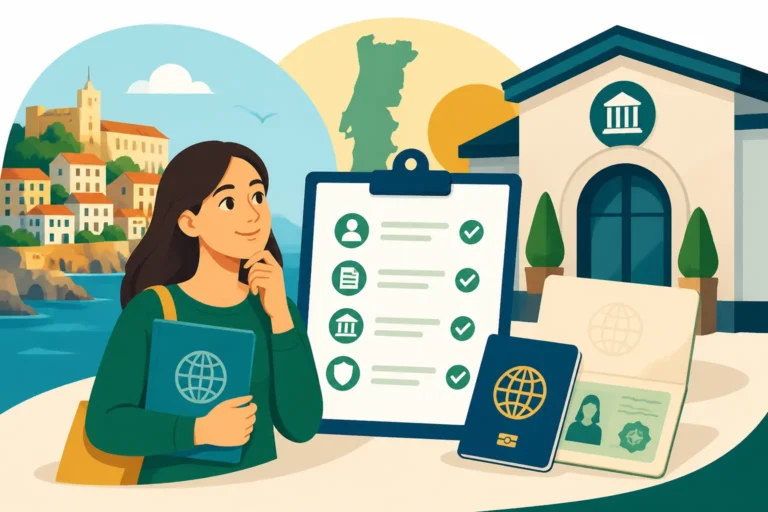
The biometrics appointment is the final boss of the 120-day visa journey. Even though you submitted documents to the consulate in your home country, you must bring a fresh set of originals and copies to the AIMA office. The "freshness" rule is key: documents like bank statements and your criminal record check should ideally be less than 90 days old. If you used RushTranslate for your initial application, you’ll likely need them again to ensure any new documents (like a local bank statement or a new lease) are properly presented.
During the Attending Your AIMA Appointment: Required Documents and Interview Process, the officer will take your fingerprints, a fresh photo, and your signature. It’s a nerve-wracking day, but usually, it’s quite mechanical. They are checking to see that your circumstances haven't changed since the visa was issued. If you are on a D8 visa, they will want to see that the income is still flowing into your account. If you are on a D7, they’ll want to see your passive income. Be polite, be early, and bring more paper than you think you need. I always carry a folder so thick it looks like a legal brief—it shows the officer you are serious and organized.
Once the appointment is over, you will receive a "DUC" (Documento Único de Cobrança), which is the invoice for your residency card. You must pay this at a Multibanco ATM or via your banking app immediately. The clock for your card production doesn't start until this fee is paid. After that, it’s a waiting game. You can check the status online, but many people find that How to track your AIMA residence card delivery via CTT registered mail is the best way to stay sane. The card will arrive at the address you registered with the Junta, which is why having that Atestado de Morada correct from day one is so vital.
Navigating Life While You Wait for the Card
What happens if your 120-day visa expires and you still haven't received your residency card? This is the most common fear I hear from newcomers. In Portugal, if you have a scheduled appointment with AIMA or if you have already attended your appointment and are waiting for the card, your legal status is automatically extended. You are not "illegal." You can still live your life, but you should avoid traveling outside of Portugal. While you might be able to get back in, the border guards in other Schengen countries like Spain or France may not recognize your expired sticker and "waiting" status.
During this limbo period, focus on the cultural side of relocation. Use the time to understand Portuguese Coffee Culture and Restaurant Etiquette: Ordering Like a Local. Learning the difference between a "galão" and a "meia de leite" will do more for your sanity than refreshing the AIMA portal ten times a day. Integration is a slow process, and the 120-day visa period is actually a great time to find your favorite bakery, meet your neighbors, and start those initial Portuguese language lessons.
Finally, keep an eye on your mail. The CTT (Portuguese post) will deliver a slip if you aren't home when the residency card arrives. If you miss this, the card goes back to a central hub and retrieving it is a bureaucratic nightmare I wouldn't wish on my worst enemy. Make sure your name is clearly marked on your mailbox. In Portugal, if the postman doesn't see your name, they often won't deliver the letter, even if the address is correct. It’s a small detail that can save you months of additional waiting.
Disclaimer
The information provided in this guide is for informational purposes only and does not constitute legal or professional immigration advice. Immigration laws and AIMA procedures in Portugal are subject to frequent changes. Always consult with a qualified immigration lawyer or the official AIMA portal for the most up-to-date requirements regarding your specific visa and residency status.