How to track your AIMA residence card delivery via CTT registered mail
You’ve had your biometrics done at AIMA and you’ve been told your residence card is “on its way.” Then weeks pass, the letterbox stays empty, and you start to wonder whether a carteiro has already left a slip you never saw. This guide shows you how to track your AIMA residence card through CTT registered mail and what to do if delivery goes wrong.
How AIMA Sends Your Residence Card Through CTT
I remember that waiting period very clearly. My appointment went smoothly, the officer was kind, and I walked out feeling relieved. Then nothing happened for weeks. I checked the mailbox in my building twice a day and grew convinced the card had been lost.
It hadn’t. I just didn’t understand how the delivery system worked. Once you know the process, the wait is much less stressful. If you’re still early in the process, see AIMA Portugal: Navigating the New Immigration Agency and Residence Permits for the bigger picture.
What Happens After Your Permit Is Approved
Your physical card is not printed at the AIMA office you visited. Once your application is approved, the card goes into central production. It is then posted to the address registered on your file.
It travels through CTT, the Portuguese postal service, as registered mail. That means it is tracked through the network and someone has to sign for it on delivery. The carteiro will not drop it into your letterbox the way they would a utility bill.
This is why so many cards end up waiting at a post office counter. If nobody is home when the carteiro rings, the card cannot be left behind. If registered mail is new to you, see Sending mail via CTT: Registered letters (Correio Registado) explained.
The production stage can also take a while, and CTT tracking only starts once the envelope has been handed over. If you’re still waiting for a decision, see AIMA Residence Permit Processing Times and How to Check Your Status.
Where Your Tracking Code Actually Comes From
This part confuses people most, because a tracking code does not always reach you the same way. Here are the most common places it turns up:
- In a message or notification from AIMA linked to your application, once the card has been dispatched
- On the paper delivery notice, called an aviso, that the carteiro leaves after a failed delivery attempt
- On the envelope itself, if you sign for it at the door
Some people get a code before the card arrives and can follow every step. Others first see a code when they find an aviso in the letterbox. Neither situation means something has gone wrong.
My advice is to check your email inbox, spam folder and any SMS messages often during this period, and to search them for “CTT” or “AIMA.” When a code appears, save a screenshot straight away.
Reading the Code Correctly
Once you have a code, make sure you type it correctly. As of October 2026, CTT’s help page on finding your shipping code says an alphanumeric CTT tracking code has 13 characters in total. It starts with a 2-letter prefix, then 9 digits, then a 2-letter suffix, for example RD123456789PT.
Some items carry a purely numeric code instead, which can be 22 or 25 digits long. Both formats work in CTT’s tracking tool, but you have to enter every character exactly as printed.
| Code Format | Structure | Total Length | Example |
|---|---|---|---|
| Alphanumeric | 2-letter prefix, 9 digits, 2-letter suffix | 13 characters | RD123456789PT |
| Numeric | Digits only | 22 or 25 digits | A long string of numbers printed on the notice |
The usual problem with handwritten or poorly printed notices is mixing up the letter O and the number zero. In the alphanumeric format, the first two and last two characters are always letters and the middle nine are always digits. If the tool gives you an error, check those positions first.
Step-by-Step: Tracking Your Card on CTT
Once you have the code, tracking is simple. The hard part is understanding the Portuguese status messages, so I’ll cover those in detail.
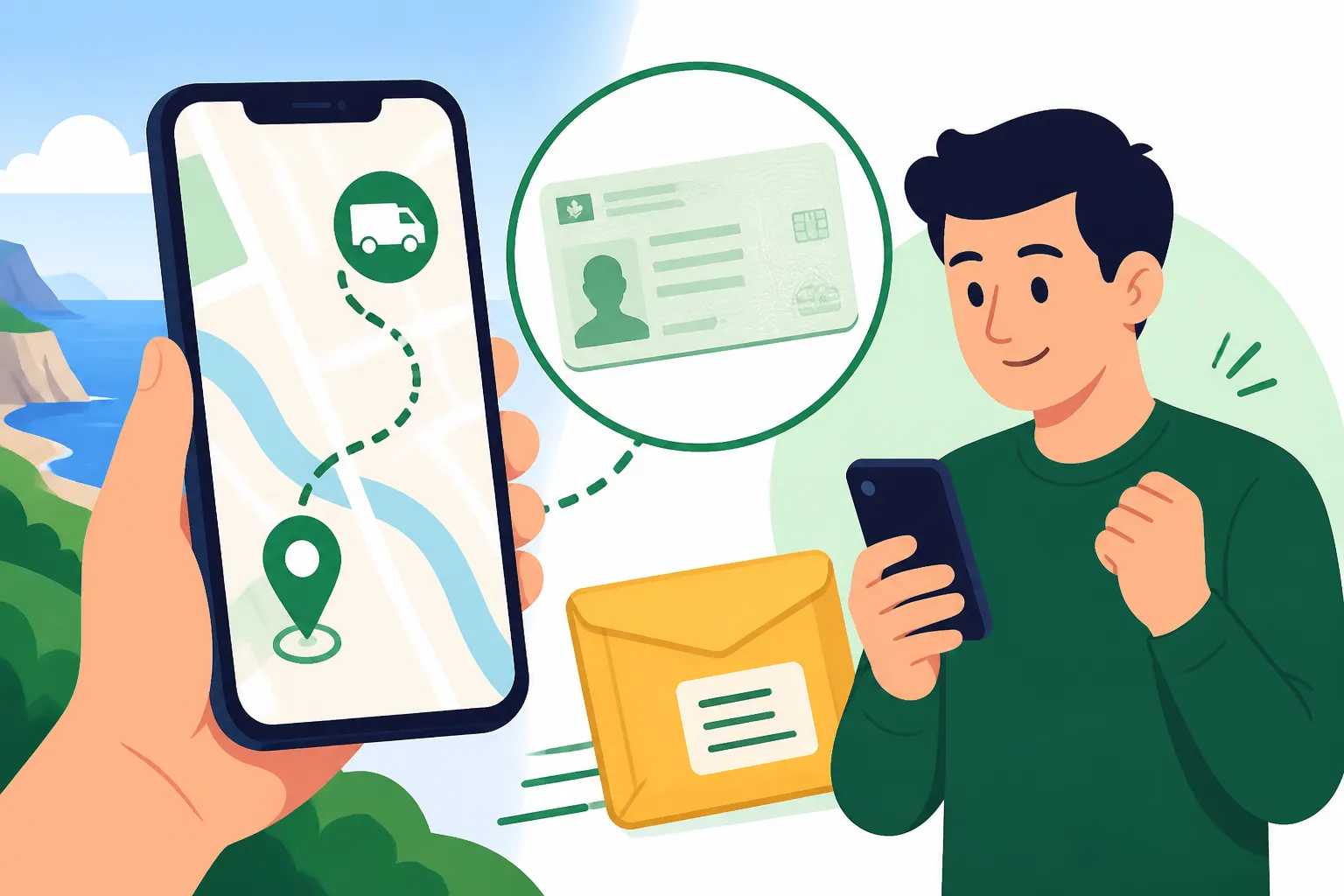
Using the CTT Website and App
Follow these steps:
- Find your tracking code in your AIMA communication, on the aviso slip, or on the envelope.
- Open the CTT website or the official CTT mobile app. Both have an object-tracking search field on the main screen.
- Type the code exactly as printed, either the 13-character alphanumeric version or the full 22 or 25 digit numeric version, with no spaces.
- Submit the search and read the history, which lists each event with a date, time and location.
- Note the most recent location, especially if it names a specific CTT store or post office.
- Check again once a day rather than every hour. Updates usually appear when the item moves between sorting centers or delivery rounds.
If you don’t read Portuguese, your browser’s translation feature will handle the website reasonably well. I still recommend learning the handful of key phrases below, because translations of postal terms can be oddly literal.
Decoding Tracking Statuses
The wording in CTT’s history can vary slightly, but the events usually fall into these categories:
| Typical Status Meaning | What Is Happening | What You Should Do |
|---|---|---|
| Accepted or received into the network | AIMA has handed the card to CTT | Nothing yet, just watch for movement |
| In transit | The card is moving between sorting centers | Keep checking daily |
| Out for delivery | A carteiro has it on today’s route | Stay home or arrange for someone to sign |
| Not delivered, recipient absent | Delivery was attempted and nobody answered | Look for the aviso slip in your letterbox |
| Available for collection | The card is waiting at a named CTT store or post office | Go and collect it with your ID before the deadline |
| Delivered | Someone signed for it | Confirm who signed if you don’t have it |
| Returned to sender | The card has gone back to AIMA | Contact AIMA to arrange a new delivery |
The “out for delivery” status is your cue to act. If you see it in the morning and you work in an office, try to get a neighbor, porteiro or flatmate to listen for the doorbell. Carteiros in Portuguese cities often have tight schedules and won’t wait long at a building door.
When the Card Does Not Arrive: Missed Deliveries and Returns
This is where people panic, and I understand why. Your residence card is the most important document you have here. Most delivery problems are fixable if you act quickly.
The Aviso Slip and Collecting at a CTT Store
If nobody signs for the card, the carteiro leaves an aviso in your letterbox. It is a small printed notice with the tracking code, the address of the CTT store or post office where the card is waiting, and the date by which you have to collect it.
The holding period is limited, and you’ll find the exact deadline on the aviso itself. Don’t put it on your fridge and forget about it. Plan to go within the next day or two.
Take the following to the counter:
- The aviso slip, or at least a photo of it showing the tracking code
- Your passport, since the card is addressed to you personally
- Any AIMA document showing your pending or approved status, in case the clerk asks
Counter staff at busy stores, such as the main branches in central Lisbon or Porto, deal with this all the time. A short “Bom dia, venho levantar uma carta registada,” which means you’ve come to collect a registered letter, followed by handing over the slip will usually be enough.
If someone else needs to collect it for you, ask at the counter beforehand what authorization they need. Identity documents are handled more strictly than ordinary parcels.
If the Card Was Returned to AIMA
If the holding period runs out, CTT sends the card back to the sender. The tracking history will show a return status. This is frustrating, but the card itself is not lost. It is back with AIMA.
Your next step is to contact AIMA through its official channels and explain that your card was returned uncollected. Give them your application details and the tracking code as proof of the failed delivery. Be persistent and polite, and keep a written record of every contact.
If repeated attempts to contact them get nowhere, you have the right to make a formal complaint. See How to file a formal complaint against AIMA on the Livro de Reclamações. A complaint creates an official record, which can help move a stuck case along.
Wrong or Outdated Address Problems
One of the most common reasons a card never arrives is that AIMA has an old address on file. This often happens if you moved between your appointment and the card being printed. The carteiro will try the old address, find nobody, and the card ends up returned.
Make sure your address is correct and complete before the card is dispatched. That includes the floor and door designation, such as 3.º Esq., and the full postal code. For the format, see Portugal postal codes (Código Postal): How to read and write them correctly.
If you have moved, update your address with AIMA as soon as possible. See Changing your address on your Residence Card: The new online AIMA process. Keep your other records consistent too, since your tax address on Finanças is often checked alongside your residency file. If you originally got your NIF remotely through a service like Bordr, check whether they can help you update the address linked to it. You might also need proof of your new address, which is covered in Registering Your Address with Junta de Freguesia (Atestado de Morada).
Practical Tips While You Wait
The waiting period is the hardest part, mostly because you feel you have no control. Here is what helped me and other expats I know.
Make Your Building Delivery-Friendly
Put your full name clearly on both your letterbox and your doorbell. In older Lisbon and Porto buildings, letterboxes are often labeled only with a floor number or a previous tenant’s surname. A carteiro with a registered envelope and no matching name may simply leave an aviso, or not try at all.
A small printed label with your name exactly as it appears on your passport costs almost nothing and makes a real difference. For more on making sure post reaches you, see How to Get Mail and Parcels Delivered in Portugal.
Keep Your Documents Ready and Translated
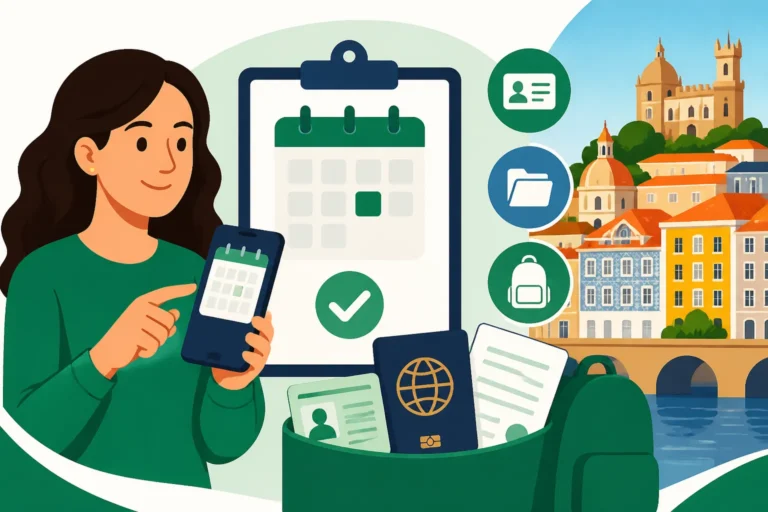
Have your passport, appointment confirmation and any AIMA decision letters together in one folder. If AIMA asks you to resubmit something, or you need foreign documents translated for a follow-up step, a certified translation service such as RushTranslate can produce copies quickly.
Keep an eye on the documents that support your status as well. If your health insurance policy is due for renewal during this time, renew it on time. An international insurer like Cigna Global can send you an updated certificate if you’re asked to show continuous coverage later on.
Proving Your Status and Travelling Before the Card Arrives
Without the physical card, you may need to show employers, landlords or banks that you are legally resident. See AIMA appointment delayed: How to prove legal status to Portuguese employers for practical ways to do that.
Travel is the other big worry. Booking a trip abroad while your card is still with CTT is risky, both because of border checks and because you could miss the delivery and collection window. Before booking anything, see Can I leave Portugal to visit France while waiting for my first AIMA card?.
Once the card is in your hands, photograph both sides and keep the photos somewhere safe. If it ever goes missing, What to do immediately if you lose your Portuguese Residence Card covers what to do. Collecting that card from a CTT counter is a great feeling, and you’ll get there.
Disclaimer
This article is for general informational purposes only and does not constitute professional advice. Laws, prices and regulations vary by location and change over time. Consult a qualified professional for guidance on your specific situation.