Changing your address on your Residence Card: The new online AIMA process
Moving to a new home in Portugal is often a dream realized, but the legal reality of updating your address on your residence card can quickly turn that dream into a bureaucratic knot. I remember the sheer panic I felt when I moved from a drafty apartment in Lisbon to a sunny spot in Cascais, only to realize that a simple address update could take months of missed mail and stressful phone calls. This guide solves that uncertainty by walking you through the new online AIMA process, ensuring your legal residency details are current without the traditional headache of the old SEF system.
Understanding the Legal Obligation to Update Your Address
In Portugal, your residence card (Título de Residência) is more than just a piece of plastic; it is your primary legal identity within the country. When you move, you are legally required to inform the authorities of your new domicile within 60 days. This is not just a suggestion; failing to update your address can lead to significant fines and, more importantly, the loss of critical correspondence from the tax office, social security, or immigration authorities. Many expats believe that simply changing their address with the post office is enough, but in the eyes of AIMA (Agência para a Integração, Migrações e Asilo), if it is not on your card, it did not happen.
The transition from the old SEF system to AIMA was intended to digitize these hurdles. Under the previous regime, you had to book an in-person appointment—a feat that often felt like winning the lottery. Now, the shift toward an online-first approach means you can handle the notification process from your laptop. However, the system is still evolving, and the digital portal can sometimes be temperamental. Keeping your address updated ensures that when it comes time for Permanent Residency in Portugal: Requirements, Language Tests, and Timelines, your history of residency is clean and documented.
Beyond the legal fines, an outdated address can mess with your access to public services. Your local health center is determined by your registered address. If you move from Porto to Braga but don't update your card, you may find yourself unable to register for a family doctor in your new city. This is why Finding an English-Speaking General Practitioner (Médico de Família) becomes significantly harder if your paperwork doesn't match your physical location. It is a domino effect of administrative tasks that starts with that one small line of text on your ID.
Preparing Your Documentation for a Smooth Update
Before you even log into the AIMA portal, you need to have your "paperwork ducks" in a row. Portugal is a country that runs on specific, stamped documents. The most important piece of evidence you will need is proof of your new address. While a utility bill sometimes works, the gold standard in Portugal is the Atestado de Morada. This is a certificate issued by your local Junta de Freguesia (Parish Council) that officially confirms where you live.
Getting this document can be a cultural experience in itself. Depending on your neighborhood, you might be asked to provide the signatures of two neighbors who are registered voters in that same parish to "vouch" for the fact that you actually live there. It sounds archaic, but it is a standard part of the Atestado de Morada: How many witnesses do you need at the Junta? process. Once you have this stamped paper, the rest of the digital upload becomes much easier. If your lease agreement is in English or another language, you might need a certified translation. Services like RushTranslate are excellent for this, ensuring that your foreign documents meet the strict standards of Portuguese officials.
Additionally, make sure your rental contract is properly registered. Your landlord is legally obligated to register your lease with the tax authorities (Finanças). If they haven't done this, you won't be able to use the lease as proof of address for AIMA. You can check this by logging into the Portal das Finanças. Understanding why Registering your rental contract with Finanças: Why your landlord must do it is so vital will save you from a rejection later in the process. If you are a homeowner, your property deed (Escritura) or a recent Caderneta Predial will serve as your primary proof.
Step-by-Step The New Online AIMA Address Change Process
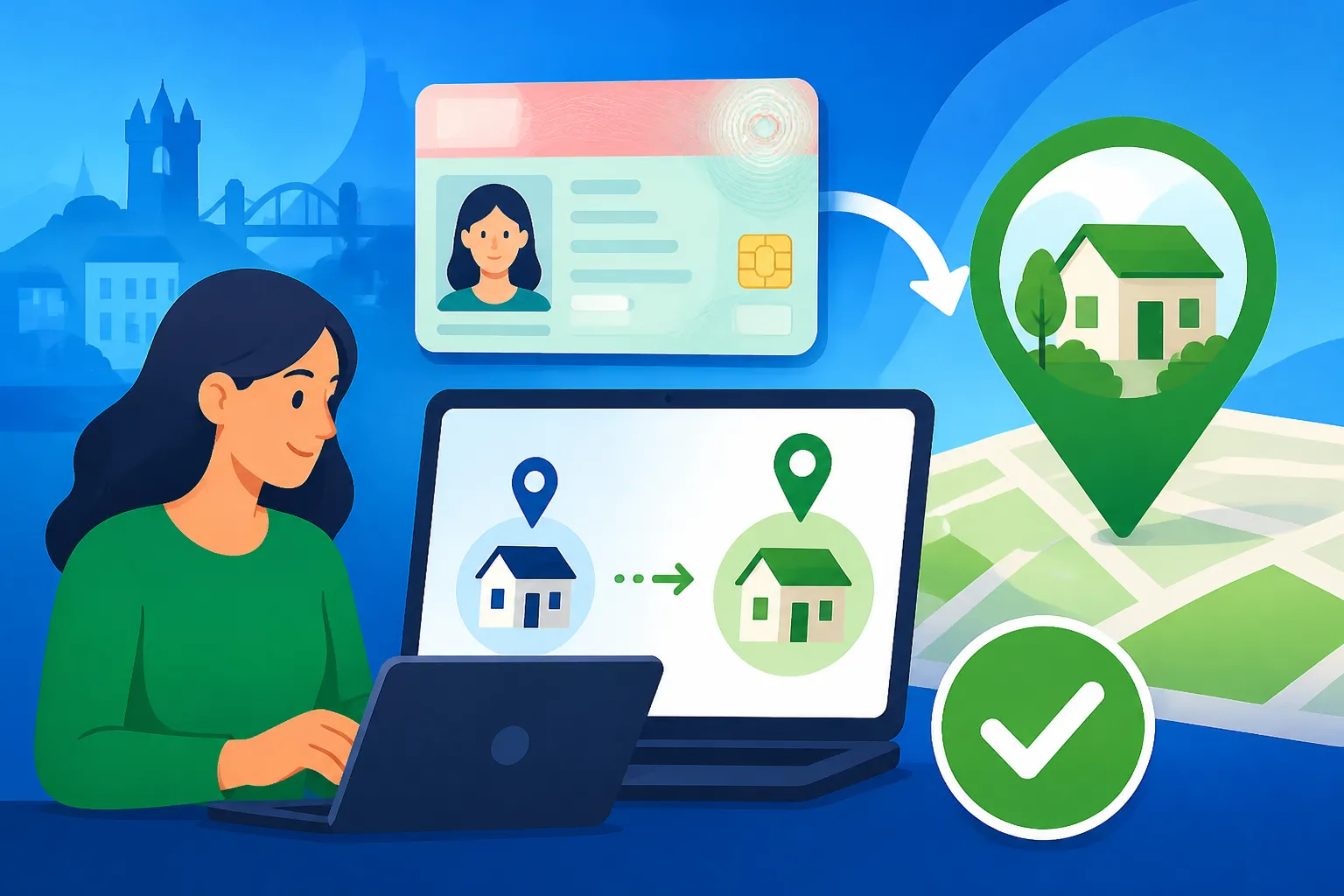
The current AIMA portal is designed to be more intuitive than its predecessor, but it still requires a methodical approach. First, you must ensure you have a "Chave Móvel Digital" (CMD) or a card reader for your Citizen Card if you have one. For most expats with a residence permit, the CMD is the easiest way to log in. It links your phone number to your legal ID, allowing you to sign documents digitally. If you haven't set this up yet, it's worth a trip to a Loja do Cidadão to get it activated.
Once logged in, look for the section titled "Alteração de Morada." You will be prompted to enter your new address exactly as it appears on your CTT (postal service) records. A common mistake is formatting the address incorrectly—make sure the floor number, apartment letter, and postal code are precise. After entering the data, the portal will ask you to upload your supporting documents. This is where your Atestado de Morada or registered lease comes into play. Ensure the scans are clear and under the file size limit, usually 2MB per document.
After submission, there is typically a fee involved for the issuance of a new physical card. The portal will generate a DUC (Documento Único de Cobrança), which is a payment reference. You can pay this through your banking app or at any Multibanco ATM. Knowing How to pay the AIMA residence permit issuance fee (DUC) at a Multibanco ATM is a basic skill every expat needs to master. Once the payment is confirmed, your application moves into the processing phase. If you find the technical side of these portals overwhelming, companies like Bordr can often provide guidance or assistance in navigating the broader administrative landscape in Portugal.
What Happens After You Submit: Timelines and Delivery
Once you’ve hit submit and paid your fee, the waiting game begins. Unlike the old days where you might wait six months for an appointment, the online process is generally faster, but "Portuguese fast" is a relative term. Typically, it takes several weeks for the central system to verify your documents and trigger the printing of a new card. During this time, your old card remains technically valid, but it is wise to carry a PDF receipt of your address change request.
The new card will be sent via CTT registered mail to your new address. This is a critical point: you must ensure your name is clearly visible on your new mailbox. If the mail carrier cannot find your name, they will return the card to the AIMA central office, which triggers a whole new cycle of bureaucratic hell. If you are worried about the delivery, you can use the tracking number provided in your portal. How to track your AIMA residence card delivery via CTT registered mail is a useful habit to develop for all your official documents.
If your current card is due to expire while you are waiting for the address update to process, request its renewal on time and keep the receipt, because the automatic extensions of expired residence documents ended on 15 October 2025. If you are working, you might need to show your employer the proof of your pending application. For more on this, read about what to do when an AIMA appointment delayed: How to prove legal status to Portuguese employers occurs.
Comparison of Address Update Methods in Portugal
| Feature | Online AIMA Portal | In-Person Appointment | Loja do Cidadão (EU only) |
|---|---|---|---|
| Eligibility | Most Residence Permit holders | Exceptional cases/Backlogs | EU/EEA Citizens |
| Typical Wait Time | 4-8 Weeks | 3-12 Months | Immediate (for CRUE) |
| Convenience | High (From home) | Low (Travel required) | Medium (Walk-in/Booking) |
| Cost | Card issuance fee (~€35-€50) | Card issuance fee | Nominal fee for CRUE update |
| Required Tech | Chave Móvel Digital (CMD) | None | None |
Common Pitfalls and How to Avoid Them
One of the biggest traps expats fall into is assuming that changing their address on their residence card automatically updates their address with the Tax Authority (Finanças) and Social Security (Segurança Social). In Portugal, these systems do not always talk to each other. You must manually update your NIF address on the Portal das Finanças. If you don't, your tax mail will still go to your old house. If you originally used a fiscal representative to get your NIF, you may need to "remove" them and update the address to your own Portuguese home. This is a common step for those Changing your NIF address from a foreign country to your Portuguese address once they have officially settled in.
Another common issue is health insurance. If you have private coverage through a provider like Cigna Global, you need to notify them of your move to ensure your policy reflects your current location, especially if your premium is based on your region. More importantly, your public health registration (Número de Utente) needs to be transferred. You will need to take your new residence card to the Centro de Saúde in your new neighborhood to complete the transfer. If you skip this, you might find yourself stuck in a lurch during a medical emergency. Understanding the nuances of Registering with the Centro de Saúde: Getting Your SNS Número de Utente will help you navigate this transition smoothly.
Finally, don't forget the utilities. When you move, you'll be Setting Up Utilities in Portugal: Electricity, Gas, Water, and Internet in your name at the new property. The providers (like EDP or MEO) will ask for your NIF and your residency details. If the addresses across all these documents don't match, it can cause delays in getting your fiber internet or electricity connected. The goal is "administrative harmony"—having the same address on your card, your tax portal, and your utility bills. It takes a bit of legwork upfront, but it prevents massive headaches down the road.
Managing Your Residency During the Transition
While you wait for your new card, life continues. You might need to travel within the Schengen area or renew your driver's license. Generally, traveling within Schengen is fine with your current card and the proof of the address change, but traveling outside the EU can be trickier if your card is near its expiration date. Always keep a digital folder with your lease, your Atestado de Morada, and your AIMA payment receipt.
If you are a digital nomad on a D8 visa or a retiree on a D7, the address change is also a good time to double-check your tax residency status. Moving houses can sometimes trigger questions about where you are spending the majority of your time. If you’re unsure about how your move affects your visa, revisit the D8 Digital Nomad Visa: Do I need an employment contract or are invoices okay? guidelines to ensure your remote work setup remains compliant with your new living situation.
The key to surviving Portuguese bureaucracy is patience and a proactive attitude. The system is designed to be thorough, which often feels like "slow," but once you have that new card in your hand with the correct address, the sense of relief is immense. You are officially "home" in the eyes of the Portuguese state, and you can get back to enjoying the pastéis de nata and the sunset over the Atlantic.
Disclaimer
The information provided in this guide is for informational purposes only and does not constitute legal or professional advice. Immigration laws and digital portal procedures in Portugal are subject to frequent change. Always consult with the official AIMA website or a qualified legal professional regarding your specific residency situation.