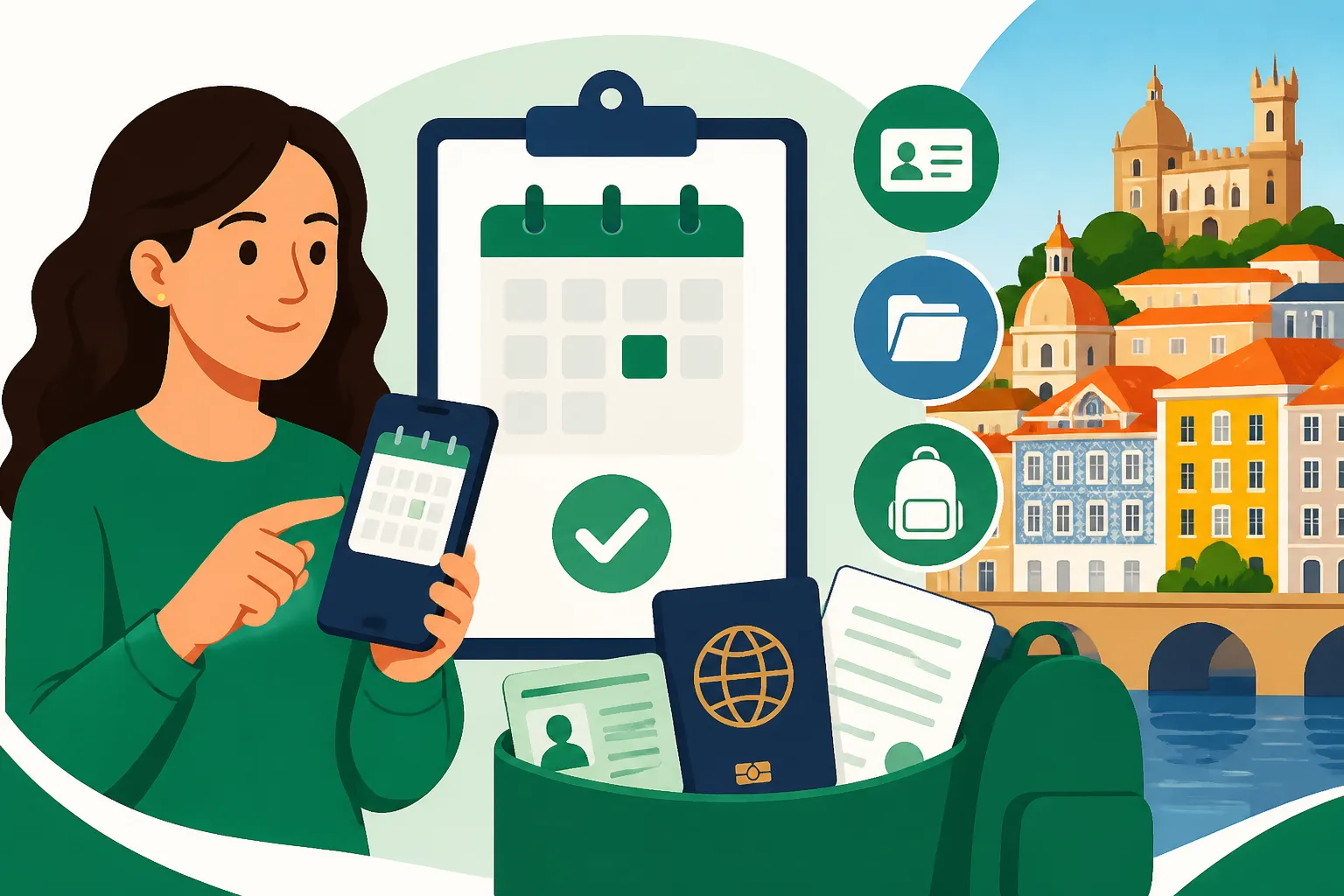
AIMA Appointments in Portugal: How to Book and What to Bring
Oh, the AIMA appointment! Just the phrase can send shivers down the spine of any expat who's been through the Portuguese immigration system. The transition from SEF to AIMA has added another layer of complexity to an already intricate process, leaving many of us feeling adrift in a sea of bureaucracy. This guide aims to cut through the confusion, offering you a veteran expat's candid advice on how to book your AIMA appointment and exactly what documents you need to bring to ensure your visit goes as smoothly as possible.
Understanding AIMA: The New Era of Portuguese Immigration
For years, expats in Portugal navigated the waters of the Serviço de Estrangeiros e Fronteiras (SEF). It was a system with its quirks, delays, and frustrations, but at least we knew it. Then came the big change, and SEF was abolished, replaced by the Agência para a Integração, Migrações e Asilo (AIMA). This transition has been anything but seamless, causing significant backlogs and confusion for countless individuals trying to secure or renew their residency.
From SEF to AIMA: What Changed?
The shift from SEF to AIMA in October 2023 was intended to streamline immigration processes and separate policing functions from administrative ones. SEF's policing duties, such as border control and combating illegal immigration, were transferred to various police forces, while AIMA was created to handle the administrative aspects of integration, migration, and asylum. In theory, this sounds great, right? In practice, however, the change has led to a colossal reshuffling of staff, systems, and procedures. Existing SEF appointment schedules were thrown into disarray, and a new digital portal was launched, often with teething problems that translated into major headaches for applicants. The initial period was characterized by frozen applications, canceled appointments, and a general lack of clear communication, leaving many expats in limbo. You can imagine the collective sigh of frustration that rippled through the expat communities when this happened.
The Role of AIMA Today
AIMA is now the primary agency responsible for managing residence permits, family reunification, asylum requests, and integration support for foreigners in Portugal. This means that whether you're applying for your initial D7 Passive Income Visa Portugal, a D8 Digital Nomad Visa, or trying to understand the Family Reunification Visa in Portugal, AIMA is your point of contact for the actual issuance and renewal of your residence card. The agency's stated goals include improving efficiency, enhancing digital services, and fostering better integration of migrants. While these are noble aims, the reality on the ground has been a slow and often opaque process, with persistent challenges in securing appointments and navigating the new online platform. They are trying to clear AIMA Backlogs, but it's a monumental task.
Booking Your AIMA Appointment: The Digital Maze
Getting an AIMA appointment can feel like winning the lottery. It's often the most anxiety-inducing part of the entire residency process. While there have been improvements, it’s still far from a straightforward experience for many.
The AIMA Portal: Your First (and Often Frustrating) Stop
Your journey begins, and often stalls, at the official AIMA online portal. This portal is supposed to be your one-stop shop for scheduling, managing, and checking the status of your applications. However, anyone who has tried to use it will tell you that it can be a source of immense frustration. Common complaints include slow loading times, confusing navigation, pages that freeze or error out, and, most critically, the persistent lack of available appointment slots. It’s not uncommon to spend hours refreshing the page, only to be met with "Não há vagas disponíveis" (No appointments available). This isn't just a minor inconvenience; it can significantly delay your plans, impact your ability to work, or even cause issues with your bank account if your residence card expires.
Step-by-Step Guide to Online Scheduling
Despite the hurdles, the AIMA portal is currently the primary (and often only) way to book your appointment. Here's a general step-by-step breakdown, but be warned, the system can change without much notice:
- Access the AIMA Portal: Go to the official AIMA website. Look for the "Agendamento" or "Marcações" section, which is Portuguese for "Scheduling" or "Appointments."
- Create/Log In to Your Account: If you're a new user, you'll need to register. This typically involves providing your NIF (Número de Identificação Fiscal) and other personal details. If you already have an account (perhaps from SEF days, though these often needed to be reactivated or recreated), log in.
- Select Your Service: You'll be presented with a list of services. This is crucial. Are you applying for a first-time residence permit (e.g., D7, D8, D2 Entrepreneur Visa), a renewal, or family reunification? Choose carefully, as different services have different document requirements and appointment availabilities.
- Choose Your Location: Select the AIMA service point (Posto de Atendimento) where you wish to have your appointment. For many expats, this is typically Lisbon, Porto, or Faro, but smaller cities like Coimbra or Braga might have less demand.
- Search for Availability: This is where the real challenge often lies. The system will prompt you to select a date and time. Often, you'll see no slots available for weeks, or even months, into the future. This is where patience and persistence become your best friends.
- Confirm Your Appointment: If you miraculously find a slot, act fast! Select it, review all the details, and confirm. You should receive a confirmation email with a unique booking code or reference number. Print this immediately. This confirmation is your golden ticket.
Remember, the system can be finicky. Sometimes it works better in certain browsers, or late at night, or very early in the morning. Don't assume that just because there are no appointments today, there won't be any tomorrow.
Tips for Securing a Slot
Finding an AIMA appointment can feel like a full-time job. Here are some strategies that many expats have found helpful:
- Be an Early Bird (or a Night Owl): Many successful applicants report that new slots often appear early in the morning (e.g., 7-9 AM local time) or late at night when the system is less congested. It’s a bit of a rumor mill, but consistent checking during these times can sometimes pay off.
- Check Different Locations: Don't limit yourself to the major cities. While it might involve more travel, looking for appointments in smaller towns or less popular regions might yield results. A quick train ride could be worth avoiding months of delay.
- Refresh, Refresh, Refresh: This is practically a mantra for AIMA appointment seekers. Keep hitting that refresh button. Slots can open up unexpectedly due to cancellations or new allocations.
- Join Expat Forums and Groups: Facebook groups like "Americans & Friends in Portugal" or "Digital Nomads Portugal" are invaluable resources. Members often share real-time updates on when and where slots appear, or tips on what strategies worked for them. Just be wary of misinformation and never pay someone who claims they can get you an appointment quickly, as these are often scams.
- Consider Professional Help: If you're really struggling, some immigration lawyers or specialized services might offer assistance with booking appointments as part of a larger relocation package. While this can be costly, it might save you significant time and stress. Services like Bordr can help you with essential initial steps like getting your NIF, which is a prerequisite for any AIMA interaction.
Documents to Bring: The Essential Checklist (and Why It's Never Simple)
Once you’ve wrestled an appointment from the AIMA portal, the next hurdle is knowing exactly what to bring. This is where many people get tripped up, often because the official lists can be vague, outdated, or just plain confusing. Always remember, it's better to over-prepare than to be sent away for missing a single document.
General Requirements for All Applicants
No matter your visa type, there’s a core set of documents you’ll almost certainly need for your AIMA appointment. Treat this as your absolute minimum:
- Passport: Your valid passport, plus copies of all pages with stamps or visas. Ensure it has at least six months validity remaining.
- Visa (if applicable): If you entered Portugal on a D-visa (e.g., D7, D8), bring the original visa sticker from your passport, along with photocopies. This is your initial authorization to apply for residency.
- Proof of Appointment: The printed confirmation of your AIMA appointment. Do not forget this!
- Two Passport-Sized Photos: Recent, color, passport-style photos. Make sure they meet standard EU requirements (white background, no glasses, neutral expression). You might even need to bring more than two, just in case.
- Proof of Accommodation: A rental contract (Contrato de Arrendamento) registered with Finanças is ideal. If you're a homeowner, bring your deed (Escritura). If you arrived with temporary accommodation, you might need to prove an ongoing commitment, like a long-term Airbnb reservation or a declaration from a host. For visa applications, proof of accommodation for D7 and D8 Visas typically requires a 12-month lease.
- Proof of Sufficient Funds: Bank statements from a Portuguese bank account showing you meet the minimum income requirements for your visa type. For D7, this means Portugal D7 Visa Income Requirements 2026, usually tied to the Portuguese minimum wage. For D8, it’s closer to D8 Visa Income Requirements 2026.
- NIF (Número de Identificação Fiscal): Your Portuguese tax identification number. You can often get this remotely with services like Bordr if you're not yet in Portugal.
- NISS (Número de Identificação da Segurança Social): Your Social Security number. If you're employed or self-employed, you'll need this. Learn how to get your NISS online.
- Criminal Record Check: An apostilled criminal record check from your home country (and any country you've resided in for the past year or more). This typically needs to be recent (within 3 months). Preparing the FBI Criminal Record Check and Apostille for Portugal Visas is a common step for US citizens.
- Health Insurance: Proof of private health insurance in Portugal or registration with the public SNS (Serviço Nacional de Saúde) once you have your NISS. For visa applications, Travel Insurance vs Private Health Insurance for Your Initial Visa Application often means a robust private plan like those offered by Cigna Global.
- Application Forms: Any specific forms required by AIMA for your application type, usually downloadable from their portal. Fill them out thoroughly beforehand.
Visa-Specific Document Deep Dives
Beyond the general list, each visa type has its own particular demands.
- D7 Passive Income Visa:
- Passive Income Proof: Documents proving a consistent, regular passive income (pensions, dividends, rental income). This cannot be salary from active employment. Bank statements, pension statements, property rental agreements, and investment portfolio statements are common. Does a US Social Security pension count as passive income for the Portugal D7? Yes, it absolutely does!
- Bank Account: Proof of a Portuguese bank account, preferably with a substantial deposit (often cited as 12-18 months of minimum wage). How much bank savings do you actually need for the D7 Visa in 2026? It's generally around €920 (minimum wage) multiplied by 12 months for the applicant, plus additional percentages for dependents.
- D8 Digital Nomad Visa:
- Proof of Remote Work: An employment contract from a foreign company or service contracts/invoices if you're a freelancer. This needs to demonstrate at least four times the Portuguese minimum wage (€3,680 as of 2026, though always check the latest figure). D8 Digital Nomad Visa: Do I need an employment contract or are invoices okay? Both are acceptable, but clear evidence of consistent income is key.
- Declaration of Remote Work: A signed statement from your employer (or yourself if self-employed) confirming that you can perform your duties remotely.
- Tax Residency Proof: While not strictly for the initial AIMA appointment, be prepared to discuss your tax residency.
- Family Reunification Visa:
- Proof of Relationship: Marriage certificates, birth certificates, and sometimes even proof of stable union (União de Facto) for unmarried partners. All typically need to be apostilled and translated.
- Sponsor's Documents: The main applicant (the one already resident in Portugal) needs to provide their residence card, NIF, NISS, proof of accommodation, and proof of financial means to support the family. Family Reunification: How long does AIMA take to process children in 2026? Processing times can vary significantly, so prepare for a wait.
- Dependent's Documents: Passports, criminal records, and photos for each family member.
- D2 Entrepreneur Visa:
- Business Plan: A detailed business plan outlining your venture in Portugal.
- Proof of Investment: Evidence of capital investment in your business.
- Company Registration: If applicable, documents showing your company is registered in Portugal.
The Importance of Translations and Apostilles
This cannot be stressed enough: Portuguese authorities are sticklers for official documentation. Any document not issued in Portuguese (or English, sometimes) must be translated, and often, that translation needs to be certified. Furthermore, many official documents, particularly criminal record checks, marriage certificates, and birth certificates, require an Apostille. This is an international certification that authenticates the origin of a public document.
- Translations: Don't just get a friend to translate. You need a certified translator (tradutor certificado) or one recognized by the Portuguese consulate. Services like RushTranslate can provide certified translations that are often accepted. Always clarify with the consulate or AIMA if the translation needs to be done by a Portuguese-based certified translator or if an international certified translation will suffice.
- Apostilles: Obtaining an Apostille depends on where the document was issued. In the US, for example, a state document (like a birth certificate) gets an Apostille from the Secretary of State in that state, while federal documents (like FBI background checks) get one from the US Department of State. How to expedite an Apostille for US FBI background checks for Portugal is a common concern, as processing times can be long.
Table: Common Documents for AIMA Appointments
| Document Category | General Requirements | Specific to Visa Type (Examples) | Certification/Translation Needs |
|---|---|---|---|
| Identity & Status | Valid Passport (with copies), Visa Sticker (if applicable), Passport Photos, Appointment Confirmation | N/A | N/A |
| Financial Proof | Portuguese Bank Statements, Proof of Funds (savings/investments) | D7: Pension statements, rental contracts; D8: Employment contract/invoices (showing 4x min. wage) | Financial documents usually don't need apostille, but translation may be requested. |
| Address Proof | Rental Contract (registered with Finanças), Property Deed, Atestado de Morada (from Junta de Freguesia) | N/A | N/A |
| Criminal Background | Apostilled Criminal Record Check from home country and recent residences | N/A | Apostille & certified translation (if not English/Portuguese) |
| Health & Social | Private Health Insurance or SNS registration; NIF (tax number); NISS (social security number) | N/A | N/A |
| Application Specific | AIMA Application Forms | D2: Business Plan, Proof of Investment; Family: Marriage/Birth Certificates, Proof of Stable Union | Marriage/Birth Certificates require Apostille & certified translation |
Navigating the AIMA Appointment Day: Expect the Unexpected
You've got your appointment, your folder of documents is bursting at the seams, and you're ready. Almost. The actual appointment day can still be a bit of a rollercoaster.
What to Expect at the Office
AIMA offices, much like the old SEF offices, can be bustling and sometimes a bit chaotic.
- Arrival: Arrive early! At least 30 minutes before your scheduled time. Parking can be difficult, and you might need time to find the right entrance or counter.
- Check-in: You'll usually check in at a reception desk, presenting your appointment confirmation and passport. You'll then be given a number and directed to a waiting area.
- The Wait: Prepare to wait, even with an appointment. Delays are common. Bring a book, your phone (fully charged), or anything to pass the time.
- Biometrics: When your number is called, you'll typically go to a counter or small office where an AIMA agent will review your documents, take your fingerprints, and capture your digital photo for the residence card. This is the moment of truth for your document prep.
- The Interview (brief): It’s not a full-blown interview, but the agent might ask questions about your stay, your income, or details from your documents. Answer clearly and honestly.
- Payment: You'll usually pay a fee for the issuance of your residence card. This can often be done via Multibanco or card at the office. How to pay the AIMA residence permit issuance fee (DUC) at a Multibanco ATM is a helpful skill to have.
- Confirmation of Receipt: You should receive a printed document (sometimes called a "proof of approval" or "declaração de aprovação") confirming that your application has been processed and your residence card is being produced. This is invaluable, especially if you need to travel or prove legal status while waiting for your card. What does AIMA's "Proof of Approval" declaration mean for international travel? It generally means you are legally allowed to remain in Portugal and, in many cases, travel within the Schengen Area, but it's not a passport replacement.
Language Barriers and How to Cope
While AIMA aims to be helpful, not all agents will speak fluent English, especially outside of Lisbon or Porto. This can add to the stress.
- Learn Basic Portuguese: Even a few phrases can go a long way. "Bom dia," "Obrigado/a," "Não falo Português muito bem," and "Pode falar Inglês, por favor?" can make a difference. Websites like PortuguesePod101 can be a great starting point for language learning.
- Bring a Translation App: Google Translate or similar apps can be lifesavers for understanding instructions or questions.
- Bring a Portuguese-Speaking Friend (if allowed): If you have a trusted friend who speaks Portuguese, ask if they can accompany you. Some AIMA offices allow this, others might prefer you use a professional interpreter. Clarify beforehand.
- Stay Calm: Frustration is natural, but a calm, polite demeanor can often help bridge communication gaps. Do you need to speak fluent Portuguese to pass the AIMA interview? Generally, no, but having some basic understanding or a translator helps immensely.
Common Pitfalls and How to Avoid Them
The last thing you want is to have your appointment derailed after all that effort.
- Missing Documents: This is the number one reason for issues. Double-check, triple-check, and then have someone else double-check your checklist against the AIMA requirements. Bring originals and at least two copies of everything.
- Expired Documents: Ensure your criminal record check, passport, and any other time-sensitive documents are still valid within the required timeframe.
- Incorrect Photos: Ensure your photos meet strict passport photo standards. They are very particular about this.
- Late Arrival: Punctuality is appreciated, especially in bureaucratic settings. Being late could mean losing your slot entirely.
- Negative Attitude: AIMA staff are often overwhelmed. Being patient and respectful, even when frustrated, will serve you well.
- Unregistered Rental Contracts: If your rental contract isn't registered with Finanças, it might not be accepted as valid proof of address. Ensure your landlord has taken this crucial step.
After Your Appointment: The Waiting Game Begins
Congratulations, you've made it through the appointment! Now comes the next phase of Portuguese immigration: the wait.
Tracking Your Residence Card
Once your appointment is complete, AIMA will process your application and, if approved, send your residence card to you.
- AIMA Portal Status: You can try to check the status of your application on the AIMA portal, though updates are often slow or vague.
- CTT Delivery: Your residence card will typically be sent via registered mail (correio registado) by CTT, the national postal service. It's usually delivered to the address you provided. How to track your AIMA residence card delivery via CTT registered mail is crucial here. Make sure someone is home to sign for it, or you'll need to pick it up at the nearest CTT office within a limited timeframe.
- SMS Notification: Sometimes, you might receive an SMS notification when your card has been dispatched.
What to Do If Your Card is Delayed
AIMA delays are a common source of stress. Your card might take weeks or even months to arrive.
- Keep Your Proof of Approval: The declaration you received at your appointment is vital. It proves your legal status while you wait.
- Carry a Copy: Always carry a copy of your expired residence permit (if renewing) and your AIMA proof of approval, especially when traveling within Portugal or the Schengen Area. Can I leave Portugal to visit France while waiting for my first AIMA card? Generally yes, with your proof of approval, but check current travel rules for Schengen.
- Contact AIMA (if necessary): If the delay is excessive (e.g., more than 3 months with no updates), you can try contacting AIMA through their helpline or in person. However, managing expectations is key, as direct updates are not always readily available.
- Legal Advice: In extreme cases, if your employer, bank, or other essential services are causing issues due to your expired card and the delay, you might consider seeking legal advice. AIMA appointment delayed: How to prove legal status to Portuguese employers often involves presenting the proof of approval from AIMA.
Understanding Your New Residence Permit
When that shiny new card finally arrives, take a moment to celebrate! But also, understand what it means.
- Validity: Your first residence permit (for D7, D8, etc.) is typically valid for two years. Renewals are usually for three years.
- Rights: This card grants you legal residency in Portugal, allowing you to live, work, open bank accounts, access public services like the SNS, and travel freely within the Schengen Area. Using your Portuguese residence card as a valid ID across the European Union is one of its key benefits.
- Renewal Process: Mark your calendar! Start the renewal process well in advance (typically 3-4 months before expiration). The process is similar to the initial application, often requiring updated financial proof and other documents. How to Renew Your Portuguese Residence Permit Online via the AIMA Portal will be your guide for future renewals.
This journey through AIMA appointments can be daunting, but with careful preparation, persistence, and a healthy dose of patience, you will get through it. Remember, countless expats have navigated these very same waters, and you're not alone in the experience.
Disclaimer
The information provided in this guide is for general informational purposes only and does not constitute legal advice. While we strive to keep the information up-to-date and accurate, immigration laws and procedures in Portugal can change rapidly. Always consult with an official AIMA representative, a qualified immigration lawyer, or an official Portuguese consulate for the most current and personalized advice regarding your specific situation. We are not responsible for any decisions made based on this information.