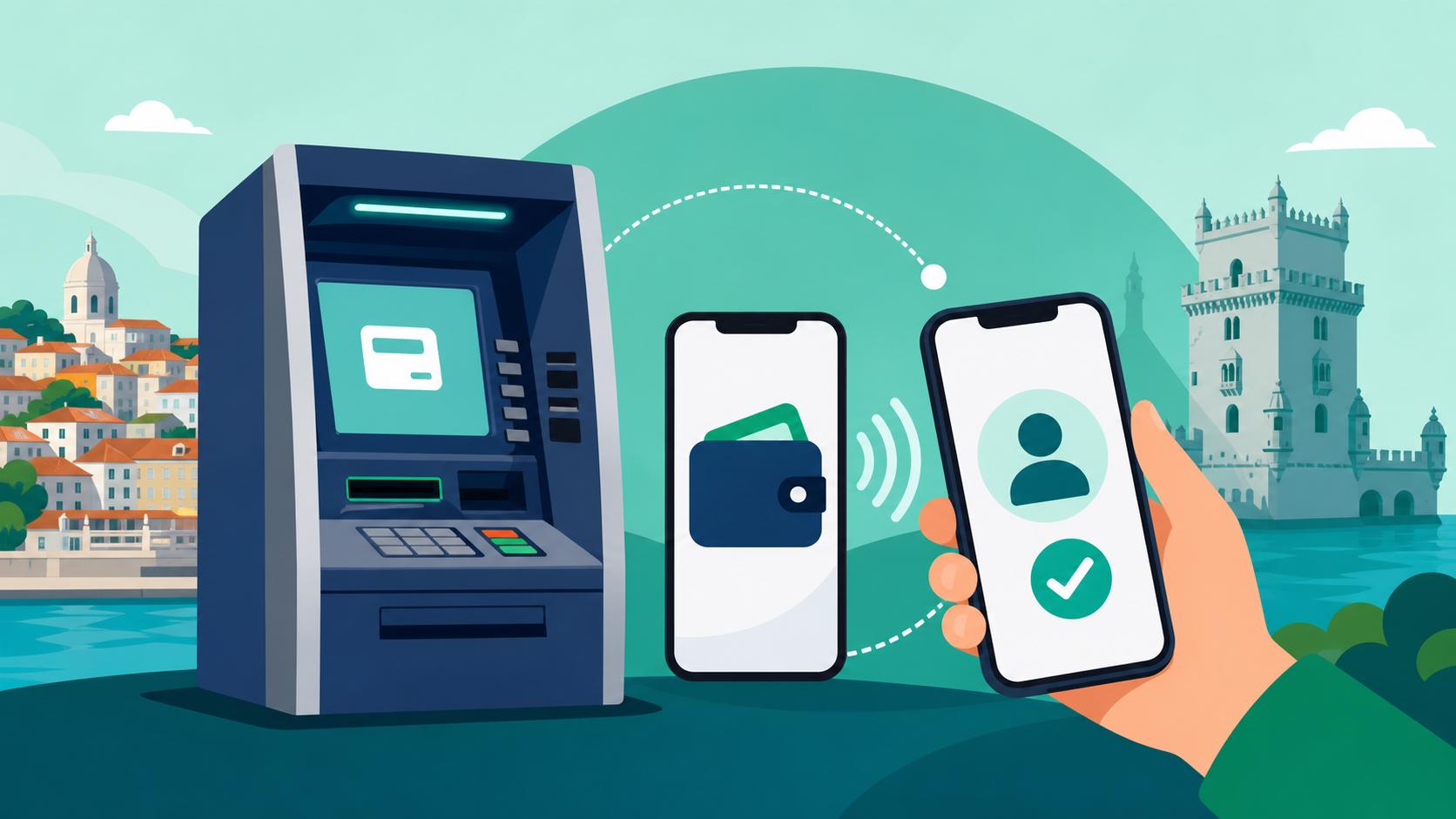
The Multibanco System and MB Way: Portugal’s Unique Payment Network
Disclosure: This article contains affiliate links. If you buy through them, we may earn a commission at no extra cost to you. Read our full disclosure.
You are standing at a small, sun-drenched "Pastelaria" in a quiet corner of Graça, the smell of fresh espresso filling the air. You reach for your sleek, metal international travel card to pay for a €1.50 "café e pastel," only to be met with a polite but firm shake of the head and the dreaded phrase: "Só Multibanco." I remember the sheer confusion of my first week in Lisbon, holding a handful of useless premium credit cards while staring at a cashier who just wanted a local payment. This guide solves the mystery of Portugal's unique financial ecosystem, ensuring you never feel like a lost tourist at the checkout counter again.
Understanding the Multibanco Powerhouse
The Multibanco system is far more than just a network of ATMs; it is the central nervous system of Portuguese life. Developed in the 1980s, long before the rest of the world was thinking about integrated interbank networks, Multibanco allowed every bank in the country to talk to one another seamlessly. For an expat, understanding this isn't just a matter of convenience—it is a requirement for survival. Unlike the US or the UK, where Visa and Mastercard dominate every single terminal, Portugal has a proprietary layer that sits on top of or alongside these international giants.
When you see a sign that says "Multibanco" in a shop window, it generally means they accept cards issued by Portuguese banks. Many smaller establishments, particularly local family-run restaurants, hardware stores, and traditional cafes, only pay for the Multibanco processing service and skip the more expensive international Visa/Mastercard processing fees. This is why Opening a Bank Account in Portugal: Best Banks for Foreigners and Expats should be one of the first things on your to-do list. Without a local card, you are essentially locked out of the "local" price economy and forced to rely on larger, more expensive chains that cater to tourists.
Not Just an ATM: The Multibanco Philosophy
In most countries, an ATM is a machine where you withdraw cash and perhaps check your balance. In Portugal, the Multibanco terminal is a high-functioning kiosk that can handle nearly every administrative task in your life. I have spent many mornings standing at a machine in a shopping mall, not to get Euros, but to pay my monthly electricity bill or top up my phone. The philosophy behind the system is "total integration."
Because the system is owned by SIBS (Sociedade Inter-Bancária de Serviços), it acts as a trusted intermediary between the citizen, the banks, the utility companies, and the government. This is why you will see locals performing complex maneuvers at the machine. You can buy hunting licenses, pay for your kid's school lunch, or even donate to specific charities. For those of us coming from systems where you have to log into five different websites to pay five different bills, the "all-in-one" nature of Multibanco is actually a breath of fresh air once you get past the initial learning curve.
Why Your International Card Might Fail at the Local Shop
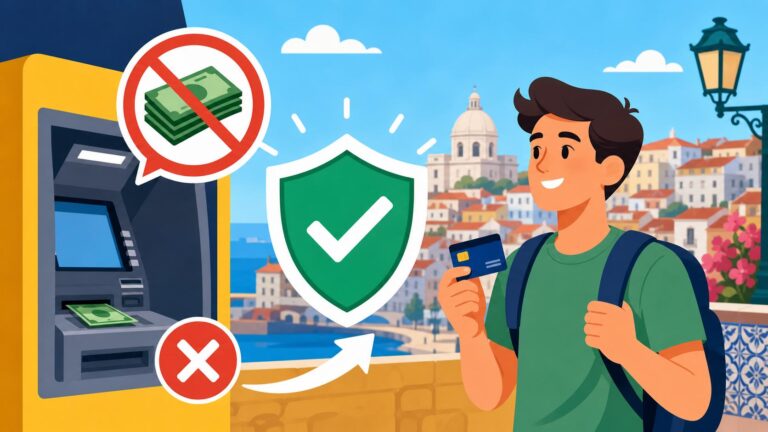
It is a common frustration: your card works perfectly at a high-end restaurant in Príncipe Real, but is rejected at the "Talho" (butcher) around the corner. This happens because many Portuguese payment terminals are configured to prioritize the Multibanco network. If a merchant's contract only covers the domestic network, your non-Portuguese card simply won't be recognized. The terminal expects a specific domestic chip handshake that your foreign card doesn't have.
This is also why Credit cards in Portugal: Why debit cards (Cartão de Débito) are preferred by locals. In the Portuguese mindset, "crédito" is for large, planned purchases, while the Multibanco debit card is for daily life. If you are relying on a card from home, even a versatile one like Wise, you might still run into the "Só Multibanco" wall. While Wise is an incredible tool for Using Wise to pay your first month's rent and deposit to a Portuguese landlord, it is technically a foreign-issued card. To truly navigate the country like a local, you eventually need that silver Multibanco logo on the back of your plastic.
Mastering MB Way: The Essential Expat App
If Multibanco is the hardware of the Portuguese payment world, MB Way is the software that has revolutionized it. It is essentially an app that links to your Portuguese phone number and your Portuguese bank account. Think of it as a mix between Venmo, Zelle, and Apple Pay, but with significantly more utility. You can send money to a friend just by knowing their phone number, but you can also generate "virtual credit cards," withdraw cash from an ATM without your wallet, and pay for your groceries via a QR code.
I personally use MB Way at least three times a day. Whether I am splitting a "frango assado" dinner with friends or paying for a taxi, the "Enviar Dinheiro" feature is instantaneous and, for most bank accounts, completely free of charge. It has become so ubiquitous that even the most "old school" vendors at the municipal markets often have a printed QR code or a phone number ready for an MB Way transfer. It has effectively killed the "I don't have change" excuse that used to plague small transactions.
How MB Way Changed Daily Life in Portugal
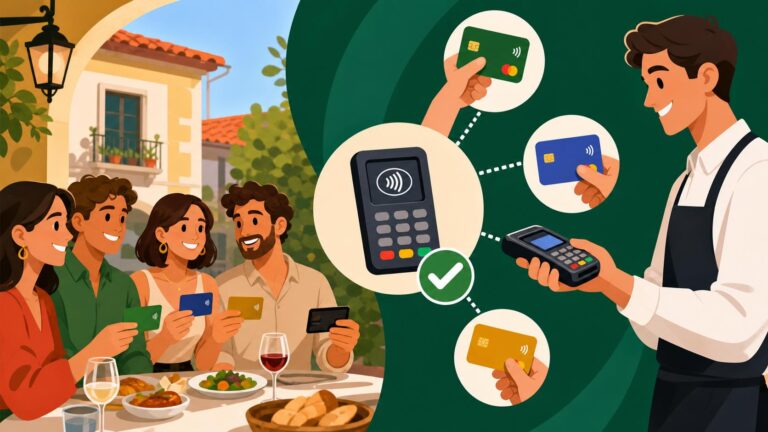
Before MB Way, splitting a bill at a restaurant was a logistical nightmare involving five people trying to use different cards on one terminal—a practice that still draws sighs from Portuguese waiters. Now, one person pays the bill, and everyone else "MB Ways" their share in seconds. But the utility goes deeper. The "Cartões Virtuais" (Virtual Cards) feature is a lifesaver for security. You can create a one-time-use credit card with a specific spending limit to use on a website you don't entirely trust. If the site is hacked, that card data is already useless.
Furthermore, the "Levantar Dinheiro" (Withdraw Money) feature is a stroke of genius. If you lose your wallet or simply forget it at home, you can generate a code in the app, type that code into any Multibanco ATM, and the machine will spit out cash. It’s a level of digital integration that often surprises newcomers from the US or Northern Europe. You will also find that many online retailers in Portugal have an "MB Way" button at checkout. You click it, a notification pops up on your phone, you enter your PIN, and the transaction is done. No more typing in long card numbers and CVC codes.
Setting Up MB Way with a Portuguese Phone Number
The setup process is the one area where expats frequently stumble. To use MB Way, you generally need two things: a Portuguese bank account and a Portuguese mobile number. The app is tied very strictly to these two identifiers for security reasons. Many expats try to link their home country number, which leads to the common issue of Linking your foreign phone number to MB Way (and why it usually fails). The system is designed to be a closed, secure loop within the Portuguese infrastructure.
To set it up, you usually need to visit an ATM. You insert your Portuguese debit card, select "MB Way," enter your Portuguese mobile number, and set a six-digit PIN. Then, you download the app and follow the prompts. It feels a bit 1990s to have to go to a physical machine to activate an app, but this is the Portuguese way of ensuring that the person holding the card is the same person setting up the digital access. Once it's active, you’ll wonder how you ever lived without it.
Practical Uses for Multibanco ATMs
When you walk up to a Multibanco machine, the menu can be overwhelming. There are dozens of options, and if your Portuguese is still a work in progress, it can feel like you’re trying to disarm a bomb. However, once you understand the logic of "Pagamentos" (Payments), a whole world of administrative ease opens up. The most important thing to look for on any bill or invoice you receive is a small box containing an "Entidade" (Entity), "Referência" (Reference), and "Montante" (Amount).
This "triad" is how almost all official business is conducted in Portugal. Whether you are paying your rent, your internet bill, or a fine, you don't send a check or a bank transfer in the traditional sense. You "pay a service" at the ATM or via your home banking app using these three numbers. It is an incredibly efficient way to ensure the money goes exactly where it needs to go without the risk of typos in an IBAN.
Paying Taxes, Tolls, and Utilities
One of the most common uses for the ATM for an expat is handling the less glamorous side of living in paradise. For example, if you own a car, you have to pay the IUC (Individual Vehicle Tax) every year. Instead of waiting for a letter or navigating a confusing government portal, you can simply take your reference number to the machine. The same applies to How to pay a Portuguese traffic fine (Multa) using the Portal das Finanças if you were a bit too heavy on the gas pedal on the A2 highway.
Utilities are even easier. While most people set up a direct debit (débito direto), there are times when a payment fails or you have a one-off charge. The "Pagamento de Serviços" menu is your best friend here. You can even pay your social security contributions if you are working as a freelancer. This high level of utility is why you will often see a line at the Multibanco on the first of the month; it’s not people getting cash, it’s people settling their lives. Check out this guide on How to use the Multibanco ATM network to pay taxes, tolls, and utility bills for a step-by-step tutorial on the menu navigation.
Loading Public Transport Passes and Social Security
For those living in major hubs like Lisbon or Porto, the Multibanco is also your ticket to the city. You can top up your Navegante Pass Lisbon: How to get the €40 monthly unlimited transit card directly at any ATM. You just insert your transport card into the slot (yes, the same slot as your bank card), follow the prompts for "Transportes," and pay with your debit card. It beats standing in the massive lines at the Metro stations, especially during the tourist-heavy summer months.
Beyond transport, the system allows for a deeper level of civic participation. You can pay your "Segurança Social" (Social Security) if you are a "Trabalhador Independente" (Freelancer). Every month, once you've calculated your earnings, you generate a reference and pay it at the machine. It’s an immediate, confirmed transaction that reflects in the government's system almost instantly. This tight integration makes it much easier for your Finding an English-Speaking Certified Accountant (Contabilista Certificado) to track your payments and ensure you are in good standing with the tax authorities.
Comparing Modern Payment Options for Expats
While the Multibanco system is the local king, modern expats often balance their finances across several platforms. You might earn in USD or GBP, save in a high-yield account in Germany, and spend in Euros in Lisbon. This multi-app approach is very common in the digital nomad community. The key is knowing which tool to use for which specific task so you don't lose a fortune in hidden currency conversion fees or "non-local card" surcharges.
For instance, many of us use Trade Republic as a secondary "spending and saving" hub. Their card offers a "Saveback" feature that invests a small percentage of every purchase into a stock or ETF of your choice. While you can't use a Trade Republic card to pay a Portuguese "Entidade/Referência" at an ATM, it is a fantastic way to handle your e-Fatura guide: Why cashiers ask for your NIF at the supermarket purchases at big retailers like Continente or Pingo Doce, where international cards are accepted.
Using Wise and Digital Wallets in Portugal
Wise remains a staple in the expat toolkit for its transparency. If you are moving a large sum of money from home to buy property or pay a deposit, the exchange rates are usually unbeatable. However, don't make the mistake of thinking your Wise digital wallet can completely replace a Portuguese bank. You will still find that Portuguese government sites or smaller local businesses won't accept the IBAN provided by an international neobank for certain official direct debits.
It is wise to use a "Hybrid Model." Use Wise for moving money between currencies and for the convenience of Apple/Google Pay in major stores. But keep a local account with one of the Traditional Portuguese Banks: Millennium, CGD, Santander, and Novobanco for your MB Way needs and for paying those specific Portuguese references. This ensures you have the best of both worlds: the low fees of a neobank and the total accessibility of the Multibanco network.
Trade Republic and Saving while Spending
For the financially savvy expat, Trade Republic has become a bit of a "life hack." Since they offer competitive interest on uninvested cash, many expats keep their "rainy day" fund there rather than in a Portuguese savings account, which often offers near-zero interest. When you use their card in Portugal at any major retailer, you're not just spending; you're earning a bit back. It’s a great way to offset the slightly higher cost of living in cities like Lisbon or Porto.
However, be aware that these international neobank cards do not support the "Multibanco" protocol. If a shop owner asks "Multibanco ou Visa?", and you are using Trade Republic, you must say "Visa." If their machine doesn't support Visa, your card will be declined. This is the moment where you either reach for your local Portuguese bank card or your cash.
| Payment Method | Best For | Portuguese Reference Payments? | MB Way Compatible? |
|---|---|---|---|
| Local Portuguese Bank | Daily life, rent, utilities, MB Way | Yes (Full Support) | Yes |
| Wise | International transfers, travel spending | No | No |
| Trade Republic | Savings, cash-back on big retailers | No | No |
| MB Way App | Splitting bills, QR payments, virtual cards | Yes (via App) | N/A |
| Cash (Euros) | Rural markets, very small cafes | No | No |
Security and Avoiding Scams
Portugal is generally a very safe country, but like any place where a specific technology becomes ubiquitous, scammers have found ways to exploit it. The Multibanco system itself is incredibly secure, but MB Way has become a target for social engineering. As an expat, you are often seen as a "softer" target because you might not be fully aware of how the system is supposed to work.
The most important rule is this: MB Way is for sending or receiving money, but you should never have to "activate" it at an ATM to receive a payment from someone else. If you are selling something on a platform like OLX or Facebook Marketplace and a buyer tells you they will pay via MB Way but you need to go to an ATM and follow their instructions, hang up immediately. They are trying to trick you into linking your bank account to their phone number, which gives them full access to your funds.
The MB Way "OLX" Scam and How to Stay Safe
Many expats fall for the OLX scam. The scammer contacts you, acting very eager to buy your old sofa or surfboard. They say they want to pay by MB Way but claim your account "isn't authorized" to receive large amounts. They then guide you to a Multibanco machine and ask you to enter a specific code and their phone number under the "MB Way" menu. In reality, you are authorizing their phone to be the primary device for your bank account.
To stay safe, remember that receiving money on MB Way is passive. Someone sends it to your number, and it appears in your account. You don't need to do anything at an machine to "accept" a transfer. If you stick to this rule, MB Way is one of the safest and most convenient tools in your pocket. Always keep your PIN private and never share the codes generated by the app with anyone, no matter how helpful they seem to be.
Binance and Using Crypto for Payments in Portugal
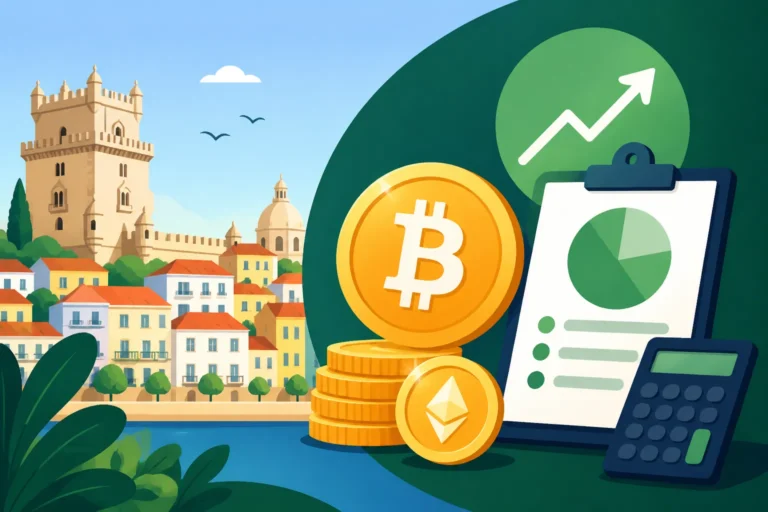
For the more adventurous expat, Portugal has long been a hub for cryptocurrency enthusiasts. While you can't walk into a "Padaria" and pay for a croissant with Bitcoin just yet, the landscape is changing. Many people use the Binance card to spend their crypto gains. Like the other neobanks, the Binance card works on the Visa network, so it faces the same limitations as Wise or Trade Republic in small shops.
However, if you are deep into the crypto world, it is vital to understand the Cryptocurrency Tax Laws in Portugal 2026: 28% Rule vs 1-Year Exemption. While spending crypto via a card is convenient, each transaction could technically be a taxable event depending on how long you've held the assets. Portugal is no longer the "tax-free tax haven" it once was for crypto, so using these cards requires a bit more record-keeping than a standard Multibanco card. Always consult with a professional if you are moving large amounts of wealth through digital assets.
Summary Table of Payment Methods
| Situation | Recommended Method | Why? |
|---|---|---|
| Local Cafe (Bill < €5) | Cash or Local MB Card | Many don't accept foreign cards for small amounts. |
| Splitting Dinner with Friends | MB Way | Instant, free, and everyone has it. |
| Paying Monthly Rent | ATM (Entidade/Ref) | Most secure way to ensure the landlord receives it. |
| Buying a Car | Bank Transfer / MB Card | Higher limits and paper trail. |
| Online Shopping (Global) | MB Way Virtual Card | Extra layer of security against hacking. |
| Receiving Salary (USD/GBP) | Wise | Best exchange rates for conversion to EUR. |
Money and Finance Disclaimer
The information provided in this article is for informational and educational purposes only and does not constitute financial, legal, or tax advice. Financial regulations and systems in Portugal, including the Multibanco network and tax laws regarding cryptocurrency or NHR status, are subject to change. While we strive to keep the information up to date, we recommend consulting with a certified accountant, legal professional, or financial advisor who is familiar with the specific requirements for expats in Portugal before making significant financial decisions. All brands mentioned, including Wise, Trade Republic, and Binance, are for contextual reference and do not imply an endorsement of their specific financial products.