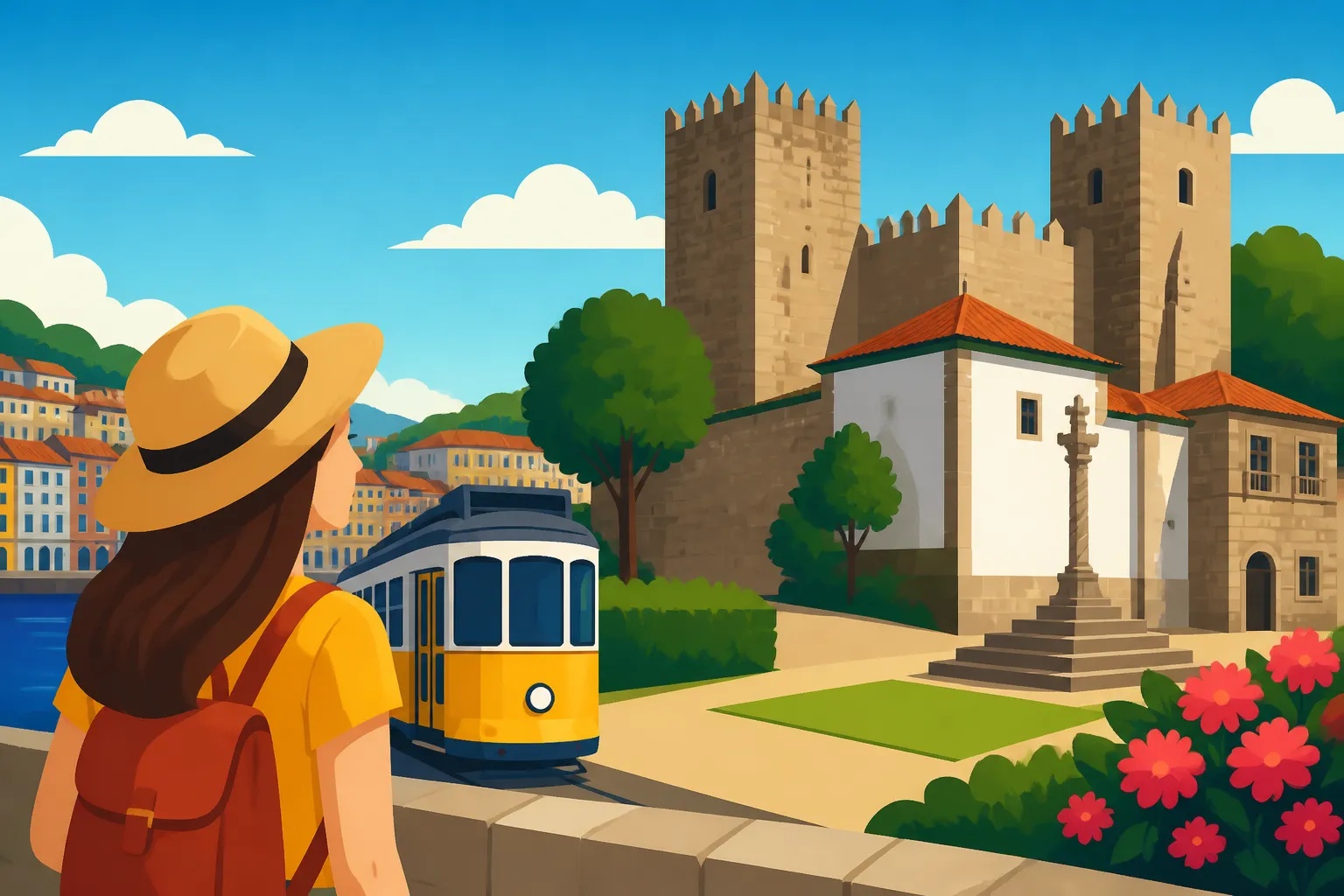
How to Take a Day Trip to Guimarães From Porto
Disclosure: This article contains affiliate links. If you buy through them, we may earn a commission at no extra cost to you. Read our full disclosure.
So, you're soaking up all the charm and vibrancy of Porto, maybe you've walked the Ribeira countless times and are starting to feel that familiar expat itch to explore a little further, to uncover another slice of Portugal's rich history. Trust me, I get it – sometimes you just need a change of scenery, a breath of fresh air, but figuring out the logistics of a day trip can feel daunting in a new country. Well, my friends, a journey to Guimarães is the perfect antidote, and this comprehensive guide is here to demystify every step of getting there from Porto and making the most of your visit.
Why Guimarães Deserves a Spot on Your Itinerary
Before we even talk about tickets and schedules, let's just gush a little about Guimarães. This isn't just another pretty Portuguese town; it's quite literally the birthplace of the nation. Imagine walking through streets that have seen the very foundations of Portugal laid, absorbing centuries of history with every step. It’s a designated UNESCO World Heritage site, and for good reason – the entire historic center feels like a beautifully preserved, living museum.
The city is a stark yet harmonious contrast to Porto. While Porto buzzes with a grand, riverside energy, Guimarães offers a more intimate, medieval embrace. It's quieter, perhaps a little more contemplative, allowing you to really feel the weight of its historical significance. For an expat like myself, it's a constant reminder of how deeply rooted this country's identity is, and how much there is to discover beyond the big cities. You'll find yourself marveling at the ancient architecture, picturing knights and dukes walking the same cobbled paths.
Navigating Your Way from Porto to Guimarães
Getting to Guimarães from Porto is surprisingly straightforward, and you have a few excellent options depending on your preference for speed, flexibility, and cost. I've tried them all, from sweating it out on a local bus to the relaxed rhythm of the train, and each offers a unique experience.
Train Travel: The Scenic & Stress-Free Choice
For many, myself included, the urban train is the quintessential Portuguese day trip experience. It’s affordable, reliable, and offers a glimpse into local life as you pass through smaller towns and rural landscapes.
To catch your train, you'll head to one of Porto’s main stations: São Bento or Campanhã. São Bento is famous for its stunning azulejo-tiled entrance hall – seriously, get there early just to admire it! Campanhã is the larger, more modern hub, and often where longer-distance trains originate or terminate. Both are well-connected by metro.
You'll be looking for the urban train (Comboio Urbano) on the Porto-Guimarães line. These trains are frequent, usually running every 30 minutes to an hour, especially during peak times. The journey itself is pretty relaxing, taking about 1 hour and 10 minutes to 1 hour and 20 minutes. The cost is quite economical, typically just a few euros each way, making it a very budget-friendly option. You can buy your tickets at the station using the ticket machines, which usually have an English language option. You'll load it onto a rechargeable "Andante" card, or sometimes for this specific urban line, you can get a simple paper ticket. Remember to validate your ticket before boarding! For more in-depth information on Portugal's rail system, you might want to check out our guide on Using Comboios de Portugal (CP) Trains and the Navegante Pass.
Pros of Train Travel:
- Affordability: One of the cheapest ways to travel.
- Convenience: Frequent departures, direct to Guimarães train station, which is a walkable distance from the historic center.
- Relaxing: No need to worry about driving or navigating, just sit back and enjoy the views.
- Authentic: A chance to experience daily Portuguese commuting.
Cons of Train Travel:
- Fixed Schedule: You're tied to the train timetable, which might limit spontaneity.
- Can Get Crowded: During rush hour, trains can be quite full with commuters.
Bus Connections: Direct & Efficient
Another solid option is taking the bus. Portugal has an excellent intercity bus network, and several companies operate routes between Porto and Guimarães. The most prominent national operator is Rede Expressos, though you might also find services from other companies like FlixBus, which can sometimes offer competitive prices.
In Porto, buses to Guimarães typically depart from the Campo 24 de Agosto bus station, which is easily accessible via the metro. The journey time can be slightly shorter than the train, often around 50 minutes to an hour, depending on the number of stops and traffic. Ticket prices are comparable to train tickets, perhaps a tiny bit more, but still very reasonable. You can purchase tickets online in advance through company websites or platforms like Omio, or directly at the bus station ticket counter. Buying ahead, especially for popular times, is always a good idea.
Pros of Bus Travel:
- Speed: Often a quicker journey than the urban train.
- Comfort: Modern buses usually offer comfortable seating and air conditioning.
- Flexibility: Multiple departures throughout the day.
Cons of Bus Travel:
- Traffic: Buses are susceptible to road traffic, which can cause delays, especially during peak times entering or leaving Porto.
- Station Location: The bus station in Guimarães might be a bit further from the historic center than the train station, requiring a short walk or taxi ride.
Driving Yourself: Freedom and Flexibility
If you prefer the freedom of your own schedule and enjoy road trips, driving to Guimarães is certainly an option. The drive from Porto is relatively short, usually around 40-50 minutes via the A3 and A7 highways.
However, a word of caution for new drivers in Portugal: tolls. The highway system here is fantastic but relies heavily on electronic tolls. If you're driving a rental car, ensure it has a Via Verde transponder, which allows for automatic payment. If not, you'll need to understand how to pay tolls manually, which can be a bit of a hassle for a short trip. Parking in Guimarães, especially near the historic center, can also be challenging and may involve paid parking garages. For a deeper dive into road rules and tolls, check out Navigating the Portuguese Toll System: Via Verde and Electronic Tolls.
Pros of Driving:
- Maximum Flexibility: You set your own schedule, stopping whenever and wherever you please.
- Convenience for Families/Groups: Ideal if you're traveling with children or a larger group and have lots of gear.
Cons of Driving:
- Tolls: Costs add up, and understanding the system can be tricky.
- Parking: Can be difficult and expensive in city centers.
- Navigation: While straightforward, city driving can be stressful for some.
Organized Tours: The Easiest Option
For those who want zero hassle and enjoy having an expert guide, an organized tour is a fantastic choice. Many tours combine Guimarães with a visit to Braga, another historic city nearby, making for a comprehensive day out. These tours typically include round-trip transportation from Porto, a guide, and sometimes even entrance fees to attractions.
You can easily find and book these tours through platforms like GetYourGuide. They offer various options, from small group tours to private experiences, often with English-speaking guides who can share fascinating insights into the history and culture of these regions.
Pros of Organized Tours:
- Zero Stress: Everything is arranged for you, from transport to itinerary.
- Expert Guidance: Learn fascinating historical context from local guides.
- Efficiency: Often combines multiple significant sites into one day.
Cons of Organized Tours:
- Less Flexible: You're on the tour's schedule, with limited time at each stop.
- More Expensive: Generally the priciest option compared to public transport.
Here’s a quick comparison table to help you decide:
| Method of Transport | Journey Time (approx.) | Cost (one-way, approx.) | Pros | Cons |
|---|---|---|---|---|
| Train | 1h 10m – 1h 20m | €3.50 – €4.50 | Affordable, relaxing, authentic | Fixed schedule, can be crowded |
| Bus | 50m – 1h | €4.00 – €7.00 | Faster, comfortable, frequent | Traffic delays possible, station further out |
| Car | 40m – 50m | Fuel + tolls (€5-€10+) | Utmost flexibility, private | Toll system complexity, parking challenges |
| Organized Tour | Full day (8-10h) | €60 – €100+ | Stress-free, guided, combines cities | Least flexible, most expensive |
Unveiling the Treasures of Guimarães: What to See and Do
Once you arrive in Guimarães, you'll feel like you've stepped back in time. The city is compact and incredibly walkable, allowing you to easily explore its main attractions on foot. Just be sure to wear comfortable shoes – those cobblestones are charming but can be tough on the feet!
The Imposing Castle of Guimarães
Your journey into Portugal's past should absolutely begin at the Guimarães Castle (Castelo de Guimarães). This medieval fortress, dating back to the 10th century, is often considered the symbolic birthplace of Portugal. It’s believed that Afonso Henriques, the first King of Portugal, was baptized in its chapel.
The castle itself is wonderfully preserved, and you can climb its battlements for panoramic views of the city and the surrounding countryside. Standing there, gazing out, you can almost hear the echoes of ancient battles and imagine the early struggles for independence. It’s a powerful experience, a tangible link to the very beginnings of a nation. Don't rush it; take your time to soak in the atmosphere and appreciate the strategic importance of this ancient stronghold.
The Grand Palace of the Dukes of Braganza
Just a stone's throw from the castle lies the magnificent Palace of the Dukes of Braganza (Paço dos Duques de Bragança). This 15th-century palace, with its distinctive brick chimneys and blend of architectural styles, was once the residence of the first Duke of Braganza. It offers a fascinating insight into the lives of Portuguese nobility.
Inside, you'll find beautifully restored rooms adorned with tapestries, antique furniture, and weaponry. The chapel, with its stunning stained glass, is particularly noteworthy. It’s a real contrast to the austere military architecture of the castle, showing the shift from pure defense to aristocratic living. Exploring the palace provides a wonderful understanding of the evolution of Portuguese power and influence through the centuries.
Wandering Through the Historic Centre
The true heart and soul of Guimarães lies within its historic center, a labyrinth of narrow, winding streets, charming squares, and beautifully preserved medieval buildings. This area is a UNESCO World Heritage site, and you’ll quickly understand why.
Start your exploration at Largo da Oliveira, one of the city's most iconic squares. It's dominated by the beautiful Church of Nossa Senhora da Oliveira and the Padrão do Salado, a gothic shrine marking a significant battle. This square is buzzing with cafes and restaurants, making it a perfect spot for a coffee break or a leisurely lunch. Just around the corner is Praça de Santiago, another picturesque square with a more intimate feel, lined with historic houses and inviting esplanades. These are the places where you can truly feel the pulse of Guimarães, where history meets daily life.
As you wander, pay attention to the details: the iron balconies, the colorful flowers spilling from window boxes, the ancient archways. It's a photographer's dream, but more importantly, it's an experience for the soul, making you feel deeply connected to this incredible place. If you're wondering about fitting in, our guide to Daily Life in Portugal: Supermarkets, Language, and Cultural Etiquette offers some great insights into blending in.
Monte da Penha: A View from Above
For breathtaking panoramic views and a serene escape, take the cable car (teleférico) up to Monte da Penha, located just outside the city center. The ride itself offers fantastic vistas as you ascend.
At the summit, you'll find the Santuário de Nossa Senhora da Penha, a modern sanctuary that stands majestically amongst granite boulders. There are also beautiful gardens, walking trails, and several viewpoints offering different perspectives of Guimarães and the surrounding landscape. It's a wonderful spot to reflect, enjoy a picnic, or simply breathe in the fresh air. There are also a few cafes at the top if you fancy a bica (espresso) with a view!
Practical Tips for Your Guimarães Day Trip
To ensure your day trip is as smooth and enjoyable as possible, here are a few practical tips gleaned from my own expat adventures and the experiences of countless visitors.
Fueling Your Exploration: Food and Drink
Portuguese food is a highlight of any trip, and Guimarães is no exception. While you're there, be sure to try some traditional Minho region specialties. Dishes often feature hearty meats like rojões (marinated pork) or bacalhau (codfish) prepared in various delicious ways. For a sweet treat, look for tortas de Guimarães.
Many restaurants offer a "prato do dia" (dish of the day) during lunch, which is a fantastic value and a great way to try local cuisine. Don't forget the coffee! Portuguese coffee culture is strong, and a quick café (espresso) is a perfect pick-me-up. To order like a local, you might find our guide on Portuguese Coffee Culture and Restaurant Etiquette: Ordering Like a Local quite handy.
Language and Local Interactions
While many people in tourist-heavy areas of Guimarães will speak some English, it's always appreciated if you try a few basic Portuguese phrases. A simple "Olá" (hello), "Obrigado/Obrigada" (thank you, male/female), and "Por favor" (please) goes a long way. Locals are generally very friendly and welcoming, and a little effort can open up some wonderful interactions. If you're serious about learning, check out Learning European Portuguese: Top Apps, Tutors, and Free Government Classes.
Planning Ahead for a Smooth Day
Always check the opening hours of specific attractions like the castle and palace before you go, especially if you're traveling during a public holiday. Most major sites are closed on Mondays. Booking tickets online in advance can sometimes save you time, though it's less critical for Guimarães than, say, a major Lisbon attraction.
Consider what time of year you're visiting. Summer can be hot and crowded, while spring and autumn offer pleasant weather and fewer tourists. If you happen to be there during a local festival, embrace the vibrant atmosphere, but be prepared for larger crowds.
Extending Your Stay
While Guimarães is perfect for a day trip, if you find yourself utterly charmed and want to linger a little longer, there are some lovely boutique hotels and guesthouses in the historic center. Staying overnight allows you to experience the city when the day-trippers have left, enjoying a quieter evening stroll and a delicious dinner. You can explore accommodation options on platforms like Booking.com if you decide to extend your adventure.
Disclaimer
Please note that travel information, including public transport schedules, prices, and opening hours, can change. While every effort has been made to provide accurate and up-to-date details, it is always advisable to verify information with official sources before making your travel plans. This guide is for informational purposes only and does not constitute professional advice.