Navigating the Portuguese Toll System: Via Verde and Electronic Tolls
Disclosure: This article contains affiliate links. If you buy through them, we may earn a commission at no extra cost to you. Read our full disclosure.
Picture this: you drive the rental out of Faro airport, merge onto the motorway, and pass under a metal gantry with cameras and no booth anywhere. Weeks later a letter arrives with charges you never knew you owed. This guide explains how Portugal’s toll system works, from Via Verde lanes to electronic-only motorways, and how to pay on time.
How the Portuguese Toll System Is Actually Built
My first drive from Lisbon to Porto was simple. I took a ticket, drove north, and paid at the booth. A month later I drove a stretch with only overhead gantries and assumed it was free. It was not. Portugal runs several toll models side by side, and you need to know which one you are on.
Traditional Toll Plazas With Booths
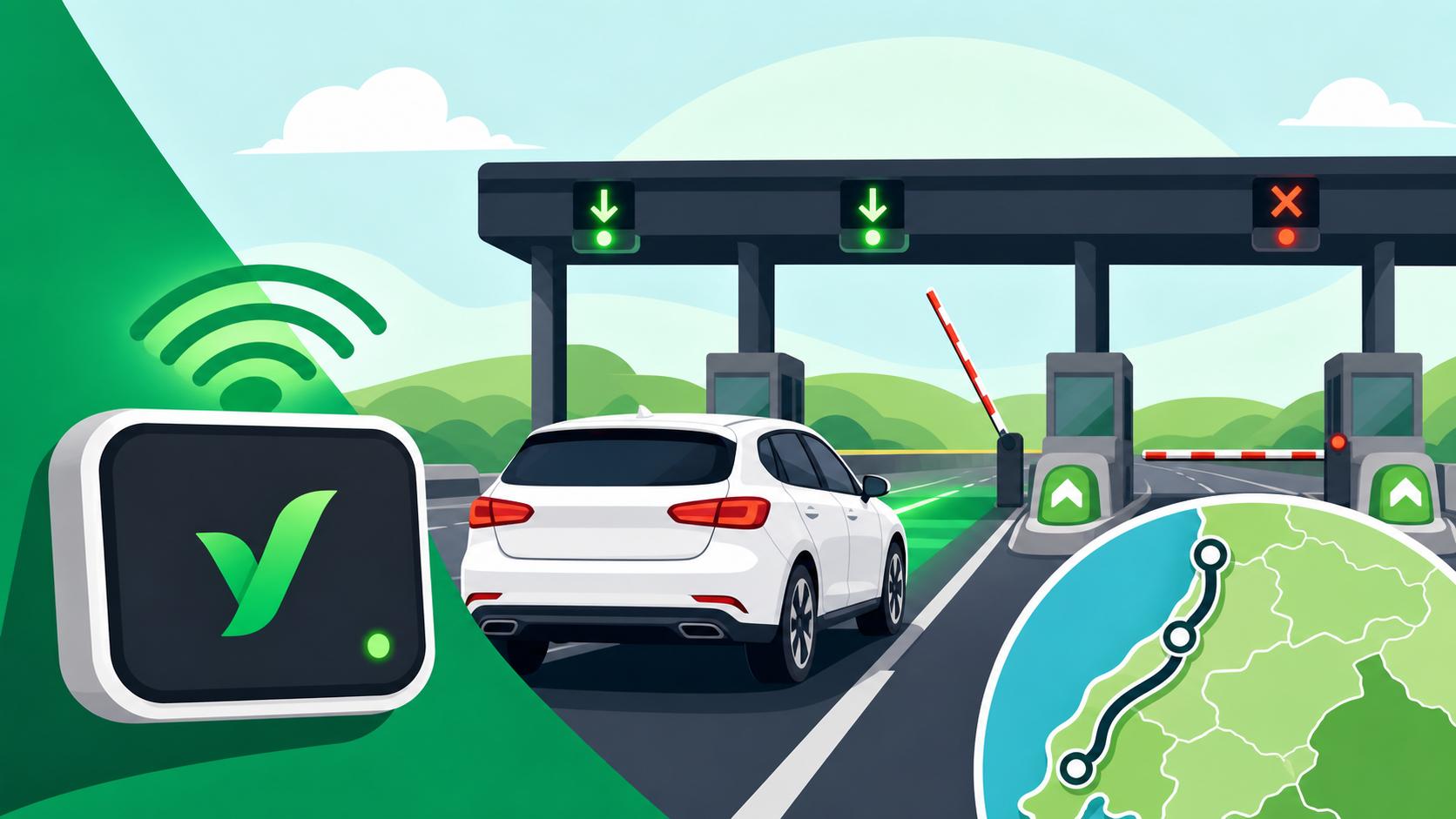
The older motorways, including the main north-south spine, use classic toll plazas called portagens. On many routes you collect a ticket at the entry plaza and pay at the exit based on distance. Other plazas charge a fixed amount for that section. You will see lanes for cards, lanes for cash, and lanes marked with a green “V” for Via Verde.
Keep the entry ticket somewhere safe, not loose on the passenger seat where the wind can take it. If you lose it, you are normally charged as if you entered at the farthest possible point on that motorway. Clip the ticket to the sun visor and move on.
Electronic-Only Motorways and Gantries
Some motorways and sections have no booths at all. Overhead gantries read either a Via Verde device or your number plate. These routes are signed with notices about electronic tolls, usually “Portagem Electrónica” or similar wording in English and Portuguese, placed before the first gantry.
This is the part that catches people out, because you can’t hand anyone cash. You either have a registered device or plate link, or you pay afterwards. The network also changes over time. Some former SCUT routes have had tolls removed, while other electronic-only sections remain. Check the current list on the official road operator or toll payment sites before relying on a route being free.
Via Verde Lanes Explained
Via Verde is Portugal’s electronic toll and payment system. A small device called an identificador is fixed to your windscreen, usually behind the rearview mirror. It is read automatically at plazas and gantries, and the charges go to the bank account linked to your contract.
The green “V” lanes are reserved for vehicles with a device. Some let you pass at reduced speed without stopping. Others, often labelled with a “V” and a speed limit, let you roll through gently. Treat them as reserved lanes. If you enter one without a device, the system still records your plate, and you will have a toll to settle later. That process is covered below.
Getting Via Verde as a Resident
Once I had a Portuguese car and a local bank account, getting Via Verde was one of the best admin decisions I made. It removed the toll anxiety completely.
What You Need to Sign Up
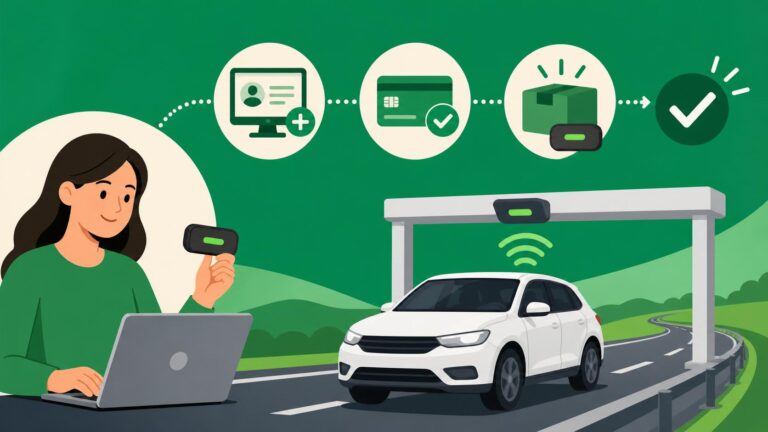
You usually need a NIF, identification, your vehicle details, and a Portuguese bank account for direct debit. Contracts can be set up through Via Verde’s own stores and website, and some Portuguese banks offer it through their apps or branches. The step-by-step sign-up process is covered in How to register for a Via Verde tag for electronic highway tolls.
Plans differ in their monthly cost, whether the device is bought or rented, and which extra services are included. These terms are revised from time to time. Compare the options on the official Via Verde pages before you sign. If you have just bought a car, the toll device is only one item on a longer list of ownership costs, and Buying a Car in Portugal: IUC Tax, Inspections (IPO), and High Vehicle Costs walks through the rest.
Installing and Using the Device
Fix the identificador to the windscreen in the spot shown in the instructions, usually just behind the mirror. Some modern windscreens have a heat-reflective coating with a marked clear zone, so check your car manual. A badly placed device may not be read, and then you are back to plate-based charging.
The device does more than tolls. Depending on your plan, it can pay at many car parks, at some fuel stations, and at certain drive-through services. In Lisbon I use it at shopping centre car parks and skip the ticket machine. If you are still driving on a foreign licence, see Driving in Portugal: Exchanging Your Foreign License to a Portuguese One.
Managing Your Account and Statements
The Via Verde app and online area show every passage, the plaza or gantry, and the amount. I check mine monthly, partly to catch errors and partly because seeing my toll total sometimes persuades me to take the train. Statements also help when you split costs with a partner or claim work mileage.
If you change cars, update the vehicle on your contract. The device is tied to a vehicle class, and moving it into a larger car can cause mismatched charges. When you sell a car, remove the device and update the account the same day. Otherwise the new owner’s trips may end up on your bill.
Paying Tolls on Electronic-Only Motorways Without Via Verde
This is where your calendar matters. If you drove under gantries without a device or a registered plate, you have a defined window to pay. The figures below are as of October 2026, from CTT.
The 48 Working Hours and 15 Working Days Window
After a trip on an electronic-only motorway, the amount can take up to 48 working hours to show up as payable. Once it appears, you have until 15 working days after the trip to pay. These are working days, so weekends and public holidays do not count. Sort it out in the first week anyway.
On top of the toll itself, CTT applies an administrative charge of EUR 0.32 per passage, up to a maximum of EUR 2.56 per payment, as of October 2026. If you passed several gantries on one trip, pay them together to benefit from the cap. Picture a weekend coastal drive with twelve gantry passages. Paid all at once, the administrative charge stops at the EUR 2.56 cap instead of the EUR 3.84 that twelve passages at EUR 0.32 each would add up to. Paying them in separate transactions means a separate charge each time.
Where to Pay
You can pay at:
- CTT post offices and Payshop agents, the small payment counters often found inside cafés, newsagents and kiosks
- Multibanco ATMs, using the toll payment option in the menu
- The CTT website or app
To pay, you give your number plate and the system shows the outstanding passages. For the Multibanco menus, which are confusing the first time, see How to use the Multibanco ATM network to pay taxes, tolls, and utility bills. If you are a visitor without a Portuguese card, a post office or the CTT app is usually easier.
A Practical Payment Routine
My routine for friends visiting in their own cars:
- Note the date of every trip that crossed electronic gantries.
- Wait at least two working days so the passages can become payable.
- Pay all passages together at CTT, a Payshop agent, Multibanco, or the CTT app.
- Keep the receipt or a screenshot until the trip is well behind you.
- Set a phone reminder well before the 15 working day limit as a safety net.
Paying on the road means using your phone, so mobile data matters. A travel eSIM from Airalo is a simple way to get data the moment you land, so the CTT app works from a service station. For more on choosing a plan, see Best unlimited data eSIMs for digital nomads arriving in Portugal.
Entering a Via Verde Lane Without a Device
It happens. You are tired, the lanes are confusing, and you roll into the green “V” lane with no device. Don’t panic and don’t reverse, which is dangerous and illegal. Drive through. The plate is recorded and the toll is handled through a separate process.
The 30-Day Wait on the Pagamento de Portagens Portal
Here is how it works, as of October 2026, per the Pagamento de Portagens portal’s help page. A passage through a Via Verde lane without a device usually becomes payable on that portal in about 30 days. It cannot be paid anywhere else before then. CTT counters and Multibanco won’t show it in the meantime, so stop searching.
Set a reminder for about a month after the trip and check the portal using your plate. The wait feels backwards when you want to pay straight away, but that is how the system runs.
What Happens If It Stays Unpaid
If the passage stays unpaid, a notice is sent to the registered owner. The toll is then charged plus EUR 2.21 per passage, and you have 30 working days to pay, as of October 2026. For a rental car, the notice goes to the rental company, which passes the cost to you with its own handling charges.
If that deadline is also missed, the matter can move into formal enforcement with the tax authority, and the costs rise considerably. If you get a letter later, How to pay an unpaid SCUT electronic toll online before getting fined and How to pay a Portuguese traffic fine (Multa) using the Portal das Finanças cover the next steps.
Payment Timelines at a Glance
All figures in this table are as of October 2026.
| Situation | When it becomes payable | Deadline to pay | Where to pay | Extra charge |
|---|---|---|---|---|
| Electronic-only motorway, no device | Up to 48 working hours after the trip | 15 working days after the trip | CTT, Payshop, Multibanco, CTT site or app | EUR 0.32 per passage, up to EUR 2.56 per payment |
| Via Verde lane, no device | Usually about 30 days after the trip | Pay once it appears on the portal | Pagamento de Portagens portal only | Check the portal |
| Via Verde lane, no device, after notice | When the notice is issued | 30 working days | As stated on the notice | Toll plus EUR 2.21 per passage |
| Via Verde subscriber | Automatically | Direct debit | Linked bank account | Per your Via Verde contract |
Tolls for Visitors, Rental Cars and Foreign Plates
Visitors face the toughest version of this system, because it was built around residents with Portuguese bank accounts.
Rental Cars and Toll Devices
Most rental companies offer a Via Verde device for a daily or per-rental fee, sometimes with a cap. Take it, especially if you will use electronic-only routes. Tolls are charged to the card on file afterwards. Without a device, the rental company may charge you its handling fee on top of every toll it has to process.
Ask at the counter whether the device is active and where it is fitted. Every gantry passage would have become a plate-based charge. For more detail, read How Do Tolls Work in Portugal for Rental Cars? and Renting a Car in Portugal: Tolls, Insurance, and Driving Tips.
Foreign-Plated Cars
If you drive into Portugal in your own car from Spain or further away, there are options built for you. EasyToll is available at some border entry points and links your plate to a payment card. Prepaid options such as Toll Card and TollService cover a set amount or period. Via Verde also offers temporary devices for visitors. Each has different fees, validity periods and coverage, so check the official pages before you cross.
Many drivers coming from Spain arrive with a phone mount and a basic car kit ordered from Amazon Spain, which ships quickly to the Iberian border regions. A secure mount is worth having so you can follow navigation and toll signs hands-free rather than squinting at a phone on your lap.
Comparing Your Options
| Option | Best for | How you pay | Needs a Portuguese bank account | Key consideration |
|---|---|---|---|---|
| Via Verde subscription | Residents with a car | Direct debit | Usually yes | Covers plazas, gantries and extras such as parking |
| Rental company device | Tourists in hire cars | Card held by rental company | No | Daily or per-rental fee set by the company |
| EasyToll | Foreign plates entering by road | Card linked to plate | No | Only available at certain entry points |
| Prepaid toll products | Short visits on electronic routes | Pay upfront | No | Limited validity or credit |
| Pay after the trip at CTT | Occasional drivers | Cash or card | No | 15 working days after the trip, plus the administrative charge |
| Cash or card at booths | Traditional plazas only | At the booth | No | Not possible on electronic-only routes |
Living With Tolls Long Term
After years here, tolls have become a lifestyle factor rather than an admin chore. They affect where I live, how I commute, and when I take the train.
Factoring Tolls Into Where You Live
Tolls add up for daily commuters. Before signing a long lease in a suburb or coastal town, map the commute and check whether it crosses toll plazas or gantries. Look up the cost for your vehicle class on the operator’s website and multiply by your working days.
Many newcomers rent a furnished room for a few months through Uniplaces before committing to a long lease, which gives time to test the commute in real traffic. If you are weighing the south, The Algarve for Expats: Lagos, Faro, and Tavira Compared looks at how towns differ for daily life.
When the Train Beats the Motorway
On the Lisbon to Porto route, once I added tolls, fuel and city parking, the train often came out cheaper and far less stressful. Around Lisbon, the monthly transit pass can make car commuting look like a luxury. See Using Comboios de Portugal (CP) Trains and the Navegante Pass for how the rail and pass system works.
I still drive for village weekends, beach trips with gear, and rural areas where trains are sparse. The goal is choosing the motorway on purpose rather than by habit.
Common Mistakes Worth Avoiding
Patterns commonly seen among newcomers:
- Driving electronic-only routes and forgetting to pay within the 15 working day window
- Searching CTT for a Via Verde lane passage before the portal shows it, which takes about 30 days
- Leaving a Via Verde device in a sold car with the account still active
- Losing the entry ticket on a ticketed motorway
- Declining the rental device to save a little, then paying handling fees on every gantry
The toll system rewards a little planning. Get a device if you live here, pay promptly if you are visiting, and keep the two key windows in your head: 15 working days after the trip for electronic-only motorways, and about 30 days for a Via Verde lane passage to appear on the portal.
Disclaimer
This article is for general informational purposes only and does not constitute professional advice. Laws, prices and regulations vary by location and change over time. Consult a qualified professional for guidance on your specific situation.