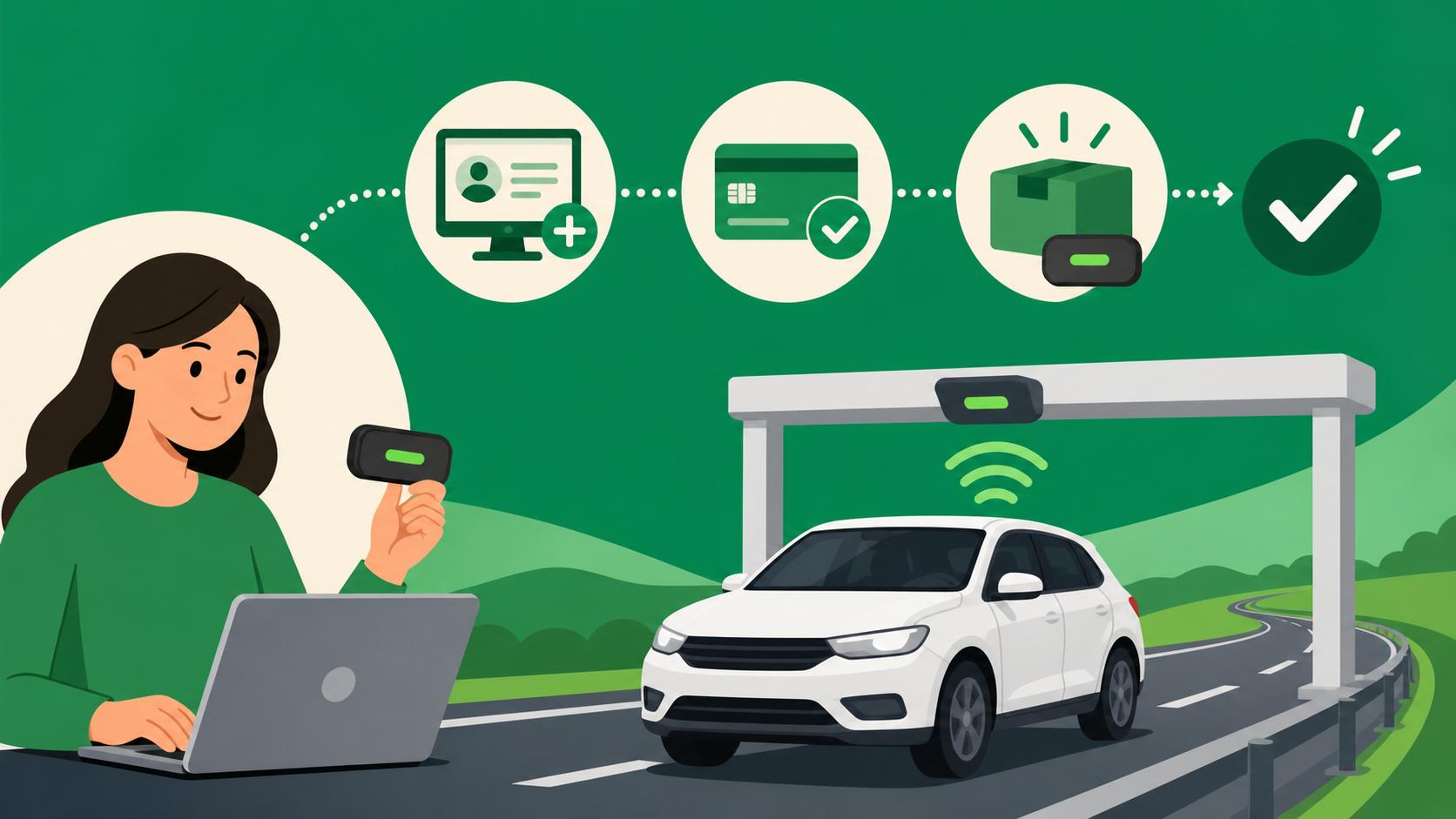
How to register for a Via Verde tag for electronic highway tolls
Disclosure: This article contains affiliate links. If you buy through them, we may earn a commission at no extra cost to you. Read our full disclosure.
The confusion of driving onto a Portuguese highway and seeing a "Portagem Eletrónica" sign without a single toll booth in sight is a rite of passage for every expat. I remember my first week in Cascais, sweating as I drove under those overhead cameras on the A22, convinced I was racking up hundreds of euros in fines I didn't know how to pay. This guide solves the mystery of the Via Verde tag, ensuring you never face a surprise letter from the tax office.
Understanding the Portuguese Toll System: Boilers and Beeps
Before you can even think about registering for a tag, you need to understand the beast you are dealing with. In Portugal, we have two distinct types of toll roads. First, there are the traditional highways like the A1 between Lisbon and Porto, where you can still pull up to a booth, take a ticket, and pay a human or a machine at the exit. Then, there are the "SCUTs" (Sem Custos para o Utilizador, though they certainly aren't free anymore), which are purely electronic. These roads use overhead gantries with cameras that read your license plate. If you don't have a Via Verde tag, paying for these electronic-only roads involves a tedious process of waiting 48 hours and then visiting a CTT post office or a Payshop location.
When you first arrive and are still staying in a Uniplaces rental while scouting for a long-term home, the last thing you want is to spend your afternoons standing in line at the post office to pay a €2.50 toll. The Via Verde system was designed to bypass all of this. It is a small DSRC (Dedicated Short-Range Communications) device that sticks to your windshield. When you pass a gantry or a toll lane, it beeps, and the money is automatically debited from your Portuguese bank account. It is the single most important "quality of life" upgrade for anyone planning on Driving in Portugal: Exchanging Your Foreign License to a Portuguese One.
The stress of the "manual" payment system is real. If you forget to pay within the five-day window allowed at the post office, the toll moves into a "late" phase where administrative fees are added. If it stays unpaid longer, it gets sent to the Autoridade Tributária (the tax man), and suddenly that small toll becomes a legal headache. Having a Via Verde tag completely removes this risk. It also allows you to use the dedicated "V" lanes at traditional toll plazas, meaning you never have to stop or wait in line behind a tourist struggling to find their credit card.
The Step-by-Step Guide to Getting Your Via Verde Tag
Registering for the system is surprisingly modern, but it does require a few specific items that you likely struggled to get during your first month in the country. To start the process, you will need your NIF (Número de Identificação Fiscal), a Portuguese bank account (specifically one that supports SEPA direct debits), and your vehicle's registration document (Documento Único Automóvel or DUA). If you are still in the process of Opening a Bank Account in Portugal: Best Banks for Foreigners and Expats, you might need to wait until your debit card arrives before you can finalize the registration.
You have two main paths for registration: online through the Via Verde website or in person. If your Portuguese is still at a beginner level, I highly recommend going in person to a "Loja Via Verde" or a "Loja do Cidadão." However, the online portal is fairly intuitive if you use a browser with translation features. You will choose your plan, enter your vehicle's license plate number, and provide your IBAN. If you choose the physical tag option, they will mail it to your address within a few days. If you are in a rush, some CTT offices and Loja do Cidadão locations can hand you the tag over the counter.
Once you have the tag, the installation is critical. It needs to be placed behind the rearview mirror in the "shaded" or dotted area of the windshield. This is where the car’s glass is designed to allow signals to pass through easily. If you place it too low or tucked into a corner, the overhead gantries might fail to read it. When that happens, the light at the toll booth will flash yellow instead of green. If you see a yellow light, don't panic, but do check your account later. Usually, the system will use your license plate to "match" the transaction to your account, but if it happens repeatedly, you’ll need a new tag.
Comparing Via Verde Subscription Plans for Expats
One of the biggest points of confusion for newcomers is which plan to choose. Gone are the days when you simply bought a tag and owned it forever. Now, Via Verde operates primarily on a subscription model. For most expats who are just getting settled and perhaps Buying a Car in Portugal: IUC Tax, Inspections (IPO), and High Vehicle Costs, the choice usually comes down to how often they plan to drive.
The "Leve" plan is often the favorite for those who don't commute daily. With this plan, you only pay the monthly subscription fee (usually around €1.25 to €1.50) in the months that you actually use the tag. If your car sits in the garage all of August while you are back home, you pay nothing. The "Livre" plan is a flat annual or monthly fee that is slightly cheaper if you are a heavy user, such as someone commuting between Cascais and Lisbon every day. There is also a "Mobility" version that includes perks like discounts on ferries and electric vehicle charging.
| Plan Name | Best For | Subscription Fee Type | Additional Benefits |
|---|---|---|---|
| Via Verde Leve | Occasional travelers/Tourists | Pay-per-month of use | Tolls and Parking only |
| Via Verde Livre | Daily commuters | Monthly or Annual flat fee | Tolls, Parking, and Gas |
| Via Verde Mobilidade | Tech-forward drivers | Monthly flat fee | EV Charging, Ferries, and McDrive |
| Via Verde Visitors | Short-term visitors | Weekly rental | Temporary use for foreign plates |
If you are a digital nomad who just arrived and is using an Airalo eSIM to navigate your way from the airport, you might even consider the "Visitors" option if you brought your own car from Spain or France. However, for anyone staying long-term, the "Leve" or "Livre" plans are the standard. Make sure you understand The Multibanco System and MB Way: Portugal's Unique Payment Network before signing up, as you will likely need to "activate" the direct debit at an ATM or through your banking app to ensure the payments go through smoothly.
Maximizing Your Tag: More Than Just Highway Tolls
The beautiful thing about the Via Verde tag is that it isn't just for highways. Once you have it stuck to your windshield, you’ll realize it works like a magic wand across the country. One of the best uses is in parking garages. Most shopping malls (like Colombo in Lisbon or NorteShopping in Porto) and public parking lots have Via Verde-enabled lanes. You drive in, the gate lifts automatically, and you drive out without ever having to stand at a ticket machine. For someone still learning the ropes of Daily Life in Portugal: Supermarkets, Language, and Cultural Etiquette, avoiding the confusion of a parking pay station is a massive win.
You can also use the tag to pay for fuel at Galp stations. There is a specific "Via Verde" button on the pump; you press it, fill up, and drive away. The charge shows up on your monthly statement. It even works at certain McDonald's drive-thrus. This level of integration is why nearly everyone in Portugal has a tag. It simplifies your financial life, especially when you are already dealing with the complexities of Portuguese Taxes for Expats: IRS, Tax Residency, and Filing Deadlines.
Another hidden gem is the "Via Verde Estacionar" app. This allows you to pay for street parking in dozens of Portuguese cities directly from your phone, using the same account tied to your tag. You don't need to hunt for coins or find a working parking meter. You simply start the timer in the app when you park and stop it when you leave. If you are exploring the narrow streets of the Algarve or the hilly neighborhoods of Porto, this app is a lifesaver. You can even find car-related accessories on Amazon Spain that help keep your interior cool while you are parked in the blazing Portuguese sun, as the heat can sometimes degrade the adhesive on the tag.
The Oh No Moments: Troubleshooting and Fines
Despite being a very efficient system, things can go wrong. The most common issue is the battery. The tags are sealed units, and the battery typically lasts 5 to 7 years. When the battery starts to die, the beep will sound weak, or you will start seeing that dreaded yellow light at the toll gates. If this happens, you need to log into your portal and request a replacement. Do not try to crack the tag open to change the battery yourself; you will likely damage the internal antenna and end up with a fine.
If you trade in your car or sell it, you must remember to update your Via Verde account immediately. The tag is linked to both the device ID and the license plate. If you leave the tag in the car and the new owner goes on a road trip to Spain, your bank account will be the one paying for it. Conversely, if you move the tag to a new car but forget to update the license plate in the system, you might trigger a "fraud" alert at the toll gantry. Keeping your car's details updated is as essential as Registering your rental contract with Finanças: Why your landlord must do it.
What happens if you drive through a toll without a tag? If you are in a Portuguese-registered car, you have a window to pay. For SCUTs, you wait 48 hours for the system to process the image, then you can go to any CTT (post office) or use the CTT website to generate a Multibanco reference. If you miss this window, the fine increases exponentially. For traditional tolls with barriers, if you accidentally go through the "V" lane without a tag, the camera will record your plate. You should visit the Via Verde website's "Pagamento de Portagens" section to pay the "unresolved" toll before it turns into a tax debt. This is particularly important for those who might be worried about Do unpaid parking tickets affect your Portugal residence visa renewal?.
Integrating Via Verde into Your Expat Journey
Getting your Via Verde tag is one of those small but symbolic steps in becoming a "local." It means you've successfully navigated getting an NIF, opening a bank account, and likely registering a vehicle. It removes a layer of daily friction that can make living in a new country feel exhausting. When you are busy Finding Doctors and Specialists in Portugal: English-Speaking Medical Care or trying to figure out which neighborhood to settle in, the last thing you need is a letter from the tax office about a forgotten €0.80 toll from three months ago.
If you are renting a car when you first arrive, most rental agencies will offer you a "pre-loaded" Via Verde device for a few euros a day. It is wise to take it. The cost of the rental is far less than the stress of trying to find a CTT office in a rural village while on vacation. Once you have your own permanent wheels, though, getting your own account is the way to go. It gives you a clear digital trail of your travel expenses, which is helpful if you are Freelancing in Portugal (Recibos Verdes): Taxes, Social Security, and Setup and need to track your business mileage.
In the end, the Via Verde system is a reflection of Portugal itself: a bit confusing at first glance, requiring some specific paperwork to start, but incredibly efficient and helpful once you are "in the system." It allows you to focus on the beautiful scenery of the Alentejo or the rugged cliffs of the Silver Coast rather than squinting at overhead gantries and worrying about your bank balance.
Disclaimer
This guide is for informational purposes only. Toll prices, subscription fees, and registration requirements in Portugal can change based on government regulations and Via Verde company policy. Always verify the latest terms and conditions on the official Via Verde website or at a Loja do Cidadão. Driving without paying tolls can lead to significant fines and legal action by the Portuguese Tax Authority (Autoridade Tributária e Aduaneira).