Do unpaid parking tickets affect your Portugal residence visa renewal?
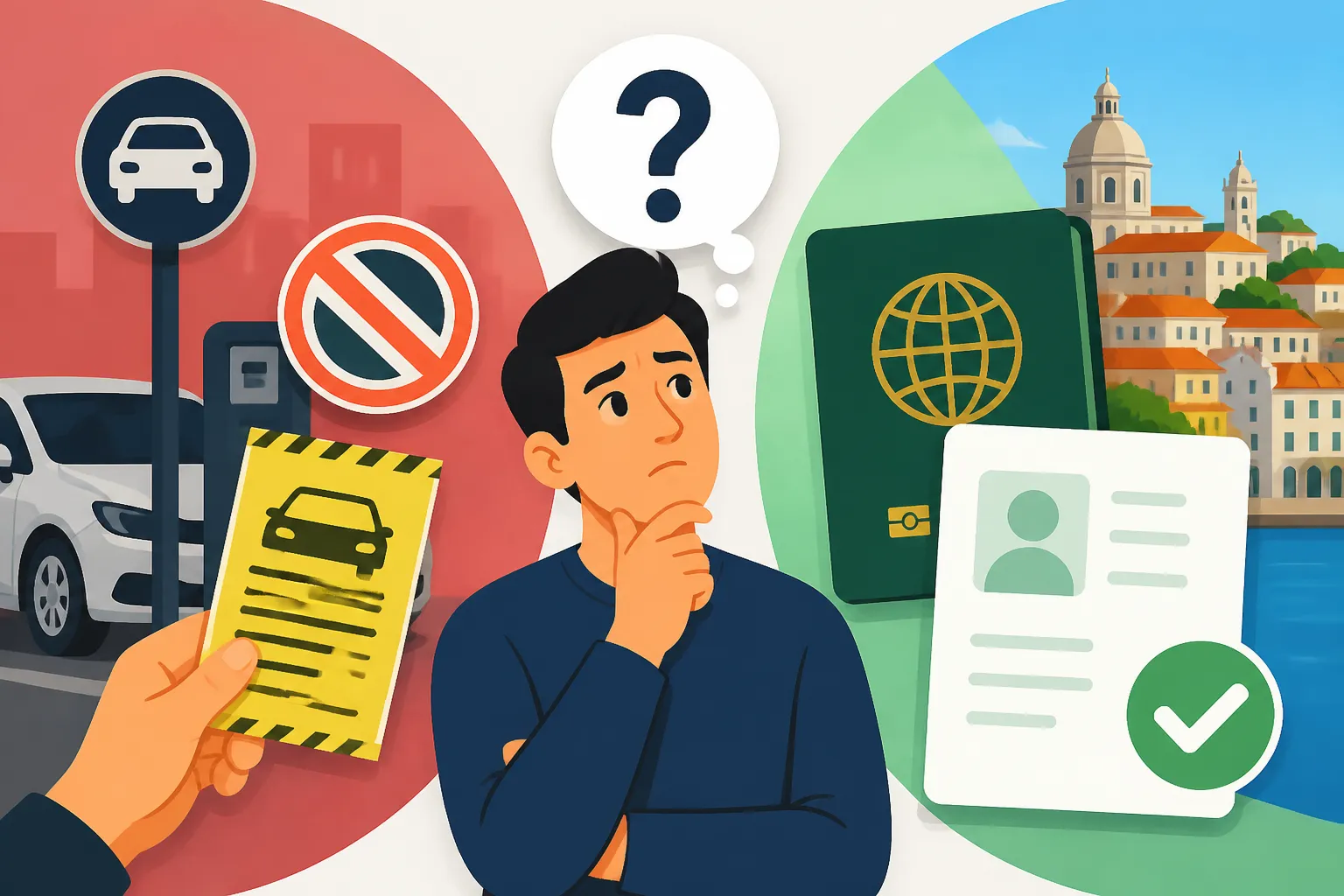
Finding a yellow "Aviso de Multa" tucked under your windshield wiper in Lisbon or Porto is a rite of passage for many expats. I remember the cold sweat I broke into the first time it happened to me; I was convinced that a simple parking error would lead to an immediate rejection of my residency renewal. This guide clarifies exactly how traffic infractions intersect with immigration law and whether your unpaid tickets actually jeopardize your future in Portugal.
Administrative Infractions vs Criminal Record Concerns
In the eyes of Portuguese law, there is a massive distinction between a "contraordenação" (an administrative infraction) and a "crime." When you are preparing for your residency renewal, AIMA (the successor to SEF) is primarily concerned with your "idoneidade," or your suitability as a resident. This is almost exclusively measured by your criminal record.
Parking tickets, even if you have several of them, fall under the category of minor administrative infractions. They are handled by the ANSR (Autoridade Nacional de Segurança Rodoviária) or local municipalities, not by the criminal courts. Therefore, a parking ticket does not appear on your How to get a Portuguese criminal record certificate (Registo Criminal) online. If the infraction isn't on that document, AIMA typically has no automated way of seeing it during a standard background check.
However, do not mistake "administrative" for "irrelevant." While a single ticket won't get you deported, the way you handle the debt can create a paper trail that eventually reaches the tax office. If you are applying for other documents through services like Bordr, you will know that having a clean administrative record makes every other process smoother. AIMA wants to see that you are a law-abiding resident who respects the local regulations, even if those regulations involve where you leave your car on a Tuesday afternoon.
The Hidden Danger of Debt to the State
The real risk to your residency isn't the act of parking illegally; it is the financial debt that results from ignoring the fine. In Portugal, if an administrative fine remains unpaid after the voluntary payment period and any subsequent appeals, the case can be referred to the Autoridade Tributária (the tax office, or Finanças) for "execução fiscal" (tax execution).
Once a parking ticket becomes a fiscal debt, it is registered against your NIF (Tax Identification Number). One of the core requirements for renewing a residence permit is proving that you have no outstanding debts to the Tax Authority or the Social Security system. When you are Attending Your AIMA Appointment: Required Documents and Interview Process, the officer may ask for a "Certidão de Não Dívida." If your unpaid parking ticket has escalated to a fiscal debt, this certificate will show that you are not in good standing with the state.
AIMA can, and often does, pause or reject applications if there is an active debt to the state. It is much easier to pay the 30 or 60 euro fine now than to deal with a "pending" status on your residency card while you scramble to clear your tax record. If you are unsure of your status, it is wise to learn How to request a Certidão de Dívida e Não Dívida (No Debt Certificate) for visas before your appointment date to ensure your record is spotless.
When Traffic Violations Become a Residency Threat
While a standard parking ticket is a minor issue, not all road-related incidents are treated equally. There is a hierarchy of infractions in Portugal that you need to be aware of. Serious traffic violations can move from the administrative realm into the criminal realm, which is where your residency status truly enters the danger zone.
AIMA is particularly sensitive to "crimes rodoviários" (road crimes). This includes driving under the influence of alcohol or narcotics, reckless driving that endangers others, or driving without a valid license. These are not just tickets; they are criminal offenses that will be recorded on your permanent record. If you are worried about past incidents, you should research Criminal record requirements: Does a misdemeanor DUI disqualify you? to see how it might impact your specific case.
The following table breaks down how different types of infractions are viewed by immigration authorities during a renewal process:
| Type of Infraction | Example | Impact on AIMA Renewal | Action Required |
|---|---|---|---|
| Minor (Leve) | Overstaying a parking meter | Negligible (unless it becomes tax debt) | Pay the fine immediately |
| Serious (Grave) | Speeding (20-40km over) | Low (administrative only) | Pay and ensure no tax debt |
| Very Serious (Muito Grave) | Running a red light | Moderate (could affect suitability) | Pay and monitor legal status |
| Criminal (Crime) | DUI or driving without a license | High (potential for rejection) | Consult an immigration lawyer |
If you are using international services like Cigna Global to maintain your health coverage for visa purposes, you are likely already someone who values being "by the book." Applying that same rigor to your traffic fines is the best way to avoid unnecessary stress at the AIMA office.
How to Resolve Unpaid Fines Before Your Appointment
If you have a stack of yellow slips or have received a "notificação" in the mail, the best time to handle it is today. Portugal has made it relatively easy to pay these fines, but the bureaucracy moves slowly. If you wait until the week of your renewal, the system might not update in time to show you have a clean slate.
You can usually pay traffic fines through the Multibanco network. This is often the most efficient way to ensure the payment is tracked. You will need the "Entidade" and "Referência" numbers provided on the ticket or the notification letter. Understanding How to use the Multibanco ATM network to pay taxes, tolls, and utility bills is an essential skill for any expat living here. If the ticket was issued by the police (GNR or PSP) on the spot, they often carry mobile payment terminals, which is the fastest way to kill the problem at the source.
If you have ignored a ticket for a long time and aren't sure where it stands, you should check the "Portal das Finanças." If the fine has been converted into a tax debt, it will appear there under your NIF. You can learn How to pay a Portuguese traffic fine (Multa) using the Portal das Finanças to clear those old debts. For those who prefer a face-to-face interaction or need to clarify a notification, Using the CTT post office to pay your immigration fines or processing fees is another viable route, as the post office acts as a hub for many state payments.
Behavioral Tips for Your Residency Appointment
When you finally sit down for your biometrics or renewal interview, your demeanor matters as much as your paperwork. If an officer does bring up a minor infraction, the worst thing you can do is be dismissive or combative. The Portuguese system values "respect for authority" and an acknowledgment of the rules.
If a fine is mentioned, simply provide proof of payment. If you have already paid it but it hasn't cleared the system, show the receipt from the Multibanco or the CTT. Being prepared shows that you are a responsible resident who takes your obligations seriously. For more on the social nuances of these meetings, check out What to wear and how to properly behave at your AIMA biometrics interview.
If your situation is more complex—for example, if you are also dealing with foreign documents—ensure everything is in order. If you have had to provide updated criminal records from your home country, using a service like RushTranslate can ensure your documents are accepted without delay. AIMA officers are much more likely to overlook a minor parking mishap if the rest of your file, including Preparing the FBI Criminal Record Check and Apostille for Portugal Visas, is impeccable and professional.
Disclaimer
This information is for educational purposes only and does not constitute legal advice. While parking tickets are generally administrative, individual cases vary, and immigration laws in Portugal are subject to frequent change. Always consult with a qualified Portuguese immigration lawyer or the official AIMA portal for the most current regulations regarding your specific residency status.