Safety and Emergency Preparedness in Portugal for Foreign Residents
Disclosure: This article contains affiliate links. If you buy through them, we may earn a commission at no extra cost to you. Read our full disclosure.
Finding yourself in a beautiful seaside town only to realize your wallet was lifted on a crowded tram is a rite of passage no one wants, yet it happens to the best of us. I remember my first month in Lisbon when I felt so safe I left my bag unattended for just a second at a café, only to learn that "relaxed" doesn't mean "invulnerable." This guide solves the complex puzzle of staying safe and prepared in Portugal, covering everything from emergency numbers to natural disaster protocols.
Understanding General Safety and Crime in Portugal
Portugal consistently ranks as one of the safest countries in the world, often appearing in the top ten of the Global Peace Index. This high ranking is well-deserved; violent crime is exceedingly rare, and the general atmosphere in most towns and cities is one of peace and neighborly care. However, the biggest mistake a newcomer can make is confusing a low violent crime rate with a zero-crime environment. Petty theft, opportunistic crimes, and seasonal risks are very real factors that require your attention.
Petty Theft and Pickpockets in Tourist Hubs
In major urban centers like Lisbon and Porto, the most common threat you will face is pickpocketing. This is particularly prevalent in areas with high tourist density, such as the historic Alfama district or the Ribeira waterfront. Thieves often work in small groups, using distraction techniques. One person might ask you for directions or "accidentally" spill something on your coat while another reaches into your pocket or bag.
The famous Tram 28 in Lisbon is a notorious hotspot for these activities. While it is a charming way to see the city, the cramped conditions provide the perfect cover for professional thieves. To mitigate this, always wear your bag across your front and keep your hand on the zip. Avoid keeping your phone in your back pocket, even for a moment. If you are ever a victim, you should know that Common tourist scams in Lisbon: Pickpockets on Tram 28 and fake hash sellers are well-documented, and local police are familiar with the patterns.
Beyond the trams, be cautious in busy metro stations like Baixa-Chiado or Trindade. Late at night, these areas are still relatively safe, but staying aware of your surroundings is key. If someone approaches you offering "drugs" on the street—especially in downtown Lisbon—be aware that these are almost always fake substances (like crushed bay leaves or flour) and the "sellers" are looking for an easy mark to scam or pickpocket.
The Safety of Nightlife and Walking Alone
One of the greatest joys of living in Portugal is the vibrant nightlife. Whether it's the bars of Bairro Alto or the clubs in Vila Nova de Gaia, the streets are often packed until the early hours of the morning. Generally, walking home at 3 AM is much safer here than in many other European or North American cities. You will see solo women walking home and elderly residents out late, which speaks volumes about the communal sense of safety.
However, "safe" does not mean "heedless." In nightlife districts, the combination of alcohol and narrow, dimly lit streets can occasionally lead to trouble. Stick to well-lit main roads when possible. If you are living in a more secluded area or a "bairro" with many winding alleys, it pays to learn the layout during the day. Most expats find that the biggest nighttime risk isn't crime, but rather the slippery "calçada Portuguesa" (traditional pavement) when it’s wet or after someone has spilled a drink.
If you ever feel uncomfortable, don't hesitate to step into a 24-hour convenience store or a late-night pharmacy. The Portuguese are generally very helpful to foreigners in distress. For those who are still settling in and looking for a secure place to live, using a trusted platform like Uniplaces can ensure you find accommodation in neighborhoods known for their safety and community feel, reducing the initial anxiety of moving to a new country.
Understanding the Livro de Reclamações and Consumer Safety
Safety isn't just about physical protection; it’s also about your rights as a consumer and resident. Portugal has a unique and highly effective system for handling disputes called the "Livro de Reclamações" (Complaints Book). Every business that serves the public, from the smallest café to the largest utility provider, is legally required to have this book—both in physical form and often in a digital version.
If you feel you are being scammed, overcharged, or treated unfairly in a way that compromises your financial safety, requesting the book often resolves the issue instantly. Business owners take this very seriously because every entry must be sent to the regulating authority for investigation. Learning What is the 'Livro de Reclamações' and how does it solve consumer disputes? is a vital skill for any resident. It acts as a safety net, ensuring that you have a formal voice in a system that might otherwise feel opaque to a non-native speaker.
Emergency Services and the 112 System
In a moment of crisis, the last thing you want is a language barrier or confusion about which number to dial. Portugal uses the standard European emergency number, 112, which is free to call from any phone, even without a SIM card or with a locked screen. Knowing how to navigate this system is the cornerstone of your emergency preparedness.
Calling 112: Language Barriers and What to Expect
When you dial 112, your call is routed to a centralized dispatch center. The operators are trained to handle high-stress situations and, in almost all cases in major cities and tourist regions, they will speak English. However, if you are in a more rural part of the Alentejo or the Centro region, the English proficiency might vary. It is helpful to know a few basic Portuguese phrases, such as "Preciso de uma ambulância" (I need an ambulance) or "Há um incêndio" (There is a fire).
The operator will ask for your location, the nature of the emergency, and your phone number. If you are calling from a foreign phone, ensure your roaming is active. For those just arriving, having a local eSIM from a provider like Airalo can be a lifesaver, ensuring you have immediate data and connectivity to use GPS to pinpoint your exact coordinates for the dispatcher. For more detailed information on hospital procedures after the call, consult Emergency Medical Care in Portugal: Calling 112 and Going to the Hospital.
The 112 system covers three main branches: medical emergencies (INEM), police (PSP/GNR), and firefighters (Bombeiros). Depending on your situation, they may dispatch one or all of these services. In Portugal, the Bombeiros often handle medical transport as well as fire-related emergencies, so don't be surprised if a fire engine or a red ambulance arrives for a medical call.
Police Forces in Portugal: GNR vs PSP
As an expat, you might be confused by the different police uniforms you see. Portugal has two main police forces, and knowing which one to approach can save you time. The PSP (Polícia de Segurança Pública) is the urban police force. They wear dark blue uniforms and are responsible for large cities, airports, and major urban centers. If you are in Lisbon, Porto, or Faro, the PSP will be your primary point of contact for reporting a crime or seeking help.
The GNR (Guarda Nacional Republicana) is a paramilitary force that covers rural areas, smaller towns, and the highways. They wear green-grey uniforms and are often the first responders for road accidents on the "Autoestradas." If you are living in a village in the Silver Coast or the interior, the GNR "posto" (station) will be your local authority. Both forces are generally professional and helpful, though the GNR is known for having a slightly more formal, military-style protocol.
| Authority | Coverage Area | Primary Responsibility |
|---|---|---|
| PSP | Major Cities & Urban Hubs | Public order, crime prevention in cities, airport security |
| GNR | Rural Areas & Highways | Traffic enforcement, rural safety, nature protection |
| INEM | Nationwide | Urgent medical assistance and triage |
| Bombeiros | Local Municipalities | Firefighting, rescue, and non-emergency medical transport |
The SNS 24 Helpline for Medical Emergencies
Not every medical situation requires an ambulance and a trip to the ER. In fact, for non-life-threatening issues, the Portuguese government strongly encourages residents to call the SNS 24 (808 24 24 24) line first. This is a 24-hour health service staffed by nurses and medical professionals who can provide advice, triage your symptoms, and even issue a "baixa" (sick note) or a prescription.
Calling this number can save you hours of waiting in a crowded public hospital. The nurses can direct you to the nearest "Centro de Saúde" (Health Center) or tell you if your condition genuinely requires the "Urgências" (Emergency Room). They have an English-language option, though you may sometimes have to wait a bit longer for an English-speaking nurse to become available. For a deeper dive into how this fits into the broader healthcare landscape, read SNS 24 Helpline (808 24 24 24): Triage, Advice, and Sick Notes.
Natural Disasters and Environmental Preparedness
Portugal's stunning landscape comes with its own set of environmental risks. From the sun-drenched forests of the north to the seismic activity of the Atlantic coast, being a resident means understanding and preparing for natural disasters.
Forest Fires: The Biggest Summer Threat
Forest fires (incêndios florestais) are the most significant and frequent natural hazard in Portugal, typically occurring between June and September. High temperatures, low humidity, and strong winds can turn a small spark into a massive blaze in minutes. If you live near a wooded area, especially in the central and northern regions, you must be proactive.
The Portuguese government has strict laws about "limpeza de terrenos" (clearing of land). If you own property, you are legally required to clear brush and thin out trees within a certain radius of your home by the end of April each year. Failure to do so can result in heavy fines and, more importantly, leave your home vulnerable. You should also download the "Fogos.pt" app, which provides real-time maps of all active fires and their status.
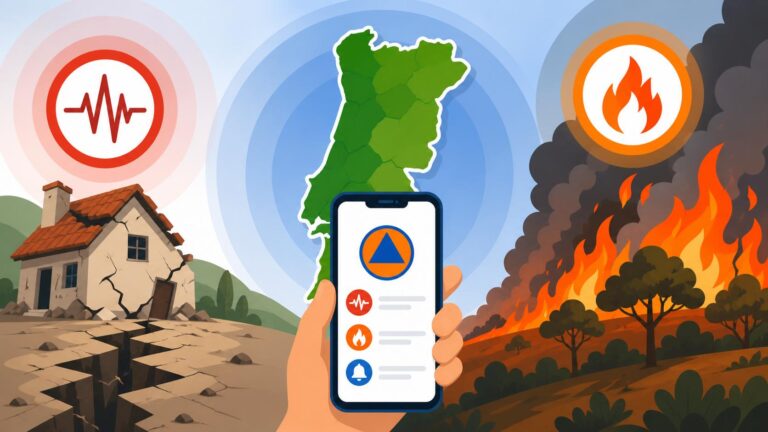
When fire danger is high, the "Proteção Civil" (Civil Protection) will send SMS alerts to all mobile phones in the affected area. These alerts are now sent in both Portuguese and English. If you receive an evacuation order, follow it immediately. Do not stay behind to try and save your property with a garden hose; these fires move faster than a person can run. Understanding Earthquake and wildfire risks in Portugal: How to stay informed via Prociv is essential for anyone living outside of the concrete jungle.
Earthquake Safety and Seismic History
Portugal is located near the boundary between the Eurasian and African tectonic plates. While major earthquakes are rare, the memory of the Great Lisbon Earthquake of 1755 still shapes the city's architecture and safety protocols. Small tremors are recorded frequently, though they are usually not felt by residents.
Modern buildings in Portugal are constructed with strict anti-seismic regulations. However, if you live in an older, historic building in Lisbon's Baixa or Alfama, it is worth familiarizing yourself with the safest spots in your home—usually under a sturdy table or in an interior doorway. In the event of a major quake, the primary risk after the shaking stops is a tsunami, particularly if you are in a low-lying coastal area. Local authorities have marked "Tsunami Escape Routes" in areas like Belém and Cascais; look for the blue and white signs and know your nearest high-ground point.
Flooding and Winter Storm Awareness
While summer is about fire, winter in Portugal can bring intense rain and wind, especially in the north and along the coast. Urban flooding is a recurring issue in Lisbon and Porto during heavy downpours, often caused by the city's ancient drainage systems being overwhelmed. If you are driving during a storm, avoid underpasses and roads known for flooding, like Avenida da Liberdade or the riverside areas of Porto.
Coastal storms can also produce massive waves. While watching the giant waves in Nazaré is a popular winter activity, keep a safe distance from the shoreline during "Aviso Laranja" (Orange Alert) or "Aviso Vermelho" (Red Alert) periods. Every year, unsuspecting tourists and residents are swept off rocks by "rogue waves" that are much larger than the preceding sets.
Home Security and Neighborhood Safety
Your home is your sanctuary, but ensuring it remains secure requires a mix of physical measures and social awareness. Portuguese homes have specific characteristics that influence how you should approach security.
Securing Your Apartment or Villa
Most Portuguese apartments come with "portas blindadas" (armored doors) as a standard feature. These are incredibly heavy, multi-bolt doors that are very difficult to breach. Always ensure you double-lock the door when leaving, as many of these locks only engage the secondary bolts when the key is turned twice.
If you are living in a ground-floor apartment or a "vivenda" (house), window security is paramount. Many homes have external metal shutters called "estores." Beyond blocking out light and heat, these provide an extra layer of security. When you go away on holiday, lowering these shutters is a clear signal that the house is empty, so consider getting a timer for your lights or asking a neighbor to check in. For those looking to upgrade their home security or replace old locks, Finding English-speaking plumbers and electricians using the Fixando app can help you find reliable tradespeople who can also install security systems.
Neighborhood Watch and Community Dynamics
In Portugal, your best security system is often your neighbor. The culture is very social, and residents tend to keep an eye on their "rua" (street). In older buildings, you might still find a "porteira" (concierge) who knows everyone who enters and exits. Building a good relationship with your neighbors—a simple "Bom dia" or "Boa tarde" goes a long way—means they are much more likely to notice if something is wrong at your property.
Unlike some countries where neighborhood watch is a formal organization, in Portugal, it is an informal, cultural practice. If you are moving into a new area, take the time to visit the local "Café" or "Tabacaria." Being a recognized face in the neighborhood is a powerful deterrent to petty criminals who prefer the anonymity of tourist-heavy zones.
Dealing with Noisy Neighbors and Local Disputes
Safety also includes the "peace" of your living environment. Portugal has strict noise laws known as the "Lei do Ruído." Between 11 PM and 7 AM, noise that disturbs neighbors is generally prohibited. If you have a neighbor who regularly hosts loud parties or performs renovations at odd hours, the first step is always a polite conversation. Most Portuguese people are accommodating and may not realize how thin the walls are.
If a polite request fails, you can call the PSP or GNR to report a noise complaint. They will usually send a patrol car to issue a warning. For persistent issues, you might need to involve the "Condomínio" (the building's management committee). Understanding Quiet hours in Portuguese apartments (Lei do Ruído): Handling noisy neighbors will help you navigate these social waters without creating lasting friction in your building.
Digital and Financial Safety for Expats
As a foreign resident, your digital footprint and financial accounts can be targets for sophisticated scams. Portugal has a highly advanced banking system, but this also means scammers have developed local methods to target users.
Avoiding Rental Scams and Online Fraud
The housing crisis in Lisbon and Porto has unfortunately led to a rise in rental scams. Fraudulent listings often appear on Facebook Marketplace or Idealista, featuring beautiful apartments at suspiciously low prices. The "landlord" will often claim to be abroad and ask for a deposit via bank transfer before you have seen the property.
Never pay for an apartment you haven't physically visited or verified through a reputable agency. Platforms like Uniplaces are excellent for expats because they verify the properties and hold the payment in escrow until you move in, providing a layer of safety that direct transfers do not. For more tips on identifying these traps, read Avoiding Rental Scams in Lisbon and Porto: Red Flags to Watch.
Safe Banking and the Multibanco System
The Multibanco network is one of the best in the world, allowing you to pay utility bills, top up your phone, and even buy train tickets at any ATM. However, "skimming"—where thieves place a device over the card slot to steal your info—does occur. Always use ATMs located inside bank branches during business hours if possible.
The mobile app "MB Way" is incredibly popular in Portugal for instant transfers and QR code payments. A common scam involves someone calling you, pretending to be from a bank or a buyer on a site like OLX, and asking you to go to an ATM to "activate" MB Way using a code they provide. In reality, this code gives them access to your account. Remember: your bank will never ask you to perform an action at an ATM over the phone. For more on how to use these systems safely, check out The Multibanco System and MB Way: Portugal's Unique Payment Network.
Mobile Connectivity and Emergency Data
In an emergency, your phone is your lifeline. While Wi-Fi is common in Portugal, you cannot rely on it if you are lost or in a crisis. Having a robust data plan is essential. Many expats find that their home country SIM cards are too expensive for long-term use. Using a service like Airalo allows you to download an eSIM instantly, giving you local data rates and ensuring you can always access maps, translation apps, or emergency services.
Road Safety and Driving Precautions
Driving in Portugal is perhaps the most "adventurous" part of expat life. The country has a history of high road accident rates, though this has improved significantly in recent years thanks to better infrastructure and stricter enforcement.
Navigating Portuguese Driving Habits and Rules
The Portuguese are generally skilled drivers, but they can be aggressive. Tailgating is common, and indicators (turn signals) are often treated as optional suggestions. Roundabouts are a particular point of confusion; the law states that if you are taking any exit other than the first one, you must stay in the inner lanes until just before your exit.
Speed cameras (radares) are increasingly common, especially on the "Eixo Norte-Sul" in Lisbon and the VCI in Porto. Some of these are "average speed cameras," which calculate your speed over several kilometers. Fines are high and often have to be paid on the spot if you are a foreign resident with a foreign-registered car.
What to Do in Case of a Road Accident
If you are involved in an accident, the first thing to do is put on your high-visibility yellow vest—which must be kept inside the car cabin, not the boot—and place your warning triangle 30 meters behind the vehicle. This is a legal requirement.
For minor "fender benders" where both parties agree on who is at fault, you can fill out the "Declaração Amigável" (Amicable Statement). This is a standardized yellow and blue form that all drivers should keep in their glovebox. If there is any dispute or if anyone is injured, you must call 112 and wait for the GNR or PSP to arrive and create a formal report. Without this report, insurance companies may refuse to pay out.
Car Security and Avoiding Break-ins
Car break-ins are common in urban areas and near popular beaches. Never leave anything visible in your car—not even an empty shopping bag or a charging cable. Thieves will smash a window for something as small as a pack of cigarettes or a few coins in the console.
If you are parking in a city, you might encounter "arrumadores"—unlicensed parking attendants who offer to help you find a spot and watch your car in exchange for a small tip (usually 50 cents to a euro). While technically illegal, most locals pay them to avoid any "accidental" scratches to their car. It is a small price for peace of mind in busy districts.
Building an Emergency Kit for Your Portuguese Home
Being prepared means having the right tools at hand before a crisis hits. Because of Portugal's unique climate and infrastructure, your kit should be tailored to local needs.
Essential Supplies for Power Outages and Natural Disasters
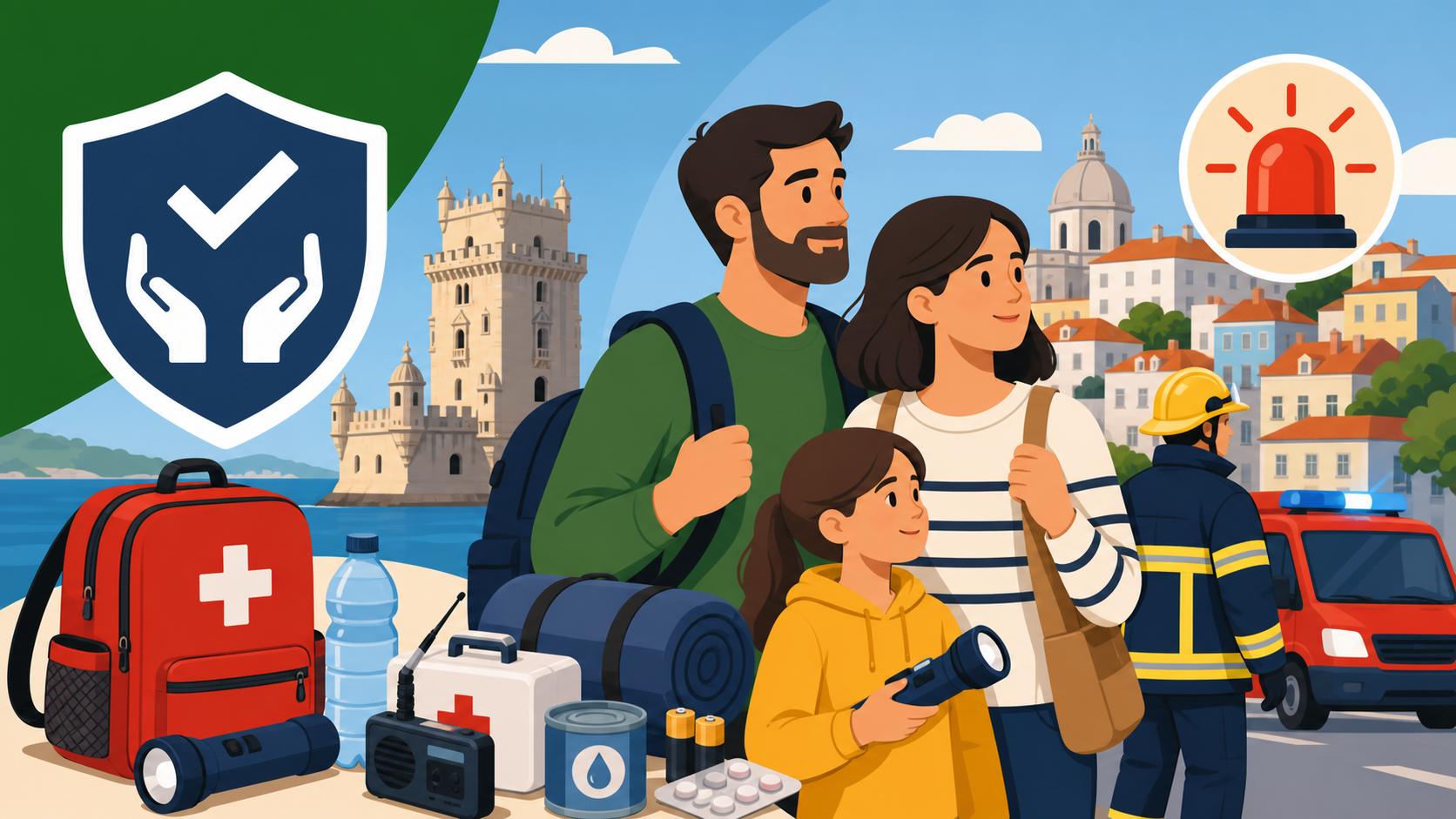
Power outages are relatively common during winter storms, especially in older neighborhoods or rural areas. Your home kit should include:
- A high-quality flashlight and spare batteries.
- A portable power bank for your phone.
- A manual can opener and a three-day supply of non-perishable food.
- At least 5 liters of bottled water per person.
- A first-aid kit with basic bandages, antiseptics, and any personal medications.
You can easily source many of these items from Amazon Spain, which offers fast delivery to Portugal without the customs hassles of ordering from the UK or US. During the winter, mold can become a health and safety issue in poorly insulated Portuguese homes. Investing in a high-quality dehumidifier is not just a comfort choice; it’s a health necessity. Check out the Best dehumidifiers to buy in Portugal to prevent winter wall mold for recommendations that work for the local climate.
Communication and Power Solutions
In a major emergency, like a large-scale forest fire or earthquake, local cell towers may become overwhelmed. A small battery-powered or hand-crank radio can provide access to emergency broadcasts from the "Proteção Civil." Ensure you have a physical list of emergency contacts, including the local GNR/PSP station, your embassy, and your landlord or property manager.
Document Safety and Backup Strategies
Keep copies of your essential documents—passport, NIF, residency card, health insurance policy, and rental contract—in a waterproof and fireproof folder. It is also wise to have digital scans of these stored in an encrypted cloud service. In a rapid evacuation (common during forest fires), you may only have minutes to grab your things; having a "go-bag" with these documents and your essential electronics can make a world of difference.
Disclaimer
The information provided in this guide is for general informational purposes only and does not constitute legal, medical, or professional safety advice. While we strive to keep the information up to date and correct, laws, emergency protocols, and safety conditions in Portugal can change rapidly. Always follow the instructions of local authorities and official emergency services.