How to receive Amazon packages in Portugal without paying customs fees
Disclosure: This article contains affiliate links. If you buy through them, we may earn a commission at no extra cost to you. Read our full disclosure.
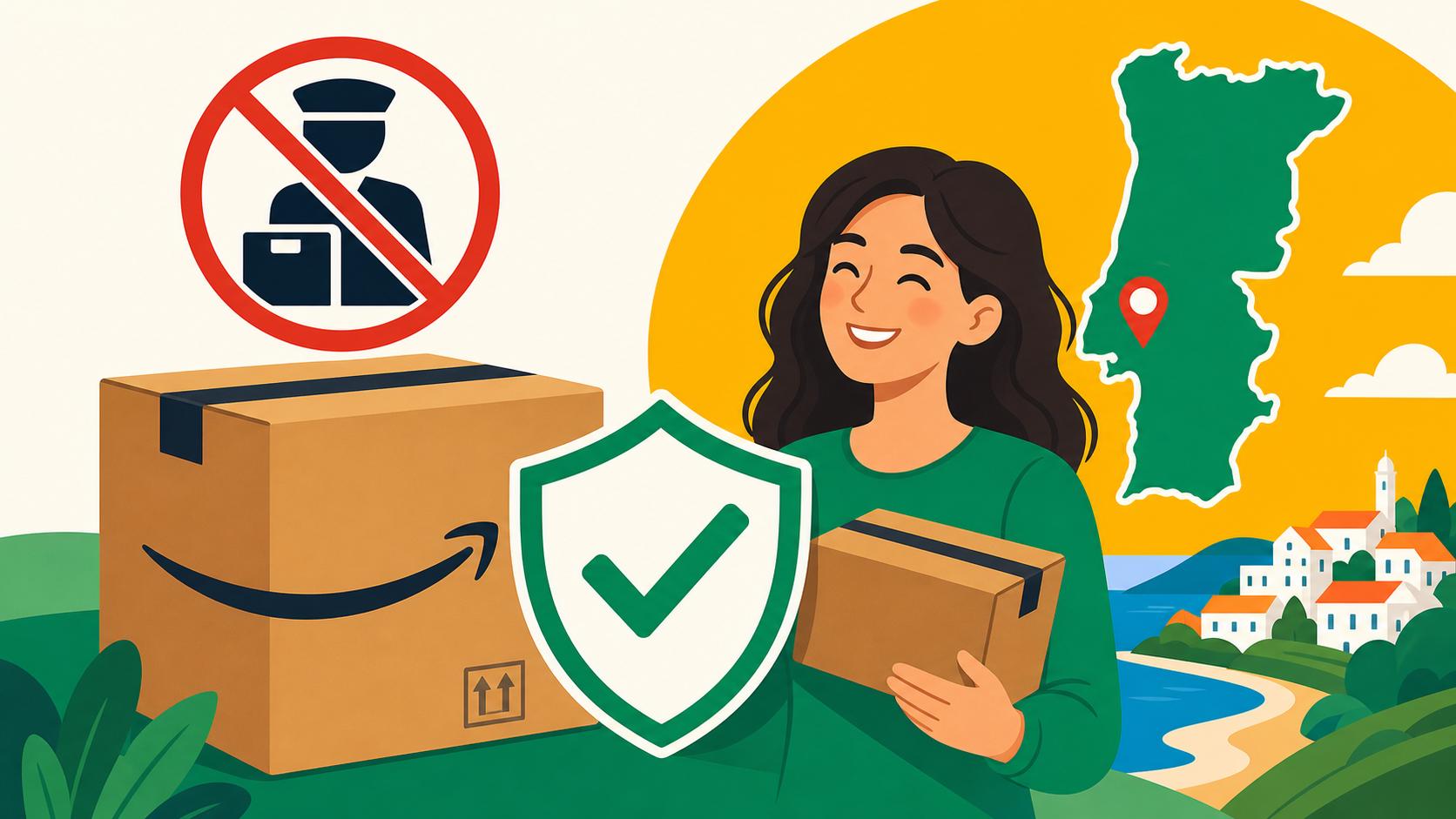
The headache of receiving a "tax due" SMS from the Portuguese customs office (Alfândega) is a rite of passage every expat wishes they could skip. I remember my first winter in a drafty apartment in Coimbra, ordering a high-quality heater from a non-EU site only to have it held hostage for a month while I battled a digital portal that seemed designed to frustrate. This guide solves the riddle of Amazon logistics in Portugal, ensuring your orders arrive at your door without a single extra Centavo in surprise fees.
Understanding the EU Single Market Advantage
The most critical rule for living in Portugal and shopping online is understanding the borders of the European Union Single Market. When you order a product from a country within the EU, it is treated as "domestic" traffic for customs purposes. This means there are no import duties, no customs clearance fees, and no frantic trips to the CTT office with a printed invoice in hand. Many newcomers, especially those coming from the US or the UK, are used to the vast selection of Amazon.com or Amazon.co.uk. However, using these sites while living in Portugal is the fastest way to get your package stuck in a warehouse in Cabo Ruivo.
Since the United Kingdom left the EU, ordering from the UK site now triggers the same customs scrutiny as ordering from China or the United States. Even if the item seems cheaper on the UK site, once you factor in the "Customs Presentation Fee" from CTT and the mandatory 23% Portuguese VAT (IVA) on the total value (including shipping), you will almost always pay significantly more. For anyone following a Living in Portugal Guide 2027: The Complete Relocation Manual for Expats, the first rule of digital survival is switching your default shopping habits to European-based platforms.
Why Amazon Spain is Your Primary Hub in Portugal
Because Portugal does not have its own dedicated Amazon domain (like an Amazon.pt), the company treats Portugal and Spain as a unified "Iberian Market." This is actually a massive benefit for us. Amazon Spain (Amazon.es) is the official provider for the Portuguese territory. When you shop here, you are shopping within the EU, meaning the price you see at the final checkout screen is the total price you will pay. There are no "hidden" fees upon arrival because the goods have already cleared the EU border (or were produced within it).
Furthermore, Amazon Spain offers a full Portuguese language interface and, most importantly, free shipping to Portugal on millions of items if your order exceeds a small threshold (usually 19 or 35 Euros). If you have recently moved into a new apartment through a service like Uniplaces, you’ll likely need everything from kitchenware to bedding immediately. Ordering these through the Spanish hub ensures they arrive in days, not weeks, and without any interaction with the customs authorities.
The Customs Reality Check for Non-EU Orders
If you absolutely must order from outside the EU—perhaps a specific supplement from iHerb or a niche tech gadget from the US—be prepared for the "Portal de Desalfandegamento." This is the online gatekeeper for CTT (the Portuguese postal service). When a package arrives from outside the EU, you will receive a notification (usually by SMS or email) to "clear" the item. You will have to upload your NIF, a PDF of the invoice, and a proof of payment.
The frustration here isn't just the VAT; it’s the administrative fees. CTT charges a flat fee for the "service" of processing your customs declaration, which can often be higher than the value of the item itself. To keep your Cost of Living in Portugal 2026: Detailed Budgets for Singles and Families under control, it is almost always better to find a slightly more expensive version of an item on a European site than to risk the "Import Trap" from a non-EU seller.
How to Set Up Your Amazon Spain Account for Success
Navigating a foreign-language website can be daunting, but Amazon has made the Iberia transition relatively smooth. Even though you are on a Spanish site, you can set the language to Portuguese or English. However, keep in mind that customer service for Amazon Spain is most robust in Spanish and Portuguese. If you are still working on your language skills, using a browser with an integrated translator is helpful, but the "Portuguese" setting on the site itself covers 95% of what you need.
One detail that often trips up new residents is the NIF (Número de Identificação Fiscal). While you don't strictly need a NIF to buy a book, having your NIF attached to your Amazon account is highly recommended. In Portugal, you can often deduct certain expenses from your annual tax return if your NIF is on the invoice. When you're Grocery Shopping in Portugal: Continente, Pingo Doce, Auchan, and Mercados, you’re asked for your NIF at the till for this very reason; the same logic applies to your online purchases of "home office" or "health" related items.
Managing the Ship to Portugal Filter
When you first land on Amazon.es, the site might default to a Spanish delivery address or a "General Spain" setting. You must immediately change your delivery location to Portugal. This is crucial because not every item sold on the Spanish site can be shipped across the border. Large appliances, certain liquids, or items with specific batteries may be restricted to mainland Spain.
By setting your location to your Portuguese address, the site will automatically filter out what can't be sent to you. It will also calculate the correct shipping costs. Many expats get excited about a discounted TV, only to reach the final checkout page and find it "unavailable for your location." To avoid this, ensure your primary address is correctly formatted. If you aren't sure of your exact details yet, refer to our guide on Portugal postal codes (Código Postal): How to read and write them correctly to ensure your street name and the 7-digit code are perfect.
Calculating the VAT Difference (IVA)
You might notice a strange phenomenon: the price of an item in your basket often increases by a few Euros the moment you reach the final checkout stage. No, Amazon isn't trying to scam you. This is the "IVA adjustment."
Spain’s standard VAT (IVA) rate is 21%, while Portugal’s is 23%. Under EU law, a large seller like Amazon must charge the VAT rate of the country where the customer is located. Therefore, when the site recognizes you are in Lisbon or Porto, it removes the Spanish 21% and adds the Portuguese 23%. This is a legitimate tax adjustment and is not a customs fee. It is much better to pay this extra 2% upfront than to deal with a customs agent later.
| Ordering From | Customs Fees? | VAT (IVA) | Shipping Time |
|---|---|---|---|
| Amazon Spain (.es) | No | 23% (at checkout) | 1-5 Days |
| Amazon Germany (.de) | No | 23% (at checkout) | 3-7 Days |
| Amazon UK (.co.uk) | Yes (High) | 23% (at delivery) | 10-20 Days |
| Amazon US (.com) | Yes (Very High) | 23% (at delivery) | 15-30 Days |
Strategic Delivery Options and Logistics
Once you’ve placed your order, the next hurdle is actually getting the package into your hands. Portuguese addresses can be notoriously difficult for couriers to find, especially in older city centers or rural "freguesias." I’ve spent more than one afternoon staring at a "delivery failed" notification while sitting right next to my front door. This is why having a local phone number is non-negotiable. Couriers in Portugal will almost always call you if they can't find the buzzer or if the street is blocked. If you haven't sorted this out, look into Getting a Portuguese SIM card at Lisbon Airport: Vodafone vs NOS vs MEO to ensure you are reachable.
If you aren't home during the day, I strongly suggest using an "Amazon Locker" or a "Ponto de Entrega." Amazon has partnered with hundreds of local shops (papelarias, gas stations, and dry cleaners) across Portugal. You can select one of these locations as your delivery address. You’ll receive a code via email when the package arrives, and you usually have 7 to 14 days to pick it up. This eliminates the "missed delivery" dance and keeps your packages safe from the rain or opportunistic "porch pirates," which, while rare in Portugal, do exist in busy tourist areas.
Navigating CTT and Courier Deliveries
In Portugal, Amazon uses a variety of couriers including CTT Expresso, Paack, and SEUR. Each has its own quirks. Paack is generally excellent for urban deliveries in Lisbon and Porto, often offering specific time slots. CTT Expresso is the reliable standby, but if they miss you, they will take the package to the nearest CTT branch. You will need to wait until the next business day to pick it up, and you must bring your residence card or passport.
If you are currently waiting for your official residency and only have a temporary document, make sure the name on the package matches your ID exactly. This is a common pain point. If you are in the process of Registering Your Address with Junta de Freguesia (Atestado de Morada), use that official address for your Amazon account to build a "paper trail" of your residency, which can occasionally be helpful for other administrative tasks.
Using Amazon Spain Prime in Portugal
Is Amazon Prime worth it in Portugal? Yes, but with a caveat. You must subscribe to Prime on Amazon Spain. A UK or US Prime subscription will not give you free shipping to Portugal. The Spanish Prime membership is relatively affordable compared to other countries and includes Prime Video (which has a surprisingly good selection of content with Portuguese subtitles).
For most expats, the main draw is the free "Entrega em 1 dia" (One-day delivery) on thousands of items. If you are trying to manage your expenses and perhaps Paying utility bills automatically: Setting up SEPA Direct Debits on your bank app, the annual Prime fee is a predictable cost that can save you hundreds in shipping fees over the course of a year, especially if you order heavy items like mineral water, pet food, or cleaning supplies in bulk.
Troubleshooting Customs and Hidden Fees
Even when you think you’ve done everything right, you might occasionally see a "Ships from outside the EU" warning on a product page. This happens because Amazon is a marketplace, and third-party sellers can list items from anywhere in the world. Always look for the "Dispatched from Amazon" or "Sold by Amazon" label. If you see "Dispatched from: Shenzhen" or "Dispatched from: London," you are heading straight into a customs trap.
If you find yourself in a dispute with a seller who claimed the item was in the EU but it actually shipped from abroad, don't just accept the customs charges. You can refuse the package. It will be sent back to the seller, and you can claim a refund through Amazon’s "A-to-z Guarantee." Knowing What is the 'Livro de Reclamações' and how does it solve consumer disputes? is also useful if you deal with local third-party sellers who aren't playing by the rules, though Amazon’s internal system is usually faster for refunds.
Vetting Third-Party Sellers on Amazon Spain
Before clicking "buy," take five seconds to click on the seller's name. Check their "Business Address." If it is in Spain, Germany, Italy, or any other EU country, you are safe. If the address is in China, the UK, or the US, you will almost certainly be contacted by customs.
I’ve found that even if the price is 10 Euros higher from an EU-based seller, I take it every time. The peace of mind of knowing that the package will simply appear on my doorstep—tracked via a reliable connection like one provided by Airalo while I’m out exploring a new city—is worth the extra cost. Plus, you avoid the 15+ Euro "processing fee" that CTT adds to every non-EU package they handle.
Dealing with Unexpected Customs Requests
On rare occasions, a package from within the EU might be flagged by the Portuguese authorities if it contains restricted items (like certain electronics or medicines). If you get a request for information from the "Alfândega" for an Amazon Spain order, check your Amazon order history first. Amazon usually provides a "Customs ID" or "Commercial Invoice" in your account under "Order Details."
Download this invoice and upload it to the CTT portal immediately. Do not pay any "VAT" if you have already paid it to Amazon. If the portal insists on a payment, contact Amazon Spain customer service first. They are often able to intervene or will refund you the customs charges if the seller erroneously shipped from outside the EU without proper labeling. Staying organized with your digital receipts is just as important as Building Credit in Portugal: Do Credit Scores Matter for Mortgages? when it comes to long-term financial health in your new home.
Important Disclaimer
The information provided in this guide is for general informational purposes only and is based on the customs and tax regulations of Portugal. Shipping policies, VAT rates, and customs procedures are subject to change by the Portuguese government and the European Union. While we strive to keep this information up to date, we recommend verifying specific shipping terms on the retailer's website before completing a purchase. We are not responsible for any unexpected fees, delays, or issues encountered with third-party delivery services or the Portuguese customs authorities.