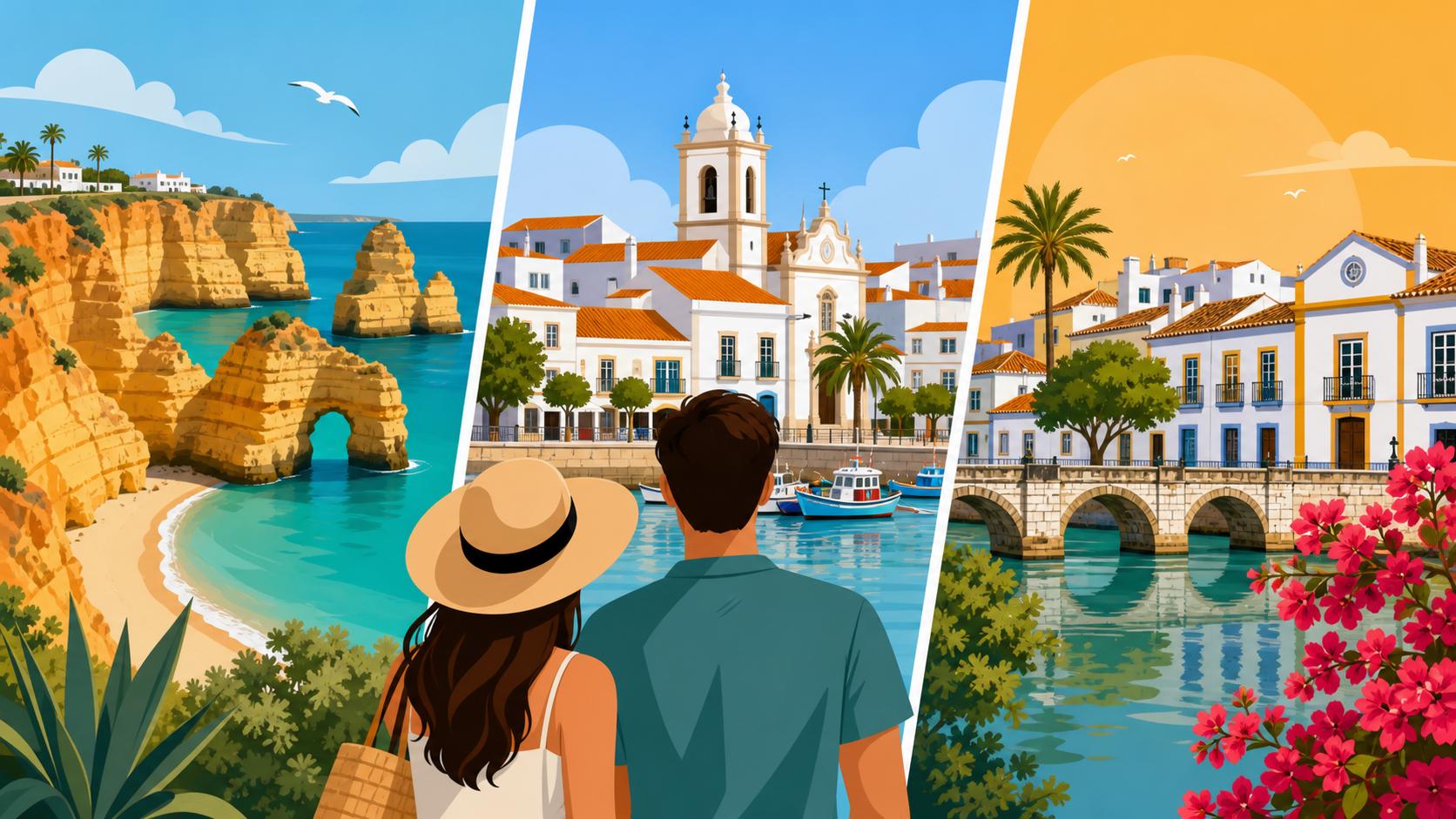
The Algarve for Expats: Lagos, Faro, and Tavira Compared
Disclosure: This article contains affiliate links. If you buy through them, we may earn a commission at no extra cost to you. Read our full disclosure.
The hardest part of moving to southern Portugal isn't the paperwork—it's the paralyzing fear that you'll pick a town that turns into a ghost village the moment the September sun dips. I remember my first winter in a coastal hamlet, watching the last gelato shop board up its windows and feeling a sudden, sharp isolation. This guide breaks down the nuances of Lagos, Faro, and Tavira to ensure you find a year-round home, not just a summer fling.
The Algarve Appeal Beyond the Postcards
When people think of the Algarve, they usually see the ochre cliffs of Benagil or the neon lights of Albufeira’s "Strip." But for those of us who have moved our entire lives here, the reality is far more complex. The region is effectively split into the Sotavento (the leeward east) and the Barlavento (the windward west). Each side offers a distinct climate, a different type of coastline, and, most importantly, a different social rhythm. Understanding this divide is the first step in deciding Where to Live in Portugal: Lisbon, Porto, Algarve, and Silver Coast Compared.
The Barlavento, where Lagos sits, is characterized by those dramatic Atlantic cliffs and a more cosmopolitan, international vibe. It’s where the surfers, the digital nomads, and the yachting crowd congregate. The Sotavento, home to Tavira, is flatter, warmer, and dominated by the Ria Formosa lagoon system. Here, life moves at a pace that can feel almost meditative—or frustratingly slow, depending on how much you’ve adjusted to the local "amanhã" (tomorrow) culture.
The Two Algarves Reality Summer vs Winter
Let’s be honest: the Algarve you see in July is a different planet from the one you experience in January. In the peak of summer, the population quadruples. Traffic on the N125 becomes a nightmare, and getting a table at your favorite petiscos bar requires a level of planning usually reserved for military operations. For expats, this means your "Cost of Living in the Algarve: Winter vs Summer price differences for expats" will fluctuate significantly, as short-term rental prices skyrocket and local services become stretched to their limits.
However, the winter is when the true beauty of the region reveals itself to residents. While the rest of Northern Europe is shivering under grey skies, we are often sitting outside in t-shirts for lunch. But there is a catch. Many houses in the Algarve were built for the heat, meaning they lack insulation. I spent my first winter huddled over a space heater because my beautiful tiled floors felt like ice. If you are looking for long-term rentals, check platforms like Uniplaces carefully to ensure you aren't getting a "summer only" build that will be damp and cold come December.
Cultural Nuances and the Expat Bubble
It is incredibly easy to move to the Algarve and never speak a word of Portuguese. Between the British enclaves in Almancil and the Dutch communities in Silves, you could live an entirely English-speaking life. But doing so means you miss out on the soul of the region. There is a specific warmth to the Algarvian people, a rugged kindness born from a history of fishing and farming. They might seem reserved at first, but once you share a coffee and a "pastel de nata," the barriers melt away.
The "expat bubble" can be a double-edged sword. It provides a safety net when you are trying to figure out how to pay a toll or why your internet has suddenly died, but it can also insulate you from the very reason you moved abroad. Newcomers are often advised to shop at the local municipal markets rather than just the big supermarkets. Not only is the produce better, but it’s the quickest way to integrate. If you can’t find specific home comforts locally, ordering from Amazon Spain is a common expat hack to get specialized items delivered to your door within a few days without customs headaches.
Lagos The Wests Golden Child
Lagos is often the first place expats fall in love with. It has a rare balance of historical charm—walled old town, cobblestone streets—and modern amenities. It feels youthful. On any given Tuesday morning, you’ll see retirees walking their dogs along the Avenida dos Descobrimentos alongside surfers heading to Praia do Zavial and tech workers perched in cafes with their laptops. It is arguably the most "balanced" town in the region for those who want a mix of everything.
The social scene in Lagos is vibrant. Because it attracts a younger demographic of remote workers, there is a steady stream of meetups, language exchanges, and co-working events. This makes it a top choice for those arriving on a D8 visa. However, this popularity comes at a price. Finding a long-term rental here has become notoriously difficult. You’ll often find that "Renting an Apartment in Portugal: Contracts, Fees, and Tenant Rights" becomes a vital topic of study because many landlords would rather rent to tourists for €150 a night in August than a resident for €1,200 a month all year.
Lifestyle and Vibes Digital Nomads vs Retirees
Lagos manages to cater to two very different crowds without feeling disjointed. The Marina area is the hub for the more affluent, boat-owning crowd and retirees who enjoy the flat, accessible walks and the proximity to high-end dining. Meanwhile, the historic center and the area around the "Rua 25 de Abril" are filled with backpacker bars, boutique hotels, and trendy brunch spots that appeal to the younger crowd.
The town also benefits from being a gateway to the Costa Vicentina—the wild, protected west coast. If you are someone who needs rugged nature and world-class surfing to be happy, Lagos is your base. You can be at the dramatic cliffs of Sagres in 30 minutes. Just ensure your connectivity is sorted before you head out to those remote beaches; it is wise to consider getting a local data plan or using Airalo for a secondary eSIM to ensure you have signal for navigation when the Atlantic winds mess with the local towers.
Housing Market and Neighborhoods
If you are looking to buy or rent in Lagos, you need to understand the micro-geography. Meia Praia offers long stretches of sandy beach and modern apartment blocks, but it can feel a bit disconnected from the town center in the winter. The Porto de Mós area is increasingly popular for luxury villas, offering stunning sea views but requiring a car for almost every errand. For those who want the true Lagos experience, the "Bairro Operário" or the streets just outside the city walls offer a more authentic, residential feel.
Be prepared for the "Algarve premium." Prices in Lagos have risen faster than almost anywhere else in the region. When budgeting, don’t just look at the rent. Factor in the cost of Buying a Car in Portugal: IUC Tax, Inspections (IPO), and High Vehicle Costs because, while Lagos itself is walkable, the surrounding natural parks and hidden beaches are not. Public transport exists, but it operates on a schedule that is "suggestive" at best.
Faro The Authentic Regional Capital
Faro is frequently misunderstood. Most people see the airport and the train station and then immediately flee west or east. Their loss is the expat’s gain. Faro is the only city in the Algarve that feels like a real, functioning Portuguese city rather than a resort town. It is the administrative heart of the region, meaning the schools, hospitals, and government offices are all here. It doesn't "shut down" in the winter because the locals actually live here year-round.
Living in Faro gives you a sense of permanence. You aren't just a guest in a holiday destination; you are a resident of a capital. The historic "Cidade Velha" is stunning, with its cathedral and orange-tree-lined squares. But the real life happens in the grid of streets behind the harbor, where students from the University of the Algarve mingle with lawyers and shopkeepers in traditional "tascas."
Urban Living and Connectivity
Faro is the ultimate hub. If you live here, you are 10 minutes from an international airport, which is a massive plus if you need to travel back home or for work. It’s also the terminus for the Alfa Pendular high-speed train to Lisbon. I’ve often hopped on the morning train, spent the day in the capital for meetings, and been back in time for a sunset glass of wine by the Ria Formosa.
The city is also exceptionally walkable. Unlike Lagos, which has its fair share of hills, Faro is mostly flat. This makes it an excellent choice for older expats or those who simply don't want the hassle of Navigating the Portuguese Toll System: Via Verde and Electronic Tolls every time they need to buy a loaf of bread. The connectivity extends to the digital realm too; Faro has some of the most reliable fiber-optic coverage in the south, making it a very safe bet for remote workers.
University Influence and Year Round Stability
The presence of the University of the Algarve is a game-changer. It injects a youthful energy into the city and, perhaps more importantly, keeps the economy stable. It also means there is a higher density of cultural events—film festivals, art galleries, and live music—than you’ll find in the more tourist-centric towns. Because the students need housing from September to June, the rental market is more geared toward mid-to-long-term stays, though competition can still be fierce.
For health-conscious expats, Faro offers the best access to medical care. You have the main public hospital (CHUA) as well as top-tier private options. If you are navigating the system, you’ll want to look into Finding an English-speaking General Practitioner (Médico de Família) early on. I’ve found that while the public system is excellent for emergencies, having private insurance to access the CUF or HPA clinics in Faro can save you months of waiting for specialists.
Tavira The Charm of the East
Heading east toward the Spanish border, the landscape changes. The cliffs disappear, replaced by the salt pans and marshes of the Ria Formosa. At the heart of this region is Tavira, often called the "Venice of the Algarve." It is, without a doubt, one of the most aesthetically pleasing towns in Portugal. With its Roman bridge, 37 churches, and houses topped with distinctive "tesoura" roofs, Tavira feels like a step back in time.
Tavira is for the expat who wants peace. It attracts a quieter crowd—mostly retirees and creative types who appreciate the slower pace. There are no high-rise hotels here; the building codes have been strictly enforced to preserve the town’s character. The beaches are located on the Ilha de Tavira, which requires a short, charming ferry ride to reach. This "barrier" keeps the beaches pristine and prevents the kind of overdevelopment seen in the central Algarve.
Roman Bridges and Salt Pans
Life in Tavira revolves around the Gilão River. The riverside walk is the social artery of the town, where people gather for their morning "galão" and evening "aperitivo." The town has a deeply traditional feel. You’ll see fishermen mending nets by the water and locals harvesting fleur de sel from the salt pans. For an expat, this offers an incredibly high quality of life if you enjoy nature and tradition.
However, the "East" is significantly hotter and drier than the "West." In the summer, the heat in Tavira can be intense. It’s also worth noting that because the town is so well-preserved, modern housing can be harder to find within the center. Many expats choose to live in the surrounding hills in areas like Santa Catarina da Fonte do Bispo, which offers more space and cooler breezes, though it does mean you’ll be more reliant on your car.
Slower Pace and Accessibility
The downside to Tavira’s charm is that it can feel a bit too quiet for some. If you are looking for a bustling nightlife or a high-tech networking scene, you might find Tavira a bit isolating. The "expat community" here is smaller and more spread out. However, for those who value being able to walk to a local bakery where the owner knows your name, Tavira is unbeatable.
Accessibility is another factor. Tavira is only 25 minutes from the Spanish border. This is a huge perk for residents. Many of us drive over to Ayamonte in Spain for a change of scenery, different tapas, and sometimes cheaper fuel. It also provides a gateway to exploring the rest of Andalusia. If you are settling here, make sure you've handled the basics like Registering with the Centro de Saúde: Getting Your SNS Número de Utente because the local health center is smaller, and you'll want to be in the system before you actually need it.
Side by Side Comparison Cost Accessibility and Community
Choosing between these three locations often comes down to your personal priorities. Are you looking for a beach-side lifestyle with a buzz, a convenient urban base, or a quiet, historical retreat? The costs are not as different as they used to be, but the "value for money" varies depending on what you consider essential.
| Feature | Lagos | Faro | Tavira |
|---|---|---|---|
| Primary Vibe | International / Trendy | Urban / Authentic | Historical / Peaceful |
| Best For | Nomads & Active Retirees | Working Pros & Students | Slow-lifers & Nature Lovers |
| Beach Access | Walkable (Cliffs/Coves) | Bus/Ferry (Barrier Islands) | Ferry Required (Islands) |
| Winter Liveliness | Medium (Many shops close) | High (Real city rhythm) | Low (Very quiet) |
| Public Transport | Average (Train/Bus) | Excellent (Hub) | Moderate (Train/Bus) |
| Rental Prices | Highest | Medium-High | Medium |
When you look at the Healthcare in Portugal for Expats: The Complete 2026 Medical Guide, you'll find that while all three have clinics, Faro is the only one with the full weight of a regional capital's medical infrastructure. Lagos residents often travel to Portimão or Alvor for major treatments, while those in Tavira may head to Faro or even across the border for certain private services.
Practical Survival Guide for Algarve Expats
Regardless of which town you choose, living in the Algarve requires a bit of logistical savvy. The first thing you'll notice is that everything takes longer than you think. Whether it’s getting a technician to fix your boiler or waiting for your residency card, patience is a mandatory skill. I spent three weeks waiting for a specific part for my washing machine that had to come from Lisbon; now I know to check availability on Amazon Spain for smaller household components first.
Another reality is the "August Shutdown." While the tourists are here, the local bureaucracy effectively stops. Don't try to renew a license or change a utility contract in August. The staff are either on holiday or overwhelmed by the seasonal demand. Plan your administrative tasks for October or March when the "tempo" is back to normal.
Connectivity and Remote Work
For those of us working remotely, the Algarve is a dream, but you have to be careful with "rural" properties. I’ve looked at gorgeous farmhouses in the hills behind Tavira that had zero mobile signal and internet speeds reminiscent of 1998. If you are renting or buying, always do a speed test during your viewing. In the more populated areas of Lagos and Faro, you can easily get 1Gbps fiber, which is better than what I had in many major UK cities.
If you are moving around a lot in your first few months, don't rely solely on hotel Wi-Fi. I used Airalo to keep a backup data plan active while I was waiting for my MEO installation. It saved me during more than one Zoom call when the local lines were being upgraded. Also, keep in mind that Finding Asian, Mexican, or specialty food ingredients in Lisbon and Porto is much easier than in the Algarve. While we have great local food, if you crave specific spices or international brands, you'll likely be making a "stock up" trip to the bigger cities or ordering online.
Managing the Bureaucracy and Services
The biggest hurdle for most is the health system. You'll hear horror stories about wait times, but the reality is usually more nuanced. If you are living in the west, you should read up on an Healthcare in the Algarve: HPA (Hospital Particular) review for expats to see if private care fits your budget. Most expats here use a "hybrid" model: the public system for big things and private for day-to-day specialist visits.
Finally, don't ignore the importance of a car. Even in Faro, having a vehicle opens up the hidden Algarve—the mountain villages of Monchique, the wild beaches of Aljezur, and the hidden waterfalls near Loulé. The good news is that the A22 highway has been toll-free since 1 January 2025, so you no longer need a Via Verde transponder or trips to the post office (CTT) to drive it, though some other motorways in Portugal still charge tolls.
Disclaimer
This guide is for informational purposes only. Immigration laws, rental regulations, and tax requirements in Portugal change frequently. Always consult with a qualified legal professional or a certified accountant before making significant financial or residency decisions. The experiences shared are based on personal observations and current local conditions in the Algarve for 2026.