Silver Coast (Costa de Prata): Affordable Expat Living Outside the Cities
Disclosure: This article contains affiliate links. If you buy through them, we may earn a commission at no extra cost to you. Read our full disclosure.
Finding yourself priced out of Lisbon's trendy neighborhoods or exhausted by the humid hustle of Porto is a rite of passage for many newcomers in Portugal. I remember staring at a damp, overpriced T1 in Graça and realizing my entire remote salary would vanish just to keep a roof over my head. This guide explores the Silver Coast (Costa de Prata) as the ultimate solution for those seeking a balanced, affordable, and authentic Portuguese lifestyle without sacrificing modern amenities.
Understanding the Geography and Appeal of the Silver Coast
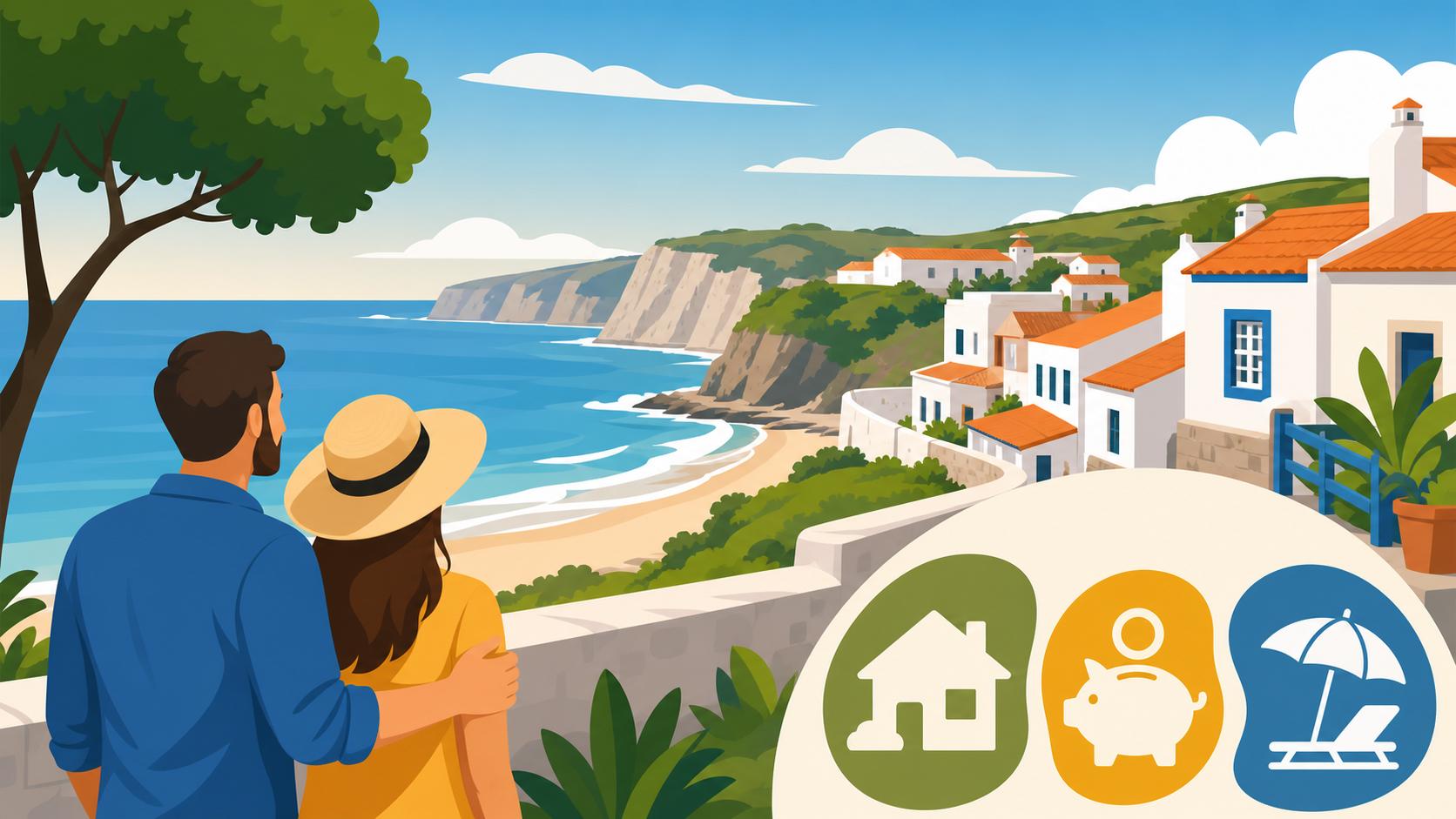
The Silver Coast isn't a single town, but a ruggedly beautiful stretch of Atlantic coastline that runs roughly from Ericeira in the south up to the outskirts of Porto in the north. Unlike the manicured, golf-course-heavy landscape of the Algarve, the Silver Coast feels wilder and more traditional. It is where you find the soul of central Portugal, characterized by dramatic cliffs, vast sandy beaches, and medieval towns that haven't been entirely transformed into tourist traps.
Defining the Core Towns and Hubs
When people talk about living on the Silver Coast, they are usually referring to a few key areas that serve as anchors for the expat community. Caldas da Rainha is the unofficial capital of the region. It is a mid-sized city known for its historic thermal baths, its vibrant daily fruit and vegetable market, and a thriving arts scene. Living here gives you a "real" Portuguese city experience with theaters, hospitals, and parks, but at a fraction of the cost of Lisbon.
Moving toward the ocean, you have the coastal gems like São Martinho do Porto, which features a unique shell-shaped bay that provides calm waters—a rarity on the Atlantic. Further north sits Nazaré, famous for its record-breaking monster waves in the winter, but a charming, narrow-streeted fishing village in the summer. For those who prefer a bit of history, the walled town of Óbidos offers a fairytale setting, though it can become quite crowded with day-trippers during the chocolate and medieval festivals. Choosing between these depends on whether you want a year-round "working" town like Caldas or a seasonal "resort" vibe like Nazaré.
The Realistic Climate Expectations
One thing I learned the hard way after moving from the sunny south is that the Silver Coast is not the Algarve. It is greener for a reason. The Atlantic breeze is a constant companion here, which is a blessing in the scorching months of July and August when Lisbon feels like an oven. However, the winters are noticeably cooler and much more humid. It isn't uncommon for a sea mist to roll in during the mornings, giving the coastline a mysterious, ethereal feel.
For an expat, this means you must prioritize housing quality. Many older homes in this region were built for summer use and lack proper insulation. Before signing a long-term lease, you should look for modern construction or houses with "aquecimento central" (central heating). If you are still in the scouting phase, using a platform like Uniplaces can help you find mid-term rentals that allow you to "test-drive" a town during the winter months before committing to a purchase or a multi-year contract.
Comparing the Cost of Living to Major Cities
The primary driver for the migration to the Silver Coast is, undoubtedly, the financial relief. Even in 2026, as prices have risen across the country, the "Silver Coast discount" remains significant. You can often find a spacious three-bedroom villa with a small garden in a village near Alcobaça for the same price as a cramped studio apartment in the Estrela district of Lisbon.
Rental and Real Estate Value
The real estate market here is much more approachable for the average family. While Lisbon and Porto have seen astronomical increases, the Silver Coast offers a variety of price points. In towns like Caldas da Rainha or Torres Vedras, a T2 (two-bedroom) apartment might rent for €700 to €900, whereas the equivalent in Lisbon would easily surpass €1,500. This disparity allows expats to maintain a higher quality of life, perhaps even affording a private pool or a view of the Atlantic.
If you are just arriving and haven't secured a local bank account yet, the initial costs can be high due to the lack of a "Fiador" (guarantor). Landlords in this region are generally more traditional, but they are becoming accustomed to foreigners. Always ensure you are looking at Portuguese Lease Contracts (Contrato de Arrendamento): What to Look For to avoid the common pitfalls of informal agreements that don't offer you legal protection.
Everyday Expenses and Local Markets
Where you really save money is in the "hidden" costs of daily life. Eating out in the Silver Coast is a joy because you are often paying "local" prices rather than "tourist" prices. A "Prato do Dia" (plate of the day) including soup, a main dish, wine, and coffee can still be found for under €12 in many village tascas. The proximity to the ocean means seafood is incredibly fresh and affordable, while the agricultural heartland nearby keeps the produce prices low.
The Cost of Living in Portugal 2026: Detailed Budgets for Singles and Families often highlights how grocery bills can be slashed by shopping at local "mercados" instead of large supermarket chains. In Caldas da Rainha, the Praça da Fruta is open every single day, offering incredible local cheeses, honey, and vegetables directly from the farmers. This not only saves you money but also integrates you into the local rhythm of life.
| Expense Category | Lisbon / Porto (Estimated) | Silver Coast (Estimated) |
|---|---|---|
| Rent (T2 Apartment) | €1,400 – €2,000 | €750 – €1,100 |
| Dinner for Two (Mid-range) | €50 – €70 | €35 – €50 |
| Monthly Transit Pass | €40 | €30 – €40 |
| Gym Membership | €40 – €60 | €30 – €45 |
| Utilities (Electricity/Water) | €120 – €160 | €100 – €140 |
Infrastructure and Remote Work Realities
Ten years ago, moving to the Silver Coast might have felt like "going off the grid." Today, it is a haven for digital nomads and remote workers who want more space for their home office. The infrastructure has caught up, with high-speed fiber internet now reaching even relatively small villages. However, there are still logistical hurdles to clear when you first land.
Internet Connectivity and Mobile Data
When you first arrive at the airport, you’ll want to be connected immediately to navigate to your new home. Many newcomers use a digital SIM from a provider like Airalo to bridge the gap between your arrival and the day your local fiber internet is installed. Once you are settled, the big three providers—MEO, NOS, and Vodafone—offer reliable service throughout the Silver Coast.
For those working in tech or creative fields, the region has started to develop its own co-working spaces. Caldas da Rainha and Peniche (a surfer’s paradise) both have vibrant hubs where you can meet other professionals. If you are living in a more rural spot, just be sure to check the coverage map for 5G, as some valley areas can have "shadows" where the signal drops.
Transportation and Accessibility
One of the biggest perks of the Silver Coast is its proximity to Lisbon. The A8 motorway connects the region to the capital, making it possible to drive from Caldas da Rainha to Lisbon Airport in about an hour. This makes the region ideal for those who may need to visit the city for meetings once a week but want to spend the rest of their time in a quieter environment.
Public transport is available via the "Rede Expressos" bus network and the "Linha do Oeste" train line. While the buses are modern, frequent, and reliable, the train line is notoriously slow and in a state of ongoing (and seemingly eternal) modernization. For life on the Silver Coast, a car is almost a necessity if you want to explore the hidden beaches and nearby mountain ranges. You’ll also find that How to use the MB Way app: Why it’s better than carrying cash in Portugal is essential here, as many smaller village shops and cafes now prefer digital payments for even small transactions like a coffee or a "pastel de nata."
Health and Administrative Procedures
Relocating to a less urban area doesn't mean you lose access to quality services, but it does mean you might need to be more proactive. The bureaucracy in central Portugal can feel a bit more "old school" compared to the digitized offices in Lisbon.
Accessing the Healthcare System
The Silver Coast is well-served by both public and private options. There are major public hospitals in Caldas da Rainha, Leiria, and Torres Vedras. For routine care, you will need to start by Registering with the Centro de Saúde: Getting Your SNS Número de Utente. Be aware that many local health centers are understaffed, and you might wait several months to be assigned a "Médico de Família" (Family Doctor).
Because of this, many expats in the region opt for private coverage to skip the queues for specialists. You will find excellent private clinics like CUF or Hospital da Luz in the larger towns. It’s worth looking into Private Health Insurance in Portugal: Costs, Coverage, and Best Providers to ensure you have a safety net, especially since the premiums in Portugal are remarkably low compared to North America or the UK. Even if you use the private system, having a local doctor who knows the area is vital, so don't overlook the importance of Finding an English-speaking General Practitioner (Médico de Família) in your specific town.
Managing Residency and Taxes
When you move to the Silver Coast, you will likely need to deal with the local "Finanças" (Tax Office) and the "Câmara Municipal" (Town Hall). If you are moving under a D7 or D8 visa, your first step is usually NIF and NISS: How to Get Your Portuguese Tax and Social Security Numbers. The clerks in the Silver Coast offices are often very friendly, but their English proficiency may be lower than in the capital.
A "veteran move" often recommended is to bring a Portuguese-speaking friend or hire a local fiscal representative for your first few visits. Also, make sure you register your address at the "Junta de Freguesia" to get your "Atestado de Morada." This little piece of paper is the "Golden Ticket" of Portuguese bureaucracy; you’ll need it for everything from registering your kids for school to getting a local resident's discount at the gym.
Social Life and Cultural Integration
The most common fear I hear from people moving "outside the cities" is that they will be lonely. On the Silver Coast, the opposite is often true. Because the expat community is smaller and more spread out, people tend to be more intentional about connecting.
Building a Community
There are thriving Facebook groups and "Meetup" circles for the Silver Coast, with regular events ranging from beach cleanups in Peniche to wine tastings in the Bombarral region. The community here is a mix of retirees, young digital nomad families, and "homesteaders" who have bought old farmhouses to renovate. This diversity makes for a very welcoming environment where you aren't just "another tourist."
Integration with the local Portuguese community is also easier here than in the high-turnover neighborhoods of Lisbon. People have the time to talk to you. If you make an effort to use even basic phrases, you’ll find the locals incredibly patient. I strongly recommend Learning European Portuguese: Top Apps, Tutors, and Free Government Classes as early as possible. Being able to chat with your neighbor about their vegetable garden or the weather will change your experience from "living in a place" to "belonging to a place."
Shopping and Home Life
While the local markets are great for food, you might miss the variety of international goods found in Lisbon's specialty shops. This is where Amazon Spain becomes your best friend. Delivery to the Silver Coast is usually very fast (often 24-48 hours), and it saves you the long drive to an IKEA or a specialized electronics store.
One practical tip for your home life: buy a high-quality dehumidifier the moment you move in. The coastal air is wonderful for your lungs but can be tough on your walls if you don't manage the indoor humidity. Reading up on the Best dehumidifiers to buy in Portugal to prevent winter wall mold will save you a lot of stress (and paint) during your first winter.
Pros and Cons of the Silver Coast Lifestyle
To give you the most "I've-been-there" realistic view, we have to look at both the sunset-filled evenings and the logistical headaches. The Silver Coast is a lifestyle choice that trades "convenience" for "quality."
The Advantages of Central Living
The biggest pro is the sheer variety of life. In a single day, you can hike in the Serra de Montejunto mountains, visit a world-class vineyard, and watch the sunset over the Atlantic. You are centrally located, meaning Where to Live in Portugal: Lisbon, Porto, Algarve, and Silver Coast Compared usually ranks this region highest for those who want to see the "real" Portugal. You have more money in your pocket, more space in your home, and a much slower, more intentional pace of life.
The Challenges to Consider
The main con is the "August Shutdown" and the winter "Damp." In August, the coastal towns become very busy with Portuguese families on holiday, making parking and restaurant reservations a nightmare. In the winter, some of the smaller seaside villages can feel like "ghost towns" as the seasonal shops close up. If you are someone who needs the constant buzz of a 24/7 city, the quiet Tuesday nights in a town like São Martinho do Porto might feel a bit too isolated. However, for those of us who have lived through the administrative and cultural hurdles, the peace and the community of the Costa de Prata are well worth the trade-off.
Disclaimer
The information provided in this guide is for educational and informational purposes only and does not constitute legal, financial, or professional medical advice. Immigration laws, tax regulations, and healthcare policies in Portugal are subject to change. Always consult with a qualified professional, such as an immigration lawyer, certified accountant, or medical practitioner, regarding your specific circumstances. Personal experiences shared are subjective and may not reflect the current reality for every individual.