NIF and NISS: How to Get Your Portuguese Tax and Social Security Numbers
Starting your life in Portugal often feels like a puzzle where the pieces refuse to fit until you have two specific strings of digits: the NIF and the NISS. I remember standing in a humid government office for three hours, clutching my passport, only to be told I couldn't get a phone plan without a tax number I didn't yet have. This guide deconstructs that bureaucratic "chicken and egg" cycle, showing you exactly how to secure your Portuguese Tax and Social Security numbers so you can actually start living.
Understanding the NIF: Your Key to Life in Portugal
The Número de Identificação Fiscal, or NIF, is arguably the most important document you will hold in Portugal, often more immediately useful than your actual residence permit. Without it, you are essentially invisible to the Portuguese system. You cannot sign a rental agreement, get a SIM card, open a bank account, or even sign up for a gym membership. It is a nine-digit number that follows you for life, serving as your unique identifier for all things financial and administrative.
What exactly is a NIF and why do you need it?
In many countries, you only interact with the tax office once a year. In Portugal, the NIF is a daily companion. When you go to the supermarket, the cashier will ask, "NIF na fatura?" (Tax number on the invoice?). This isn't just a polite suggestion; it’s part of a national system to combat tax evasion. By attaching your NIF to your purchases, you can actually earn small tax rebates on categories like healthcare, education, and even your monthly hairdressing bill or restaurant meals.
Beyond the supermarket, the NIF is the foundational stone for your immigration journey. If you are looking at the D7 Passive Income Visa Portugal: 2026 Requirements and Step-by-Step Process, the first thing your lawyer or consultant will tell you is that you need a NIF to open the mandatory Portuguese bank account. Even if you are just scouting the country as a tourist, having a NIF allows you to put down a deposit on a long-term rental or buy a vehicle. It is the bridge between being a visitor and becoming a resident.
How to get your NIF: The three main pathways
There are generally three ways to obtain your NIF, and the "best" way depends entirely on your current location and your tolerance for bureaucratic friction. The most traditional method is going in person to a Finanças office (Autoridade Tributária e Aduaneira) or a Loja do Cidadão. If you are an EU/EEA citizen, this is relatively straightforward. You bring your passport and proof of address from your home country, wait in line, and walk out with a piece of paper.
For non-EU residents, the process is slightly more complex due to the requirement for a fiscal representative. If you aren't in the country yet, or if you want to avoid the infamous four-hour wait times in Lisbon's central offices, using a remote service is the path of least resistance. Companies like Bordr have specialized in this, allowing you to upload your documents online and receiving your NIF via email in a matter of days or weeks. This is particularly useful for those needing to Opening a Bank Account in Portugal: Best Banks for Foreigners and Expats before they even board their flight.
Fiscal Representation: The hurdle for non-EU residents
If you are a resident of a non-EU/EEA country (like the US, UK, or Canada), Portuguese law historically required you to have a fiscal representative—a person or entity already resident in Portugal who acts as a point of contact for the tax authorities. While some rules have softened regarding the requirement for a representative if you opt for digital notifications, many Finanças offices still insist on one during the initial application for non-residents.
A fiscal representative essentially vouches for your "reachability." If the tax office sends you a letter and you don't respond because you’re still in New York or London, the representative is the one they hold accountable. This is why many expats choose to pay a professional service to act as their representative initially. Once you move to Portugal and get your residency card, you can—and should—update your address on the Finanças portal and remove the fiscal representative, effectively becoming your own representative. This is a crucial step in Becoming a Tax Resident in Portugal: The 183-Day Rule Explained.
Navigating the NISS: Accessing the Social Security System
While the NIF handles your taxes and spending, the Número de Identificação de Segurança Social (NISS) is what connects you to the social safety net. If you plan on working, freelancing, or eventually accessing the public healthcare system as a resident, the NISS is non-negotiable. It is the number used to track your contributions to the state pension, unemployment benefits, and maternity/paternity leave.
What is the NISS and who needs one?
The NISS is your social security number. If you are moving to Portugal to retire and will not be working, you might think you don't need one. However, the NISS is often requested when you are Registering with the Centro de Saúde: Getting Your SNS Número de Utente. The public health system uses the social security database to verify your eligibility for subsidized care. For those who are working, the NISS is how your employer deducts your mandatory 11% contribution (and their 23.75% contribution) from your monthly salary.
If you are a digital nomad on a Portugal D8 Digital Nomad Visa: How to Work Remotely and Live Legally, you will need a NISS to pay into the system if you choose to become a tax resident and freelancer in Portugal. It is the "active" counterpart to the NIF's "passive" financial role. Having a NISS means you are officially part of the labor force or the protected social group in the eyes of the Portuguese state.
Getting your NISS online: A step-by-step walkthrough
The good news is that the days of sleeping outside the Seguranca Social office to get a "senha" (ticket) are mostly over. The government launched an online portal specifically for requesting a NISS. You will need to provide a scanned copy of your passport and your NIF. This is why the NIF must always come first. The online form asks for basic biographical data, your parents' names (a very common requirement in Portuguese bureaucracy), and your address.
Once you submit the request through the "Segurança Social Direta" portal, the processing time can vary from a few days to a few weeks. You will receive an email notification when the number is assigned. It is a remarkably efficient system compared to others in the country, but you must ensure your documents are perfectly legible. If there is a discrepancy between the name on your passport and the name you type into the form, it will be rejected without much explanation, leaving you to start over.
NISS for the self-employed vs. employees
The way you use your NISS depends on your employment status. If you are a standard employee, you simply hand your NISS to your HR department, and they handle the rest. However, many expats start their journey as "Trabalhadores Independentes" (Freelancers). In this case, you are responsible for making your own declarations. Once you have your NISS, you will eventually need to navigate Social Security Contributions for Freelancers: How to Calculate Your Quota.
For the first 12 months of freelancing in Portugal, you are often exempt from making social security contributions, but you still must have the NISS and be registered. This "honeymoon period" is a great way for new residents to find their feet financially. Just remember that even if you aren't paying, you still need to file your quarterly declarations to show the state what you are (or aren't) earning.
The Administrative Interplay: NIF, NISS, and Your Visa
It is important to view the NIF and NISS not as isolated tasks, but as prerequisites for your larger immigration goals. The Portuguese immigration agency, now known as AIMA, expects these numbers to be in place during various stages of your residency application or renewal.
Why you need these numbers for your D7 or D8 application
When you apply for a visa at a Portuguese consulate in your home country, they want to see "proof of integration" and "financial capacity." Having a NIF and a Portuguese bank account (which requires the NIF) proves that you have already begun the process of moving your life to Portugal. It shows the consular officer that you are serious.
For the D8 Visa Income Requirements 2026: Proving €3,680 Monthly Active Income, you will eventually need to show how that money is entering the Portuguese economy. While you can initially use foreign bank statements, once you are in the country and applying for your actual residence permit at your AIMA appointment, having your NISS ready shows that you are prepared to contribute to the social system if required. It streamlines the interview process significantly.
Coordinating the timeline for your move
Timing is everything in Portuguese bureaucracy. You should aim to get your NIF at least 2-3 months before your intended move date or visa appointment. This gives you enough time to How to open a Millennium bcp account before arriving in Portugal, which is the standard choice for most expats due to their English-speaking staff.
The NISS can be applied for once you have the NIF, but if you are an employee, your company will often do this for you once you have a signed contract. If you are moving under Family Reunification Visa in Portugal: Bringing Your Spouse and Children, remember that each family member, including children, needs their own NIF. While children don't necessarily need a NISS immediately unless they are accessing specific social benefits, it is usually easier to get both at the same time to avoid future trips to government offices.
Address updates: Moving from foreign to Portuguese residency
A common mistake I see expats make is keeping their "non-resident" status on their NIF for too long. When you first get your NIF, it will be linked to your address in your home country. Once you have a long-term lease or have purchased a home, and once you have your residency card from AIMA, you must update your address at the Finanças office.
This change is what officially triggers your status as a tax resident of Portugal. If you forget to do this, you might run into issues with the "183-day rule" and find yourself struggling to prove your residency for citizenship purposes later on. Updating your address is also the moment you can remove your fiscal representative and stop paying any annual fees associated with that service. It’s a rite of passage—the moment you are no longer a "visitor" but a "vizinho" (neighbor).
Common Pitfalls and Expert Tips for Success
Even with the best intentions, the "Portuguese way" can be opaque. Small errors in paperwork can lead to months of delays. After years of watching people navigate this, I’ve noticed a few recurring themes that separate the successful expats from the frustrated ones.
Dealing with Finanças: What to expect in person
If you do decide to go to a Finanças office in person, arrive early—at least 30 to 45 minutes before they open. The "tickets" (senhas) for NIF services often run out within the first hour of the day in busy hubs like Lisbon, Porto, or Faro. If you don't speak Portuguese, bring a friend who does, or have a translation app ready. While many officers speak excellent English, they are not legally required to, and the official language of the proceedings is Portuguese.
Be prepared for "o sistema está em baixo" (the system is down). It happens. Don't get angry; it won't help. Instead, use the opportunity to ask for the "Livro de Reclamações" if you feel you are being unfairly denied service, but generally, a smile and a "Bom dia" go much further than a demand. For more on this, check out Portuguese Hospital Etiquette: Visiting Hours and Patient Rights which, while medical-focused, covers a lot of the same cultural ground regarding patience and respect in public institutions.
The importance of professional translation for documents
Portuguese bureaucracy is obsessed with "original" and "certified" documents. If you are providing a power of attorney for someone to get a NIF for you, or if you are showing a birth certificate for a NISS application, it often needs to be translated. This is where a service like RushTranslate becomes invaluable. A "standard" translation from a random person is rarely accepted; it usually needs to be a certified translation that meets the standards of the Portuguese consulate or the specific government department.
Always keep a folder (physical and digital) of every document you’ve ever submitted. I can’t tell you how many times I’ve been asked for a document I gave them three months prior. Having a "certified" copy ready to go can save you a week of back-and-forth emails. This is especially true when Translating and Certifying Documents for Portuguese Immigration.
| Document / Number | Issuing Body | Primary Purpose | Required For |
|---|---|---|---|
| NIF | Finanças (AT) | Taxes, Banking, Contracts | Everything (SIM, Rent, Bank) |
| NISS | Segurança Social | Work, Pension, Healthcare | Working, Freelancing, Public Health |
| Número de Utente | SNS (Health) | Public Medical Care | Doctor appointments, Prescriptions |
| CRUE | Local Camara | EU Resident Registration | Proving residency (EU citizens only) |
How to avoid "bureaucratic loops"
The "loop" usually looks like this: You need a bank account to get a lease, but you need a lease to show a local address for the bank account. To break this, use your foreign address for your NIF and your bank account initially. Portugal allows you to open a "non-resident" bank account. Once you are settled and have your Portuguese Lease Contracts (Contrato de Arrendamento): What to Look For, you then go back and update everything to your new local address.
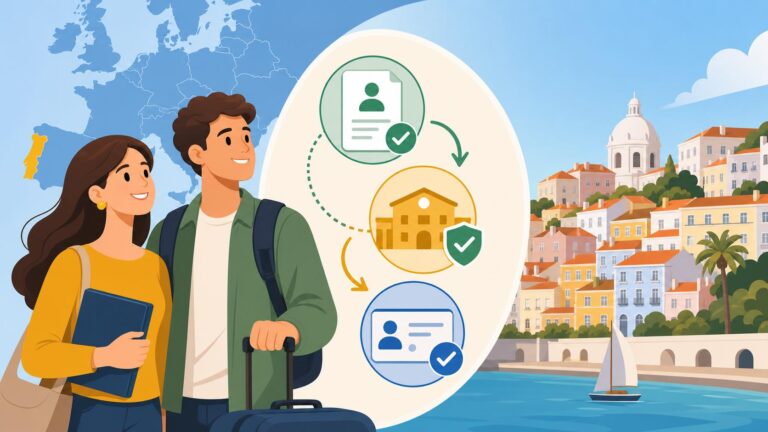
Another loop involves the NISS and the NIF. Some people try to get a NISS first to prove they want to work, but Seguranca Social will almost always ask for your NIF first to create your profile. Always follow the order: NIF -> Bank Account -> Visa/Residence -> NISS -> Health Number. If you try to skip a step, the "system" will eventually flag it, and you'll be sent back to the start line.
Practical Resources and Cost Comparison
Getting these numbers doesn't have to be expensive, but you are often trading money for time. For many, the cost of a professional service is a small price to pay to avoid the stress of navigating a foreign-language government website that might not even accept a foreign credit card for the small processing fees.
DIY vs. Using a Service
If you are already in Portugal and have an EU passport, the DIY route for a NIF is essentially free (or the cost of a few euros for the document). However, for a non-EU person needing a fiscal representative, you might pay anywhere from €80 to €150 for a professional service to handle the NIF and the first year of representation.
The NISS is free to apply for online, but if you are struggling with the portal, some relocation agents include NISS registration in their "arrival packages." If you are feeling overwhelmed, it might be worth looking into Using an agency vs DIY: Is it worth paying for a Portugal visa relocation service? to see if a holistic approach fits your budget better than piece-meal applications.
What to do after you get your numbers
Once you have your NIF and NISS, your first task should be to request your passwords for the online portals. For the NIF, you request a "Senha" on the Portal das Finanças. They will mail a physical letter with a code to your registered address. This is why having a reliable address (or a fiscal representative who checks their mail) is vital.
With these passwords, you can log in to check your tax status, validate invoices for tax back (e-Fatura), and see your social security contributions. It gives you a level of control over your administrative life that is much better than waiting for letters in the mail. You can also start looking into Private Health Insurance in Portugal: Costs, Coverage, and Best Providers if you want to supplement the public system you've just joined. Many people find that Cigna Global offers the kind of comprehensive coverage that bridges the gap between their home country's expectations and the Portuguese reality.
Security and privacy for your tax data
In Portugal, your NIF is a very "public" private number. You’ll be asked for it constantly—at the pharmacy, the hardware store, even when buying a laptop. While it’s normal to give it out for tax receipts, be cautious about sharing your actual login credentials for the Finanças or Segurança Social portals.
Your Portal das Finanças account contains your entire financial history in Portugal. If you are working with an accountant, which is highly recommended if you are Starting a Business in Portugal: Lda Setup, Corporate Tax, and Accounting, you will usually give them "consultant" access rather than your personal password. Treat your Portuguese digital identity with the same care you would your banking details back home.
Disclaimer
This guide is for informational purposes only and does not constitute legal or financial advice. Portuguese immigration and tax laws are subject to frequent change, and while we strive to keep this information up to date for 2026, you should always verify requirements with official government sources such as the Portal das Finanças or AIMA. Every expat's situation is unique, and consulting with a qualified professional is recommended for complex cases.