Garbage, Recycling, and Condominium Fees (Quota de Condomínio)
Disclosure: This article contains affiliate links. If you buy through them, we may earn a commission at no extra cost to you. Read our full disclosure.
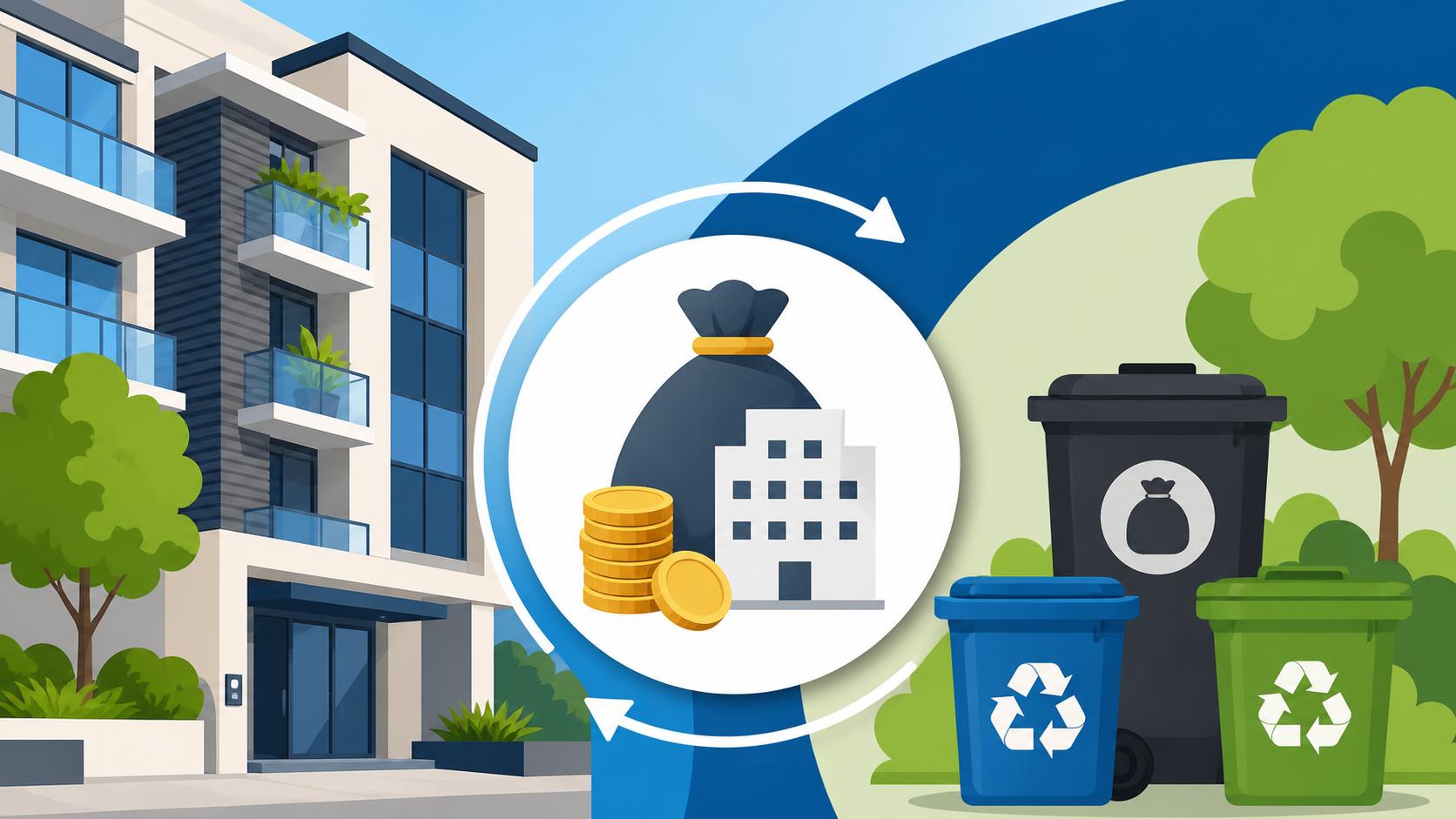
You moved into your Portuguese flat, and now you face three mysteries. There is a row of coloured bins on the corner. A neighbour has slipped a note under your door about the “quota.” And a broken sofa is sitting in your living room with no obvious way out. This guide covers how waste, recycling, bulky pickup and condominium fees actually work in Portugal, and who pays for what.
How Household Garbage Works in Portugal
Rubbish in Portugal is not complicated. It is simply different from what most of us grew up with. Most cities have no kerbside wheelie bin with your house number on it. Instead you carry your bags to shared street containers, and nobody explains this when you arrive. I spent my first week in Lisbon hovering by the front door with a bag in hand, waiting to see where my neighbours went.
Street Containers and Building Bins
In dense neighbourhoods like Alfama, Graça, Baixa or Porto’s Ribeira, you will usually find large grey or green containers on the street. Some have a foot pedal on the side to lift the lid. Many newer areas have underground systems: a metal hatch on the pavement swallows your bag into a buried tank. These are emptied by the municipal service, often at night. So yes, that grinding truck at one in the morning is normal.
Newer apartment buildings, especially in suburbs like Parque das Nações, Matosinhos or Oeiras, often keep bins in a ground-floor or garage room. The building cleaner, the “empregada da limpeza do prédio,” wheels them out on collection days. The cleaner is paid out of your condominium fees, which is one of the first places the quota and the garbage overlap. If your building works this way, ask a neighbour or the administrator which days the bins go out. Leaving bags in the bin room on the wrong night can mean smells and, in summer, cockroaches.
Timing Rules and Local Etiquette
Many municipalities set hours for putting general waste out, usually evenings. In historic centres where collection happens street by street, leaving a bag on the pavement in the morning can earn a fine from the local police or municipal inspectors. Rules vary between Câmaras, so check your own council’s website or the notices in your building’s entrance.
Etiquette matters too. Tie your bags properly, never leave them beside a full container, and do not put loose rubbish into the containers. In older buildings the elderly neighbour on the ground floor watches the entrance closely. A few careless bags will shape how the whole building sees “the foreigners on the third floor.” Small courtesies go a long way.
How You Actually Pay for Waste Collection
The question most newcomers have is where the bill comes from, since nobody hands you a garbage invoice. In most municipalities the waste charge, usually called the tarifa de resíduos or tarifa de gestão de resíduos urbanos, is added to your water bill. The amount is often linked to how much water you use, plus a fixed component. If you look closely at your water statement, you will see separate lines for water, sanitation and waste.
So when you open a water contract, you are effectively signing up for rubbish collection too. If you have not done that yet, see How to Set Up Water Service in a Portuguese Home. If your rent includes utilities, the waste fee is folded into that arrangement. What does “Despesas Incluídas” mean in a Portuguese rental advertisement? explains what is and is not normally covered.
Recycling in Portugal: The Ecoponto System
Recycling here runs on the “ecoponto,” a cluster of coloured containers you will see on almost every few blocks. Once you learn the colours it becomes automatic. Until then, it is easy to stand there holding a yoghurt pot and a pizza box, wondering which hole they belong in.
The Colour Code Explained
The system is built around a few main colours, with extra containers for specific items. Here is a practical summary to keep on your fridge for the first month.
| Container | Portuguese Name | What Goes In | What Stays Out |
|---|---|---|---|
| Yellow | Embalão | Plastic bottles, plastic packaging, cans, aluminium trays, drink cartons, metal lids | Toys, hard plastic household items, dirty nappies |
| Blue | Papelão | Cardboard boxes, newspapers, magazines, paper bags, egg boxes | Greasy pizza box sections, used tissues, waxed paper |
| Green | Vidrão | Glass bottles and jars without lids | Drinking glasses, mirrors, ceramics, light bulbs, window glass |
| Red or small tube | Pilhão | Household batteries | Car batteries |
| Brown | Biorresíduos | Food scraps and organic kitchen waste where available | Packaging, plastic bags, unless compostable and accepted locally |
| Grey or dark green | Indiferenciado | Everything that cannot be recycled | Anything recyclable or hazardous |
Drink cartons, the “pacotes” milk and juice come in, go in the yellow bin, not the blue one. People argue about this constantly in expat chats, but the yellow container is the right answer. Rinse packaging lightly; it does not need to be spotless. For a deeper walk-through, see Where to recycle glass, plastic, and paper: The Ecoponto color system.
Organic Waste, Cooking Oil and Special Items
Separate food waste collection is spreading across the country. Some Lisbon parishes, parts of Porto and various smaller municipalities now provide brown containers or small kitchen caddies. Some councils even hand out free starter kits at the Junta de Freguesia. If your area has one, using it noticeably cuts down the smell of your general waste bag.
Used cooking oil should never go down the sink, because old Portuguese pipes clog easily. Pour it into a plastic bottle and drop it at an “oleão,” an orange or yellow container often found near supermarkets or Junta offices. Old medicines and their packaging go back to pharmacies through the Valormed system; just ask at the counter. Small electronics and lamps can be returned to electronics shops or to dedicated “eletrão” collection points, and many supermarkets have a small box for batteries and bulbs near the entrance.
Making Recycling Work in a Small Portuguese Kitchen
The honest pain point is space. Portuguese kitchens, especially in older T1 and T0 flats, are tiny, and nobody designs them with five sorting bins in mind. Some people keep a single tall bin with stacked compartments. Others hang bags on the back of the balcony door, the “marquise,” if they are lucky enough to have one.
If your local shops lack a decent selection, Amazon Spain ships to mainland Portugal and stocks plenty of slim multi-compartment kitchen bins and under-sink sorting systems. That is handy when you need something narrow enough to squeeze beside the fridge. Hardware chains like Leroy Merlin and AKI also carry them. Choose whatever you will actually use: a clean yellow bag hanging on a hook beats a beautiful system that collects dust.
Getting Rid of Furniture and Bulky Items
Sooner or later you will face a mattress the landlord left behind, an IKEA wardrobe that did not survive the move, or a fridge that has died. You cannot simply dump these next to the street containers. Many people try, and the fines can be steep.
The Monstros Collection Service
Large items are called “monstros,” literally monsters, and almost every Câmara offers free or low-cost collection. You usually book by phone, through an online form, or with a municipal app. In Lisbon, for example, you can report and request bulky collection through the Na Minha Rua LX platform. Other councils use their own portals or a dedicated phone line at the Junta de Freguesia.
The typical process looks like this:
- Contact your Câmara or Junta and describe the items, such as a sofa, mattress or two chairs.
- Receive a date, and sometimes a reference number.
- Place the items at the agreed spot, usually beside the nearest containers, only on the evening before or the morning of collection.
- Keep your reference handy in case an inspector or neighbour asks.
For full details by city, see Booking large trash pickup (Monstros) for old furniture via your local Camara.
Selling or Donating Before You Discard
Before calling the monster truck, consider that a surprising amount of furniture finds a second life here. Students and new arrivals are constantly looking for cheap desks, bed frames and drawers. Listing something on a local marketplace often gets it picked up within a day, by someone who carries it down the stairs for you. If you go that route, Second-hand furniture in Portugal: Using OLX, Vinted, and Facebook Marketplace covers the platforms and the etiquette of haggling.
Charities and parish social centres also accept usable furniture and appliances, and some will collect. The Junta de Freguesia can often point you to who needs what locally.
Construction Debris and Renovation Waste
Rubble, tiles and old bathroom fittings from renovation work are not monstros. Most municipalities treat construction waste separately. You either hire a skip, contract the builder to remove it, or take small quantities to a municipal ecocentro. If you hire tradespeople, agree in writing who handles removal. Otherwise you may find a pile of broken tiles in the shared hallway and a very unhappy condominium administrator.
Understanding the Quota de Condomínio
Now to the part that confuses almost every newcomer: the monthly or quarterly condominium fee. If you live in any flat in a building with more than one owner, a condominium exists by law, even if it looks informal. That condominium needs money to run.
What the Quota Pays For
The quota de condomínio covers the shared costs of the building. That usually includes:
- Cleaning of stairs, entrance and common areas.
- Electricity for hallway lights, the lift and garage doors.
- Lift maintenance contracts and mandatory inspections.
- The professional administration company, where one is hired.
- Building insurance on the common parts.
- Small repairs to the entrance door, intercom and lighting.
- A contribution to the reserve fund.
Each owner’s share is normally based on their fraction’s “permilagem.” This is a value, expressed in parts per thousand, that is set in the building’s constitution document. A large T3 with a terrace pays more than a T0 on the ground floor. Some costs, like the lift, can be split differently if the building’s regulations say so. For a broader picture of building life, see Condominium Fees and Building Rules in Portugal.
The Reserve Fund and Extra Charges
By law, every condominium must keep a common reserve fund, the Fundo Comum de Reserva, to pay for conservation work. Each owner contributes a minimum share on top of the regular quota. This is money set aside so that when the roof leaks or the façade needs repainting, the building is not starting from zero.
When major work comes up, such as replacing a lift, redoing the roof or rebuilding a façade in an old Porto building, the reserve fund rarely covers everything. The assembly then votes on an “quota extra,” a one-off or temporary additional charge. These votes can be heated. If you own, they can also be a significant expense. Always ask how healthy the reserve fund is and what works are planned before you commit to buying.
Self-Managed Buildings Versus Professional Administrators
Smaller buildings, especially older ones with four to eight flats, are often self-managed. One owner volunteers as administrator, sometimes on a rotating basis, and collects the money into a shared bank account. This keeps costs low, but it depends heavily on that person’s goodwill and organisation. There are self-run buildings that work beautifully. I have also seen others where receipts live in a shoebox and nobody knows the account balance.
Larger buildings usually hire an administration company. They handle contracts, chase debts, organise meetings and send you payment references. You pay for the service through your quota, but you gain transparency and someone to email when the lift breaks. Neither model is automatically better. What matters is whether accounts are presented clearly at the yearly meeting.
Tenants, Owners and Who Pays What
This is where many renters get blindsided. A landlord mentions “condomínio” during the viewing, and suddenly you are not sure whether it is in the rent or on top.
The Default Rule and How Leases Change It
Under Portuguese law, condominium charges are the owner’s responsibility. A lease can transfer the regular quota to the tenant if both parties agree in writing. In practice, many landlords quote a rent that already includes the condomínio. Others add it on top, especially in buildings with pools, gyms or concierges in places like Cascais, Vilamoura or Expo.
Read the clause carefully. A fair contract should say whether the tenant pays only the regular quota or also extraordinary charges. Extraordinary charges for structural work belong with the owner, so be wary of any wording that pushes them onto you. Portuguese Lease Contracts (Contrato de Arrendamento): What to Look For goes through the clauses worth checking line by line.
| Cost | Normally Paid By | Can a Lease Shift It to the Tenant? |
|---|---|---|
| Regular quota for cleaning, lift, lighting | Owner | Yes, if agreed in writing |
| Reserve fund contribution | Owner | Usually stays with owner |
| Extra quota for major structural works | Owner | Should remain with owner |
| Waste charge on water bill | Whoever holds the water contract | Depends on whose name is on the contract |
| Fines for breaking building rules | Person responsible | Tenant, if they caused it |
Renting a Room or a Furnished Flat
If you are renting a room, the situation is usually simpler. Platforms like Uniplaces, popular with students and new arrivals in Lisbon, Porto and Coimbra, typically list a single monthly price. Condominium costs are absorbed into the landlord’s side, and bills are either included or split. Even so, it is worth confirming in the listing or by message what “bills included” covers. Some landlords cap utilities and charge extra above a certain level.
Renting a room still means living by the building’s rules. Bin routines, noise limits and use of common areas all apply to you, whether or not you ever see a condo invoice.
Paying the Quota Without Headaches
If the quota is your responsibility, the administrator will usually provide a bank transfer reference, an IBAN, or a Multibanco payment reference. Many buildings collect quarterly, though some go monthly. Setting up an automatic payment saves you from awkward reminder letters. See How to set up direct debit (Débito Direto) for your utility bills using Multibanco for the mechanics, and How to Pay Condominium Fees in Portugal for options specific to condo payments.
Keep every receipt. If your landlord later claims you missed payments, or you are an owner selling the flat, a clean payment history is your best defence.
Building Meetings, Disputes and Buying a Flat
The condominium is not just a fee. It is a small democracy, with its own meetings, minutes and occasional drama.
The Annual Assembly and Why It Matters
Owners must hold at least one ordinary assembly each year to approve the accounts and the budget. Extraordinary meetings are called for urgent issues or big projects. Notices are sent in advance by registered letter or, where owners have agreed, by email. Decisions are recorded in the “ata,” the official minutes. For owners this document is crucial, because a properly approved ata showing debts can be used to collect unpaid quotas through the courts.
Tenants generally cannot vote, though an owner can give a tenant written authority to represent them. Even without a vote, reading the minutes tells you a lot about the building. Leaks being argued about for years, or neighbours constantly in dispute, are worth knowing about. What is a Condominium meeting (Reunião de Condomínio) and should I attend? walks through what happens at these meetings and how to prepare.
Common Friction Points Between Neighbours
The same few issues come up in building after building. They include bags left in the stairwell, bikes and strollers blocking the entrance, laundry dripping onto the neighbour’s balcony below, and smoking in shared areas. Most buildings have a regulamento do condomínio, the house rules, which can set limits on these things and even provide for small penalties.
Noise is the classic one, particularly with tiled floors and thin walls in renovated older buildings. Before escalating, a polite note or a chat on the landing solves more than you would expect. If it does not, Quiet hours in Portuguese apartments (Lei do Ruído): Handling noisy neighbors explains the legal side.
A practical tip for the first weeks: administrators and neighbours increasingly coordinate through WhatsApp groups. Councils also send notices about collection changes through apps and SMS. If your home SIM is roaming expensively when you land, an Airalo eSIM keeps you reachable for those messages and lets you use municipal apps right away. Once settled, many people switch to a local Portuguese plan.
Checking Condominium Debts Before You Buy
If you are buying, condominium debt is one of the most important things to investigate. When a fraction is sold, the seller must provide a declaration from the administrator stating any amounts owed to the condominium. Ask for it early. Also request recent minutes, the current budget, the reserve fund balance and any approved works that have not yet been billed.
A building that has just voted for a major façade project can mean a large bill landing shortly after you get the keys. You want to know that before signing the promissory contract, not after. Your lawyer should raise these questions as part of due diligence. See CPCV (Promissory Contract): What you must know before signing to buy a house for how to protect yourself at that stage. For the full set of purchase costs, see Buying Real Estate: IMT Tax, Stamp Duty, and Closing Costs Explained.
Disclaimer
This article is for general informational purposes only and does not constitute professional advice. Laws, prices and regulations vary by location and change over time. Consult a qualified professional for guidance on your specific situation.