Heating and Insulation in Portuguese Homes: Fighting Winter Cold and Mold
Disclosure: This article contains affiliate links. If you buy through them, we may earn a commission at no extra cost to you. Read our full disclosure.
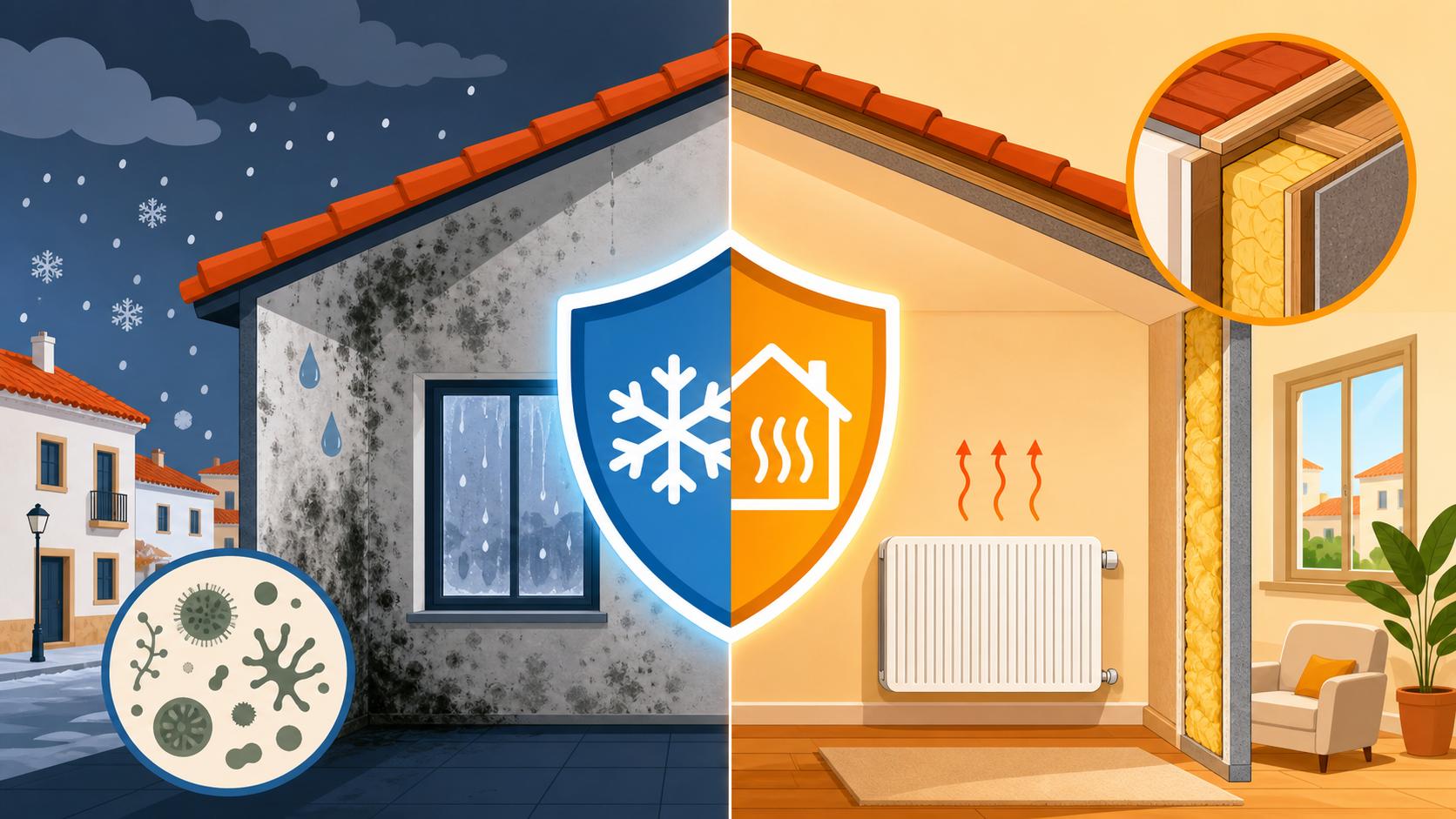
Most expats move to Portugal for the 300 days of sunshine, only to find themselves shivering inside a stone-walled apartment that feels colder than a London basement. I remember my first winter in a charming Alfama flat; I spent three months wearing a literal ski jacket while watching TV. This guide provides the hard-won strategies you need to insulate your home, choose the right heating, and finally defeat the relentless Portuguese winter mold.
The Paradox of the Sun: Why Portuguese Homes Are So Cold
The primary shock for almost every newcomer is the realization that while it might be a crisp 15 degrees Celsius outside in the Lisbon sun, it often feels like 10 degrees inside your living room. This isn't just your imagination; it is a structural reality of the country's housing stock. For decades, Portuguese construction focused on keeping the heat out during the blistering summer months, often neglecting the three to four months of damp, chilly Atlantic winters.
Architectural Heritage vs Thermal Comfort
In older neighborhoods across the country, from the Ribeira in Porto to the backstreets of Coimbra, houses were built with thick stone walls. While these are excellent for thermal mass, they act like a sponge for the winter chill. Once that stone gets cold, it stays cold. These buildings were designed to "breathe," which is a polite way of saying they are incredibly drafty. You might find that your beautiful high ceilings and original hardwood floors are the very things making your winter miserable.
When considering Where to Live in Portugal: Lisbon, Porto, Algarve, and Silver Coast Compared, it is vital to look past the aesthetics of the "pombalino" style or the rustic farmhouse. These traditional builds rarely include wall insulation (like glass wool or expanded polystyrene) which is standard in Northern Europe. Instead, you are dealing with air gaps and single-pane windows that allow heat to escape almost as fast as you can generate it. I have lived in several of these "charming" spots, and the lack of a thermal bridge is the single biggest cause of the indoor "fridge effect."
The Lack of Central Heating as a Standard
Unless you are moving into a high-end new build or a luxury condominium, do not expect central heating. The majority of Portuguese apartments rely on portable solutions. This is often a shock to those from North America or Northern Europe who are used to a thermostat on the wall that controls the entire home's climate. In Portugal, heating is a room-by-room battle, and it requires a completely different mindset.
Landlords often view heating as an optional luxury rather than a necessity. When browsing listings on Uniplaces, you may see "heating" listed as an amenity, but this often refers to a single electric radiator tucked in a closet rather than a built-in system. This lack of infrastructure means the burden of staying warm falls entirely on the resident, leading to a fragmented and often expensive approach to winter survival. It is one of the most frustrating aspects of Renting an Apartment in Portugal: Contracts, Fees, and Tenant Rights, as you are essentially renting a shell that you must thermally manage yourself.
Fighting the Damp: Strategies to Prevent and Remove Mold
In Portugal, we don't just talk about the cold; we talk about "humidade." The Atlantic climate brings high humidity levels that, when combined with cold interior walls and poor ventilation, create the perfect breeding ground for mold (locally known as "bolor" or "mofo"). If you see black spots appearing in the corners of your bedroom or behind your wardrobe, you are dealing with a national rite of passage that can actually be quite hazardous to your health.
Understanding Humidity Levels in Portugal
During the winter months, relative humidity in coastal areas frequently hovers between 80% and 95%. Inside a closed-up apartment, moisture from cooking, showering, and even your own breath has nowhere to go. Because the walls are so cold, this moisture condenses on the surface. This is why you will often wake up to "crying" windows—heavy condensation dripping down the glass onto your wooden sills.
I’ve learned the hard way that ignoring this condensation for even a week can lead to permanent damage to the plaster and a colony of mold that is incredibly difficult to eradicate. You must monitor your indoor humidity using a simple hygrometer. Your goal is to keep it below 60%. If it climbs higher, you are essentially inviting the mold to move in and start paying rent. This is a critical part of maintaining your Cost of Living in Portugal 2026: Detailed Budgets for Singles and Families, as repairing mold damage can eat into your security deposit very quickly.
Effective Cleaning and Prevention Techniques
Prevention starts with airflow. Even if it is cold outside, you must open your windows for at least 10 to 15 minutes every morning to "cross-ventilate" the apartment. This clears out the humid air trapped overnight. However, the most essential tool in your arsenal is a high-capacity compressor dehumidifier. Do not waste money on those little plastic boxes with moisture-absorbing crystals; they are useless for a Portuguese winter.
You should look for a unit that can pull at least 10 to 20 liters of water per day. It is worth checking Amazon Spain for reputable brands like De'Longhi or Cecotec, as they often offer better prices and a wider selection than local physical stores. If mold has already appeared, do not just wipe it with water. You need a dedicated "antifúngico" spray. Look for the brand UHU or Cillit Bang "Bolor" in the cleaning aisle of any Pingo Doce or Continente. Spray it, let it sit, and wipe it away—but always wear a mask, as the spores and the bleach fumes are brutal. For more on managing your home, see Best dehumidifiers to buy in Portugal to prevent winter wall mold.
Heating Solutions for Every Budget
Choosing how to heat your home in Portugal is a delicate balance between upfront cost and monthly electricity bills. Electricity here is among the most expensive in Europe relative to income, so a "cheap" heater can quickly become a financial nightmare when the EDP bill arrives.
Portable Electric Heaters and Their Costs
The most common solution is the oil-filled radiator (aquecedor a óleo). These are relatively safe to leave on for longer periods and provide a steady, "heavy" heat. However, they take a long time to warm up. On the other end, you have convection heaters and fan heaters (termoventiladores), which provide instant heat but are incredibly inefficient. They "eat" electricity and the heat vanishes the moment you turn them off.
If you are on a tight budget, you might be tempted by halogen or quartz heaters. I personally avoid these; they are fire hazards and only heat the objects directly in front of them, leaving the rest of the room icy. Many expats find that Buying appliances on installment (Crédito) at Worten or Rádio Popular is a good way to afford more efficient ceramic heaters or infrared panels, which offer a more pleasant heat profile and lower consumption.
AC Units and Pellet Stoves: Long-term Investments
If you own your home or have a long-term lease, the "gold standard" for heating in Portugal is the reverse-cycle air conditioner (AC). While we associate AC with cooling, it is actually the most energy-efficient way to heat a room in the Portuguese climate. A modern A++ rated AC unit can provide three to four units of heat for every unit of electricity it consumes.
Another popular option in the interior of the country or in larger villas is the pellet stove (salamandra a pellets). These burn compressed wood pellets and are incredibly effective at heating large open spaces. They require a flue (chimney) and regular cleaning, but the dry heat they produce is the ultimate enemy of mold. While you are setting up your new home and researching these larger installations, using an eSIM from Airalo can keep you connected if your home fiber hasn't been installed yet, allowing you to coordinate with technicians and installers without roaming fees.
| Heating Type | Upfront Cost | Running Cost | Best For |
|---|---|---|---|
| Oil Radiator | Low (€40 – €100) | High | Bedrooms / Constant heat |
| AC (Reverse Cycle) | High (€600+) | Low | Living areas / Efficiency |
| Ceramic Heater | Medium (€80 – €150) | Medium | Small to medium rooms |
| Pellet Stove | High (€800+) | Medium | Large houses / Rural areas |
| Dehumidifier | Medium (€150 – €250) | Low | Reducing damp / Preventing mold |
DIY Insulation Hacks for Renters and Owners
Since most of us are living in rentals where we can't exactly replace the windows, we have to get creative with DIY insulation. In Portugal, small changes can make a massive difference in how much heat stays inside your walls.
Sealing the Gaps: Windows and Doors
The most common source of "the chill" is the gap under your front door or the poorly sealed frames of old wooden windows. Walk around your apartment with a lit candle; where the flame flickers, you have a draft. The traditional Portuguese solution is the "chouriço"—a long, fabric-stuffed tube (shaped like a sausage) that you lay at the base of doors and windows.
For a more modern approach, you can buy self-adhesive foam or rubber weather stripping from a "loja de ferragens" (hardware store) or Leroy Merlin. Applying this to the window tracks can cut down on drafts significantly. If you have those ubiquitous "estores" (external metal shutters), ensure you close them the moment the sun goes down. The air pocket between the shutter and the window acts as a surprisingly effective layer of insulation. This is a key part of the Daily Life in Portugal: Supermarkets, Language, and Cultural Etiquette—learning that the shutters aren't just for privacy, but for thermal survival.
Thermal Curtains and Rugs
If you have single-pane glass, your windows are essentially "heat sinks" that pull the warmth right out of the room. Thermal curtains are a game-changer. These are heavy, multi-layered drapes designed to block both light and heat transfer. You can find excellent options on Amazon Spain that are specifically marketed as "oscurecimento" (blackout) and thermal.
Don't forget the floor. Portuguese homes often have tile or stone flooring, which feels like ice underfoot in January. Investing in thick area rugs can provide a vital layer of insulation between your feet and the cold subfloor. It sounds simple, but the psychological and physical impact of covering a cold tile floor in your living room cannot be overstated. These small touches are essential when Setting Up Utilities in Portugal: Electricity, Gas, Water, and Internet, as they help you reduce the reliance on expensive electric heating.
Energy Efficiency and Utility Bills
Managing your energy consumption is vital because Portugal has high electricity taxes. You don't want to be blindsided by a €300 bill in February because you left an old electric heater running 24/7.
Understanding the Energy Certificate
When you rent or buy a property, the landlord is legally required to show you the "Certificado Energético." This document rates the home from A+ (most efficient) to F (least efficient). Most older apartments in Lisbon or Porto will be rated D or E. While this certificate might seem like just another piece of bureaucracy, it gives you a realistic expectation of how much you will spend on climate control.
An "F" rated house will require constant heating just to stay habitable, whereas a "B" rated new build might stay warm with just a few hours of AC. Understanding these ratings is a crucial part of your financial planning. Be sure to check How to read an EDP electricity bill: Taxes, bi-hourly tariffs, and peak hours to understand the difference between flat-rate plans and "bi-horário" plans, where electricity is cheaper at night.
Managing Your EDP Bill in Winter
The best way to keep costs down is to use a bi-hourly tariff and run your dehumidifier and any high-draw heaters during the "off-peak" hours (usually after 10 PM or 12 AM). Many modern heaters have timers; set them to warm up the room just before you wake up and just before you come home from work.
I also highly recommend using the "EDP Zero" app or the equivalent from your provider (like Endesa or Iberdrola) to submit your own meter readings monthly. If you don't, the company will "estimate" your usage, which often leads to massive, unexpected bills every six months when they finally do a physical reading. Staying on top of this is a mandatory part of the Cost of Living in Portugal 2026: Detailed Budgets for Singles and Families.
Living the "Portuguese Way" in Winter
Finally, there is a cultural element to staying warm in Portugal. The locals have survived these winters for centuries without central heating, and they have developed a set of habits that you would do well to emulate.
Cultural Habits for Staying Warm
In the UK or US, we tend to wear a t-shirt inside and crank the heat. In Portugal, you "layer up" indoors. This means having a dedicated "house fleece," thick wool socks, and the ever-present "manta" (blanket) on the sofa. If you visit a Portuguese friend in winter, they will almost certainly offer you a blanket as soon as you sit down.
The "botija de água quente" (hot water bottle) is another local staple. Slipping one into your bed ten minutes before you sleep is much more efficient than trying to heat the entire bedroom with an electric radiator all night. You will find these in any "farmácia" or supermarket, and they are worth their weight in gold.
Essential Winter Gear for the Home
Aside from the dehumidifier, I recommend investing in a high-quality electric blanket (manta elétrica). It uses very little electricity compared to a space heater and makes getting into bed a joy rather than a chore. Also, look for "flanela" (flannel) bedsheets. Most Portuguese stores switch their stock to flannel in November, and the difference in warmth compared to standard cotton is immense.
If you are struggling to find specific items like high-end thermal base layers or specialized insulation tape, remember that Amazon Spain delivers to Portugal usually within 48 hours, often with free shipping if you have Prime. This can be a lifesaver when the first cold snap hits and local stores sell out of heaters. Embracing these local hacks and combined with modern technology, you can turn a freezing Portuguese apartment into a cozy sanctuary.
Disclaimer
This guide is for informational purposes only and reflects the personal experiences of the author living as an expat in Portugal. Building regulations, energy costs, and rental laws are subject to change. Always consult with a qualified professional or your landlord before making significant structural changes or electrical installations in your home. Be aware that improper use of heating appliances can pose a fire risk or lead to carbon monoxide poisoning; always follow manufacturer safety guidelines.