Living in Portugal Guide 2027: The Complete Relocation Manual for Expats
Disclosure: This article contains affiliate links. If you buy through them, we may earn a commission at no extra cost to you. Read our full disclosure.
Landing in Lisbon with three suitcases and a dream often ends in a five-hour queue at a tax office that doesn't recognize your documents. I spent my first month chasing signatures in a language I didn't speak, feeling utterly defeated by the paperwork. This guide provides the clarity I lacked, covering everything from housing and healthcare to administrative essentials.
The Administrative Foundation of Your New Life
The very first hurdle you will face upon moving to Portugal is the realization that everything—absolutely everything—is connected to a handful of identification numbers. Without these, you cannot rent a long-term apartment, buy a car, or even sign up for a gym membership. It can feel like a "chicken and egg" situation where you need an address to get a tax number, but you need a tax number to get an address. I remember the sheer frustration of being told "no" by a bank teller simply because my paperwork was in the wrong order.
Getting Your NIF (Número de Identificação Fiscal)
The NIF is the cornerstone of your existence in Portugal. It is your tax identification number, and it is the first thing you must secure, even before you officially move. If you are an EU citizen, the process is relatively straightforward at any Finanças (tax office). However, for non-EU residents, you will typically need a fiscal representative—someone already resident in Portugal who takes legal responsibility for your tax communications. This is often a professional service or a very kind friend who has lived here for years.
When you go to get your NIF, do not expect a quick "in and out" experience. You should arrive at the Finanças office thirty minutes before they open, or better yet, book an appointment online through the Portal das Finanças if you can navigate the Portuguese interface. Once you have this number, guard it with your life. You will be asked for it at the supermarket, the pharmacy, and when paying for utilities. Interestingly, providing your NIF at checkout can actually lead to tax deductions at the end of the year, a quirk of the Portuguese system designed to combat the "shadow economy."
Opening Your First Bank Account
Opening a bank account in Portugal has become increasingly complex due to anti-money laundering regulations. As a new expat, you will likely be asked for your NIF, proof of address (often a utility bill from your home country or a rental contract), and proof of employment. If you are a digital nomad or freelancer, be prepared to show several months of bank statements or your work contract. Many traditional banks like Millennium BCP or Santander have "expat packages," but they often come with monthly maintenance fees that can be annoying if you are used to free banking.
One thing I learned the hard way is that Portuguese banks love physical presence. While some digital-first options exist, having a manager at a local branch who recognizes your face can be a lifesaver when a wire transfer gets stuck or you need to increase your daily withdrawal limit. You should also ensure your bank supports the Multibanco system and the MB Way app. This app is the lifeblood of local payments; it allows you to send money via phone number and pay for everything from coffee to rent instantly. Without it, you will feel like a functional outsider in the local economy.
Understanding the NISS (Social Security Number)
The NISS is your social security number, and it is vital if you plan to work for a Portuguese company or operate as a freelancer. Unlike the NIF, which is purely for taxes, the NISS deals with your contributions to the social safety net, including pensions and unemployment benefits. If you are employed by a local firm, they will usually handle the registration for you. However, if you are moving on a D7 or D8 visa as a freelancer, you will need to navigate the Seguranca Social portal yourself.
Newcomers often find that the Social Security offices are where they truly test their patience. The queues can be legendary, and the staff may not always speak English. It is highly recommended to bring a translator or use a professional service if your Portuguese is still at the "Olá" stage. Once you have your NISS, you can start making monthly contributions, which, while sometimes steep for freelancers, grant you access to the public healthcare system and future state benefits. It is a slow process, but it is the final piece of the administrative puzzle that makes you a "legal" resident in the eyes of the state. To ensure you stay on top of your legal status, always monitor AIMA Portugal: Navigating the New Immigration Agency and Residence Permits for any changes in residency requirements.
Finding Your Home in Portugal
Finding a place to live is perhaps the most emotional part of the relocation process. The market remains highly competitive, especially in the coastal hubs. I spent weeks Refreshing Idealista every ten minutes, only to find that the "perfect" T1 in Arroios was gone before I could even send an email. It is a fast-moving environment where landlords often hold the upper hand, and being prepared with all your documents is the only way to secure a deal.
Choosing the Right Region and Neighborhood
Portugal is a country of immense geographic and cultural variety. Lisbon is the bustling, hilly capital where tech and history collide, but the rents here are now comparable to other major European capitals. Porto offers a more grittier, traditional feel with a thriving creative scene, while the Algarve remains the go-to for sun-seekers and retirees. However, if you are looking for a balance of cost and quality of life, the Silver Coast or cities like Braga and Coimbra are becoming increasingly popular for expats who want to escape the "tourist bubbles."
Before you commit to a long-term lease, I strongly suggest visiting different neighborhoods at different times of the day. A street that looks charming and quiet at 2 PM might be a noisy nightlife hub at 2 AM. In Lisbon, neighborhoods like Graça or Príncipe Real have distinct vibes, but they also come with "hill fatigue" that you might not notice until you’re carrying groceries up a 20-degree incline. For a deep dive into regional differences, you should read Where to Live in Portugal: Lisbon, Porto, Algarve, and Silver Coast Compared.
Navigating the Rental Market with Uniplaces
For many expats, the best strategy is to book a mid-term stay for the first three to six months. This takes the pressure off finding a permanent home immediately. Using a platform like Uniplaces is incredibly helpful during this transition. They specialize in verified mid-term rentals that are often fully furnished and include utilities in the price—a massive relief when you don't yet have the local paperwork to set up electricity and water accounts.
Uniplaces is particularly popular among students and digital nomads because it bridges the gap between expensive Airbnbs and the bureaucratic nightmare of traditional long-term leases. When you use Uniplaces, you get a clear contract that is often accepted by consulates for visa purposes, which is a significant advantage. I used a similar service when I first arrived, and it gave me the breathing room to explore Lisbon's nooks and crannies without the fear of being homeless at the end of the month. It also allows you to build a local credit history and get your NIF address updated before you tackle the more aggressive long-term market.
Rental Contracts and the Role of the Fiador
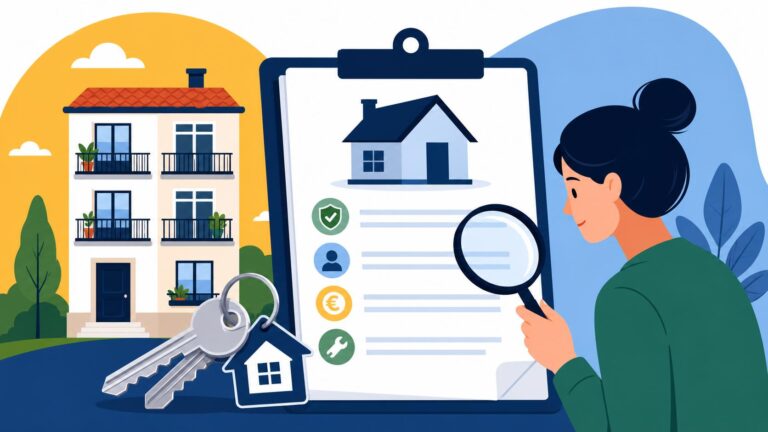
Once you transition to a long-term rental, be prepared for the "Fiador" (guarantor) request. Most Portuguese landlords want a local person who earns a Portuguese salary to sign your lease as a guarantor. As a new expat, you likely won't have one. To circumvent this, landlords will often ask for six to twelve months of rent in advance. This is a massive financial hit, but it is often the only way for foreigners to secure a desirable property.
Make sure your contract is officially registered with the Finanças. If your landlord refuses to register the contract, it is a major red flag—it means they are evading taxes, and you will not be able to use your rent as a tax deduction or as proof of address for residency renewals. Always check for a "cláusula de rescisão" (break clause), which typically allows you to leave after one-third of the contract duration, provided you give 90 to 120 days' notice. For more details on your rights, consult Renting an Apartment in Portugal: Contracts, Fees, and Tenant Rights.
| Region | Average Rent (T1) | Lifestyle Vibe | Connectivity |
|---|---|---|---|
| Lisbon | €1,200 – €1,800 | Fast-paced, International | Excellent |
| Porto | €900 – €1,400 | Traditional, Creative | Excellent |
| Braga | €600 – €900 | Family-friendly, Tech-hub | Good |
| Algarve (Lagos) | €800 – €1,300 | Beach, Seasonal | Moderate |
| Coimbra | €500 – €850 | Academic, Historic | Good |
Cost of Living and Financial Planning
Portugal is no longer the "dirt cheap" destination it was ten years ago, but it still offers a high quality of life for those earning in stronger currencies or with stable remote jobs. The most important thing to understand is the disparity between local salaries and the cost of housing. While a coffee still costs less than a Euro, your electricity bill in the winter might shock you.
Managing Your Taxes and the IRS
Taxation in Portugal is progressive, and the rates can be high. If you stay in the country for more than 183 days in a calendar year, you are considered a tax resident and are liable for tax on your worldwide income. Many expats move here under specific tax regimes like the NHR 2.0 (IFICI), which offers incentives for high-value professions. However, the paperwork for this is dense and requires a certified accountant (Contabilista Certificado).
Filing your annual IRS return (Modelo 3) happens between April and June. One of the best "hacks" I learned is the e-Fatura system. By asking for your NIF on every receipt—from your morning pastel de nata to your car repair—the government automatically tracks your spending. At the end of the year, these small amounts add up to significant tax credits. It feels tedious at first, but seeing a few hundred Euros back in your pocket makes it worthwhile. For a full breakdown of the tax system, check out Portuguese Taxes for Expats: IRS, Tax Residency, and Filing Deadlines.
Grocery Shopping and Monthly Household Budgets
The supermarket landscape is dominated by Continente, Pingo Doce, and Auchan. While basics like olive oil, wine, and local produce are incredibly affordable, imported goods or specialty items can be pricey. I recommend shopping at local "Mercados Municipais" for fresh fish and vegetables; the quality is superior, and you are supporting local farmers. A couple can expect to spend around €400 – €600 per month on groceries if they cook mostly at home.
Dining out remains one of the greatest joys of living in Portugal. A "Prato do Dia" (plate of the day) including soup, a main dish, a drink, and coffee can still be found for under €12 in many local tascas. However, in tourist-heavy areas, prices have soared. To manage your budget effectively, read Cost of Living in Portugal 2026: Detailed Budgets for Singles and Families to see how you can balance local life with expat expectations.
The Hidden Costs of Utilities and Heating
One of the biggest shocks for expats is the winter. Portuguese houses are notoriously poorly insulated. In July, the thick stone walls keep you cool, but in January, the humidity and cold can seep into your bones. Since central heating is rare, most people rely on electric heaters or "salamandras" (wood-burning stoves). This can lead to electricity bills that double or triple during the winter months.
Water and gas are generally affordable, but the "potência contratada" (contracted power) on your electricity bill is a fixed cost based on how many appliances you can run at once. If your power trips every time you use the oven and the washing machine, you need to call EDP and increase your limit. It’s a small detail that many newcomers miss, leading to years of unnecessary frustration with flickering lights and cold showers.
Healthcare for Foreigners
The healthcare system in Portugal is a mix of the public National Health Service (SNS) and a robust private sector. While the public system is high-quality and nearly free, it is currently under significant strain, leading to long wait times for non-urgent appointments and surgeries.
Registering with the Public SNS System
Once you have your residency permit, your first stop should be your local "Centro de Saúde" to get your "Número de Utente" (health user number). This is what grants you access to the public system. I remember standing outside my local clinic at 7 AM just to get a spot in the queue. You will need to bring your residence card and proof of address. Once registered, you will be assigned a "Médico de Família" (family doctor), though in many urban areas, there is a shortage, and you may be placed on a waiting list for years.
Even without a family doctor, you can still access consultations and emergency care. The SNS 24 helpline is a fantastic resource; you can call them for medical advice, and they can "triage" you over the phone, often providing a referral that bypasses the long wait at the ER. If you need help getting through the initial registration, see Registering with the Centro de Saúde: Getting Your SNS Número de Utente. For a broader view, read Portugal's National Health Service (SNS): How the Public System Works.
Private Health Insurance and Clinical Networks
Because of the wait times in the public sector, most expats opt for private health insurance. Providers like Médis, Multicare, or AdvanceCare are the most common. Private insurance allows you to book appointments with specialists directly, often within a few days, at hospitals like CUF or Hospital da Luz. These facilities look more like five-star hotels than hospitals and almost all doctors speak fluent English.
Monthly premiums for a healthy individual in their 30s can range from €30 to €70, which is remarkably affordable compared to US prices. However, be aware of "períodos de carência" (waiting periods) for things like dental care or childbirth. Many people use a hybrid approach: the public system for emergencies and major surgeries, and the private system for routine checkups and specialist visits. Deciding between the two? Read Public vs Private Healthcare in Portugal: Which One Should Expats Choose?.
Finding English-Speaking Specialists
Finding a doctor who understands your cultural background and speaks your language fluently is vital for your peace of mind. In Lisbon and Porto, this is rarely an issue, as most medical professionals have trained or worked abroad. However, in more rural areas, you might find yourself relying on translation apps or the help of a bilingual friend.
Online platforms have made this much easier. Many private hospital apps allow you to filter doctors by the languages they speak. If you have specific needs, such as mental health support or specialized pediatric care, it is worth joining expat Facebook groups to get personal recommendations. The community is usually very active and willing to share their experiences—good and bad—with local clinics.
Connectivity and Transportation
Moving around Portugal and staying connected is surprisingly easy, provided you know which apps to download and which passes to buy. The infrastructure has improved significantly, making it possible to live without a car in the major cities, though the "interior" still requires four wheels and a bit of patience.
Staying Connected with Airalo and Fiber Internet
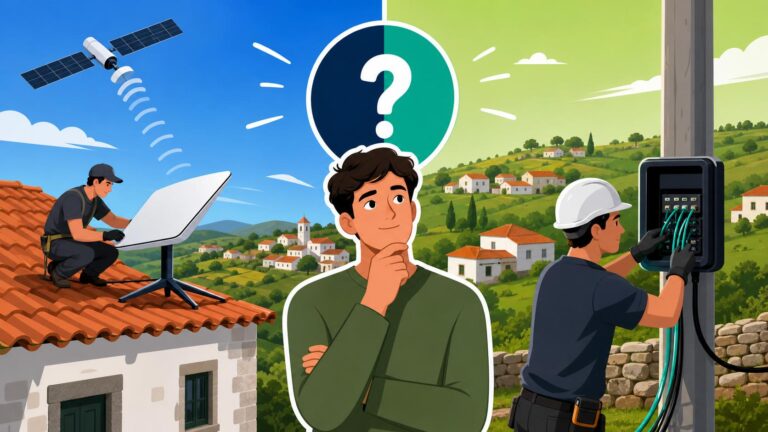
When you first land, you shouldn't rely on finding a local shop immediately to get a SIM card. It is worth considering using Airalo to set up an eSIM before you even get off the plane. Having immediate access to data allows you to call a Bolt, check your Google Maps for your Uniplaces check-in, and translate those first confusing signs at the airport. Once you are settled, you can look into local contracts with MEO, NOS, or Vodafone.
Fiber internet (Fibra) is ubiquitous in cities and surprisingly common in many rural villages. Most "Pacotes" (bundles) include internet, TV, and a mobile plan. Be prepared for 24-month loyalty contracts; breaking these can be expensive, so if you are only staying for a year, look for plans without a "fidelização" (commitment), even if they cost a bit more upfront.
Public Transport: Trains, Metros, and Passes
The public transport in Lisbon and Porto is excellent. In Lisbon, the "Navegante" pass offers unlimited travel for €30 to €40 a month, covering the Metro, buses, trams, and even the trains to Cascais and Sintra. In Porto, the "Andante" card works similarly. These systems are clean, safe, and efficient, though the classic yellow trams in Lisbon are now mostly a tourist attraction rather than a viable commuting option for locals.
For long-distance travel, the Comboios de Portugal (CP) train network is your best friend. The Alfa Pendular is the high-speed train that connects Braga, Porto, Lisbon, and Faro. If you book your tickets at least two weeks in advance on the CP app, you can often get "Promo" fares that are half the standard price. It’s a beautiful way to see the countryside without the stress of driving on the highways.
Driving in Portugal and License Exchanges
If you decide to live outside the main cities, you will likely need a car. Driving in Portugal is generally safe, but the local driving style can be aggressive, and the tolls (portagens) on the highways (Autoestradas) are among the most expensive in Europe. You absolutely must get a "Via Verde" transponder for your car; it allows you to drive through tolls without stopping, automatically charging your bank account.
The most important logistical task for drivers is exchanging their foreign license. Depending on your nationality, you may have a limited window (usually 90 days to two years) to swap your license for a Portuguese one via the IMT (Instituto da Mobilidade e dos Transportes). The process is notoriously slow and requires a medical certificate. Don't wait until the last minute, or you might find yourself unable to drive legally. For the full procedure, check out Driving in Portugal: Exchanging Your Foreign License to a Portuguese One.
Cultural Integration and Daily Life
Integration is about more than just paperwork; it’s about understanding the rhythm of life. Portugal is a country that values relationship-building over efficiency. If you try to rush a waiter or a bank clerk, you will likely find things taking even longer.
Mastering Portuguese Etiquette and Coffee Culture
Coffee is the social lubricant of Portugal. You don't just "grab a coffee"; you sit down and engage with the world. Learning the different types of coffee is your first step to belonging. A "Bica" is a standard espresso in Lisbon, while a "Meia de Leite" is half milk, half coffee. Understanding these nuances shows that you are making an effort to learn the local ways.
Social etiquette also involves greetings. Expect two kisses on the cheeks (starting with the right) when meeting friends, regardless of gender in many social circles, though a handshake is the norm in professional settings. Punctuality is "flexible"—arriving 15 minutes late to a social gathering is often expected, though business meetings are generally on time. For a deeper look at social norms, read Portuguese Coffee Culture and Restaurant Etiquette: Ordering Like a Local.
Shopping for Essentials via Amazon Spain
While Portugal has many great local shops, for electronics, niche kitchen gadgets, or specific expat brands, Amazon Spain is the primary resource. Since there is no dedicated Amazon Portugal, the Spanish site serves the entire peninsula with fast shipping (often 24-48 hours to Lisbon). Most orders over €35 qualify for free shipping, and you don't have to worry about customs duties since it's within the EU.
I rely on Amazon Spain for everything from high-quality dehumidifiers—essential for those damp winters—to tech accessories that are hard to find in the local Worten or FNAC shops. It’s also a great way to source international pantry items that haven't quite made it to the shelves of Pingo Doce yet. Having this as a fallback makes the transition much smoother during those first few months when you don't know where the "good" local shops are located.
Learning the Language: Beyond the Basics
While you can survive in the major cities with English, you will never truly feel at home without learning Portuguese. The language is challenging, with nasal sounds and complex verb conjugations that can be intimidating. However, the Portuguese are incredibly appreciative of any effort you make. Even a "Bom dia" or "Obrigado" (or "Obrigada") goes a long way.
I highly recommend signing up for the "Português para Todos" (Portuguese for All) classes offered by the government. They are often free or very low cost and provide the certificate you need if you eventually want to apply for permanent residency or citizenship. Supplement these with apps and local conversation groups to build your confidence. To plan your learning journey, check out Learning European Portuguese: Top Apps, Tutors, and Free Government Classes.
Family Life and Education
Moving with children adds another layer of complexity, but Portugal is an incredibly family-centric culture. Children are welcomed almost everywhere, from late-night restaurants to formal social gatherings.
Navigating the Public vs. International School Choice
The choice between public and international schools often comes down to your long-term plans. Public schools are free and offer a great way for children to integrate and become fluent in Portuguese quickly. However, the curriculum is rigid, and the facilities can vary significantly by neighborhood.
International schools, mostly located in Lisbon, Cascais, and Porto, offer British, American, or International Baccalaureate (IB) curriculums. These are excellent for families who move frequently, but they are expensive, with tuition often exceeding €1,000 per month per child. For a detailed comparison of costs and curriculums, see Public Schools vs International Schools in Portugal: Costs and Curriculums.
Childcare Options and Community Support
For younger children, the "Creche" (nursery) system is the most common option. The government has recently made many public creches free, but the competition for spots is fierce. Private creches are more accessible but come with a cost of around €300 to €500 per month.
Beyond formal schooling, the expat community in Portugal is a lifeline for parents. There are countless "Mom and Dad" groups on WhatsApp and Facebook that organize playdates, swap school uniforms, and provide advice on everything from pediatricians to the best playgrounds. This sense of community is what makes Portugal feel like home so quickly for families; people genuinely look out for one another.
Disclaimer
This guide is for informational purposes only and does not constitute legal, financial, or medical advice. Immigration laws, tax regulations, and healthcare policies in Portugal are subject to frequent changes. Always consult with a qualified professional, such as an immigration lawyer or a certified accountant, before making significant life decisions or signing legal documents. The author is a resident expat sharing personal experiences and research, and while every effort has been made to ensure accuracy as of 2026, the reality on the ground may vary.