Paying utility bills automatically: Setting up SEPA Direct Debits on your bank app
Disclosure: This article contains affiliate links. If you buy through them, we may earn a commission at no extra cost to you. Read our full disclosure.
One of the most stressful experiences for a new arrival in Portugal is finding a "cutoff notice" tucked into your gate because you missed a utility bill you didn't even know existed. I still remember the cold shower I had to take in my first month in Graça because I couldn't decipher my water bill in time. This guide solves that anxiety by walking you through the seamless setup of SEPA Direct Debits (Débito Direto) to automate your life.
Why Automating Your Bills is Essential in Portugal
Living in Portugal offers a beautiful pace of life, but the administrative side can be a labyrinth of paper mail and confusing digital portals. If you are still paying your bills manually every month at a Multibanco ATM or through your home banking portal, you are essentially tethered to a calendar of deadlines that are unforgiving. In Portugal, missing a payment for electricity (EDP) or water (EPAL/SMAS) doesn't just result in a polite reminder; it can lead to service suspension surprisingly quickly, followed by a hefty reconnection fee.
When I first moved here, I was overwhelmed by the sheer volume of "Entidade" and "Referência" numbers required for every single transaction. Whether you are Using the Multibanco ATM network to pay taxes, tolls, and utility bills or trying to navigate a banking app in a language you haven't mastered yet, the margin for error is high. A single transposed digit in a reference number means your money goes into the void, and your electricity goes off at 8 PM on a Friday. Automation via SEPA Direct Debit removes the human element from this equation, ensuring that your NIF stays in good standing and your lights stay on.
Furthermore, the "August Shutdown" is a very real phenomenon in Portugal. If you have a billing issue or need to make a manual payment while the country is on holiday, you might find customer service lines at a standstill. Having an automated system ensures that even when the country stops, your obligations are met. It is the first step toward true "set and forget" expat living, allowing you to focus on the more pleasant aspects of life in the Algarve or the Douro Valley.
The Risks of Manual Payment Systems
Manual payments require you to be physically present or digitally active every single month. For digital nomads or those who travel frequently, this is a major liability. I have known several expats who went back to their home countries for a month, only to return to a house with no running water because a bill was delivered to their physical mailbox and ignored. The Portuguese system relies heavily on "Citações" (notifications), and "I didn't see the letter" is rarely accepted as a valid excuse for non-payment.
Late fees, known as juros de mora, also accumulate daily. While they might seem small initially, they can complicate your tax situation if they are tied to municipal services. By setting up a Débito Direto, you bypass the risk of these penalties. You also avoid the long queues at the Loja do Cidadão where people often wait for hours just to settle a disputed or late bill. If you are still in the process of Opening a Bank Account in Portugal: Best Banks for Foreigners and Expats, prioritizing a bank with a robust "Direct Debit" management system should be at the top of your list.
Language Barriers and Digital Portals
Most utility providers in Portugal, such as MEO, Vodafone, and NOS, have apps, but they aren't always perfectly translated. Trying to find the "Pay Now" button can feel like a game of high-stakes minesweeper. When you authorize a SEPA Direct Debit, you only have to navigate the Portuguese interface once. After the mandate is active, the utility company talks directly to your bank.
This is particularly helpful for those who use international fintech solutions alongside their local accounts. For example, using Wise to hold your Euro balance and then transferring it to a local Portuguese account for your direct debits is a common strategy. It ensures you get a better exchange rate on your home currency while still meeting the local requirement for a SEPA-compatible IBAN.
How to Set Up a SEPA Direct Debit in Your Bank App
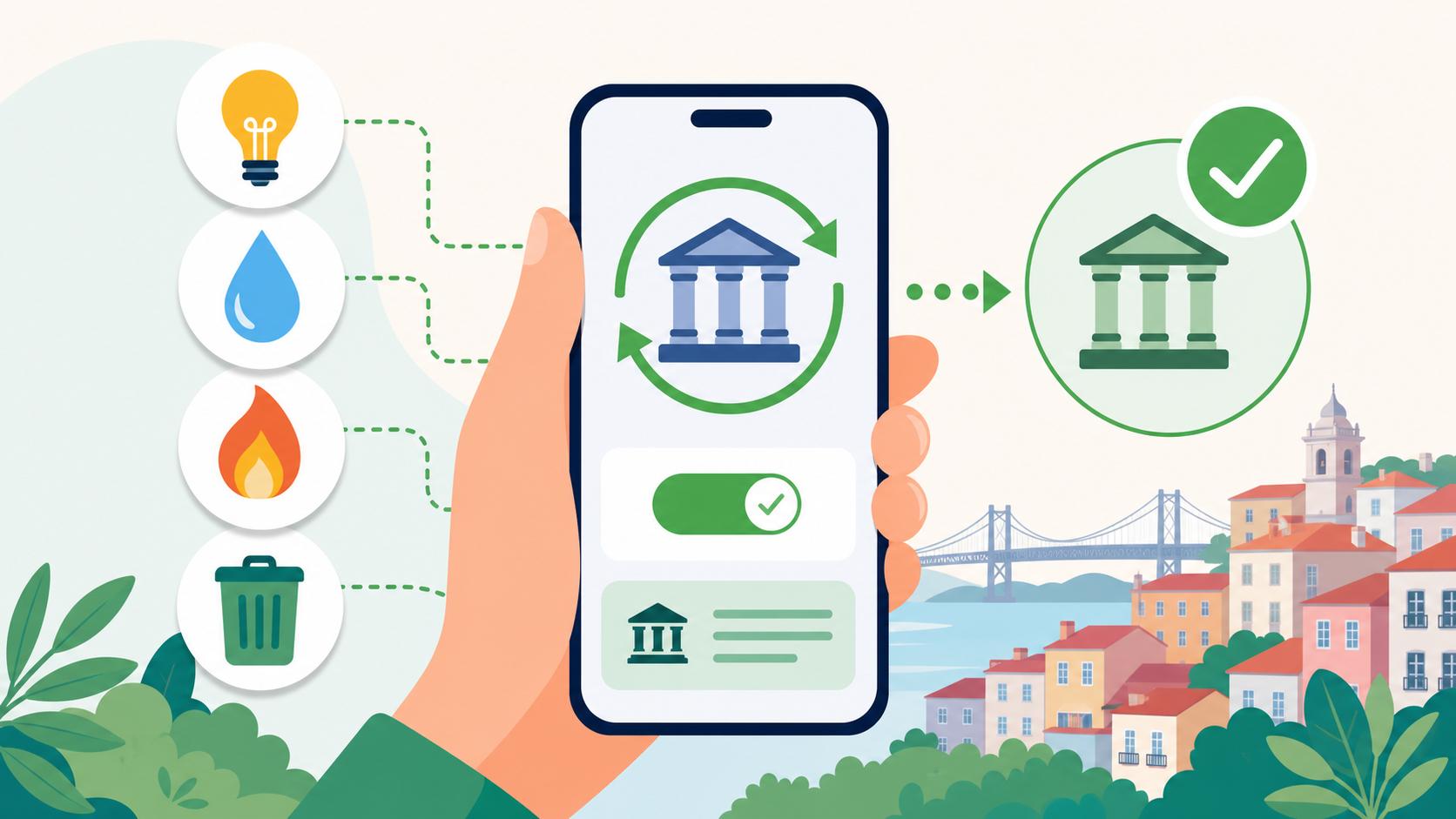
The process for setting up a Débito Direto generally happens in two stages: you provide your IBAN to the utility company, and then you confirm or manage the authorization within your bank app. Most major Portuguese banks like Millennium bcp, ActivoBank, and Santander have dedicated sections for this. If you are still deciding on a provider, check our list of Which Portuguese banks offer English mobile apps and customer service? to ensure you have a user-friendly experience.
To begin, you will need your International Bank Account Number (IBAN), which in Portugal always starts with PT50 followed by 21 digits. You can find this on your bank statement or directly on the home screen of your banking app. Once you provide this to your utility company—whether via their website, their app, or in person at a service center—they will "ping" your bank with a mandate request.
Step-By-Step Activation for Common Utilities
Let's look at a hypothetical scenario with EDP (Electricity). You would log into the EDP Comercial portal and navigate to the "Pagamentos" section. Select "Débito Direto" and enter your PT50 IBAN. Within a few days, a new entry will appear in your bank app under the "Direct Debits" or "Autorizações de Débito" tab.
It is a common misconception that you need to "create" the debit in your bank app. Usually, the company initiates it, and you simply approve it or set the limits. However, some older systems might require you to enter the company's "NIPC" (Tax ID) and your specific subscriber number directly into the bank's portal. This is where How to read an EDP electricity bill: Taxes, bi-hourly tariffs, and peak hours becomes useful, as it helps you identify exactly which numbers are the mandate references and which are just invoice numbers.
Setting Limits and Plafonds
One of the best features of the Portuguese banking system is the ability to set a "Plafond" or a maximum limit on a direct debit. This is a safety net. If your typical water bill is €30, you can set a limit of €60. If there is a massive leak while you are away and the utility company tries to bill you €500, the bank will automatically block the transaction.
This level of control is something many expats aren't used to in their home countries. It allows you to automate without giving the company a "blank check." it is wise to set these limits at roughly double your average monthly spend. This accounts for seasonal fluctuations (like higher electricity use in the winter for heating) without leaving you vulnerable to billing errors or undetected leaks.
Managing Your Financial Ecosystem
To make this automation work effectively, you need a reliable way to ensure your Portuguese account is always funded. Many expats find it difficult to manage their local bills when their primary income is in USD, GBP, or another currency. This is where tools like Wise become indispensable. You can set up a recurring transfer from your home bank to Wise, and then another scheduled transfer from Wise to your Portuguese bank, ensuring your "bill fund" is always topped up without paying exorbitant wire transfer fees.
For those who want to earn a bit of interest on their "bill money" before it is pulled out by the utilities, using an account like Trade Republic can be a smart move. You can keep your primary savings there, earning interest, and only move what is necessary for the monthly bills into your Portuguese spending account. This creates a tiered financial system that maximizes your capital while still keeping your local obligations automated.
Comparative Analysis of Payment Methods
| Method | Convenience | Speed of Settlement | Safety/Control | Recommended For |
|---|---|---|---|---|
| SEPA Direct Debit | Highest (Full Auto) | Instant on due date | High (User-set limits) | All recurring monthly bills |
| Multibanco (ATM) | Low (Manual) | Instant | Medium | One-off taxes or fines |
| Bank App Manual | Medium | Instant | Medium | Variable bills (e.g., car repairs) |
| MB Way | High (Mobile) | Instant | High | Peer-to-peer or small shops |
While some might consider using Binance or other crypto platforms for payments, it is important to note that very few (if any) Portuguese utility companies currently accept direct crypto payments for residential bills. You would still need to off-ramp those funds into a Euro-denominated IBAN to satisfy a SEPA mandate. If you are managing a complex portfolio, always ensure your final "bridge" to the utility company is a standard SEPA-compliant bank account.
Troubleshooting Failed Debits
What happens if a direct debit fails? Usually, the bank sends a notification. You will then have a "grace period" of about 5 to 10 days to pay the bill manually via Multibanco before the company considers it a formal default. If you change banks, you must remember that mandates do not always "follow" you. You will need to cancel the old ones and re-authorize them with the new IBAN.
For those who are Transferring Money to Portugal: Saving on Exchange Rates and Fees, always leave a "buffer" of at least €200 in your Portuguese account. Between the Taxas Moderadoras: Co-payments and Costs in the Public Health System and unexpected utility spikes, having a small cushion prevents the headache of a failed debit and the subsequent paperwork to fix it.
Advanced Tips for Long-Term Expats
Once you have your basic utilities automated, consider expanding this to other areas of life. Your condominium fees (condomínio), your gym membership at Fitness Hut or Solinca, and even your monthly transit pass can often be set to Débito Direto. This further streamlines your monthly admin.
If you are a couple living together, you might find that Setting up a joint bank account in Portugal: Requirements for married expats makes managing these debits much easier. Having a single account dedicated to household expenses—where both partners contribute and all direct debits are pulled from—avoids the "who paid the internet bill?" argument. It also provides a clear paper trail for residency renewals if you need to prove shared financial responsibility.
Linking to Your NIF and IRS
In Portugal, almost every bill is linked to your NIF (Tax Identification Number). When your bills are paid via direct debit, they are automatically logged in the Portal das Finanças. This is crucial for your annual tax return, as many of these expenses (especially health and education) are tax-deductible. If you are Becoming a Tax Resident in Portugal: The 183-Day Rule Explained, you will quickly learn that having your NIF on every invoice is the "national sport" of Portugal. Automation ensures that these invoices are not just paid, but correctly attributed to you in the government's digital records.
Another pro-tip: check your banking app for the "MB Way" integration. While MB Way is mostly for peer-to-peer transfers, some banks are now allowing you to use it as an authorization layer for certain subscriptions. However, for core utilities like electricity and water, the traditional SEPA Direct Debit remains the gold standard for reliability. If you have struggled with Linking your foreign phone number to MB Way (and why it usually fails), sticking to a standard bank-level direct debit is a much safer bet.
Common Pitfalls and How to Avoid Them
The most common mistake I see is expats assuming that setting up a direct debit at the bank "notifies" the company. It works the other way around. You must tell the company your IBAN first. The bank is merely the gatekeeper that approves the request. If you only add the company to your "authorized list" in the app but never give your IBAN to the company, nothing will happen.
Another pitfall is the "Invalid Mandate" error. This usually happens if the name on your bank account doesn't perfectly match the name on your utility contract. If you are "John Robert Smith" at the bank but "John Smith" on your EDP contract, the automated system might reject the link. Always ensure your documentation is consistent across all Portuguese institutions to avoid these digital hiccups.
Finally, keep an eye on your Money and Finance in Portugal: The Ultimate 2026 Guide for Expats for updates on banking regulations. The SEPA zone is constantly evolving, and 2026 has brought new consumer protections that make it easier to claw back unauthorized debits for up to 8 weeks, no questions asked. This should give you extra peace of mind that your money is safe.
Disclaimer
This guide is for informational purposes only and does not constitute professional financial or legal advice. Banking regulations and utility company policies in Portugal can change frequently. Always verify specific terms with your bank and service providers. While we strive for accuracy, we are not responsible for any service interruptions or financial penalties resulting from the use of this information. Always consult with a certified accountant or legal professional for complex financial matters in Portugal.