Building Credit in Portugal: Do Credit Scores Matter for Mortgages?
Disclosure: This article contains affiliate links. If you buy through them, we may earn a commission at no extra cost to you. Read our full disclosure.
Coming from a country like the US, UK, or Canada, you are likely used to obsessing over a three-digit number that dictates your entire financial life. I remember sitting in a bank in Lisbon for the first time, trying to pull up my high Experian score on my phone, only to have the manager look at me with genuine confusion. This guide solves the mystery of how "credit" actually works here and what banks really look for.
The Myth of the Credit Score in Portugal
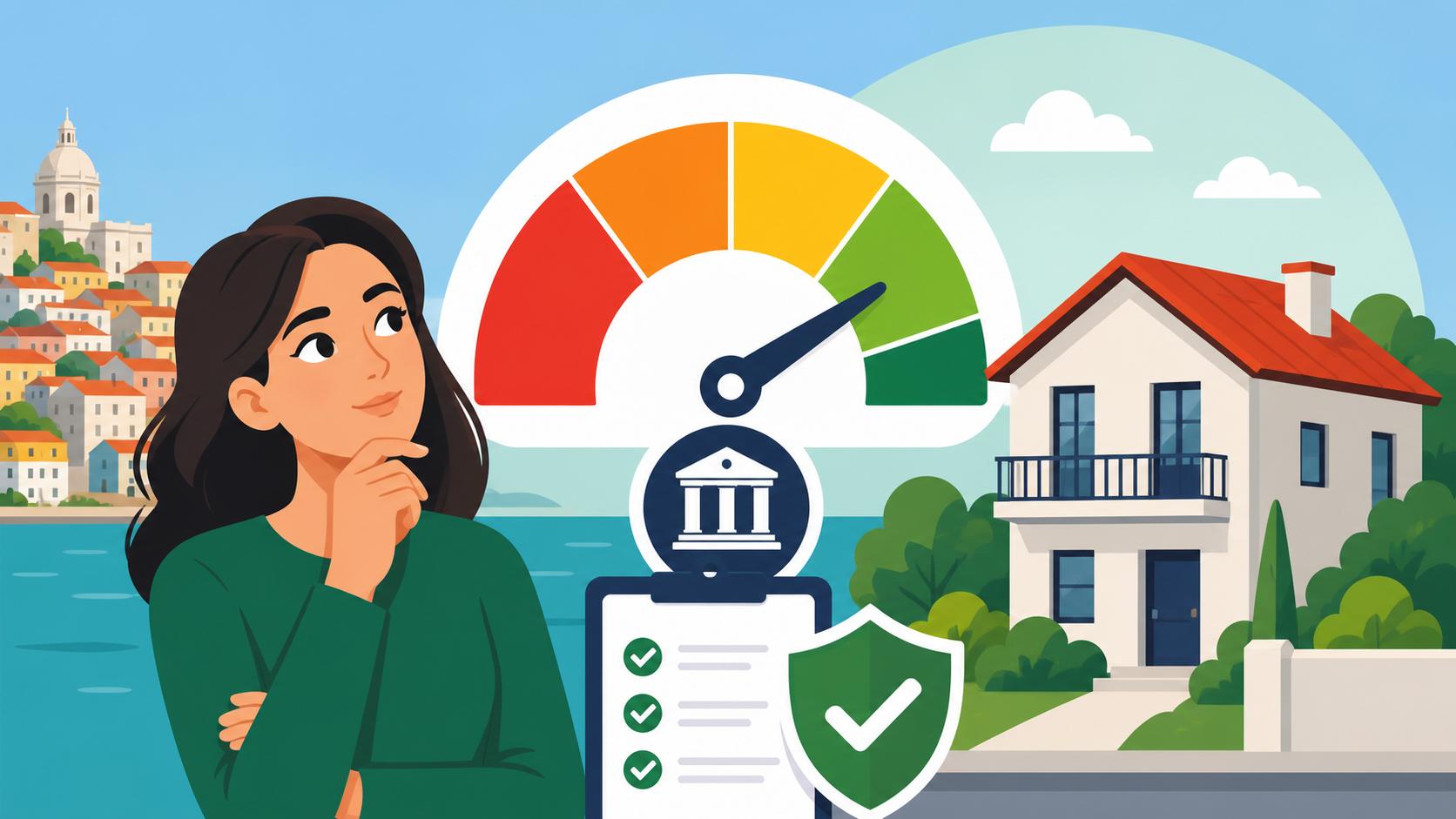
The first thing you need to unlearn when moving to the Iberian Peninsula is the concept of a centralized "credit score" produced by private companies. In Portugal, there is no FICO, no Equifax, and no magical number that goes up when you pay off a credit card. If you ask a Portuguese person what their credit score is, they will likely tell you they have no idea what you are talking about. This doesn't mean credit doesn't exist; it just means the system is built on a completely different philosophy of risk.
Why Your Foreign Credit History Does Not Cross the Border
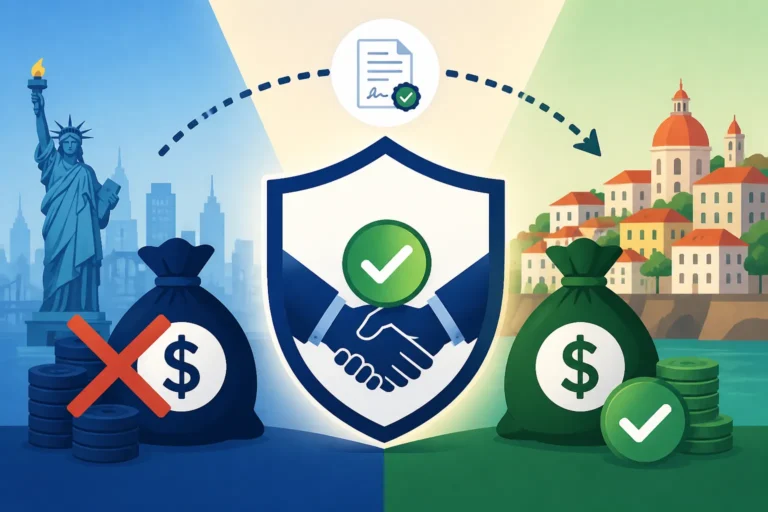
One of the most frustrating realizations for new arrivals is that your stellar financial reputation back home means almost nothing to a Portuguese lender. You could have a 850 score in the US or a "Perfect" rating in the UK, but once you step into a branch of Millennium BCP or Santander, you are essentially a ghost. Portuguese banks operate within a strictly nationalized data framework, and they do not have the legal mechanisms to "pull" a report from a foreign credit bureau.
This lack of data portability is why Opening a Bank Account in Portugal: Best Banks for Foreigners and Expats is such a critical first step. Without a local history, banks have no way to verify your behavior. They won't see that you've never missed a mortgage payment in London or that you paid off your student loans in New York. To them, you are a "new customer" with zero history, which often translates to higher risk. I spent months trying to find a way to "prove" my reliability, only to realize that the only thing that would work was time and local documentation.
The Banco de Portugal and the CRC Report
Instead of a private credit score, Portugal uses the "Central de Responsabilidades de Crédito" (CRC), which is managed by the Banco de Portugal. This is a database where every single financial institution in the country is legally required to report any debt over 50 Euros. Every credit card, car loan, personal loan, and mortgage is listed here. Instead of a score, banks request your "Mapa de Responsabilidades," which is a detailed list of your current debts and your payment history.
The "Mapa" shows two things: your current outstanding balances and whether you have any "incidents" (defaults). If you have ever been 30 days late on a payment in Portugal, it will show up as a black mark on this report. Banks don't look at a number; they look at the "cleanliness" of this sheet. For expats, the challenge is that your sheet will be completely blank when you arrive. While "blank" is better than "bad," it also provides no evidence of "good." You can actually check your own report online using your NIF and your Finanças password, which is a great way to ensure no errors are creeping into your file.
The Shift from Credit Scores to Capacity
Because there is no score, Portuguese banks focus almost entirely on "Capacidade de Pagamento" (Payment Capacity). They want to see a steady stream of income and a low debt-to-income ratio. This is a more holistic approach than the Anglo-American system. They will look at your employment contract, your last three months of payslips, and your IRS tax return (Nota de Liquidação). If you are still figuring out the local tax landscape, reading up on Portuguese Taxes for Expats: IRS, Tax Residency, and Filing Deadlines is vital, as these documents are the "credit score" of Portugal.
Banks are far more interested in the stability of your job than the fact that you’ve had a credit card for ten years. If you are on a "Contrato a Termo" (fixed-term contract), getting a mortgage is significantly harder than if you have a "Contrato Sem Termo" (permanent contract). They view the certainty of future income as the ultimate collateral. For many of us who moved here to freelance or work remotely, this can be a significant hurdle that requires extra documentation or a larger down payment to overcome.
How Portuguese Banks Evaluate Your Creditworthiness
When you finally walk into a bank to discuss a mortgage, the conversation won't be about your "score," but about your "profile." This profile is a cocktail of your income, your job security, and your "Taxa de Esforço." Understanding these components is the only way to navigate the system effectively. Some people with massive savings get rejected because their monthly income didn't meet the strict "effort rate" requirements set by the Banco de Portugal.
The Importance of Your Incident Record
The "Mapa de Responsabilidades" is the first thing a bank will pull. If there is a single "Incumprimento" (default) listed, the conversation usually ends right there. Unlike in the US, where a few late payments years ago might just lower your score, in Portugal, a current default makes you virtually "unbankable" for new credit. The system is designed to be binary: you are either a reliable payer or you are in default.
If you are worried about your local record, it is essential to manage your Money and Finance in Portugal: The Ultimate 2026 Guide for Expats with precision. Even a small forgotten utility bill that went to collection can appear on your CRC report. The good news is that once a debt is paid, the "incident" is marked as settled, though it may stay on the record for a period. For expats, the best strategy is to keep the report "clean" by ensuring all local bills are paid via direct debit (Débito Direto) through the Multibanco system.
Understanding the Taxa de Esforço (Effort Rate)
The "Taxa de Esforço" is the single most important metric for any mortgage application in Portugal. By law and recommendation of the Banco de Portugal, your total monthly debt payments (including the new mortgage) should generally not exceed 35% to 40% of your net monthly household income. If you earn 2,000 Euros net and your total debt payments would be 900 Euros, your effort rate is 45%, and the bank will likely reject the application regardless of how much money you have in the bank.
This calculation is where many expats get tripped up, especially if they have existing debts in their home country. While Portuguese banks can't easily see your foreign credit score, they will ask you to declare your global debts. If you are still paying off a student loan in the US or a car in the UK, that payment will be added to your Portuguese mortgage payment to calculate your "Taxa de Esforço." Being transparent is key, but it's also important to understand Understanding Portuguese Pay Slips: Gross vs Net Salary and Deductions so you can accurately calculate your "net" income as the bank sees it.
Professional Status and the "Efectividade"
In the eyes of a Portuguese bank manager, not all income is created equal. The gold standard is the "Quadro" or "Efectivo"—someone who has a permanent employment contract with a Portuguese company. If you have passed your probation period (Período de Experiência), you are considered very low risk because Portuguese labor laws make it difficult and expensive to fire permanent employees. This job security is treated as a form of credit insurance by the bank.
For digital nomads or those on a D8 visa, the evaluation is tougher. Banks will want to see at least two years of consistent "Recibos Verdes" (Green Receipts) or tax returns showing stable income from your foreign business. If you just arrived and started a new remote job, many banks will ask you to wait a year before applying, or they will demand a much higher down payment. I found that having a solid history of transfers via Wise to show consistent income arriving in my Portuguese account helped build a narrative of stability that the paperwork alone didn't fully capture.
Practical Steps to Build a Credit Profile for a Mortgage
Since you can't just "buy" a credit score, you have to build a "reputation." This is a slower process that involves showing the Portuguese financial system that you are integrated into the local economy. It’s about creating a paper trail that says, "I live here, I earn here, and I pay my bills here."
Opening a Local Bank Account and Establishing History
The moment you get your NIF, you should open a Portuguese bank account. Even if you aren't ready to buy a house, the age of your account matters. Banks like to see that you’ve been a client for at least 6-12 months before you ask for a major loan. It’s not about the balance in the account as much as the activity. Regular deposits and regular payments show that the account is your primary financial hub.
Using The Multibanco System and MB Way: Portugal's Unique Payment Network is the best way to generate this history. Pay your rent, your internet bill, and your electricity through your Portuguese account. When the mortgage department looks at your statements, they want to see a "normal" life. If they see that you only transfer money in to pay for dinner once a month, they won't consider you a "settled" resident, which can lead to them classifying you as a "non-resident" for the mortgage, requiring a 30% down payment instead of 10-20%.
Managing Your Multibanco and Utility Payments
In Portugal, your "creditworthiness" is often proven by your utility bills. When applying for a mortgage, the bank will often ask for a "Certidão de Não Dívida" from the Social Security and the Tax Authority (Finanças). This proves you don't owe the government any money. But beyond the government, staying current with companies like EDP (electricity) or MEO/NOS (telecom) is crucial.
It is wise to set up every possible bill on "Débito Direto." This ensures you never forget a payment and keeps your internal bank record pristine. If you are renting while waiting to buy, make sure your landlord is Deducting Expenses on IRS: e-Fatura, Supermarkets, Rent, and Healthcare correctly. When the bank sees your rent being paid consistently every month for a year, it acts as a "proxy" for a mortgage payment, proving you can handle the monthly commitment.
The Role of Down Payments and Guarantors (Fiadores)
If your "profile" is weak—perhaps because you are self-employed or new to the country—the bank will look for "mitigants." The two most common are a higher down payment or a "Fiador" (Guarantor). For residents with stable jobs, a 10% or 15% down payment is standard. However, for many expats, the bank may insist on 20% or even 30%. This reduces their risk and offsets the lack of a long-term local history.
A "Fiador" is a person (usually a Portuguese resident with a stable income and assets) who signs the mortgage with you and agrees to pay if you default. For most expats, finding a Fiador is nearly impossible unless you have local family. If you don't have a Fiador, you must focus on the strength of your "Taxa de Esforço" and the size of your deposit. Saving your funds in a high-yield environment like Trade Republic while you hunt for a property is a smart way to ensure your down payment is growing while you build your local "reputation."
| Factor | Impact on Mortgage Approval | Expat Strategy |
|---|---|---|
| Job Contract | Extremely High | Aim for "Sem Termo" (Permanent) |
| Down Payment | High | Save 20-30% to offset lack of history |
| Taxa de Esforço | Critical | Keep total debts below 35% of net income |
| Local History | Medium | Open bank account 12 months before applying |
| CRC Report | Binary | Ensure zero "Incidents" or defaults |
Navigating the Mortgage Application Process
The mortgage market in Portugal has become increasingly complex as interest rates fluctuate and new regulations from the Banco de Portugal take effect. As an expat, you are navigating a system that is designed for people who have lived here their whole lives. You need to be prepared for a level of paperwork that might seem excessive, but is actually standard for the region.
Required Documentation for Expats
Be prepared to provide a small forest's worth of paper. The bank will want your NIF, your residence card (Título de Residência), your last three months of payslips, and your last IRS tax return. If you earn income from abroad, you will need to provide the equivalent tax returns from that country (like the 1040 in the US or the P60 in the UK). These documents often need to be translated, so check Mortgages in Portugal for Non-Residents: Rates and Deposit Requirements for the latest rules on certified translations.
One thing that often surprises people is the "Declaração da Entidade Patronal." This is a letter from your employer stating your position, your salary, and most importantly, that you are a permanent employee. If you are a remote worker for a company in another country, the bank will be very specific about what this letter must say. I spent weeks going back and forth with my HR department because the Portuguese bank insisted on specific phrasing that my US-based employer found "unusual."
Fixed vs. Variable Rates and Euribor
Portugal has traditionally been a variable-rate market, with most mortgages tied to the 6-month or 12-month Euribor. However, in 2026, more people are opting for fixed rates (Taxa Fixa) or "mixed" rates (fixed for 5-10 years, then variable). When you see a mortgage offer, look at the "Spread"—this is the bank’s profit margin on top of the Euribor. A "good" spread for an expat is usually between 0.7% and 1.2%.
The bank will also show you the "TAEG" (Taxa Anual Encargos Efetiva Global), which is the total cost of the loan including all fees and insurances. Don't just look at the monthly payment; look at the TAEG. Because there is no "credit score" to lower your rate, everyone with a similar profile gets a similar rate. Your "negotiating power" comes from your down payment and whether you move your salary and insurances to that bank.
Mandatory Life and Multi-risk Insurances
In Portugal, you cannot get a mortgage without "Seguro de Vida" (Life Insurance) and "Seguro Multirriscos" (Home Insurance). The bank will almost always offer you their own insurance products to lower your "Spread." While this is convenient, it is often more expensive over the long term. You have the legal right to buy your insurance elsewhere, but the bank will likely increase your interest rate if you do.
The life insurance requirement can be a hurdle for older expats or those with pre-existing conditions. The bank’s insurance company may require a medical exam. If you are rejected for life insurance, you generally cannot get the mortgage. It is a strict system that emphasizes total risk coverage. Many expats find this frustrating, but it’s simply part of the "safety first" culture of Portuguese banking.
Managing Your Global Finances While Living in Portugal
Building your life here means balancing your past financial life with your new one. You might still have investments in the US, a crypto portfolio on Binance, or a savings account in the UK. How you handle these can actually help or hurt your ability to get credit in Portugal, depending on how you present them to the bank.
Transferring Down Payments and Currency Exchange
When you finally find your dream home and need to pay the "Sinal" (deposit) for the CPCV (Promissory Contract), you will likely be moving a large sum of money from abroad. Using a traditional bank for this is a massive mistake that will cost you thousands in hidden exchange rate markups. I have always used Wise for my large transfers. It provides the mid-market rate and is transparent about fees, which is essential when you are trying to show a clean "audit trail" of where your house money came from.
Portuguese banks are very sensitive to Anti-Money Laundering (AML) rules. If 100,000 Euros suddenly drops into your account from a random source, they may freeze it until you prove its origin. Using a service like Wise allows you to provide clear statements showing the money moving from your named foreign account to your named Portuguese account. This "transparency" is a form of creditworthiness in itself, as it proves you are a legitimate actor in the eyes of the bank's compliance department.
Growing Your Wealth Outside the Portuguese Banking System
While you are building your "reputation" in Portugal, don't feel obligated to keep all your wealth in a Portuguese savings account that pays 0.01% interest. Banks here don't give you "extra points" for having a high savings balance if the income isn't there to support the "Taxa de Esforço." You are better off putting your excess capital to work.
Many expats use Trade Republic to invest in ETFs or earn interest on their uninvested cash. When it comes time to apply for a mortgage, you can show these statements as "Património" (Assets). While the bank won't count the interest as "monthly income" for the effort rate, having a significant portfolio elsewhere shows you have a "cushion," which can help the manager push your application through if you are on the borderline.
Investing and Tax Transparency
If you are an active investor, particularly in the crypto space, you must be careful about how this appears on your bank statements. Using a platform like Binance is perfectly legal, but large, unexplained transfers from crypto exchanges can raise red flags during a mortgage audit. If you plan on using crypto gains for a down payment, make sure you have a clear record of the original investment and the taxes paid.
Transparency is the "credit score" of the expat world. If you can show a bank manager a clean line of logic—"Here is my income, here is where I save it, here is how I moved it to Portugal, and here are my tax filings"—you will win. The system isn't trying to stop you from buying a house; it’s just trying to ensure that everything is "pelo livro" (by the book). If you play by their rules and provide the mountain of paper they ask for, you'll find that getting a mortgage in Portugal is a very achievable goal.
Disclaimer
The information provided in this guide is for informational purposes only and does not constitute financial, legal, or investment advice. I am an expat sharing my personal experience and research, not a certified financial planner or a licensed mortgage broker in Portugal. Financial regulations, interest rates, and bank policies can change rapidly. Always consult with a qualified professional, such as a certified accountant (Contabilista Certificado) or a licensed credit intermediary (Intermediário de Crédito), before making significant financial decisions or signing a mortgage contract in Portugal. Be aware that your home may be at risk if you do not keep up repayments on a mortgage or other loan secured on it.