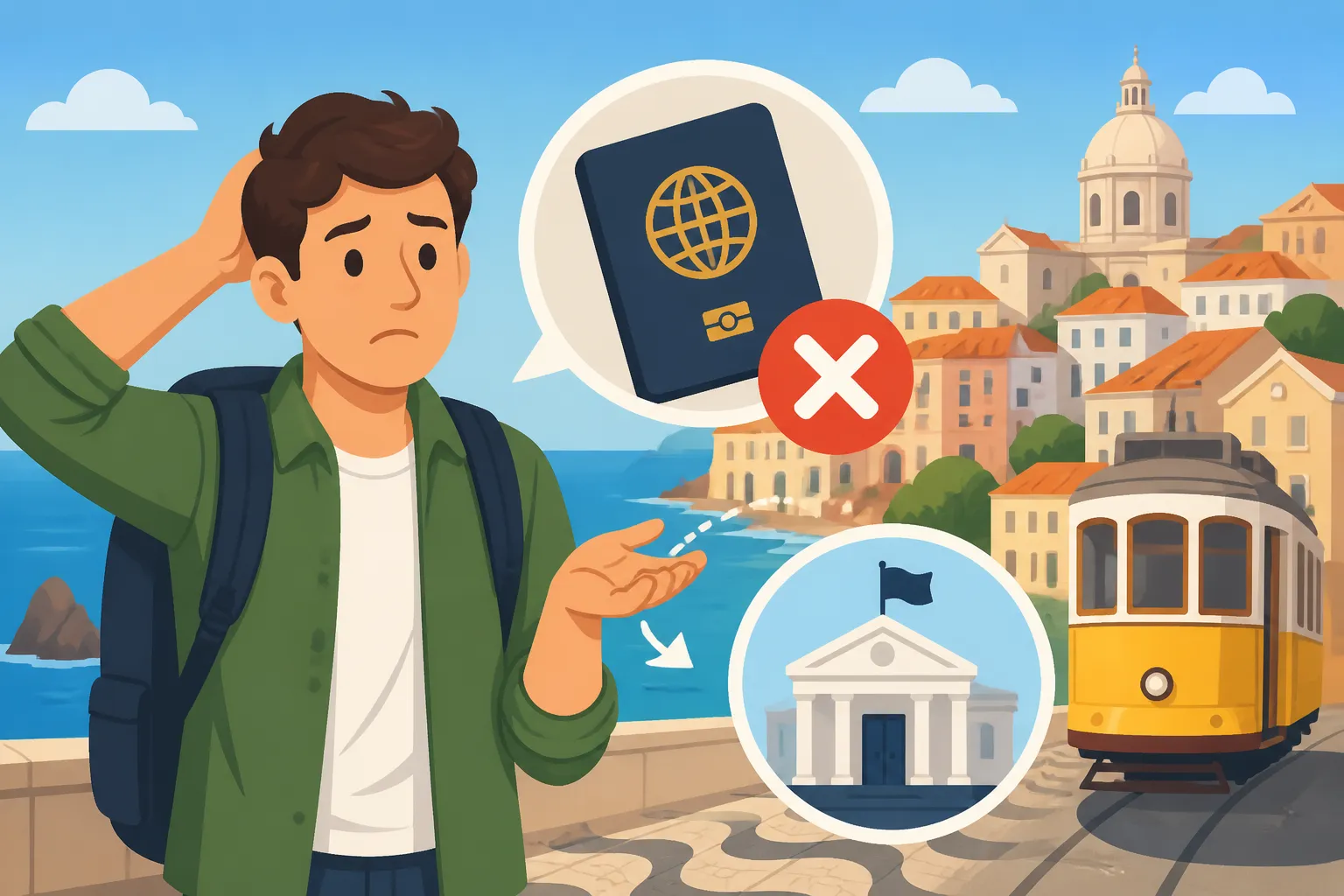
What to Do If You Lose Your Passport in Portugal
Disclosure: This article contains affiliate links. If you buy through them, we may earn a commission at no extra cost to you. Read our full disclosure.
Losing your passport in Portugal, whether it's stolen from your bag on a packed tram in Lisbon or simply vanishes from your beachfront Airbnb in the Algarve, can instantly transform your dream European adventure into a harrowing bureaucratic ordeal. That cold dread, the frantic pat-down, the gut-wrenching realization that your most vital document is gone – it’s a moment of sheer panic many expats and tourists, myself included, have unfortunately experienced. This comprehensive guide will walk you through the immediate steps, explain exactly how to report the incident, detail the process for getting a replacement travel document, and help you navigate your way out of Portugal, all based on real-world experiences and a good dose of empathy.
The Immediate Aftermath: Don't Panic, But Act Fast
It’s completely normal to feel a wave of despair wash over you when you discover your passport is missing. Take a deep breath. Panicking won't make it reappear, but quick, calm, and methodical action certainly will help. Your immediate response can significantly impact the ease (or difficulty) of the recovery process. This isn't just about replacing a document; it's about re-establishing your identity and ensuring you can travel home or continue your journey legally.
Retrace Your Steps and Search Thoroughly
Before you jump to conclusions about theft, take a moment to meticulously retrace your steps. Think back to the last time you saw your passport. Was it at the airport, showing it to immigration? At your accommodation, tucked away in a "safe" place? Or perhaps when you bought that beautiful souvenir?
- Check Your Belongings Meticulously: Don’t just glance. Empty every pocket of your bag, every compartment of your wallet, and every corner of your suitcase. Look under beds, behind cushions, and inside seemingly unrelated items. Sometimes, a passport slips into an unexpected place.
- Contact Recent Locations: If you believe you lost it in a specific place – a café, restaurant, shop, or public transport – call or go back there immediately. Many establishments in Portugal have a "lost and found" (perdidos e achados) policy. If you were on a train with Comboios de Portugal (CP) or a metro in Lisbon, check their respective lost property offices. Even if you don't speak Portuguese, a quick "Perdi meu passaporte, aqui?" (I lost my passport, here?) with a hopeful expression can go a long way.
- Reach Out to Your Accommodation: If you're staying in an Airbnb or hotel booked via platforms like Booking.com, reach out to your host or the hotel management immediately. Cleaning staff often find forgotten items, and they might have a system for holding onto valuables.
Secure Your Other Valuables and Documents
While your passport is undeniably the most critical document, its loss often signals a broader security concern. Use this moment to assess and secure everything else.
- Other Identification: Do you have a driver's license, national ID card, or even a photocopy or digital image of your passport? These will be crucial for identification later on. Keep them separate from your wallet if possible.
- Credit Cards and Cash: If your wallet was stolen along with your passport, immediately contact your banks to cancel your credit and debit cards. Most banks have a 24/7 international helpline. While a bit of a pain, this prevents unauthorized transactions. Consider using services like Wise or Revolut for emergency funds if your traditional bank accounts are compromised, as they often offer quick virtual cards.
- Important Papers: Check for other vital documents like visa approvals, birth certificates (if you carry copies), travel insurance details, or plane tickets. Having these will make the embassy visit smoother. If you haven't already, take a moment to store digital copies of all your important documents in a secure cloud service or email them to yourself and a trusted family member. It truly makes a world of difference when you need to prove your identity without your physical documents.
Reporting the Loss or Theft to Portuguese Authorities
This step is absolutely non-negotiable. You cannot apply for an emergency travel document without an official police report. It might feel intimidating, especially with a language barrier, but it’s a vital piece of the puzzle.
Filing a Police Report (Queixa)
In Portugal, you'll need to report the loss or theft to either the Polícia de Segurança Pública (PSP) in urban areas or the Guarda Nacional Republicana (GNR) in rural regions. For most tourists and expats in cities like Lisbon or Porto, the PSP is your point of contact.
- Where to Go: Head to the nearest police station. In tourist-heavy areas, some stations might have English-speaking officers, but don't count on it. If you're near a major city, look for a station specifically designated for supporting tourists, such as the Polícia de Turismo.
- What to Bring:
- Any other form of identification you have (driver's license, national ID card, even a photo of your lost passport on your phone).
- Details of the incident: exact time, date, and location (as precise as possible). If you suspect theft, describe what happened.
- A friend who speaks Portuguese, if possible. If not, Google Translate or a similar app can be your best friend. The police officers are generally helpful, but they appreciate efforts to bridge the language gap.
- The Process: You will file a "queixa" (complaint or report). This formal document will detail the loss or theft of your passport. Be as thorough as you can with descriptions. The report will list your name, contact information, and details of the lost document. You must obtain a physical copy of this report. It's proof that you've officially declared your passport missing, and your embassy will require it. Do not leave the station without it. Keep this document safe!
Notifying Your Embassy or Consulate
Once you have that police report in hand, your next call is to your country's embassy or consulate in Portugal. Most countries have an embassy in Lisbon, and some also have consulates in other major cities like Porto or Faro.
- Locate Your Embassy: A quick online search for "[Your Country] embassy in Portugal" will give you their contact details and address.
- Contact Them Immediately: Call their emergency number or dedicated consular services line. Explain that your passport has been lost or stolen and you need to apply for an emergency travel document. They will guide you through their specific requirements and appointment system. Some embassies operate on an appointment-only basis, while others have specific walk-in hours for emergencies.
- Prepare for the Visit: Before heading to the embassy, try to have the following:
- Your police report (the queixa).
- Proof of your citizenship (e.g., birth certificate, old passport copy, national ID card). Digital copies are a start, but originals are always better if you have them securely stored elsewhere.
- Passport-sized photos. Many larger supermarkets like Continente or shopping centers have photo booths that produce biometric photos suitable for official documents.
- Proof of your travel itinerary (e.g., flight tickets, hotel reservations).
- Funds for the fee. Emergency travel documents usually come with a fee, often payable in local currency (Euros) or a credit card.
It’s important to remember that the embassy's primary role is to assist its citizens. They can't investigate the theft or get your old passport back, but they are your lifeline for getting home. The staff are usually very experienced with this exact scenario, so don't be afraid to ask for clarification on any part of the process.
Obtaining an Emergency Travel Document
This is the document that will get you out of Portugal and back home. It's not a full passport, but a temporary solution specifically for emergency travel.
Required Documents for a Replacement
The exact documents can vary slightly depending on your nationality, but generally, you'll need a combination of the following:
- Police Report (Queixa): The original document you received from the PSP or GNR. This is paramount.
- Proof of Identity and Citizenship: This can be a photocopy of your lost passport, a driver's license, a national ID card, or a birth certificate. The more evidence you can provide that you are who you say you are, the smoother the process will be. If you've taken digital photos of your passport or other IDs, now is the time to present them.
- Passport Photos: Generally two recent, color passport-sized photos meeting international biometric standards. As mentioned, local photo booths are usually sufficient.
- Travel Itinerary: Evidence of your impending travel, such as a flight booking. This helps the embassy understand the urgency and duration for which the document needs to be valid.
- Application Form: Your embassy will provide this. Fill it out completely and accurately.
- Fees: Be prepared to pay the applicable fee for the emergency travel document. Check your embassy's website or call ahead for current costs and accepted payment methods.
Some embassies might also ask for proof of your residential address in your home country, or for contact information for an emergency contact who can verify your identity. If you're a long-term expat in Portugal, having access to documents like your residence permit (check out our guide on AIMA Portugal: Navigating the New Immigration Agency and Residence Permits) can also be helpful supplementary ID, even if it's not a primary requirement for a passport replacement.
Understanding the Different Types of Emergency Documents
Your embassy will issue one of a few types of emergency travel documents, depending on your needs and nationality:
- Emergency Passport / Temporary Passport: This is often a limited-validity passport issued specifically for direct return to your home country or country of residence. It might only be valid for a few weeks or months and usually for a single journey. This means you might not be able to use it for further tourism or extensive travel through the Schengen Area. Its primary purpose is to facilitate your exit.
- Emergency Travel Certificate / Laissez-Passer: Similar to an emergency passport, this is also a temporary document for a single journey back home. It's often issued when an emergency passport isn't feasible or when time is extremely short.
- Consular Report of Birth Abroad (CRBA): For U.S. citizens born abroad, this document can establish citizenship and can sometimes be processed alongside an application for a first U.S. passport for a child, though this is a more complex process and less common for lost adult passports.
It's crucial to understand the limitations of the document issued to you. The consular officer will explain its validity, whether it's for single entry only, and if it allows travel through other countries. Do not assume it grants you the same travel freedoms as a full passport. Often, these documents are only valid for your direct route home.
Navigating Your Exit from Portugal and Beyond
Once you have your emergency travel document, the finish line is in sight, but there are still a few hurdles to clear. Don't let your guard down just yet.
Booking New Travel with Your Temporary Document
Your emergency travel document is your key to leaving, but you need to be smart about how you use it.
- Inform Your Airline: Before booking or re-booking any flights, it is imperative that you contact your airline directly and explain that you will be traveling on an emergency travel document. Airlines have varying policies on these documents. Some may require pre-approval or have specific requirements. It's far better to confirm this beforehand than to be turned away at the check-in counter or gate.
- Direct Flights Are Best: If possible, book a direct flight from Portugal back to your home country. Transiting through other countries, especially within the Schengen Area, can cause complications. While your emergency document should be recognized, individual border control officers in other countries might not be as familiar with it, leading to delays or even denied boarding. If you absolutely must travel within the Schengen Area first, say by train using Omio, ensure your emergency document explicitly states it’s valid for such travel.
- Keep All Documents Handy: Always have your emergency travel document, police report (queixa), and any other supporting documents (like your flight itinerary) readily accessible. You'll likely need to present them multiple times.
- Confirm ID Requirements for Activities: And if you had tours or activities booked through services like GetYourGuide, you might need to show ID for those too. Check their policies, though often the emergency document combined with another form of photo ID (like a driver's license) might suffice.
Potential Complications and What to Expect at the Border
Even with all your ducks in a row, crossing borders with an emergency document can be a bit more tense than usual.
- Portuguese Immigration: When you arrive at the Portuguese airport or border crossing, you'll present your emergency travel document and police report. The Portuguese border guards (AIMA, formerly SEF) are generally familiar with these situations. They will verify your identity and the validity of your document. Be prepared for extra questions and possibly a slightly longer processing time. Explain your situation calmly and clearly.
- Schengen Area Considerations: Portugal is part of the Schengen Area. If your emergency document is a single-entry document meant only for direct return home, attempting to travel to another Schengen country first could be an issue. Always follow the specific instructions given by your embassy regarding intra-Schengen travel. Understanding Traveling in the Schengen Area with a Portuguese Residence Permit is different than traveling on a temporary emergency document.
- Your Home Country's Immigration: Upon arrival in your home country, you will present your emergency document to your own border control. They will verify your identity and facilitate your entry. This is usually the smoothest part of the journey, as you are returning home. However, they might also ask questions about the loss and advise you on applying for a full replacement passport once you're back.
- Keep Records: It's a good idea to keep copies of all communication with your embassy and the police. If you have to deal with AIMA for any reason later, perhaps regarding your ongoing residence, having these records can be beneficial. In Portugal, proving your legal status is key, especially with a temporary document.
Here's a quick summary of essential items to have for your emergency travel document application:
| Document Type | Description | Importance |
|---|---|---|
| Police Report (Queixa) | Official report from PSP/GNR stating loss/theft. | Critical |
| Proof of Citizenship | Original or copy of birth certificate, previous passport, national ID. | Critical |
| Passport Photos | 2 recent, color, biometric-standard photos. | Critical |
| Proof of Identity (Secondary) | Driver's license, student ID, any other photo ID. | High |
| Travel Itinerary | Flight booking, onward travel plans. | High |
| Application Form | Provided by your embassy/consulate. | Critical |
| Fees | Funds to cover the cost of the emergency document. | Critical |
| Embassy Appointment Confirmation | Proof of your scheduled visit. | High |
| Copy of Portuguese Visa/Residence Permit (if applicable) | If you live in Portugal, this helps prove your legal status. | Medium |
Losing your passport is a truly unpleasant experience, especially in a foreign country. The key is to remain calm, follow these steps meticulously, and leverage the support of your embassy. It's a temporary setback, not the end of your Portuguese adventure. While it's always stressful, remember that you're not the first, and certainly won't be the last, expat or tourist to go through this. Keep those photocopies of your passport and visa separate, and consider a little pouch for your most important documents next time. Better safe than sorry, as they say!
Disclaimer
The information provided in this guide is intended for general informational purposes only and does not constitute legal or official advice. While we strive to keep the information accurate and up-to-date, immigration policies, local laws, and embassy requirements can change frequently. Always consult with your specific country's embassy or consulate in Portugal and relevant Portuguese authorities (PSP, GNR, AIMA) for the most current and authoritative guidance regarding lost or stolen passports and travel documents. We cannot be held responsible for any outcomes based on the use of this information.