Surfing in Portugal: Ericeira, Peniche, and Nazaré
Disclosure: This article contains affiliate links. If you buy through them, we may earn a commission at no extra cost to you. Read our full disclosure.
Many newcomers arrive in Portugal with visions of glassy barrels and sunset sessions, only to find themselves intimidated by aggressive local lineups, freezing Atlantic temperatures, and the logistical nightmare of transporting gear through narrow cobblestone streets. This guide breaks down the nuances of Portugal’s surfing meccas—Ericeira, Peniche, and Nazaré—ensuring you choose the right break for your skill level while navigating the local culture with respect and ease.
The Ericeira World Surfing Reserve: More Than Just Reef Breaks
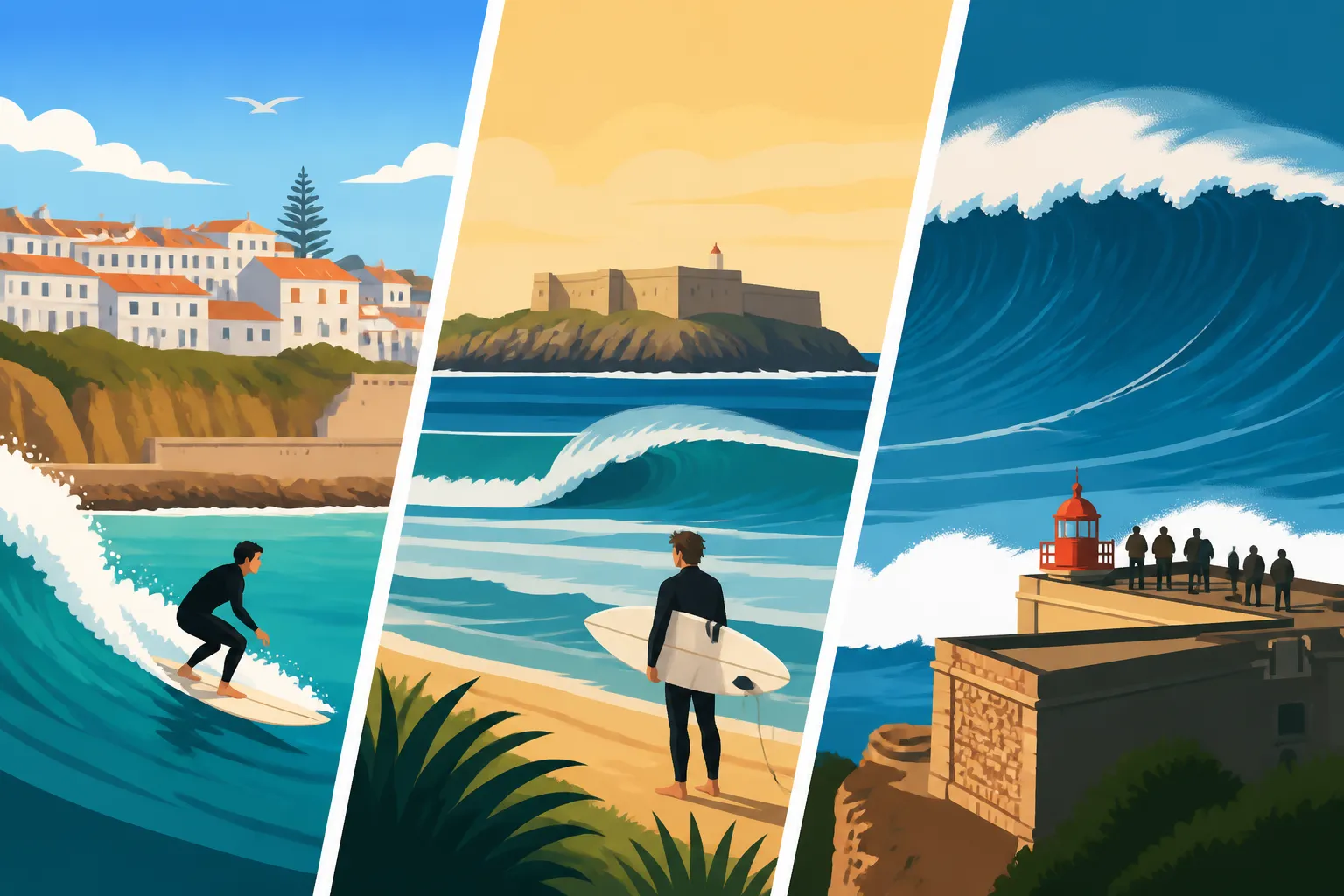
Ericeira is the crown jewel of Portuguese surfing, recognized as the first World Surfing Reserve in Europe. For the expat moving here, it offers a lifestyle that revolves entirely around the ocean. However, the prestige of the "Reserve" status brings with it a level of crowdedness and localism that can be jarring if you aren't prepared. The town itself sits on high cliffs, and the waves here are predominantly reef breaks, which means they are consistent but can be unforgiving on your fins and your skin if you wipe out at low tide.
Living in Ericeira requires an adjustment to the pace of life. While the surf is world-class, the infrastructure can feel strained during the summer months. If you are considering settling here long-term, it is vital to look into the Cost of Living in Portugal 2026: Detailed Budgets for Singles and Families to see how the rising popularity of surf towns impacts local rents. Ericeira has transformed from a sleepy fishing village into a high-end surf hub, and while the "vibe" remains, the prices for a T1 apartment overlooking the Atlantic have certainly climbed.
Ribeira d’Ilhas and the Main Point Breaks
Ribeira d’Ilhas is often called the "living room" of Portuguese surfing. It is a natural amphitheater that hosts international competitions and provides a long, crumbling right-hand break that is accessible to intermediates on smaller days but becomes a beastly, high-performance wave when the winter swells arrive. The beauty of Ribeira is its consistency; it picks up almost any swell the North Atlantic throws at it. However, because it is so famous, the "peak" can be a battleground.
For those who find Ribeira too crowded, the surrounding breaks like Coxos or Cave offer more intensity. Coxos is arguably the best wave in Portugal—a heavy, hollow right-hand point break. But a word of warning for expats: do not paddle out at Coxos unless you are an expert and have spent time watching the lineup. The locals are protective of this wave, and the entry/exit over urchin-covered rocks is a skill in itself. If you do get into a scrape, make sure you understand Finding Doctors and Specialists in Portugal: English-Speaking Medical Care so you know where to go for minor injuries that don't quite warrant an emergency room visit.
Surviving the Crowds and Local Etiquette
The social hierarchy in Ericeira is real. It is common to see many people lose their "cool" in the water. The key to being accepted in the Ericeira lineup is patience. Spend your first few sessions sitting on the shoulder, observing who the local "bosses" are, and never, ever drop in on someone. In a reef break, the take-off zone is much tighter than on a beach break, making priority even more important.
Beyond the water, Ericeira’s surf culture extends to the "Marisqueiras" (seafood restaurants). After a session, the tradition is to head into town for "percebes" (goose barnacles) and a cold Sagres. Integrating into this scene is just as important as your performance in the water. To truly understand the social nuances of these coastal towns, it helps to dive into Portuguese Coffee Culture and Restaurant Etiquette: Ordering Like a Local to avoid the typical "tourist" mistakes that can mark you as an outsider.
Peniche: The Versatile Peninsula Where It’s Always Offshore Somewhere
If Ericeira is the prestigious elder, Peniche is the rugged, hardworking sibling. Peniche is unique because it is a peninsula that juts out into the Atlantic, meaning that regardless of which direction the wind is blowing, there is almost always a beach that is offshore. This geographical fluke makes it perhaps the most reliable surf destination in the world. You can find world-class barrels on one side and gentle beginner waves on the other, often just a five-minute drive apart.
Logistically, Peniche is a bit more spread out than Ericeira. You will likely find yourself staying in Baleal, a small sub-village connected to Peniche by a thin causeway. Baleal is where the "expat energy" is highest, filled with surf camps, digital nomad hubs, and beach bars. When planning your trip, using platforms like Booking.com can help you find accommodation that specifically offers board storage, which is a detail often overlooked by those new to the area.
Supertubos: The European Pipeline Experience
Supertubos is the legendary sandbar that hosts the WSL Rip Curl Pro every year. It is a heavy, fast, and powerful wave that breaks in very shallow water. On a good day, it provides some of the best barrels in Europe. However, Supertubos is not a wave for the faint-hearted. The "lip" of the wave is thick, and the hold-downs can be intense.
For many expats, the dream is to score a day at Supertubos, but the reality is often a lot of "close-outs" and broken boards. The sandbanks shift constantly, so a spot that was perfect on Tuesday might be a "death-slab" on Wednesday. If you’re coming to Peniche to test your limits, it is wise to be covered by Private Health Insurance in Portugal: Costs, Coverage, and Best Providers because a heavy encounter with the sand at Supertubos can easily result in a dislocated shoulder or a concussion.
Baleal for Beginners and Intermediates
On the northern side of the causeway lies the Bay of Baleal. This area is much more forgiving. The waves here wrap around the island and lose some of their power, creating long, manageable rides perfect for those still refining their pop-up. The Cantinho da Baía is the most popular spot, and while it can get incredibly busy with surf schools, the atmosphere is generally much more relaxed than the high-stakes environment of Supertubos.
Baleal is also the heart of the social scene. You’ll find people from all over the world working from cafes during the day and surfing until 9:00 PM in the summer. For those looking to learn, booking a package through GetYourGuide can connect you with certified instructors who speak fluent English and know exactly where the sandbars are working that day. This is a great way to skip the frustration of trying to find the "peak" on your own in a new country.
Nazaré: Facing the Titans of Praia do Norte
Nazaré is a name that strikes fear and awe into the hearts of surfers globally. It is home to the largest surfable waves on the planet, thanks to the Nazaré Canyon—a 5,000-meter-deep underwater trench that funnels swell directly toward the shore without any loss of energy. When the giant waves "awake" (usually between November and March), the town transforms into a high-octane arena where the world's best big-wave surfers face mountains of water.
However, there is a "Summer Nazaré" that many tourists don't realize exists. During the warmer months, Praia do Norte can be a perfectly normal—if somewhat heavy—beach break. But even on small days, the currents at Nazaré are notoriously dangerous. As an expat living in Portugal, you learn to respect the power of the water here. If you ever find yourself in trouble or witness someone struggling in the shorebreak, you must know the protocol for Emergency Medical Care in Portugal: Calling 112 and Going to the Hospital to get help as quickly as possible.
The Canyon and the Science Behind the Giant Waves
The "Big Wave" phenomenon isn't just about big storms in the Atlantic; it's about the interaction between the swell and the canyon. The canyon ends just a few hundred meters from the lighthouse (Farol de Nazaré). This causes the wave to "refract" and interfere with the part of the wave traveling over the shallower shelf, effectively doubling the wave's height. This is why you can have 50-foot waves at Praia do Norte while the rest of the coast is only seeing 10-foot swells.
For the average surfer, Nazaré is not a place to paddle out. It is a place to watch. The logistics of a big wave day are immense, involving jet-ski teams, spotters on the cliffs, and medical teams on standby. Watching from the lighthouse is a bucket-list experience, but it requires planning. The roads into Nazaré become completely blocked on "Big Wednesday" events. Check Public Transport and Driving in Portugal: Trains, Tolls, and Licenses to understand how to navigate the traffic and parking restrictions that the local "Câmara" (city hall) enforces during these events.
Watching vs. Surfing: Logistics for the Brave and the Curious
If you are a spectator, the best view is from the roof of the Fort of São Miguel Arcanjo. You can feel the ground shake when the waves break. For those who want a more guided experience, many tours on GetYourGuide offer "Big Wave" sightseeing trips that explain the mechanics of the canyon and take you to the best vantage points without you having to worry about where to park your car.
For the rare few who actually intend to surf Nazaré, even on the "smaller" 15-to-20-foot days, you need specialized equipment and a partner. This is not "soul surfing"; this is survival. The town of Nazaré itself is charming and maintains its traditional fishing roots, where women still wear the "seven skirts" and dry fish on the beach. It’s a surreal contrast—ancient traditions happening right next to the most futuristic, high-tech extreme sport in the world.
Logistical Realities: Getting Around with a 7ft Board
One of the biggest hurdles for surf-tourists and new expats is the "last mile" of transport. Portuguese trains are excellent for people, but they are not always board-friendly. If you are trying to move between Lisbon, Ericeira, and Peniche, you need to plan your route carefully. Using Omio is a great way to compare bus and train schedules, as the "Rede Expressos" buses often have larger luggage compartments that can accommodate board bags, whereas some regional trains might have restrictive policies during peak hours.
Once you are in these towns, having a car is almost a necessity if you want to find the best conditions. However, driving in Portugal comes with its own set of rules and costs. You’ll need to get comfortable with Navigating the Portuguese Toll System: Via Verde and Electronic Tolls because many of the highways leading to the coast (like the A8) use electronic-only tolls that can lead to heavy fines if you don't have a transponder in your rental or personal vehicle.
Transport Options and Equipment Rental
If you don't want to lug a 20kg board bag across the Atlantic, rental culture in Portugal is very sophisticated. In Ericeira and Peniche, you can find high-performance rentals—not just foamies—from shops like 58 Surf or Fatum. This allows you to "quiver-match" the conditions. If the swell is small, rent a longboard; if it’s pumping, grab a step-up.
For those relying on public transport, the "Navegante" pass is a lifesaver in the Lisbon metropolitan area, but it won't get you all the way to Peniche or Nazaré. For those longer hauls, look into Using Comboios de Portugal (CP) trains and the Navegante Pass to see where the rail network ends and the bus network begins. Usually, you’ll take a train to Caldas da Rainha and then a local bus to the coast.
Choosing the Right Season for Your Skill Level
Timing is everything in Portugal.
- Summer (June–August): Small waves, crowded lineups, warm water (though "warm" is relative—you still need a 3/2mm wetsuit). This is the best time for beginners.
- Autumn (September–November): The "Golden Season." The water is at its warmest, the summer crowds have left, and the first consistent swells begin to hit. This is prime time for intermediates and pros.
- Winter (December–February): Heavy, powerful, and cold. This is the time for Nazaré’s giants and Ericeira’s hollowest barrels. You’ll need a 4/3mm or 5/4mm wetsuit with boots and a hood.
- Spring (March–May): Unpredictable winds but often great "leftover" swells from winter.
| Location | Best For | Wave Type | Atmosphere |
|---|---|---|---|
| Ericeira | Intermediates/Pros | Reef/Point Breaks | Trendy, Historical, Busy |
| Peniche | All Levels | Beach/Sandbar | Rugged, Sporty, Versatile |
| Nazaré | Pros (Big Wave) | Heavy Beach Break | Traditional, Intense, Awe-inspiring |
Beyond the Board: Surf Culture and Living the Lifestyle
Surfing in Portugal isn't just about the time spent in the water; it’s about the community you build on land. For many expats, the "Surf Office" concept has taken off. You can spend the morning in a deep-work session and the afternoon at Ribeira d’Ilhas. This balance is what makes Portugal one of the top destinations for digital nomads.
However, don't forget that these are real communities with their own struggles. The influx of surfers has led to housing shortages in places like Ericeira. Being a "good" expat means contributing to the local economy and respecting the environment. Join a beach cleanup or support the local "Junta de Freguesia" initiatives. If you’re staying long-term, you’ll also need to navigate the bureaucracy of Registering with the Centro de Saúde: Getting Your SNS Número de Utente to ensure you're part of the system and not just a seasonal guest.
Post-Surf Rituals and Coastal Communities
The post-surf "imperial" (small draft beer) and a "prego no pão" (steak sandwich) is a rite of passage. In Peniche, head to the bars in Baleal to meet people from every corner of the globe. In Ericeira, the "Adega Bar" is the legendary spot where surfers have gathered for decades. These social hubs are where you’ll hear the "real" surf report—which sandbar is working, which local is on a tear, and where to avoid the "flat" spots.
If you find yourself falling in love with the coast and deciding to stay, make sure you are prepared for the medical realities of an active lifestyle. Injuries happen, and knowing the difference between the public and private systems is crucial. Take a look at Public vs Private Healthcare in Portugal: Which One Should Expats Choose? to decide which coverage fits your adventurous lifestyle best. Whether it’s a reef cut in Ericeira or a wipeout in Peniche, having your health administration sorted allows you to focus on what really matters: the next swell.
Disclaimer
The information provided in this guide is for informational purposes only and reflects the personal experiences and research of the author. Surfing is an inherently dangerous sport; always consult local surf schools, check weather and tide reports, and never surf beyond your ability. While we strive for accuracy, regulations regarding visas, healthcare, and local laws in Portugal are subject to change. Always verify critical administrative details with official government sources or qualified professionals.