Money for Travel in Portugal: Cards, Cash, and ATMs
Disclosure: This article contains affiliate links. If you buy through them, we may earn a commission at no extra cost to you. Read our full disclosure.
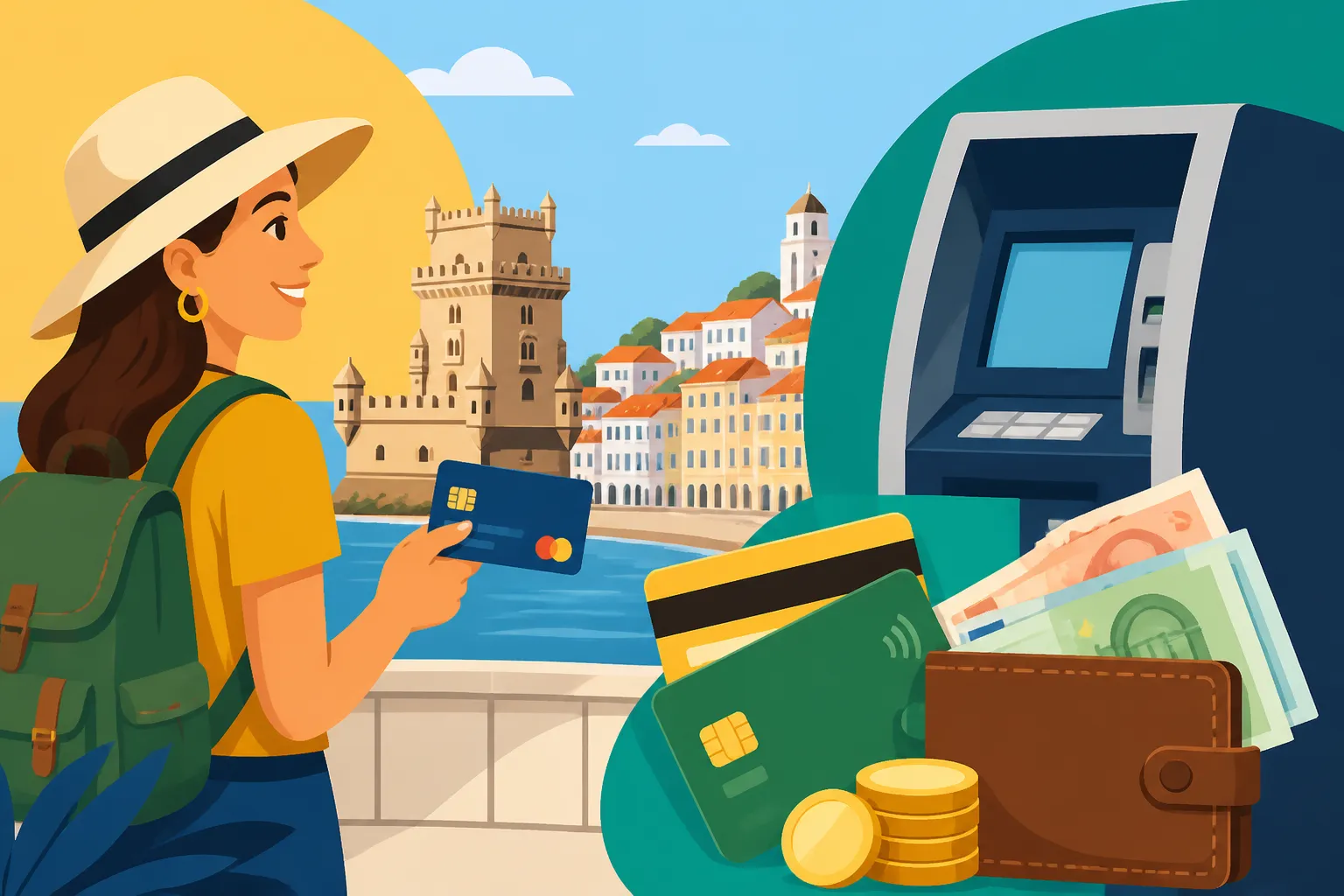
Ah, the eternal expat riddle: how on earth do you manage your money when you're traipsing through a new country? Portugal, with all its charm and ancient ways, can throw a real curveball when it comes to cash, cards, and understanding the local payment landscape. Many a newcomer has stood bewildered at an ATM, wrestling with foreign fees, or fumbled for exact change at a tiny café. This guide is here to untangle the confusion, offering practical, street-smart advice on navigating cards, cash, and ATMs in Portugal, so your travels are financially smooth and stress-free.
Navigating Cash in Portugal: The Euro and Its Importance
Despite the rise of digital payments globally, cash still holds a significant, almost cherished, place in Portuguese daily life. If you’re used to swiping your card for every single transaction, prepare for a slight cultural adjustment. While major cities and larger establishments are generally card-friendly, venturing into smaller towns, local markets, or even some beloved mom-and-pop shops in Lisbon and Porto will often require you to have some euros in your pocket.
When Cash is King
You'll quickly learn that a good old 5-euro note is your best friend in many situations. Think about those tiny pastelarias where you grab a coffee and a pastel de nata for a couple of euros – they often prefer cash, or sometimes have a minimum card spend that your small order won't meet. The local mercado for fresh produce, the fisherman selling his catch by the seaside, or even street vendors for chestnuts in winter, will almost exclusively deal in cash. Small taxis, especially outside the main city hubs, might also prefer cash, although ride-hailing apps like Uber or Bolt usually process payments digitally.
Beyond convenience, having cash is also a smart move for budgeting, especially if you're trying to stick to a daily spending limit. It can be easy to lose track when you're tapping your card everywhere, but seeing those euros dwindle in your wallet provides a tangible reminder of your spending. Plus, it’s always respectful to pay in cash for very small amounts, as card processing fees can eat into a small business's already thin margins. I remember once trying to pay for a 0.80€ coffee with a card and the barista just looked at me with a patient, yet slightly exasperated, smile, gently suggesting, "Dinheiro, por favor?" – cash, please. It was a learning moment!
Euro Denominations and Handling Change
The euro currency comes in banknotes of 5, 10, 20, 50, 100, 200, and 500 euros, though you're unlikely to encounter the 200 or 500 euro notes often, and many smaller shops won't accept anything larger than a 50 euro note for small purchases due to change availability and security concerns. The coins are 1, 2, 5, 10, 20, 50 cents, and 1, 2 euros. Getting comfortable with these coins is essential. You’ll find yourself accumulating a fair amount of change, so a coin purse or a dedicated pocket for your moedas (coins) will come in handy.
When paying, try to use smaller denominations if you have them, especially in those smaller establishments. Handing over a 50-euro note for a 3-euro purchase might earn you another one of those patient smiles, as it can deplete a small shop's entire float. Always check your change. While most Portuguese are incredibly honest, mistakes can happen, especially in busy tourist areas or if there's a language barrier. It's a good habit to quickly count your change before walking away, just like you would anywhere else.
Credit and Debit Cards: Your Plastic Friends (and Foes)
For larger purchases, hotel stays, renting a car, or dining in more upscale restaurants, your credit and debit cards will be your go-to. Visa and Mastercard are widely accepted across Portugal, much more so than American Express, which can be hit or miss outside of major international hotel chains or high-end stores. Discover cards are generally not accepted.
Understanding Acceptance and Fees
You'll see signs for "Visa" and "Mastercard" on most shop doors and at payment terminals. However, it’s always a good idea to confirm before ordering or purchasing, especially in a place where you might not have much cash on hand. Look for the card logos, or simply ask, "Aceita cartão?" (Do you accept card?).
The biggest pitfall for travelers using foreign cards in Portugal (and indeed, across Europe) are the dreaded foreign transaction fees. Most banks back home will charge you a percentage (often 2-3%) on every transaction made in a foreign currency. These seemingly small fees can quickly add up, turning your holiday budget into a leaky sieve. Before you travel, contact your bank to understand their foreign transaction policies. Better yet, consider getting a travel-friendly debit or credit card that explicitly waives these fees. Many online banks or specific travel credit cards offer this perk. This is where a little pre-trip research can save you a bundle.
The Dynamic Currency Conversion Trap
Another sneaky fee you need to watch out for is Dynamic Currency Conversion (DCC). This happens when a merchant, or even an ATM, offers you the choice to pay in your home currency (e.g., USD, GBP) instead of euros. While it might seem convenient to see the cost in a currency you understand, always choose to pay in the local currency (EUR). When you opt for your home currency, the merchant's payment processor sets its own exchange rate, which is almost always worse than your bank's rate, plus they often add an extra markup. It’s essentially a hidden fee disguised as a helpful service. So, when the payment terminal asks, "Pay in EUR or [your home currency]?", hit that "EUR" button with confidence.
When booking accommodations or tours online, you'll also want to keep an eye on currency. Websites like Booking.com, for instance, might display prices in your home currency by default. While this is convenient for browsing, confirm that the final charge will be in euros to avoid potential DCC markups from the platform or your bank. Similarly, when using services like Omio to book train or bus tickets, or GetYourGuide for booking activities, verify the currency of the transaction. Always prioritize paying in the local currency of your destination.
ATM Usage: The Multibanco Network and Fee Avoidance
With cash being so prevalent, knowing how to get it without being fleeced by fees is critical. Portugal’s ATM network is dominated by Multibanco, a ubiquitous and incredibly versatile system that goes far beyond just dispensing cash. You'll see these machines everywhere – outside banks, in shopping centers, and even in smaller villages.
Understanding Multibanco vs. Euronet
The Multibanco system is fantastic for its functionality, but here’s the critical distinction for tourists:
- Bank-operated Multibanco ATMs: These are typically found directly outside or inside Portuguese bank branches (e.g., Millennium BCP, Caixa Geral de Depósitos, Santander, Novobanco). When you use your foreign card at these ATMs, you will typically only be charged a fee by your own bank back home (if they have foreign transaction fees for cash withdrawals). The Portuguese banks themselves generally do not impose an additional fee for foreign card withdrawals.
- Euronet ATMs: These bright blue and yellow machines are often found in high-traffic tourist areas, airports, and train stations. They are independent ATMs, not operated by Portuguese banks. Euronet machines are notorious for charging high, often exorbitant, flat fees in addition to any fees your own bank might charge. This can be anywhere from 3.50€ to 5€ or more per transaction. They also frequently try to trick you with Dynamic Currency Conversion, showing you the withdrawal amount in your home currency at an unfavorable exchange rate.
The golden rule here is simple: Always use bank-branded Multibanco ATMs and avoid Euronet machines at all costs. Take an extra five-minute walk to find a Millennium BCP or Caixa Geral de Depósitos ATM. That small effort could save you a significant amount over your trip. For more details, you might want to check out this guide on Avoiding ATM withdrawal fees from Euronet machines in tourist areas.
Withdrawal Limits and Multibanco's Hidden Powers
Multibanco ATMs generally have a daily withdrawal limit of €400, often split into two €200 withdrawals per day. This means you might need to make two separate transactions if you need the full €400. This limit is imposed by the Multibanco system itself, not your bank, although your bank might also have its own daily limits. Always be aware of both.
Beyond cash withdrawals, the Multibanco system is a marvel. For locals, it's a one-stop shop for paying utility bills, topping up mobile phones, buying concert tickets, and even making donations. While most of these functionalities are geared towards those with Portuguese bank accounts, it's good to understand the breadth of the system. For expats, the Multibanco network becomes invaluable for tasks like how to use the Multibanco ATM network to pay taxes, tolls, and utility bills. For tourists, its primary use will be cash withdrawals, but knowing its robust nature demystifies the system a bit.
Here’s a quick table to summarize key points about cash and cards:
| Payment Method | Best For | Pros | Cons for Travelers |
|---|---|---|---|
| Cash (Euros) | Small purchases (coffee, pastries), local markets, street vendors, rural areas, tipping | Widely accepted in small establishments, helps with budgeting, respectful for small amounts | Risk of loss/theft, need to carry, exchange rates can vary for conversion |
| Debit Cards | ATM withdrawals (from bank-branded ATMs), larger purchases if no foreign transaction fees | Good for accessing cash, direct from your bank account | Foreign transaction fees, potential daily limits, Euronet ATMs charge high fees |
| Credit Cards | Hotel bookings, car rentals, large purchases, online transactions (e.g., Omio, GetYourGuide, Booking.com) | Purchase protection, often better exchange rates than cash exchange, points/rewards | Foreign transaction fees, American Express less accepted, Dynamic Currency Conversion trap |
Digital Payments and Mobile Wallets: The Future (and Present)
Portugal is definitely catching up with the rest of Europe when it comes to digital payments. While cash still reigns supreme in some corners, contactless payments and mobile wallets are becoming increasingly common, especially in urban centers and for larger retailers.
Contactless Payments and MB Way
Most modern payment terminals in Portugal are equipped for contactless payments, accepting cards with the distinctive wave symbol, as well as mobile wallets like Apple Pay and Google Pay. This is incredibly convenient and often faster than inserting your card and entering a PIN. Just tap your card or phone, and you're good to go.
However, Portugal also boasts its own unique mobile payment system called MB Way. This system, linked to the Multibanco network, allows users to pay directly from their Portuguese bank accounts using their phone number, generate virtual cards for online purchases, and even withdraw cash from Multibanco ATMs without a physical card. While MB Way is incredibly popular with locals and expats who have Portuguese bank accounts, it’s generally not accessible to tourists using foreign bank accounts or phone numbers. This is a crucial distinction, so don't expect to rely on MB Way unless you've gone through the process of opening a local bank account, which is typically for longer-term stays. For more on this, you can look into Understanding the Multibanco System and MB Way: Portugal's Unique Payment Network.
Using Travel-Specific Digital Solutions
For travelers, beyond traditional cards, there are several international digital solutions that can make managing money easier. Companies like Wise (formerly TransferWise) and Revolut offer multi-currency accounts with debit cards that allow you to hold and spend euros with minimal or no foreign transaction fees. You can top up these accounts in your home currency, convert to euros at a favorable interbank rate, and then spend like a local. These cards can be a lifesaver for budgeting and avoiding hidden fees from traditional banks.
These solutions are particularly helpful for booking travel components. If you're arranging your flights, hotels through Booking.com, or activities via GetYourGuide, using a multi-currency card can ensure you get a good exchange rate and avoid extra charges when paying in euros. This also extends to booking train tickets through platforms like Omio, which is excellent for exploring Portugal’s beautiful regions.
Budgeting and Money Management Tips for Travelers
One of the biggest concerns for any traveler is making their money last. Portugal can be very affordable compared to many Western European countries, but costs can quickly add up if you're not careful. Smart money management can significantly enhance your travel experience.
Planning Your Daily Spend
Before you even step on the plane, try to map out a realistic daily budget. Consider categories like accommodation, food, transportation, activities, and a buffer for unexpected expenses. Portugal's Cost of Living in Portugal 2026: Detailed Budgets for Singles and Families provides excellent insights, even if you're just visiting. For instance, a coffee and a pastry might set you back €1.50-€2, a sit-down lunch menu (prato do dia) around €8-€12, and a nice dinner with wine €25-€40 per person. Transportation is generally inexpensive, especially if you use public transport and get a multi-day pass in cities like Lisbon or Porto.
It’s often a good strategy to keep some cash on hand for spontaneous smaller purchases and local experiences, while using your travel-friendly debit or credit card for larger, planned expenses. This hybrid approach allows you to enjoy local charm without constantly worrying about cash scarcity, while also protecting you for bigger spends.
Security and Best Practices
Carrying large amounts of cash is never a good idea, anywhere in the world. While Portugal is generally safe, petty theft can occur, especially in crowded tourist areas like Lisbon’s Alfama or around busy tram stops. Divide your money – keep some cash in a secure wallet, some in a money belt or hidden pouch, and always have a backup card stored separately from your main wallet. Only carry what you realistically need for the day.
When using ATMs, be discreet. Check your surroundings before you approach the machine, cover the keypad when entering your PIN, and put your cash away immediately before walking off. If an ATM looks tampered with, or if someone is acting suspiciously nearby, move on to another one. Your safety is paramount. Also, make sure to keep your phone secure, especially if you rely on mobile banking apps or digital wallets. Losing your phone could mean losing access to your funds, or worse, expose your financial information.
Emergency Money Situations and Solutions
No one wants to think about things going wrong, but being prepared for financial emergencies is part of smart travel. What if your wallet gets lost or stolen? What if your card is skimmed? Having a plan B (and C!) can save you a lot of stress.
Lost or Stolen Cards
The moment you realize a card is missing, call your bank immediately to report it lost or stolen and have it canceled. Most banks have a 24/7 international helpline. Keep these numbers saved in your phone and written down somewhere secure (not in your wallet!). Having a second, separate card (a different bank, or a different card type like a credit card if your debit card is lost) is crucial. This is why having a Wise or Revolut card can be a great backup; if your primary bank card is compromised, you still have access to funds.
If you find yourself without any cards, you might need to arrange for a wire transfer through a service like Western Union or MoneyGram, or even ask a trusted friend or family member to send funds. Be aware that these services can be expensive, and you’ll need to pick up the cash at a designated agent location, often requiring your passport for identification. In dire straits, reaching out to your country's embassy or consulate in Lisbon can sometimes provide limited emergency assistance or guidance, though they won't typically provide funds themselves.
Unexpected Expenses and Travel Insurance
Sometimes, an emergency isn't a lost wallet but an unexpected expense. Maybe you need emergency medical care (which you can learn more about in Emergency Medical Care in Portugal: Calling 112 and Going to the Hospital), or perhaps your flight gets canceled. This is where comprehensive travel insurance truly shines. Good travel insurance can cover emergency medical treatments, trip interruptions, baggage loss, and sometimes even emergency cash assistance. Always read the policy details carefully to understand what's covered.
Having a small "emergency fund" set aside specifically for travel, either in a separate savings account or as readily accessible cash, can also provide immense peace of mind. Even an extra few hundred euros can make a world of difference if you need to book an unexpected night's stay or replace a lost item. Think of it as your personal financial safety net, allowing you to breathe a little easier knowing you're prepared for whatever twists and turns your Portuguese adventure might take.
Disclaimer
The information provided in this guide is intended for general informational purposes only and does not constitute financial, legal, or professional advice. While we strive to keep the information up-to-date and accurate, regulations, policies, and costs in Portugal can change rapidly. Always verify current requirements and seek advice from qualified professionals for your specific situation. We are not responsible for any decisions made based on this information.