How to Order Petiscos Like a Local in Portugal
Disclosure: This article contains affiliate links. If you buy through them, we may earn a commission at no extra cost to you. Read our full disclosure.
Stepping into a Portuguese tasca for the first time, you might glance at the menu and see a section labeled "Petiscos" and think, "Aha, tapas! I know this!" But hold on a minute, my friend. While they share a spirit of small, shareable plates, petiscos are a uniquely Portuguese culinary art form, deeply ingrained in the local social fabric. Navigating these delightful bites like a true local isn't just about what to order, but how to order, when to eat them, and understanding the unwritten rules of the table. This guide is here to walk you through the wonderful world of Portuguese petiscos, helping you savor every moment without feeling like a lost gringo.
Understanding Petiscos: More Than Just "Tapas"
The first mistake many expats and tourists make is equating petiscos directly with Spanish tapas. While both involve small plates meant for sharing, the philosophy and typical dishes are distinct. In Portugal, petiscos are not merely appetizers; they're often the main event, a reason to gather, chat, and spend a leisurely afternoon or evening. They embody the Portuguese love for fresh, simple ingredients, often highlighting seafood, cured meats, and hearty flavors.
The Essence of Petiscos in Portuguese Culture
For Portuguese people, petiscar (to eat petiscos) is a verb, a social ritual as much as it is a meal. It's about camaraderie, about slowing down, and savoring not just the food but the company. You'll often see groups of friends or families clustered around a table, sharing a few plates, perhaps a jug of vinho da casa (house wine) or a couple of cold beers. It's a relaxed, informal affair, perfect for after-work gatherings or a casual weekend lunch.
Unlike the often elaborate presentation of modern tapas, petiscos tend to be rustic and unfussy. They focus on the quality of the ingredients and traditional preparation. Think of them as Portugal's comfort food in miniature, designed to be enjoyed over extended conversations rather than rushed courses. It's a true slice of daily life here, and immersing yourself in it is one of the quickest ways to feel a part of the culture. Many an expat has found their favorite local spot for these bites, making it a cornerstone of their social calendar.
Common Petisco Categories and Styles
Portuguese petiscos span a wide spectrum of flavors and textures, reflecting the country's diverse culinary landscape. You'll find everything from ocean-fresh seafood to rich, earthy meat dishes, and surprisingly robust vegetarian options.
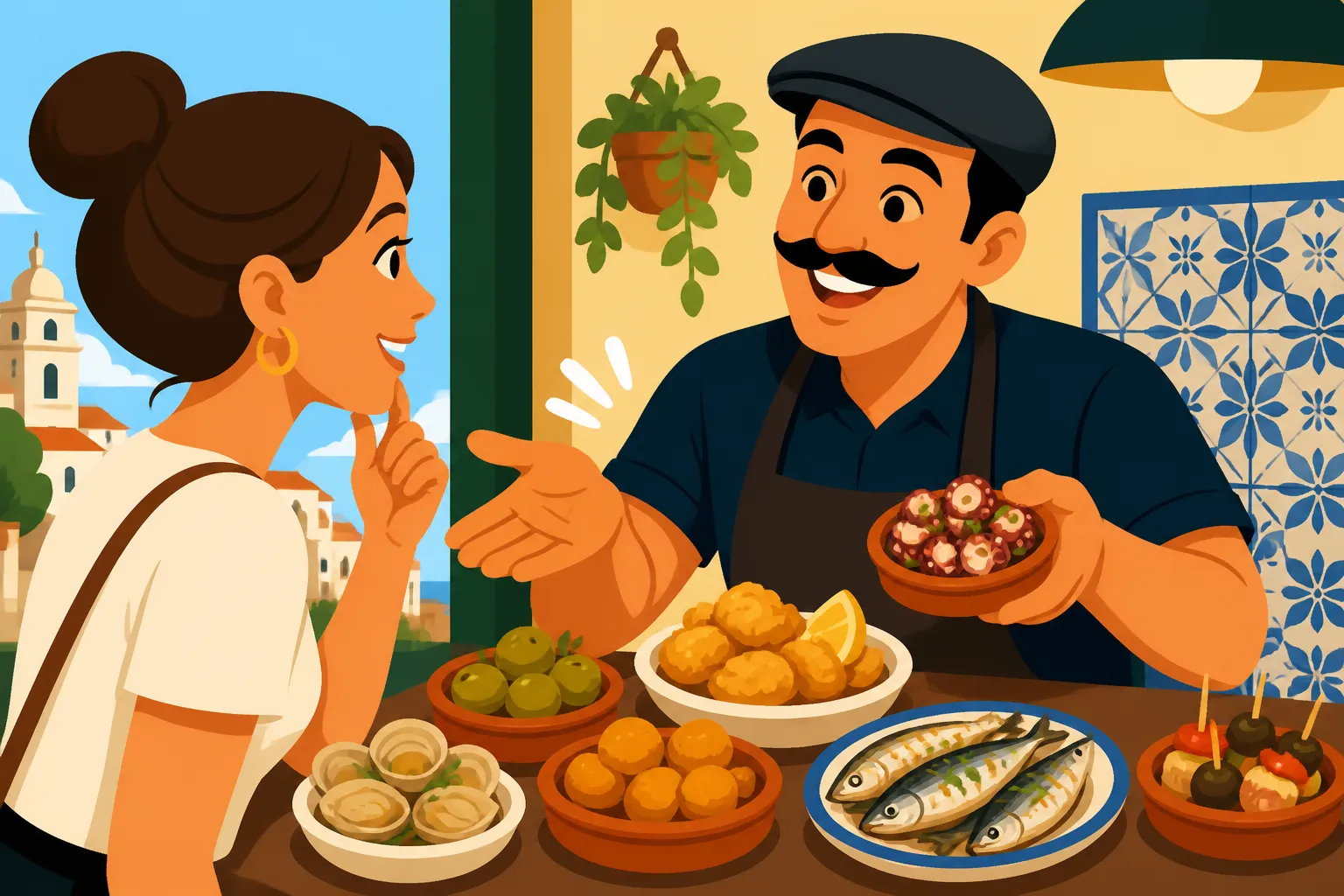
Seafood Reigns Supreme: Given Portugal's extensive coastline, it's no surprise that seafood petiscos are incredibly popular. You'll encounter dishes like amêijoas à Bulhão Pato (clams in white wine, garlic, and cilantro), camarão ao alho (garlic shrimp), salada de polvo (octopus salad), and chocos fritos (fried cuttlefish). These are often light, fresh, and bursting with the taste of the sea. Don't be shy about dipping your bread in the sauce!
Hearty Meat & Cured Delights: For meat lovers, the options are equally enticing. Pica-pau, tender cubes of beef or pork (or both) marinated and fried, often served with pickles, is a staple. Moelas estufadas (stewed gizzards) are a local favorite, rich and savory. And, of course, no petisco experience is complete without a selection of enchidos (cured sausages) like chouriço, linguiça, or farinheira, often served grilled right at your table in a flaming clay pig (a assador de chouriço).
Unexpected Vegetarian & Fried Wonders: While Portugal is known for its meat and fish, there are delicious vegetarian petiscos too. Peixinhos da horta, often translated as "little fish from the garden," are battered and fried green beans that are surprisingly addictive. Ovos mexidos com farinheira (scrambled eggs with farinheira sausage) offers a rich, comforting bite, and while farinheira isn't strictly vegetarian, many places offer simpler scrambled egg dishes. You'll also find various cheeses (queijos) and olives (azeitonas) always on hand. The trick is to try a little bit of everything!
Deciphering the Petisco Menu and Ordering Like a Pro
Walking into a bustling tasca and trying to order can feel a bit like navigating a linguistic minefield, especially if your Portuguese is still in its fledgling stages. But fear not, with a few pointers and key phrases, you'll be ordering like you've lived here for years.
Navigating the Menu: From "Prato do Dia" to "Para Picar"
When you sit down, you might be presented with a menu that lists petiscos under various headings. Sometimes they're grouped by type (seafood, meat), other times simply listed. Look for sections titled "Petiscos," "Para Picar" (for picking/snacking), or "Entradas" (starters). Don't confuse these with the "Prato do Dia" (dish of the day), which is usually a full meal.
A common practice, especially in more traditional places, is for small dishes to be placed on your table automatically, even before you order. This might include bread, olives, cheese, and sometimes butter or sardine paste. These are not free. If you eat them, you pay for them. If you don't want them, simply say "Não, obrigado/a" (No, thank you) and the server will remove them. Don't feel rude; it's a standard practice. Many expats, myself included, have fallen into the trap of assuming they're complimentary only to see an inflated bill. This is a subtle part of Portuguese Coffee Culture and Restaurant Etiquette: Ordering Like a Local that applies more broadly.
To get recommendations, you can ask, "O que recomenda de petiscos?" (What do you recommend for petiscos?) or "Qual é o petisco mais popular?" (What is the most popular petisco?). Don't be afraid to point to items on the menu if the language barrier feels too high. The staff are usually accustomed to tourists and will do their best to help.
The Art of Pacing and Sharing
The key to a successful petisco experience is pacing. Unlike a multi-course dinner where everything arrives in a sequence, petiscos are often brought out as they're ready. The idea is not to order everything at once. Start with two or three dishes for a couple, or four to five for a group of four. See how you feel, and then order more if you're still hungry. This allows you to enjoy each dish fresh and hot, and prevents your table from becoming overwhelmed.
Sharing is fundamental to the petisco culture. Everyone dips into the same plates, passing them around. This fosters conversation and a sense of communal dining. Always ensure you have enough pão (bread) on the table, as it's not just for soaking up delicious sauces but also helps to cleanse your palate between different flavors. A basket of fresh bread and a small bowl of azeitonas (olives) are almost mandatory accompaniments to any petisco session. If you're planning an extended food tour across cities, platforms like Omio can help you book train tickets efficiently between, say, Lisbon and Porto, allowing you to sample regional petiscos without hassle.
Essential Portuguese Phrases for Ordering
Having a few key phrases in your pocket will make all the difference. While many places, especially in tourist hubs, have English-speaking staff, making an effort in Portuguese is always appreciated.
| English Phrase | Portuguese Phrase | Pronunciation Guide (Approximation) |
|---|---|---|
| I would like… (polite) | Eu queria… | Eh-oo key-REE-ah |
| We would like… | Nós queríamos… | Nohsh keh-REE-ah-moosh |
| Can I have…? | Posso ter…? | POH-ssoo tair…? |
| How much is it? | Quanto custa? | KWAN-too KOOSH-tah? |
| The bill, please. | A conta, por favor. | Ah KOHN-tah, por fah-VOR. |
| Thank you. | Obrigado/Obrigada (M/F) | Oh-bree-GAH-doo / Oh-bree-GAH-dah |
| No, thank you. | Não, obrigado/a. | Nown, oh-bree-GAH-doo / oh-bree-GAH-dah |
| Another one, please. | Mais um, por favor. | My-ees oom, por fah-VOR. |
| Just water, please. | Só água, por favor. | Soh AH-goo-ah, por fah-VOR. |
| Is it spicy? | É picante? | Eh pee-KAHN-tee? |
| What do you recommend? | O que recomenda? | Oo keh reh-koh-MEN-dah? |
Practicing these simple phrases can really enhance your experience and show respect for the local culture. Don't worry about perfection; effort goes a long way.
Top Petiscos You Absolutely Must Try
Now for the fun part: what delectable delights should you be seeking out? Here’s a curated list of must-try petiscos that will give you a genuine taste of Portugal.
Seafood Delights
Portugal's connection to the sea is profound, and it shines in its petiscos.
- Amêijoas à Bulhão Pato (Clams Bulhão Pato Style): This is a non-negotiable. Fresh clams steamed in a glorious broth of white wine, olive oil, garlic, and fresh cilantro. It's simple, elegant, and utterly addictive. The sauce is made for dipping bread, so make sure to get extra. This dish perfectly encapsulates the Portuguese philosophy of letting quality ingredients speak for themselves.
- Salada de Polvo (Octopus Salad): Tender pieces of octopus, usually boiled and then dressed with finely chopped onions, bell peppers, cilantro, and a generous drizzle of olive oil and vinegar. It's refreshing, light, and surprisingly filling. A fantastic choice on a warm day, especially if you're exploring the coastal towns or looking for a lighter option.
- Chocos Fritos (Fried Cuttlefish): Often served with a side of maionese (mayonnaise) or molho verde (green sauce). The cuttlefish is usually lightly battered and fried to a golden crisp, retaining its tenderness inside. It's a popular choice in seaside cervejarias and pairs perfectly with a cold beer. You'll find variations, sometimes grilled or stewed, but the fried version is a classic petisco.
Meat & Savory Bites
For those who prefer a heartier snack, Portuguese meat petiscos are incredibly satisfying.
- Pica-Pau: A personal favorite of many, pica-pau consists of small, bite-sized pieces of beef or pork (sometimes both) quickly stir-fried with garlic, pickles, and a rich, slightly tangy sauce. It's designed to be picked at with a toothpick ("pica-pau" literally means "woodpecker," referring to the picking action). It’s robust, savory, and incredibly moreish, especially with a glass of red wine.
- Chouriço Assado (Flame-Grilled Chorizo): This is as much a spectacle as it is a dish. A whole chouriço sausage is brought to your table in a ceramic pig-shaped dish, which is then lit on fire with aguardente (a strong Portuguese spirit). The sausage cooks as the flames dance, imparting a smoky flavor. Once the flame dies down, you slice off pieces and enjoy. It’s a fantastic interactive experience and a true taste of traditional Portugal.
- Ovos Mexidos com Farinheira (Scrambled Eggs with Farinheira Sausage): This might sound unusual, but it's incredibly comforting. Farinheira is a smoked sausage made from wheat flour, pork fat, and seasonings, giving it a unique, somewhat crumbly texture and rich, savory flavor. When scrambled with eggs, it creates a creamy, deeply satisfying dish that's perfect for sharing.
Unexpected Vegetarian Gems
While not always at the forefront, delicious plant-based petiscos do exist and deserve your attention.
- Peixinhos da Horta (Green Bean Tempura): Literally "little fish from the garden," these are green beans lightly battered and fried, resembling small fish. They're crunchy, savory, and a delightful surprise for anyone expecting only meat or seafood. A perfect example of Portuguese ingenuity in making vegetables exciting.
- Queijo Fresco com Doce (Fresh Cheese with Jam): A simple yet utterly delightful petisco. Queijo fresco is a mild, soft, unaged cheese, often served with a spoon of doce de abóbora (pumpkin jam) or doce de figo (fig jam). The creamy, subtle cheese perfectly complements the sweet, rich jam. It's a wonderful way to end a meal or as a refreshing start.
- Cogumelos Salteados (Sautéed Mushrooms): Often cooked with garlic, olive oil, and sometimes a splash of white wine and herbs. These can be incredibly flavorful and are a fantastic option for a lighter, earthy petisco. The type of mushroom can vary, from button mushrooms to wilder varieties when in season.
Where to Find Authentic Petiscos and Enhance Your Experience
Finding the right spot for petiscos is crucial. You want somewhere authentic, where the atmosphere is as good as the food.
Tascas and Cervejarias: The Traditional Haunts
The best petiscos are typically found in local tascas and cervejarias.
- Tascas: These are traditional, often small, family-run eateries. They're unpretentious, with simple decor and a focus on honest, home-style cooking. The atmosphere is usually lively and bustling, filled with local chatter. Don't expect fancy plating; expect flavor and authenticity. You'll find these gems tucked away in every neighborhood, from the winding streets of Alfama in Lisbon to the historic areas of Porto. Places like "Adega da Ti'Matilde" in Lisbon or "Casa Guedes" in Porto are famous for their traditional, no-frills approach to Portuguese food, including some fantastic petiscos. This type of establishment is truly a window into Daily Life in Portugal: Supermarkets, Language, and Cultural Etiquette.
- Cervejarias: Traditionally, cervejarias (breweries) were places to enjoy beer and seafood. Today, they've evolved into vibrant restaurants offering a wide range of seafood, grilled meats, and, of course, a fantastic selection of petiscos. They tend to be a bit livelier and often larger than tascas, with a slightly more varied menu. They're excellent for a group outing. "Ramiro" in Lisbon is a legendary cervejaria known for its seafood, offering many petisco-style dishes. When scouting out a spot, keep an eye out for these establishments.
Pairing with Portuguese Drinks
A big part of the petisco experience is the drink.
- Beer (Cerveja): A super bock or sagres, served imperial (a small glass, about 200ml) or fino (the same size, more common in the north), is the classic pairing. It's crisp, refreshing, and perfect for cutting through the richness of some petiscos. Always order it fresca (cold).
- Wine (Vinho): Vinho Verde (green wine), especially the crisp, slightly effervescent white varieties, is superb with seafood petiscos. For meatier options, a young, fruity red from the Douro or Alentejo region can be an excellent choice. Don't shy away from asking for the vinho da casa (house wine); it's usually very drinkable and budget-friendly.
- Other options: Don't forget água com gás (sparkling water) with a slice of lemon for a refreshing non-alcoholic option, or a local sumo (juice) like Sumol or Compal.
Planning a Petisco Crawl
Why limit yourself to one place? A petisco crawl is an excellent way to sample a wider variety of dishes and soak in the atmosphere of different neighborhoods. Pick a district known for its eateries – perhaps Bairro Alto or Príncipe Real in Lisbon, or the Baixa and Ribeira areas in Porto – and hop from one tasca to another. Start with seafood at one spot, move to a meat-focused place for the next, and maybe finish with some cheese and wine.
For those who prefer a curated experience, many food tours on platforms like GetYourGuide focus on petiscos, leading you to hidden gems you might never find otherwise. These tours often provide historical and cultural context, enriching your culinary journey. If you're exploring different cities specifically for their unique food scenes, consider using Booking.com to find accommodations right in the heart of these gastronomic districts, making your petisco adventures easily accessible from your doorstep. Whether you're in the bustling capital, and using our Lisbon Neighborhood Guide: Best Areas for Expats and Digital Nomads, or the charming northern city covered in our Porto Neighborhood Guide: Where to Live for Culture, Tech, and Family, the petisco crawl is a fantastic way to experience the local flavor.
Remember, the goal isn't just to eat, but to experience. Engage with the staff, observe the locals, and let yourself get lost in the convivial atmosphere. This isn't fine dining; it's genuine, hearty, and quintessentially Portuguese. Enjoy your petiscos!
Disclaimer
Please note that while this guide provides comprehensive information based on current knowledge and common practices in Portugal, regulations and local customs can change. It is always advisable to verify specific details, prices, and availability directly with establishments or official sources. This content is for informational purposes only and does not constitute professional advice.