How to Ask for the Bill in a Portuguese Restaurant
Ah, the Portuguese restaurant experience! It's one of the true joys of living here or visiting, full of delicious food, good wine, and often, lively conversation that stretches long into the evening. But let's be honest, for us foreigners, there's often one tiny moment of anxiety that creeps in: how on earth do you get the server's attention to ask for the bill without feeling rude or impatient? It’s a common frustration, I promise, and this guide is here to demystify the process so you can enjoy your meal right up to the very last moment.
The Subtle Art of Signaling for Service
One of the first things you'll notice when dining in Portugal is that service isn't typically as 'in your face' as it might be in North America or even some other parts of Europe. Servers here are generally polite, efficient, but they won't hover over your table, constantly checking in or trying to rush you out. This is a cultural difference rooted in the Portuguese appreciation for lingering over a meal, enjoying the company, and not feeling pressured. It's wonderful once you get used to it, but it does mean you often have to be proactive when you're ready for something.
Catching Their Eye: More Than Just a Glance
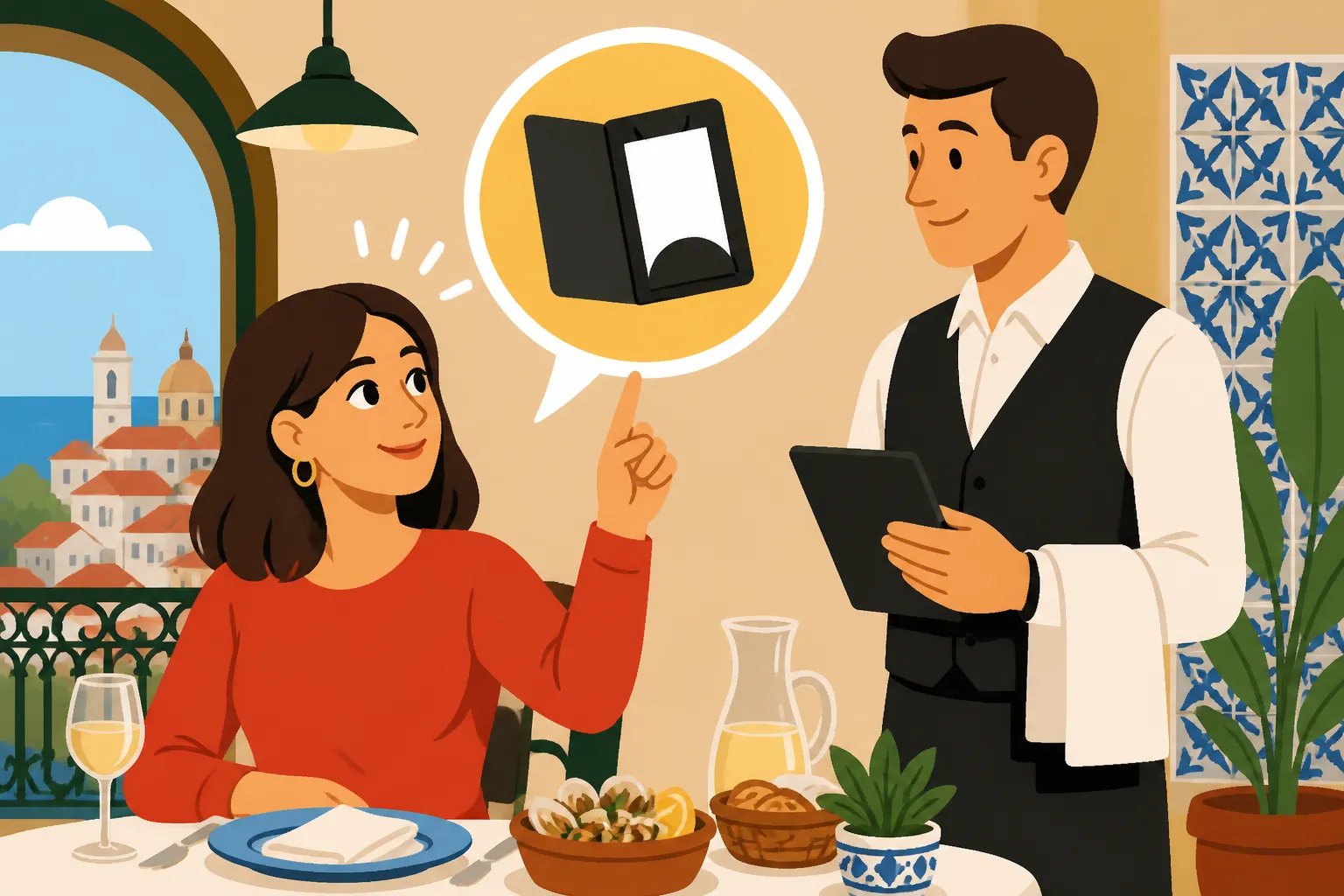
So, you've finished your bacalhau and your café, and now you're ready to settle up. The first step is to politely signal to your server. This isn't a challenge, but it does require a bit of patience and timing. Don't worry, it's not a secret handshake! Typically, you'll want to make eye contact with your server. If they're nearby, a gentle nod or a slight, raised hand will usually do the trick. Think of it as a subtle invitation, not a demand.
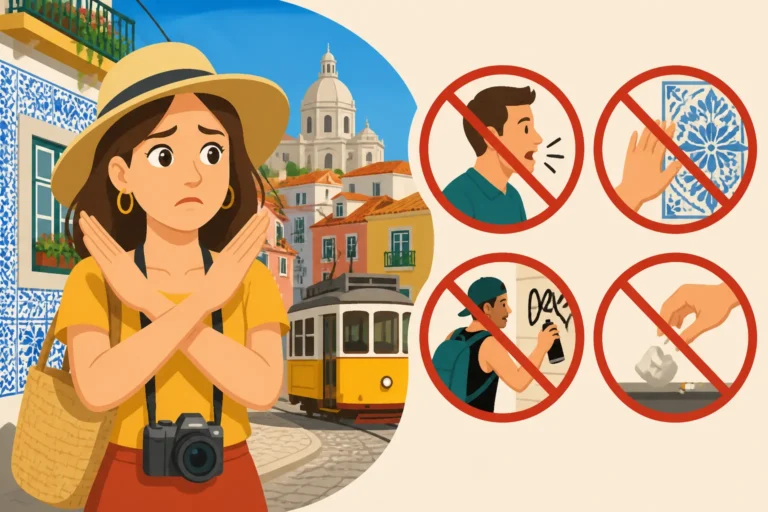
Many expats initially struggle with this because it feels like you're being ignored, but that's rarely the case. They're simply respecting your space and assuming you'll call them over when you need them. Avoid snapping your fingers, waving frantically, or loudly calling out across the room – these gestures are generally considered impolite in Portuguese dining etiquette. A quiet "Com licença?" (Excuse me?) if they are passing close by is also perfectly acceptable.
Mastering the Essential Phrases for "The Bill, Please"
Once you've got their attention, it's time to use your words. Even if your Portuguese is limited, knowing these few phrases will make a world of difference and earn you a smile from your server. They appreciate the effort!
The most common and universally understood phrase is "A conta, por favor." This literally translates to "The bill, please." It's polite, direct, and gets the job done. You can use it confidently in almost any restaurant, from a humble tasca to a more upscale establishment.
If you want to be slightly more formal or add a touch more politeness, you could say "Pode trazer a conta, por favor?" which means "Can you bring the bill, please?" or "Queria a conta, por favor," which is "I would like the bill, please." Both are perfectly fine, but "A conta, por favor" is your reliable go-to. Don't forget that "por favor" (please) at the end – it's crucial for politeness.
Avoiding Common Linguistic Pitfalls
While your intention is always clear, there are a couple of phrases that non-native speakers sometimes use that aren't quite right for asking for the restaurant bill in Portugal. Forgetting these nuances can lead to a moment of confusion, which is easily avoidable.
Firstly, avoid asking for "o cheque, por favor." While "check" is the common term in American English for a restaurant bill, it's not used in this context in Portugal. If you say "cheque," a server might think you're referring to a literal check (as in a bank cheque), or simply look at you blankly. Stick with "conta."
Secondly, while related, "a fatura" generally refers to an invoice or receipt that includes your NIF (tax identification number) for tax deductions. While your "conta" is a type of fatura in a broader sense, specifically asking for "a fatura" might make the server think you're only interested in the fiscal receipt for tax purposes, rather than just the total amount you need to pay. It’s a minor distinction but "a conta" is definitely the more natural and standard request when you want to pay. If you do want to provide your NIF, you'll generally be asked "Com NIF?" (With NIF?) after you request the bill, or you can offer it once the server brings the payment terminal. This is part of the daily rhythm of Daily Life in Portugal: Supermarkets, Language, and Cultural Etiquette, where providing your NIF for various purchases is common.
The Bill Arrives: What to Expect and How to Pay
Once you've successfully communicated your desire to pay, your server will bring the bill. This is another area where Portuguese customs might differ from what you're used to, so knowing what to anticipate can save you from any awkward moments.
Deciphering Your "Conta"
The bill itself is usually a straightforward affair. In smaller, more traditional tascas or family-run eateries, it might even be a handwritten note on a small pad, though increasingly, even these places use electronic terminals. In more modern restaurants, it will be a printed slip from a point-of-sale system. Take a moment to glance over it, just as you would anywhere else.
One common item you might see that surprises some foreigners is the "couvert." This typically includes bread, butter, olives, sometimes a sardine paste or cheese. It's placed on your table when you arrive, but it's not free. If you touch it, you'll be charged for it. If you don't want it, simply tell the server to remove it when they take your order (e.g., "Não queremos o couvert, por favor."). This is standard practice across Portugal, and it's always itemized on your bill. If you've been delving into Portuguese Coffee Culture and Restaurant Etiquette: Ordering Like a Local, you'll notice many similar small customs.
Always check for any errors, especially if you ordered a prato do dia (dish of the day) or had specific menu requests. Mistakes are rare but they do happen, and it's perfectly fine to politely point them out. A simple "Penso que há um engano aqui" (I think there's a mistake here) will usually suffice.
Navigating Payment Methods: Cash, Card, and MB Way
Portugal offers a variety of ways to pay, and it's good to be familiar with all of them. Unlike some countries where cash is king, or others where only card is preferred, Portugal embraces a mix.
Cash (Dinheiro): You can always pay with cash. This is especially appreciated in smaller establishments or when you're trying to keep things simple. It's always a good idea to carry some smaller euro notes (€5, €10, €20) for this purpose, as some tiny cafes or market stalls might not have much change for a €50 note. Your server will usually take your cash and return with your change, often along with the fiscal receipt.
Card (Cartão): Credit and debit cards are widely accepted throughout Portugal, especially Visa and Mastercard. American Express is less common, so don't rely solely on it. When you indicate you want to pay by card, the server will bring a portable payment terminal (called a TPA – Terminal de Pagamento Automático) directly to your table. You'll insert or tap your card, enter your PIN, and complete the transaction right there. It's secure and convenient.
MB Way: Ah, MB Way! If you're going to spend any significant time in Portugal, you absolutely must familiarize yourself with this system. It's Portugal's ubiquitous mobile payment solution, linking your bank account to your phone number. You can use it to pay almost anywhere that accepts card, transfer money to friends, or even withdraw cash from Multibanco ATMs without a card. Many small businesses, kiosks, and even taxis use it. When paying with MB Way, the server will typically ask for your phone number, input it into their terminal, and you'll then confirm the payment on your phone app. It’s incredibly popular here, and you can learn more about its versatility in our guide on The Multibanco System and MB Way: Portugal's Unique Payment Network.
Splitting the Bill: A Common Request
If you're dining with friends, splitting the bill is a very common request. Don't feel awkward about asking! You can say "Podemos dividir a conta, por favor?" (Can we split the bill, please?) or, if each person wants to pay for exactly what they ate, "Cada um paga o seu" (Each one pays their own).
Depending on the restaurant and the number of people, they might either split the total evenly among cards or ask each person what they had. Sometimes, if it's a large group with complex orders, they might appreciate it if you work out the individual amounts yourself beforehand and pay with fewer cards or a combination of cash and card. It's also fairly common for Portuguese friends to just have one person pay and then sort it out later with a quick MB Way transfer!
Tipping Culture and Other Post-Payment Etiquette
Once you've settled the bill, you might wonder about the final piece of the puzzle: tipping. This is another area where cultural norms can vary greatly and often leave expats feeling a bit confused.
The Tipping Conundrum for Expats
Let me preface this by saying: tipping in Portugal is not mandatory, nor is it expected in the same way it is in countries like the United States. Servers earn a livable wage, and tips are seen more as a bonus for excellent service rather than a necessary supplement to their income. So, if you're wondering Tipping culture in Portugal: Do you leave 10% or just round up the bill?, the answer is, it's really up to you and how you feel about the service.
That being said, a small gesture is always appreciated. Many Portuguese people will simply round up the bill to the nearest euro or leave a couple of euros if they were satisfied. For example, if the bill is €28.50, they might leave €30. In a nicer restaurant, for truly exceptional service, leaving 5-10% is generous and will be highly valued. You typically leave the tip in cash on the table after you've paid the bill, or you can tell the server how much you'd like to add if paying by card (though cash is often preferred for tips).
The most important thing is not to stress about it. If you choose not to tip, or only leave a small amount, you won't be seen as rude or cheap. You're just adhering to the local custom.
The Power of the Livro de Reclamações
Hopefully, your dining experience is always wonderful, but occasionally, things might not go as planned. Portugal has a fantastic consumer protection mechanism called the "Livro de Reclamações," or Complaints Book. Every business that deals with the public is legally required to have one. If you have a serious complaint – perhaps an error on the bill they refuse to correct, genuinely terrible service, or a health and safety concern – you have the right to request this book.
Asking for the Livro de Reclamações often resolves minor issues instantly, as businesses prefer to avoid official complaints. You fill out a triplicate form: one copy for you, one for the business, and one sent to the relevant regulatory authority. It's a powerful tool for consumer rights and demonstrates Portugal's commitment to protecting its citizens and visitors. For more details on this, check out What is the 'Livro de Reclamações' and how does it solve consumer disputes?.
Lingering and Leisure: The Portuguese Way
One final piece of etiquette related to asking for the bill: don't feel rushed! As mentioned, the Portuguese love to linger after a meal, enjoying another glass of wine, a digestivo, or just chatting over coffee. This is why servers don't bring the bill automatically – they don't want to make you feel like you need to leave.
So, once you've paid, feel free to sit and digest for a while. You won't be pressured to vacate your table for the next customers. It's a wonderful aspect of Portuguese culture that encourages relaxation and connection, so embrace it.
Practical Scenarios and Local Nuances
Understanding the general rules is one thing, but real-life situations always throw curveballs. Let's look at a few common scenarios you might encounter.
When You're Actually in a Hurry (A Rare Feat!)
Portugal operates on a slower, more relaxed pace. "Rushing" isn't exactly in the national DNA, especially when it comes to meals. If you're on a tight schedule, perhaps needing to catch a train or make an appointment, you might need to be a little more assertive than usual, but always politely so.
If you know you'll be pressed for time, try to communicate this at the beginning of your meal. You can say, "Temos um pouco de pressa, por favor" (We're in a bit of a hurry, please). When you're ready for the bill, a clear "A conta, por favor" accompanied by a gesture that indicates a degree of urgency (like a polite tap on the imaginary watch) can help. Just don't expect miracles – the kitchen and service staff operate at their own rhythm.
Different Establishments, Different Rules
Not all eating establishments are created equal, and how you get the bill might vary slightly:
- Traditional Restaurants (Restaurantes / Tascas): This is where the "catch the eye, say 'A conta, por favor'" method is most prevalent. The server will bring the bill to your table.
- Cafes and Pastelarias (Bakeries/Cafes): For a quick coffee and pastry, it's very common to pay at the counter. You order, consume, and then walk up to the counter, state what you had (or point to your empty cup), and pay. Sometimes, for a more substantial meal, they'll bring the bill to your table, similar to a restaurant. A safe bet is to observe what other locals are doing. If everyone is paying at the counter, follow suit. For those keen on understanding the intricacies of ordering coffee, our guide on How to order coffee in Portugal: Bica, Meia de Leite, Pingado, and Galão is a must-read.
- Shopping Centre Food Courts: These are usually self-service. You order, pay at the counter, and then collect your food. No bill-asking needed here!
Overcoming Language Barriers
If your Portuguese is still a work in progress, don't despair! Most tourist-heavy areas in Lisbon, Porto, and the Algarve will have servers who speak at least some English. If not, a simple, polite "The bill, please?" with the universal gesture of writing in the air or pointing to your table is often enough. Technology is your friend too: a quick translation app on your phone can bridge any communication gap. The key is always to be polite, smile, and show a willingness to communicate. You might even find yourself getting some impromptu language lessons! If you're serious about improving, consider exploring Learning European Portuguese: Top Apps, Tutors, and Free Government Classes.
Here's a handy table summarizing key phrases and scenarios:
| Situation | Portuguese Phrase | Pronunciation Hint | English Equivalent | Notes |
|---|---|---|---|---|
| Asking for the bill (most common) | A conta, por favor. | Ah CON-tah, por fah-VOR. | The bill, please. | Use this almost everywhere. Polite and direct. |
| Can you bring the bill, please? (more formal) | Pode trazer a conta, por favor? | POD-eh trah-ZER ah CON-tah, por fah-VOR? | Can you bring the bill, please? | Slightly more elaborate, good for a nicer restaurant. |
| I would like the bill, please. (direct) | Queria a conta, por favor. | Key-REE-ah ah CON-tah, por fah-VOR. | I would like the bill, please. | Also perfectly acceptable. |
| To split the bill | Podemos dividir a conta, por favor? | Pod-EH-mosh dee-vee-DEER ah CON-tah, por fah-VOR? | Can we split the bill, please? | Common request. Be patient with the process. |
| Each pays their own (when splitting) | Cada um paga o seu. | CAH-dah oom PAH-gah oo SEH-oo. | Each one pays their own. | Useful when everyone wants to pay for their exact order. |
| I want to pay by card | Por cartão, por favor. | Por car-TOW, por fah-VOR. | By card, please. | Most places accept card; they will bring the terminal. |
| I want to pay by cash | Em dinheiro, por favor. | Em dee-NYEH-roo, por fah-VOR. | In cash, please. | Always an option, especially for smaller amounts. |
| I want to pay with MB Way | Por MB Way, por favor. | Por em-beh-WAY, por fah-VOR. | By MB Way, please. | Give your phone number; confirm on the app. |
| Excuse me (to get attention) | Com licença. | Com lee-SEN-sah. | Excuse me. | Use when a server is passing nearby and you want to get their attention politely. |
| (No) NIF, please? (server might ask) | (Não) com NIF, por favor. | (Now) com neef, por fah-VOR. | (No) with NIF, please. | If you want to provide your NIF, just say your number; otherwise, "Não, obrigado" (No, thank you). |
| We don't want the couvert | Não queremos o couvert, por favor. | Now keh-REH-moosh oo coo-VER, por fah-VOR. | We don't want the couvert, please. | Say this when you sit down if you don't want to be charged for the bread/olives. |
Knowing how to gracefully conclude your meal by asking for the bill is a small but significant step in feeling more at home in Portugal. It transforms a potentially awkward moment into a smooth, confident interaction, allowing you to fully embrace the wonderful dining culture that this country has to offer. Enjoy your next meal, and don't forget to practice your "A conta, por favor!"
Disclaimer
The information provided in this guide is intended for general informational purposes only and does not constitute legal, financial, or professional advice. While we strive to keep the information accurate and up-to-date, customs and regulations can change. Always verify current practices and consult with relevant authorities or local experts for specific situations. The author and publisher are not responsible for any actions taken based on the information provided herein.