The Alentejo: Plains, Wine, and Hilltop Towns
Traversing Portugal beyond its vibrant coastal cities often leaves travelers and expats feeling overwhelmed by choice, unsure of how to navigate the massive, sun-drenched expanse stretching between the Tagus River and the Algarve. The Alentejo represents over thirty percent of the nation’s landmass, yet it remains sparse, quiet, and deeply bound to agricultural tradition. This comprehensive guide breaks down the Alentejo’s distinct geographical zones, historical hilltop fortresses, world-class winemaking, and practical logistical strategies so you can explore this serene region with confidence and ease.
Understanding the Geography and Soul of the Alentejo
The Alentejo is not a singular, uniform territory; it is a tapestry of golden rolling plains, dense cork oak forests, dramatic mountain borderlands, and wild, cliff-lined Atlantic beaches. To truly understand this region, one must look past its quiet exterior and appreciate how geography has dictated its history. For centuries, this vast landscape served as both the breadbasket of the kingdom and a contested frontier against invading forces. Understanding the nuances between its distinct sub-regions helps visitors and relocating foreigners tailor their journeys according to their specific travel or lifestyle interests.
Lower versus Upper Alentejo Regional Nuances
Geographically, the region is traditionally divided into the Alto Alentejo (Upper) and the Baixo Alentejo (Lower), alongside the coastal stretch known as the Alentejo Litoral. Alto Alentejo, anchored by administrative hubs like Portalegre and Évora, trends higher in elevation as it approaches the Serra de São Mamede. Here, the landscape features granite outcrops, lush microclimates, and dramatic fortresses perched high above the Spanish border. The air tends to be slightly cooler in the northern hills, allowing for diverse agricultural production including ancient olive groves and chestnut orchards.
In contrast, Baixo Alentejo, centered around Beja, is characterized by seemingly endless horizons, vast wheat fields, and undulating plains of clay and schist. The sun intensity here is legendary, shaping both the agriculture and the traditional architecture. Houses in the south are painted stark white to reflect the summer heat, trimmed with bright blue or yellow borders to ward off insects and evil spirits according to ancient local folklore. Deciding where to spend your time often depends on whether you prefer the cooler, forested terrain of the north or the peaceful, wide-open solitude of the southern plains. Those considering a permanent move to the countryside often consult our comprehensive Living in Portugal Guide 2027: The Complete Relocation Manual for Expats to evaluate rural life against coastal urban centers.
The Alentejo Litoral provides an entirely different vibe, swapping dusty dirt roads for salt air and dramatic ocean cliffs. Extending down the southwestern coast, this area offers untouched beaches protected within natural reserves. While coastal towns like Vila Nova de Milfontes and Zambujeira do Mar bustle with surfers and vacationers in the summer, the inland areas remain deeply agrarian. Understanding these distinct zones prevents the common mistake of treating the Alentejo as a homogenous monolith.
The Rhythm of Life and Cultural Expectations
Life in the Alentejo moves at a deliberate, measured pace that can initially frustrate newcomers accustomed to the fast-moving service culture of Lisbon or Porto. Here, the heat of the afternoon sun historically dictated the working schedule, giving rise to the prolonged afternoon pause. Expect small, family-run shops to close during the middle of the day, and do not expect dining experiences to be rushed. Patience is not merely a virtue in the rural south; it is a prerequisite for daily integration.
Community culture revolves around the local central square and the neighborhood café. Older residents sit together under the shade of plane trees, engaging in lively debate or quiet observation. Music plays a central, soul-stirring role in local identity, particularly Canto Alentejano. This polyphonic choral singing tradition, recognized by UNESCO, involves groups of men and women singing unaccompanied songs about rural labor, love, and nostalgia. Hearing a spontaneous performance inside a rustic tavern over a jug of local wine is an unforgettable cultural experience.
Foreigners adjusting to this lifestyle must learn to slow down their expectations. Transactions take time, conversations naturally drift into personal storytelling, and formal scheduling is frequently treated as flexible. Validating this cultural shift rather than fighting it allows you to absorb the peacefulness that makes the region so magnetic. Embracing the local rhythm transforms administrative hurdles or slow restaurant service into opportunities to observe and participate in a centuries-old way of life.
Seasonal Variations and When to Visit
Choosing when to visit or explore the Alentejo depends heavily on your tolerance for temperature extremes. Springtime, spanning from late March through May, is widely considered the most magical season across the plains. The fields burst into vibrant displays of wildflowers, temperatures remain comfortable for walking historic town walls, and the cork oak trees begin to bloom. Spring is ideal for hiking along the Rota Vicentina or exploring archaeological ruins without the oppressive heat.
Summer brings extreme environmental conditions, particularly to inland cities like Évora and Beja, where temperatures regularly exceed forty degrees Celsius. During July and August, the landscape turns a blinding, dry gold, and daytime outdoor activity becomes nearly impossible between noon and five in the evening. If you visit during high summer, you must adapt to the local schedule: explore medieval monuments in the early morning, retreat to air-conditioned quarters or swimming pools during the afternoon, and emerge late in the evening for dinner under the stars.
Autumn brings the excitement of the grape harvest (ceifa) and olive collecting seasons. September and October feature warm, pleasant days and crisp nights, making it an excellent time for wine tourism and outdoor dining. Winter, while generally mild compared to Northern Europe, brings cold, damp nights to unheated stone farmhouses. Dusting off your fire pit or wood stove becomes a daily ritual. Navigating seasonal health shifts, including spring bloom, can occasionally trigger allergies; reading up on managing Allergy Season in Portugal: Pine Pollen and Over-the-Counter Antihistamines is recommended before packing your bags for a rural spring retreat.
Essential Hilltop Towns You Cannot Miss
The landscape of the Alentejo is punctuated by historic hilltop towns, each crowned with a medieval castle or fortified wall built to guard against historical invasions. These elevated strongholds offer breathtaking panoramic views of the surrounding countryside while preserving centuries of layered architectural heritage, from Roman foundations to Moorish gateways and Manueline churches.
Évora and Its Historic Architectural Marvels
As the undisputed capital of the region, Évora functions as both an open-air museum and a living, breathing university town. Enclosed within medieval walls, its historic center is a maze of narrow whitewashed alleys, granite archways, and tiled plazas. The town’s crown jewel is the Roman Temple of Évora, often referred to as the Temple of Diana, whose Corinthian columns have stood in the main square for nearly two millennia. A short walk away stands the massive Cathedral of Évora, a fortress-like Gothic structure offering sweeping views across the plains from its roof.
No visit to Évora is complete without visiting the Capela dos Ossos (Chapel of Bones), situated inside the Church of St. Francis. Built by 16th-century Franciscan monks seeking to remind citizens of the transience of earthly life, the chapel’s walls and pillars are meticulously lined with thousands of human bones and skulls. The sobering inscription at the entrance reads: “We bones that are here, for yours await.” It remains one of the most visited and emotionally resonant sites in the entire region.
For travelers looking to dig deeper into the history without getting lost in logistics, booking a guided walking tour through services like GetYourGuide provides invaluable context on Évora’s transition from Roman outpost to royal residence. The city also serves as an ideal base for regional exploration, boasting exceptional dining options and easy transport connections back to the coast.
Monsaraz and Marvão Fortified Outposts
Perched high above the Guadiana River valley, Monsaraz is arguably one of the most picturesque villages in Southern Europe. Built entirely from local slate and schist, this car-free hilltop village offers unobstructed views of the vast Alqueva reservoir below. Walking through its ancient stone arches feels like stepping back into the Middle Ages. The quiet streets are lined with artisan craft shops, cozy wine bars, and traditional restaurants serving slow-cooked regional stews. At night, Monsaraz falls under a canopy of brilliant stars, as the region forms part of an internationally certified Dark Sky Reserve.
Further north, near the Spanish border, lies Marvão, dramatic in its sheer elevation and military engineering. Situated atop a granite crag in the Serra de São Mamede, Marvão looks as though it was carved directly out of the mountain peak. Its formidable castle walls drop steeply into vertiginous cliffs below. Standing on the castle ramparts, you can look out across miles of forest into neighboring Spain. The silence in Marvão is profound, interrupted only by the wind and the cries of circling birds of prey.
Visiting both towns requires navigating steep, cobblestone paths, so proper footwear is essential. While Monsaraz offers warm, expansive lake views and rich wine culture, Marvão provides high-altitude tranquility and cooler mountain air. Both represent the pinnacle of Portuguese military architecture and rural preservation.
Mértola and the Islamic Heritage along the Guadiana
Located in the southern reaches of the Baixo Alentejo, Mértola sits dramatically on a high rocky spur overlooking the confluence of the Guadiana River and the Oeiras river. What sets Mértola apart from other regional strongholds is its profound Islamic heritage. During the Moorish period, Martulah was a prosperous river port trading in wheat, olive oil, and minerals with Northern Africa. Today, it is recognized as Portugal’s premier open-air museum city for Islamic archaeology.
The town’s parish church, the Igreja Matriz, was originally constructed as a 12th-century mosque. Despite its conversion to a Christian church following the Reconquista, the building retains its horseshoe arches, forest of interior pillars, and original qibla wall pointing toward Mecca. Walking through the town reveals multiple archaeological sites displaying preserved Islamic house foundations, ancient burial grounds, and intricate pottery collections uncovered during municipal excavations.
Mértola offers a serene, reflective atmosphere away from the busier tourist corridors of the central plains. River trips along the Guadiana allow visitors to view the town from the water, highlighting the defensive nature of its cliffside location. It is a mandatory stop for anyone fascinated by the layered, multi-cultural history that shaped Iberian civilization.
The Wine Culture and Culinary Heritage of the Plains
To travel through the region without indulging in its food and wine is to miss the essence of local culture. Alentejo gastronomy was born out of peasant necessity, transforming humble, seasonal ingredients like dry bread, garlic, olive oil, and wild herbs into world-class culinary masterpieces. Paired with robust, full-bodied wines, the local dining experience is both comforting and sophisticated.
Indigenous Grape Varieties and Terroir
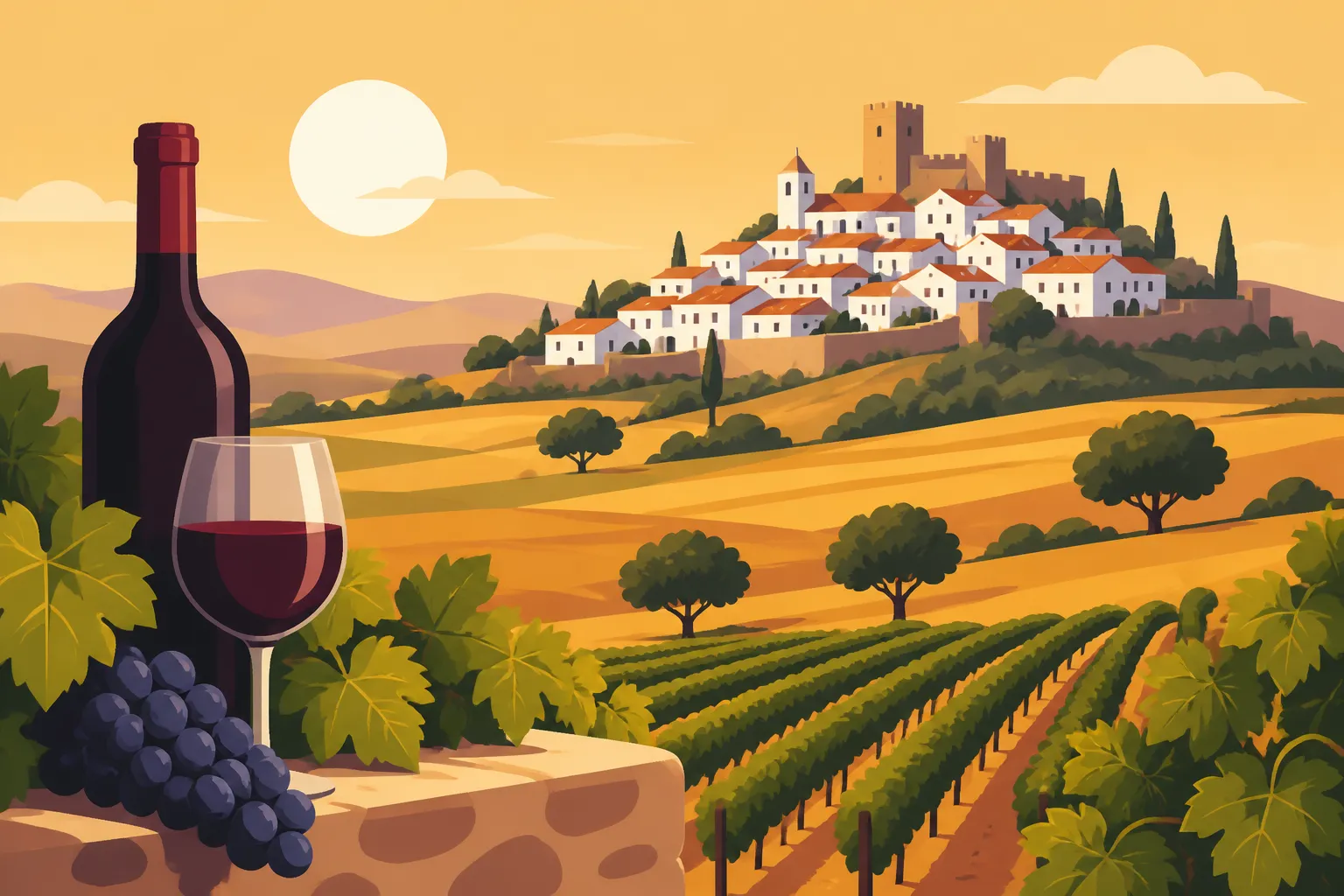
The region is famous for producing rich, fruit-forward red wines and complex, aromatic whites that thrive in the intense heat. The terroir consists primarily of granite, schist, clay, and limestone soils, combined with long hours of sunshine and dramatic day-to-night temperature swings. These conditions allow grapes to achieve full ripeness while retaining essential acidity.
Key red grape varieties include:
* Aragonez (Tinta Roriz): Adds structure, berry flavors, and elegance.
* Alicante Bouschet: A French grape that found its true spiritual home in the Alentejo, providing deep dark color, firm tannins, and aging potential.
* Trincadeira: Offers spicy aromas, vibrant acidity, and bright blackberry characteristics.
* Touriga Nacional: Frequently blended to introduce floral notes and structure.
White wines from the region are equally impressive, particularly those produced in the elevated, cooler microclimate of Reguengos or Vidigueira. Varieties like Antão Vaz, Arinto, and Roupeiro produce crisp, golden-hued wines with notes of citrus, tropical fruit, and balanced minerality. Many local wineries (herdades) offer tasting tours and estate lunches that must be booked in advance, especially during the autumn harvest season.
Traditional Talha Wine Making Techniques
One of the most remarkable aspects of the regional wine culture is the survival of Vinho de Talha—wine fermented in massive clay amphorae. Introduced by the Romans over two thousand years ago, this ancient technique was never abandoned in the Alentejo, making it one of the few places on Earth with an unbroken tradition of clay-pot winemaking.
The process is delightfully simple yet scientifically complex:
1. Crushed grapes, stems, and skins are placed inside giant clay vessels (talhas) lined with a natural resin mixture.
2. Fermentation occurs naturally, with the grape skins rising to the top to form a protective cap.
3. The winemaker stirs the cap daily using large wooden paddles to manage temperature and extraction.
4. Once fermentation finishes, the solids settle to the bottom, acting as a natural filter as the clear wine is drawn out from a tap near the base around Saint Martin’s Day in November.
Vinho de Talha results in wines that display unique textural depth, earthy aromas, and vibrant freshness. Small family taverns throughout villages like Vila de Frades still serve fresh Talha wine straight from the clay pots into unpretentious glasses, accompanied by small plates of local cheese and cured meats.
Regional Gastronomy and Rustic Comfort Food
Alentejo cuisine relies heavily on the clever use of stale bread (pão alentejano) to thicken stews and create flavorful bases for herbs and garlic. The most iconic of these dishes is Açorda à Alentejana, a fragrant soup made by pouring boiling water over crushed garlic, fresh coriander, salt, olive oil, and day-old bread, often topped with a poached egg or fresh codfish. It is a masterclass in culinary simplicity.
Pork is the undisputed king of local meat dishes, specifically meat from the native Iberian black pig (Porco Preto). These free-roaming pigs feed on acorns (bolotas) beneath the cork oak trees, imparting a rich, nutty flavor and delicate marbling to the meat. Dishes like Carne de Porco à Alentejana—marinated pork fried with tender clams, garlic, coriander, and cubed fried potatoes—showcase the regional affinity for pairing land and sea.
For seafood lovers closer to the coast or river banks, grilled sardines, goose barnacles (percebes), and rich fish rice (Arroz de Tamboril) are staples. Meals are almost always preceded by local olives, fresh sheep cheese (Queijo de Nisa or Azeitão), and crusty sourdough bread. Dining out here is an immersive ritual; reviewing our guide on Portuguese Coffee Culture and Restaurant Etiquette: Ordering Like a Local will help you feel completely at ease when sitting down at a neighborhood tasca.
Practical Logistics and Getting Around Rural Portugal
While the rural interior offers unhurried charm, navigating its vast geography requires thoughtful logistical planning. Public transit exists, but it operates on rural schedules that may not align with a tight sightseeing itinerary. Choosing the right mode of transportation and selecting strategic home bases can make or break your journey across the plains.
Renting a Car versus Public Transportation Options
To truly explore the hidden corners, wineries, and hilltop villages of the Alentejo, renting a vehicle is highly recommended. The roads across the region are generally well-maintained, clear of heavy traffic, and offer enjoyable driving conditions past endless groves of cork trees. Having a vehicle gives you the freedom to pull over at scenic lookouts, visit remote megalithic monuments, and dine at off-the-beaten-path farmsteads.
If you choose to drive, ensure you understand the local tolling infrastructure. Many highways leading from Lisbon into the interior utilize electronic toll systems. Reviewing Navigating the Portuguese Toll System: Via Verde and Electronic Tolls before hitting the road will save you from unexpected administrative fines later. Foreigners relocating long-term and considering vehicle purchase should also factor in local import taxes by reading Buying a Car in Portugal: IUC Tax, Inspections (IPO), and High Vehicle Costs.
For travelers who prefer not to drive, public transport is available between major hubs. Express bus lines connect Lisbon directly to Évora, Beja, and Portalegre. You can check schedules and purchase regional tickets easily through aggregators like Omio. The train network operated by CP (Comboios de Portugal) also connects Lisbon to Évora and Beja. However, once you reach these central towns, reaching smaller villages like Monsaraz or Marvão via bus becomes infrequent, often requiring local taxis or ride-share services.
Accommodation Choices from Herdades to Boutique Pousadas
Accommodation in the region reflects its agrarian history and architectural heritage. Visitors can choose from three main types of lodging, each offering a distinct perspective on local life:
- Herdades (Wine and Rural Estates): These extensive agricultural properties have converted historic farm buildings into high-end boutique hotels. Staying at a herdade offers immersion into working farm life, complete with wine tastings, horseback riding through cork forests, and farm-to-table dining.
- Pousadas de Portugal: These government-preserved historic hotels occupy former monasteries, convents, and royal castles. Properties like the Pousada Convento de Évora or the Pousada Castelo de Estremoz allow guests to sleep inside meticulously restored national monuments.
- Local Guest Houses (Turismo Rural): Family-run bed and breakfasts situated in small villages provide an intimate look at local hospitality, often featuring homemade breakfasts packed with regional jams, cheeses, and freshly baked bread.
When booking your stays, particularly during peak spring and autumn months, locking in reservations early through platforms like Booking.com ensures access to the best boutique rural properties before they sell out.
Managing Heat and Pace During Your Stay
Traveling through a drought-prone, high-temperature environment requires physical adjustment, particularly during summer. Dehydration and heat fatigue are genuine risks for visitors unaccustomed to dry, forty-degree summer days. Carrying ample drinking water in your vehicle at all times is non-negotiable when driving through rural stretches where gas stations may be tens of kilometers apart.
Structure your daily activities to mirror local habits:
* 08:00 – 11:00: Outdoor exploration, hiking, and walking historic town walls.
* 11:30 – 15:30: Long, shaded lunch followed by museum visits or a rest period inside your air-conditioned hotel.
* 16:00 – 19:00: Visiting indoor wineries, shaded plazas, or cooling off in lakes and pools.
* 20:00 Onward: Outdoor dining as temperatures cool down under the night sky.
Safety is paramount, particularly if you are staying in extremely isolated hamlets. While crime is exceptionally low across rural Portugal, medical emergency services can take longer to reach remote properties. It is always wise to keep basic medical supplies on hand and understand how rural healthcare infrastructure operates by reading Living in rural Portugal: How far is the nearest hospital usually?.
Comparing Top Sub-Regions in the Alentejo
Because the territory is so vast, selecting the right base camp depends heavily on your interests, trip duration, and preferred landscape. The table below compares the primary sub-regions to help you align your travel itinerary with your personal expectations.
| Sub-Region | Primary Landscape | Key Attractions | Ideal Traveler Profile |
|---|---|---|---|
| Alto Alentejo (North) | Mountainous, lush forests, granite crags | Marvão Castle, Portalegre, Castelo de Vide | Hikers, history enthusiasts, nature lovers |
| Central Alentejo | Rolling cork oak groves, vineyards | Évora, Monsaraz, Vila Viçosa Palace | First-time visitors, wine lovers, foodies |
| Baixo Alentejo (South) | Vast wheat plains, wide horizons | Beja, Mértola, Alqueva Reservoir | Stargazers, off-the-beaten-path seekers |
| Alentejo Litoral (Coast) | Atlantic cliffs, wild beaches, pine forests | Vila Nova de Milfontes, Comporta, Porto Covo | Surfers, beach lovers, coastal hikers |
Inland Fortresses versus Atlantic Coastal Escapes
Choosing between the interior plains and the Atlantic coast comes down to whether you seek cultural immersion or maritime adventure. Inland Alentejo is characterized by stone fortresses, deep-rooted agricultural traditions, and intense silence. Here, life revolves around land cultivation, medieval history, and family winemaking. The experience is deeply historic and intellectually rich, making it perfect for slow travel and deep cultural absorption.
The coastal strip, on the other hand, trades historic stone castles for raw natural beauty. Stretching along the Vicentina Coast Natural Park, the coastline offers dramatic ocean vistas, dramatic sea stacks, and world-class hiking along the Fishermen’s Trail. While coastal towns like Comporta have transformed into trendy escapes for international designers, lower coastal hamlets retain their simple fishing village heritage. The climate along the coast is significantly cooler in summer due to Atlantic breezes, providing relief from the interior heat.
If time allows, combining three days inland around Évora or Monsaraz with three days on the coast near Vila Nova de Milfontes offers the ultimate contrast, showcasing the full diversity of this expansive region.
Choosing an Itinerary Based on Travel Style
Tailoring your journey ensures you do not waste time driving back and forth across vast distances. If your primary focus is food and wine, construct a central itinerary focusing on Évora, Reguengos de Monsaraz, and Borba. This places you in the heart of high-density wine country, where historic estates sit mere minutes apart.
For travelers seeking solitude and deep relaxation, heading into the southern interior around the Alqueva Lake or Mértola provides complete detachment from modern urban chaos. You can spend days floating on clear reservoir waters, touring ancient Islamic ruins, and observing unpolluted night skies. Those evaluating different regions of the country for relocation can compare this quiet lifestyle against other provinces by checking our guide on Where to Live in Portugal: Lisbon, Porto, Algarve, and Silver Coast Compared.
Whatever itinerary you select, avoid the temptation to rush from town to town in a single day. The true luxury of the Alentejo is not found in ticking off a long list of tourist sights, but in sitting under the shade of an ancient olive tree, enjoying a glass of local wine, and letting time slow down.
Disclaimer
This article is for general informational purposes only and does not constitute professional advice. Laws, prices and regulations vary by location and change over time. Consult a qualified professional for guidance on your specific situation.