Central Portugal: Coimbra, Serra da Estrela, and the Silver Coast
Disclosure: This article contains affiliate links. If you buy through them, we may earn a commission at no extra cost to you. Read our full disclosure.
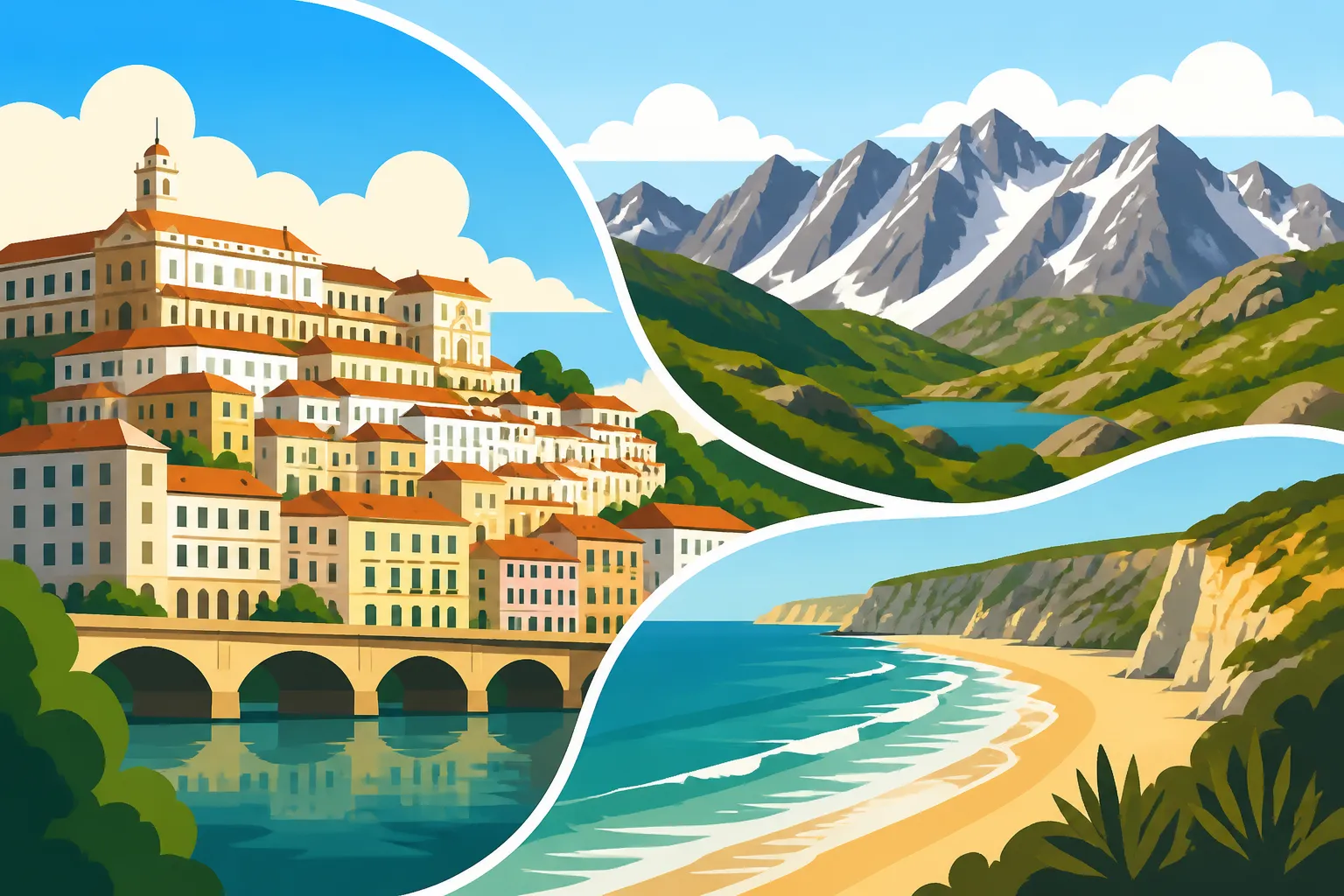
Most travelers and digital nomads get trapped in the Lisbon-Porto corridor, completely bypassing the rugged mountains and windswept beaches that define the country’s true character. This guide solves that oversight by providing a deep, local perspective on Central Portugal—from the academic traditions of Coimbra to the snowy peaks of Serra da Estrela and the authentic surf culture of the Silver Coast.
The Cultural Heart: Coimbra and the Mondego Valley
Coimbra is often called the "City of Students," but as someone who has spent many rainy afternoons navigating its limestone steps, I can tell you it is far more than just a university town. It is the place where Portuguese history feels most alive, mostly because the traditions haven’t been sanitized for tourists yet. You will still see students walking the streets in their traditional black capes (the traje), looking like something out of a Harry Potter film, and the city’s identity is inextricably linked to the Rio Mondego.
Navigating the University of Coimbra
The University of Coimbra, a UNESCO World Heritage site, sits at the very top of the hill, looking down on the rest of the city. While it is a functioning academic institution, the Alta (high) district is where you’ll find the Biblioteca Joanina. This 18th-century library is world-famous, not just for its gilded bookshelves, but for the colony of bats that live behind the books and eat insects at night to preserve the parchment.
When you visit, don't just stick to the library. Spend time in the Paço das Escolas. If you want to dive deeper into the history without getting lost in the crowds, check GetYourGuide for student-led walking tours. These are often better than professional guides because the students share the actual legends and "secret" initiation rituals that still happen within the university walls. Be prepared for a workout; the "Quebra-Costas" (Back-breaker) stairs leading up to the university are no joke, and the cobblestones can be incredibly slippery when it rains.
Fado ao Centro: The Soul of the Mondego
One of the biggest mistakes expats make is assuming all Fado is the same. If you go to a Fado house in Coimbra expecting the mournful female voices of Lisbon, you’ll be surprised. Coimbra Fado is exclusively sung by men, historically students serenading women from the streets. It is more intellectual, often poetic, and deeply connected to the university’s history of political protest.
Newcomers are often advised to head to Fado ao Centro. It’s an intimate venue where the musicians actually explain the history of the instruments—specifically the teardrop-shaped Portuguese guitar—before they play. It feels less like a performance and more like a cultural rite of passage. If you are considering the Coimbra cost of living: Why expats and students are moving to this city, the cultural access here is a massive pro. You aren't just living in a city; you are living in a living museum where the soundtrack changes as you move between the upper and lower districts.
Practical Coimbra: Where to Stay and How to Move
Finding housing in Coimbra can be a struggle because of the massive student population. If you are looking for long-term stays, avoid the start of the semester in September when everything gets snapped up. For shorter visits, check Booking.com for boutique guesthouses in the Baixa (downtown) area. It’s flatter and closer to the train station, which saves you from hauling luggage up the steep hills.
The city is well-connected by the Alfa Pendular and Intercidades trains. You can easily reach Coimbra-B (the main hub) from Lisbon or Porto in under two hours. To get into the city center, you’ll usually take a quick shuttle train to Coimbra-A. For those looking to stay longer, understanding the Public Transport and Driving in Portugal: Trains, Tolls, and Licenses is essential, as the city’s bus network can be a bit cryptic for non-Portuguese speakers.
Into the Wild: Serra da Estrela and the High Country
Moving east from the coast, the landscape shifts dramatically into the Serra da Estrela, the highest mountain range in mainland Portugal. For an expat used to the coastal heat, the first winter here can be a shock. This isn't the "sunny Portugal" you see on postcards; this is a land of granite peaks, glacial valleys, and some of the most resilient people I’ve ever met.
Exploring the Peaks: Torre and the Glacial Valleys
The highest point is Torre, standing at 1,993 meters. While there is a small ski resort there, the real magic is in the drive up. You’ll pass through the Zêzere Glacial Valley, one of the largest in Europe. The scale is humbling. If you are driving yourself, please make sure your car is up to the task. Before you head into the mountains, it's worth reading up on Buying a Car in Portugal: IUC Tax, Inspections (IPO), and High Vehicle Costs because you’ll want something with a bit of torque and good brakes for those hairpin turns.
One of my favorite spots is the village of Manteigas. It’s nestled in the valley and serves as the perfect base for hiking. The "Rota das Faias" (Beech Tree Route) is spectacular in autumn when the leaves turn gold. Just be aware that weather in the Serra is unpredictable. It can go from clear blue skies to thick, blinding fog in twenty minutes. Always carry a physical map and extra layers, even in late spring.
The Cheese and the Wool: Artisanal Heritage
You cannot talk about the Serra without mentioning Queijo da Serra da Estrela. It’s a sheep’s cheese curdled with thistle flower, and when it’s ripe, the inside is almost liquid. You cut the top off and scoop it out with bread. It’s pungent, creamy, and arguably the best cheese in the country. In the town of Seia, there is a Bread Museum (Museu do Pão) which sounds niche but is actually a fantastic deep dive into how isolated mountain communities survived for centuries.
The region also has a rich textile history. In Covilhã, the "city of wool and snow," you can visit the New Hand Lab, an old factory turned into a creative space. The Burel factory in Manteigas is another must-visit; they take the traditional heavy wool used by shepherds and turn it into modern high-fashion and home decor. It’s a great example of how Portugal balances its past with its future. For a deeper understanding of the local economy, you might look into the Cost of Living in Portugal 2026: Detailed Budgets for Singles and Families to see how prices in these interior regions compare to the coast.
Mountain Logistics: Driving vs. Public Transport
While you can take a bus to cities like Covilhã or Seia using Omio, you really need a car to experience the Serra da Estrela properly. Public transport between the small mountain villages is sparse and often timed for school runs rather than tourism. If you do drive, ensure you have a Via Verde transponder in your car. Many of the highways leading to the interior have electronic tolls only, and if you miss a payment, the fines can be a headache to settle later.
| Location | Best For | Vibe | Typical Elevation |
|---|---|---|---|
| Manteigas | Hiking & Nature | Serene, Glacial Valley | 700m |
| Covilhã | Street Art & Industry | Urban, Gritty, Academic | 800m |
| Piódão | Historical Photos | Magical, Schist Village | 630m |
| Torre | Skiing & Views | Rugged, High Alpine | 1,993m |
The Salt and the Sun: Exploring the Silver Coast
The Silver Coast (Costa de Prata) is the wilder, colder, and more affordable cousin of the Algarve. Stretching roughly from south of Porto down to Ericeira, it’s a favorite for expats who want a "real" Portuguese life without the mass tourism of the south. The Atlantic is powerful here, the wind is constant, and the sunsets are unparalleled.
Aveiro: The Venice of Portugal
Aveiro is often called the Venice of Portugal because of its canals and colorful moliceiro boats. Historically, these boats were used to harvest seaweed, but today they mostly carry tourists. While the center is beautiful, I find the real charm is in the "Beira Mar" neighborhood. This is where you’ll find the fish market and the best places to try ovos moles—a local sweet made of egg yolks and sugar encased in a thin wafer.
Just a short drive or bus ride from the center is Costa Nova, famous for its candy-striped wooden houses. It’s a great place for a walk along the lagoon. If you’re planning to visit Aveiro from Lisbon or Porto, you can easily compare bus and train times on Omio. One thing to note: Aveiro is very flat, which makes it a dream for cyclists, but it also means it can get quite damp in the winter. If you're looking at Where to Live in Portugal: Lisbon, Porto, Algarve, and Silver Coast Compared, keep in mind that humidity is a major factor in the north and center.
Nazaré: From Giant Waves to Fishing Traditions
Nazaré is a town of two halves. There is the beach level (Praia), which is bustling with seafood restaurants and women wearing the traditional seven skirts, and the upper level (Sítio), reachable by a funicular. Sítio offers the iconic view of the coastline and is the gateway to the Praia do Norte, where the world’s biggest waves break during the winter months (October to March).
Even if you aren't a big-wave surfer, the energy in Nazaré is palpable. There’s a deep respect for the ocean here. You’ll see fish drying on racks in the sun right on the beach—a practice that has continued for generations. For staying here, Booking.com has some fantastic apartments in the Sítio area that offer incredible ocean views without the noise of the main tourist strip. If you find yourself falling in love with the area, you'll want to start Learning European Portuguese: Top Apps, Tutors, and Free Government Classes to really integrate with the local fishing families who are the heart of the town.
Living on the Coast: Expat Communities and Realities
The Silver Coast has a growing expat community, particularly in Caldas da Rainha and São Martinho do Porto. Unlike the Algarve, where English is spoken everywhere, you will need some Portuguese here to navigate daily life. The locals are incredibly friendly, but they appreciate the effort.
One reality of the Silver Coast is the "Nortada"—the strong north wind that blows in the summer. It keeps the temperatures manageable, but it can be a shock if you’re expecting a tropical heatwave. Most houses here are built for summer, meaning they can be very cold and damp in the winter. Before you commit to a long-term rental, make sure you understand how to navigate the Navigating the Portuguese Toll System: Via Verde and Electronic Tolls if you plan on commuting between the coastal towns and larger cities like Leiria or Coimbra.
Hidden Gems and Inland Wonders
While the big names like Coimbra and Nazaré get the spotlight, Central Portugal is dotted with smaller villages and historic sites that feel like they’ve been frozen in time. These are the places where you can truly escape the digital nomad hubs and find some peace.
The Schist Villages: Portugal's Stone Secrets
Hidden in the Lousã and Açor mountains are the Aldeias do Xisto (Schist Villages). These are tiny hamlets built entirely from dark, flaky stone. Piódão is the most famous, looking like a nativity scene tucked into a fold of the mountain. It’s a bit of a trek to get there—expect narrow, winding roads—but the reward is a village where the only sound is the water running through the stone gutters.
Talasnal and Casal Novo are other favorites, particularly for hikers. These villages were almost abandoned in the 20th century but have been revitalized by artists and those seeking a slower pace of life. Visiting these spots is a lesson in the Portuguese Coffee Culture and Restaurant Etiquette: Ordering Like a Local—expect small, family-run cafes where the "menu" is whatever was cooked that morning. It’s rustic, honest, and incredibly cheap.
Tomar and the Templar Legacy
Tomar is one of my personal favorite cities in Central Portugal. It was the seat of the Knights Templar, and the Convent of Christ is one of the most impressive architectural feats in Europe. The Manueline window (Janela do Capítulo) is a masterpiece of maritime-themed stone carving that you have to see in person to believe.
The city itself is walkable and has a much more relaxed vibe than Lisbon. The Mata Nacional dos Sete Montes is a beautiful park for a stroll, and the Nabão River runs through the center, providing plenty of spots for an outdoor lunch. If you are interested in the history of the region, GetYourGuide offers several tours that connect Tomar with the nearby Almourol Castle, which sits on an island in the middle of the Tagus River. It’s a perfect day trip for anyone living in the center or central-east of the country.
Traveling Through Central Portugal: Practical Expat Tips
Living in or traveling through Central Portugal requires a different mindset than the big cities. Things move slower, and the "August shutdown" is very real here. If you need a plumber or a lawyer in August, good luck—most of the country is at the beach.
Connecting the Dots: Trains, Buses, and Cars
While the train connects the major hubs, the bus (Rede Expressos or FlixBus) is often the only way to reach smaller inland cities. I recommend using Omio to compare the two. Often, the bus is faster and cheaper for routes like Coimbra to Viseu or Aveiro to Guarda.
However, if you want to explore the Schist Villages or the deep Serra da Estrela, a car is non-negotiable. Driving in Portugal is generally fine, but the local drivers can be assertive. If you're bringing a vehicle or buying one, make sure you're aware of the Public Transport and Driving in Portugal: Trains, Tolls, and Licenses requirements. For expats, the biggest hurdle is usually the exchange of a foreign driver's license, so start that process early.
Seasonal Realities: When to Visit and What to Pack
The best time to visit Central Portugal is late spring (May/June) or early autumn (September/October). You avoid the searing inland heat of July and August, and the mountains are still accessible. If you come in winter, pack high-quality waterproof gear. The rain in Coimbra and the Silver Coast is persistent, and because of the lack of central heating in many older buildings, you’ll feel the chill even indoors.
Central Portugal offers a depth of experience that you just can't find in the more "internationalized" parts of the country. Whether you’re listening to the male voices of Fado in a dark Coimbra alley, eating pungent cheese on a granite peak in the Serra, or watching the sunset over the Atlantic in Nazaré, you’re seeing the heart of what makes this country so resilient and beautiful.
Disclaimer
This guide is provided for informational purposes only and represents the personal opinions and experiences of the author. Travel conditions, local laws, and prices in Portugal are subject to change. Readers should verify all practical details, including visa requirements and health regulations, with official sources before making travel or relocation plans. The author is not responsible for any issues arising from the use of this information.