The Couvert Explained: Bread and Starters in Portuguese Restaurants
Disclosure: This article contains affiliate links. If you buy through them, we may earn a commission at no extra cost to you. Read our full disclosure.
Sitting down at a traditional Portuguese restaurant for the first time often leads to a moment of confusion that every expat remembers: the arrival of unrequested bread, olives, and cheese. Many newcomers assume these are a complimentary welcome gift, only to feel a sting of frustration when the final bill reflects several extra euros for items they didn't explicitly order. This guide demystifies the "couvert" culture in Portugal, explaining the legalities, the etiquette, and how to enjoy your meal without the "bill shock" that plagues so many tourists and new residents.
What is the Portuguese Couvert anyway?
The "couvert" is a fundamental part of the Portuguese dining experience, yet it is one of the most misunderstood aspects of the local culture. When you take a seat at a tasca or a more formal restaurante, a waiter will almost immediately place a small selection of appetizers on your table. This isn't a mistake, and it isn't necessarily a "gift" from the house. In Portugal, the meal is a marathon, not a sprint, and these small bites are designed to keep your appetite at bay while the kitchen prepares your main course from scratch.
The Psychology of the Pre-Meal Spread
To understand the couvert, you have to understand the Portuguese relationship with time. Unlike the fast-paced dining culture in the US or Northern Europe, a meal in Lisbon or Porto is a social event. People sit, talk, and linger. The restaurant staff assumes you are there for the long haul. By placing bread and olives on the table immediately, they are signaling that you are now their guest and you shouldn't be sitting with an empty table.
However, for a foreigner, this can feel like an aggressive sales tactic. You didn't ask for the octopus salad or the local goat cheese, so why is it there? It is important to realize that this is rarely meant to be a "scam." It is simply how things have been done for decades. The staff isn't trying to trick you; they are following a script of hospitality that assumes you want something to nibble on. Learning Portuguese greeting etiquette: When to use Beijinhos vs Handshakes can help you feel more comfortable as you interact with the waitstaff, but the couvert remains the first real "test" of your local knowledge.
Common Items You Will Find
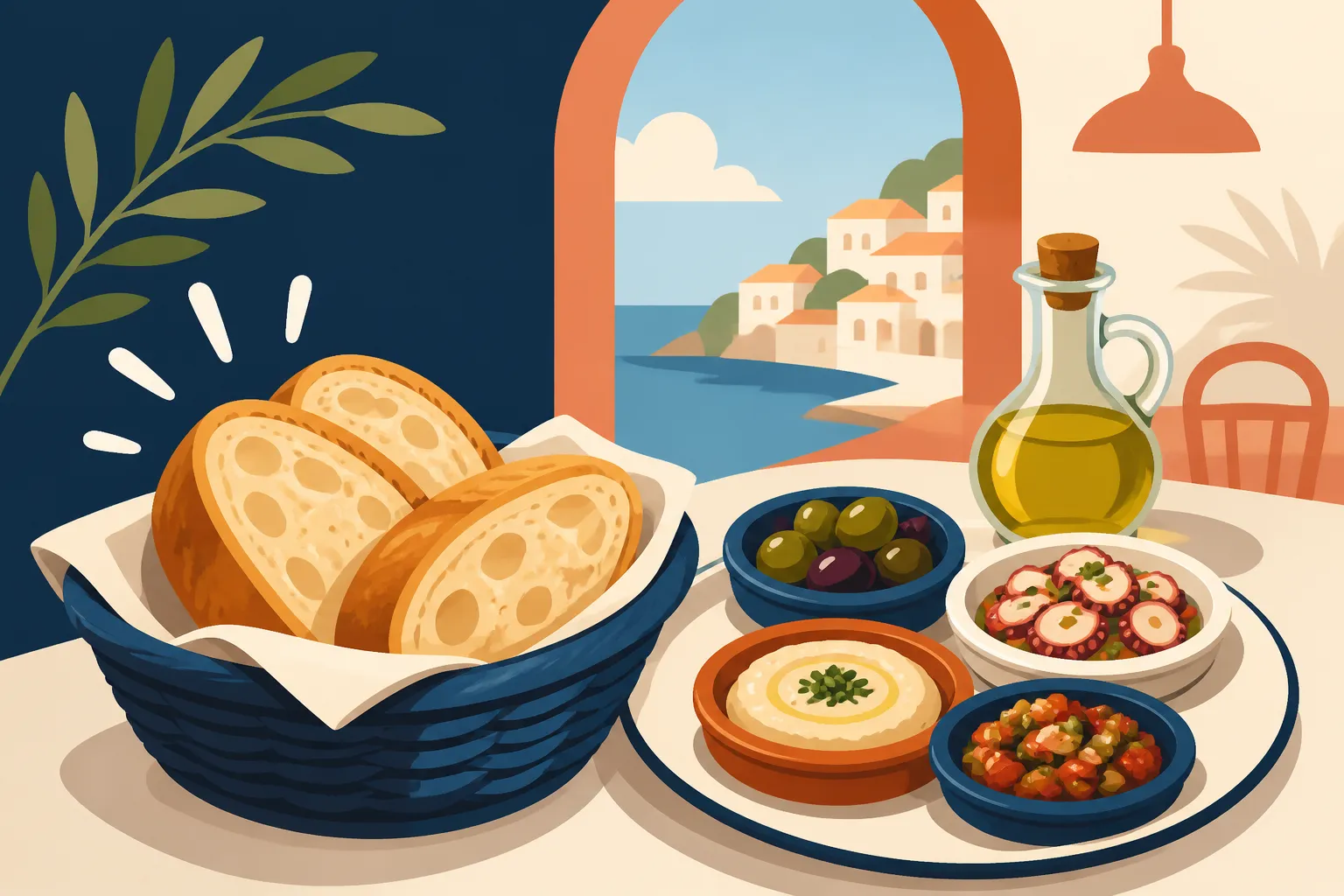
The complexity of the couvert varies wildly depending on the price point of the establishment. At a local neighborhood spot, you might just see a basket of fresh pão (bread), a small dish of azeitonas (olives), and perhaps some tiny plastic tubs of butter or sardine pate. In more upscale places, the couvert can become quite elaborate, featuring regional cheeses, presunto (cured ham), or even small plates of salada de ovelha (sheep's cheese salad) or marinated carrots.
It is worth noting that items like sardine pate are a staple of the Portuguese pantry. You will see these same brands if you are Grocery Shopping in Portugal: Continente, Pingo Doce, Auchan, and Mercados, and while they may look humble, they are a beloved part of the pre-meal ritual. The olives are usually marinated in garlic, bay leaves, and olive oil, representing the region's agricultural heritage. If you are staying in a hotel booked through Booking.com near a traditional market, you’ll likely see these exact ingredients being sold in bulk.
Why It Is Not a Complimentary Appetizer
The most important thing to internalize is that in Portugal, "if you eat it, you pay for it." This is the golden rule. Unlike the free chips and salsa in a Mexican restaurant in the States or the free bread in France, the Portuguese couvert is almost always a line item on the bill. The prices for each individual item—the bread, the butter, the cheese—are usually listed at the very beginning of the menu, often in a small section labeled "Couvert."
If you are coming from a culture where unrequested food is assumed to be free, this can feel like a breach of trust. But in the local context, it is a transparent transaction. The food is offered; you choose to accept it by consuming it. If you leave it untouched, it should not appear on your bill. Navigating this is part of the broader learning curve of Portuguese Coffee Culture and Restaurant Etiquette: Ordering Like a Local, where understanding the "unspoken" rules makes all the difference in your comfort level.
The Legal Side: Your Rights as a Diner
Many expats are surprised to learn that there are actually strict laws governing how restaurants handle these unrequested starters. For years, there was a grey area that allowed some "tourist trap" restaurants to charge exorbitant prices for things people didn't want. However, consumer protection laws in Portugal have caught up, and as a resident or a visitor, you have specific rights that protect your wallet.
The Mandatory Price Disclosure
According to Portuguese law, specifically Decree-Law no. 10/2015, no food or drink can be charged if it was not requested by the customer or used by them. Furthermore, all prices for the couvert must be clearly displayed on the menu. A restaurant cannot simply bring you a plate of expensive prawns and charge you 20 euros for them without that price being listed somewhere accessible.
When you sit down, take a quick glance at the first page of the menu. You will see the prices for "Pão," "Azeitonas," and "Queijo." These are usually quite reasonable—often between €1.00 and €3.50 per person—but in high-end areas like Chiado or Quinta do Lago, they can climb higher. Being aware of this legal requirement allows you to dine with confidence. If you've been exploring the city using a tour from GetYourGuide, you might be tired and hungry, but taking thirty seconds to check the couvert prices can save you a headache later.
Law 10/2015: Paying Only for What You Touch
The "touch rule" is the most practical piece of advice I can give you. If the waiter brings the couvert and you do not want it, simply say "No, thank you" (Não, obrigado/a) and ask them to take it away. Legally, if you do not touch the food, they cannot charge you for it. If they leave it on the table and you don't eat it, they still shouldn't charge you, but it is much safer to have it removed to avoid any "accidental" billing.
There are many instances where a waiter leaves the bread, the guest doesn't eat it, but it still appears on the bill. In this case, you are well within your rights to ask for its removal. You aren't being "difficult" or "cheap"; you are simply following the law. If a restaurant refuses to remove an item you didn't touch, you can always ask for the Livro de Reclamações (Complaints Book), though this is a nuclear option that is rarely necessary for a simple bread charge. For more on consumer rights, see What is the 'Livro de Reclamações' and how does it solve consumer disputes?.
How to Politely Say No
Rejecting the couvert is an art form that prevents awkwardness. You don't need to be aggressive. A simple wave of the hand and a "Não é preciso, obrigado" (It’s not necessary, thank you) is usually enough. Most waiters in busy areas like Lisbon or Porto speak excellent English and will understand immediately. They will simply whisk the plates away and move on to your drink order.
If you are worried about looking "un-Portuguese" by refusing the bread, don't be. Plenty of locals skip the couvert because they want to save room for the massive portions of Bacalhau or Arroz de Pato that are coming. It’s also a common tactic for those trying to stick to a budget. If you are a student or a digital nomad trying to manage the Cost of Living in Portugal 2026: Detailed Budgets for Singles and Families, skipping the couvert at every lunch can save you €50 or more over the course of a month.
A Regional Breakdown of Couvert Delights
The couvert isn't just about bread and butter; it is often a window into the regional soul of Portugal. Depending on where you are—whether you've arrived in the north via Omio or you're basking in the southern sun—the items placed before you will change significantly. Embracing the couvert in certain regions is actually one of the best ways to sample local delicacies without ordering a full appetizer.
The Classic Alentejo Bread and Olives
In the Alentejo region, bread is king. The Pão Alentejano is a heavy, sourdough-style loaf with a thick crust and a dense, chewy interior. It is world-renowned and, in my opinion, worth every cent of the couvert charge. Here, the olives are often seasoned with "poejo" (pennyroyal) or other local herbs that give them a distinct, earthy flavor.
If you find yourself in a traditional Alentejan restaurant, the couvert might also include a small pot of banha (lard) seasoned with paprika or local sheep cheese that is so soft you have to scoop it out with a spoon (Queijo de Azeite). While you might be concerned about Tipping culture in Portugal: Do you leave 10% or just round up the bill?, the real "tip" in the Alentejo is showing genuine appreciation for the quality of their bread.
Seafood Starters in the Algarve
Down south in the Algarve, the couvert takes a maritime turn. You are much more likely to be offered "cenouras à algarvia"—carrots marinated in vinegar, garlic, and parsley. These are incredibly refreshing on a hot day and are a local staple. You might also see a small plate of patê de sapateira (crab pate) or even tiny portions of marinated fish.
Because the Algarve is a tourist hub, this is where you need to be most vigilant about prices. A small plate of prawns might be placed on your table without a word, and those can easily cost €10 or more. If you’ve traveled down using Omio to enjoy the beaches, just remember to ask "É incluído?" (Is it included?) if you're unsure about a particularly fancy-looking starter. Most of the time, the answer is no, but it pays to be sure.
Rich Cheeses and Preserved Meats in the North
In the north, around Porto and the Douro Valley, the couvert tends to be more substantial. You might see slices of Salpicão (a type of cured sausage) or even a small bowl of tremoços (lupin beans). Lupin beans are a fascinating part of Portuguese culture—they are salty, yellow beans that you pop out of their skin with your teeth. They are the ultimate "beer snack."
The cheese in the north is often harder and sharper than the creamy versions found in the center of the country. If you are following a Porto Neighborhood Guide: Where to Live for Culture, Tech, and Family, you will find that the neighborhood tascas in areas like Bonfim take great pride in their local ham and cheese selections. In these cases, the couvert is less of a "filler" and more of a curated tasting of the local mountains.
| Item | Region | Typical Price Range | Must Try? |
|---|---|---|---|
| Pão Alentejano | Alentejo | €1.00 – €2.50 | Yes, it's iconic. |
| Cenouras à Algarvia | Algarve | €1.50 – €3.00 | Yes, very refreshing. |
| Queijo de Évora | Central/South | €3.00 – €6.00 | Only if you love strong cheese. |
| Patê de Sardinha | National | €0.50 – €1.00 | Classic, but basic. |
| Tremoços | National | €1.00 – €2.00 | Great with a cold beer. |
Navigating the Bill Without Feeling Cheap
One of the biggest hurdles for expats is the social anxiety of refusing food or questioning a bill. We want to fit in, and we don't want to seem like "difficult" foreigners. However, understanding the couvert is actually a sign of integration. Locals question bills and refuse bread all the time; it is a perfectly normal part of the dining dance.
Setting Expectations Early
The best way to handle the couvert is to make a decision as soon as you sit down. Take a look at the table. Do you see something you genuinely want to eat? If so, enjoy it! The quality of bread and cheese in Portugal is often superior to what you’d get in a supermarket. If you are hungry and the bread looks fresh, paying €2 for the experience is a bargain.
If you are not hungry, or if you are trying to be mindful of your spending, simply tell the waiter "Só a água, por favor" (Only the water, please) as they bring the starters. By being proactive, you prevent the food from sitting there and tempting you, and you make the waiter's job easier because they can give that fresh bread to another table. If you are living in a popular area based on a Lisbon Neighborhood Guide: Best Areas for Expats and Digital Nomads, you'll find that waiters appreciate the clarity.
The "Bread Basket" Paradox
Sometimes, a waiter will bring a bread basket and then return later to refill it. Be aware that you might be charged per basket or even per person. This is one of the more confusing aspects of the couvert. In some places, the "Couvert" price is a flat rate per person that covers everything on the table. In others, you are charged €1.00 for the bread, €1.50 for the cheese, and €0.80 for the butter.
Always check the bill for "Pão" (Bread). If you see it listed multiple times, it usually means you were charged for refills. If you didn't ask for a refill and they brought one anyway, this is a good moment to politely point it out. Most of the time, it’s just a standard entry in their computer system, and they will fix it without any fuss. This is just one of the many "daily life" adjustments, similar to understanding The "August Shutdown": Why getting things done in summer is impossible.
Understanding the Service Charge vs. Couvert
In some countries, a "service charge" or "cover charge" is a mandatory fee for the table or the service. In Portugal, this is not standard. You should not be charged a fee just for sitting down or for the "service" (though a tip is appreciated for good service). The couvert is specifically for the food items.
If you see a charge on your bill that isn't for something you consumed, it is likely an error. Unlike the "coperto" in Italy, which is a per-person charge for the tablecloth and cutlery, the Portuguese system is strictly "pay-per-item." Knowing this distinction helps you avoid overpaying and ensures you are only supporting the restaurant for the value they actually provided.
Tips for a Seamless Dining Experience in Portugal
To truly dine like a local, you need to look beyond the bread basket. The couvert is just the beginning of a meal that involves specific pacing, drinking habits, and social norms. Once you've mastered the art of accepting or rejecting the olives, you can focus on the real joy of Portuguese gastronomy.
Booking the Right Spot
If you are looking for a truly authentic experience, avoid restaurants with "touts" standing outside or menus with faded photos of food. These places often have the most aggressive couvert practices. Instead, look for spots where you see locals congregating, especially during the lunch hour (hora de almoço).
Using tools like Booking.com to find accommodation near residential neighborhoods often leads you to the best local tascas. These neighborhood gems rely on repeat business from locals, so they are much more likely to have fair couvert prices and high-quality ingredients. You can also check GetYourGuide for food tours led by locals; they will often take you to places where the couvert is treated with the respect it deserves, rather than as a way to inflate the bill.
Language Hacks for the Table
While you don't need to be fluent, a few choice phrases in Portuguese will change how the staff perceives you. If you speak a little of the language, they are less likely to treat you like a "clueless tourist" and more like a resident.
- "Podemos tirar o couvert, por favor?" (Can we take away the couvert, please?)
- "Quanto custa o couvert?" (How much is the couvert?)
- "O pão é fresco?" (Is the bread fresh?)
- "Só as azeitonas, por favor." (Only the olives, please.)
Using these phrases shows that you understand the system. It’s a small effort that pays off in the form of better service and a more relaxed atmosphere. If you’re planning a move, learning these basics is as essential as knowing How to get your Número de Utente online without visiting the health center.
Beyond the Couvert: What Else to Know
Once the couvert is settled, remember that the main courses in Portugal are often massive. Many restaurants offer "meia dose" (half portion), which is usually plenty for one person. If you are two people, sharing one "dose" (full portion) is a common and socially acceptable practice.
Also, keep an eye out for the "Prato do Dia" (Plate of the Day). This is usually a fixed-price menu that includes a soup, a main dish, a drink, and a coffee. Sometimes it even includes the couvert! These are the best deals in the country and are the secret to eating well on a budget. Mastering these little nuances is what turns a "foreigner living in Portugal" into an "expat who calls Portugal home."
Disclaimer
The information provided in this guide is based on current Portuguese laws and cultural practices as of 2026. However, individual restaurant policies may vary, and laws can change. Always check the posted menu prices and consult with the restaurant staff if you have specific questions about charges on your bill. This guide is for informational purposes only and does not constitute legal or financial advice.