Beaches and the Algarve: Coastal Portugal
Disclosure: This article contains affiliate links. If you buy through them, we may earn a commission at no extra cost to you. Read our full disclosure.
Picture this: you land at Faro in July, rent a car, drive forty minutes to the famous cove from your screensaver, and spend another forty circling for a parking spot that doesn’t exist. Portugal’s coastline is spectacular, but it rewards people who understand its regions, seasons and quirks. This guide covers where to go, how to get there, and how to stay safe.
Understanding Portugal’s Coastline Before You Pick a Beach
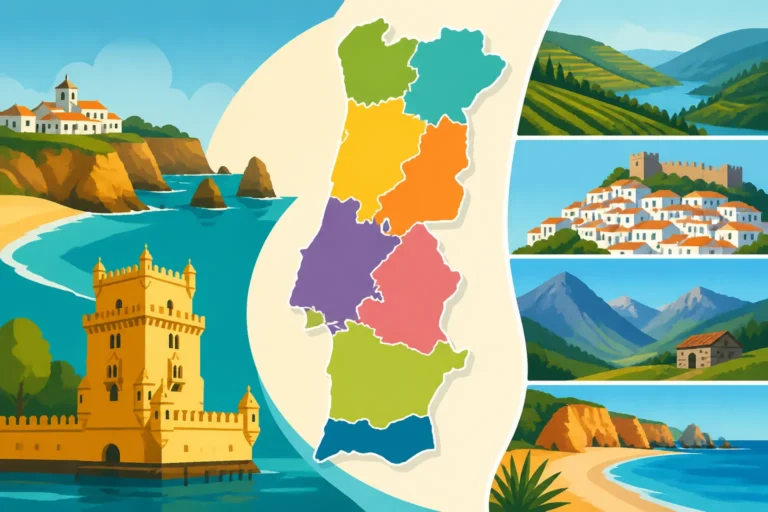
When I first moved here, I treated “the beach” as a single destination. That was my first mistake. Portugal has two very different coasts. One is a long Atlantic edge running north to south, from the Minho border down to Cape St. Vincent. The other is the south-facing Algarve, running east toward Spain. Which one you choose shapes your water, your wind, your crowds and even the food on your plate.
The Algarve’s Three Personalities
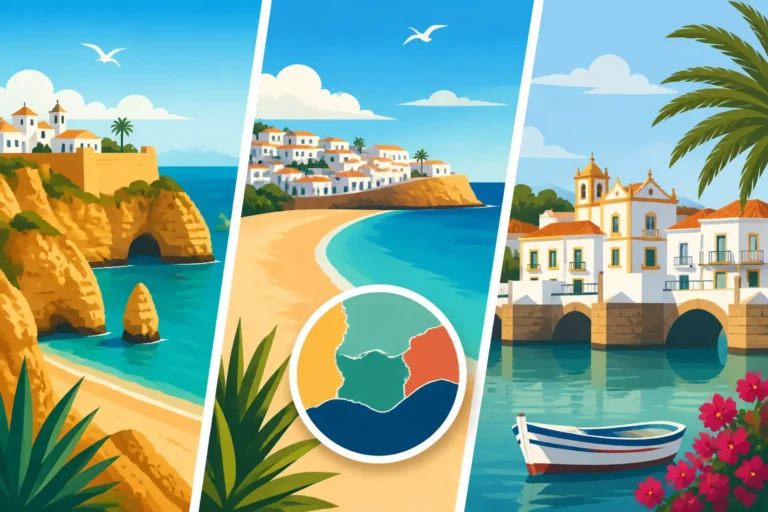
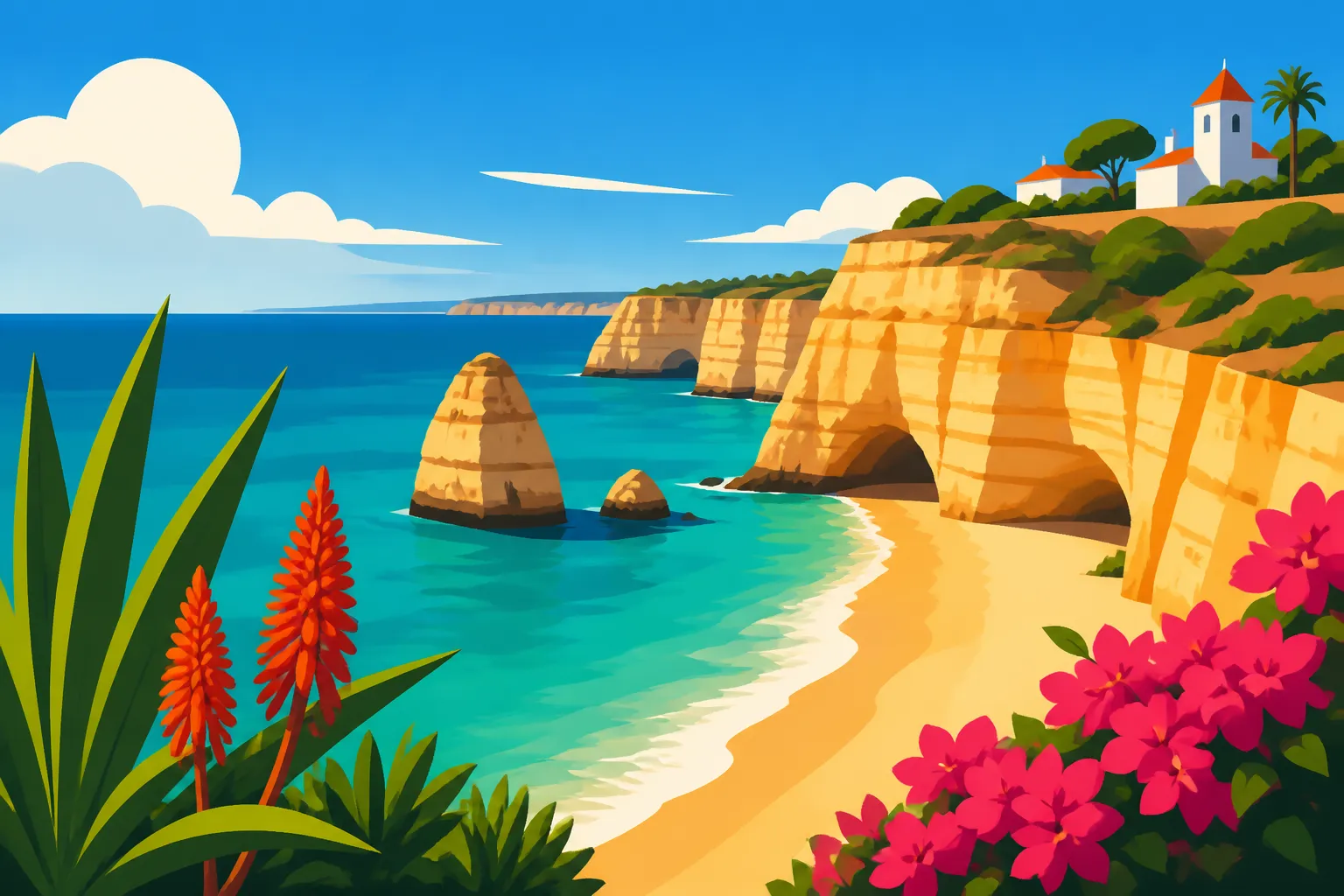
Locals split the Algarve into the Barlavento, or windward west, and the Sotavento, or leeward east. For a traveller it makes more sense to think in three parts. The far west, around Sagres and up the Costa Vicentina, is wild and exposed, with big surf. The central stretch, roughly from Lagos to Albufeira, is the postcard: honey-coloured cliffs, sea stacks, grottoes and small coves. The east, from Faro to Tavira and on to the Spanish border, is flat and sandy, with barrier islands and lagoons.
These differences show up in practical ways. In the west you will want a wetsuit for surfing and a windbreaker for the evening. In the centre, the hard part is getting into the coves, since many sit at the bottom of steep staircases or tide-dependent paths. In the east, you often need a ferry, because the best sand sits on islands across the Ria Formosa lagoon.
They booked a resort in Monte Gordo and then complained there were no cliffs. A year later, a different couple booked Sagres expecting calm, glassy family swimming and found a wind-lashed surf town instead. Both trips were great once they adjusted, but they would have been better with the right expectations. For a full overview of towns and landscapes, see The Algarve for Travelers: Beaches, Towns, and Cliffs.
The Atlantic West Coast Beyond the Algarve
North of the Algarve, the coast changes again. The Alentejo coast has long, empty beaches backed by dunes and cork country, plus small fishing villages like Zambujeira do Mar and Vila Nova de Milfontes. Around Lisbon you get a bit of everything: urban beaches along the Cascais line, Guincho’s wind-blasted dunes, the long surf beaches of Costa da Caparica, and the sheltered turquoise coves of the Arrábida hills.
Further north, the Silver Coast runs through Peniche, Nazaré and São Martinho do Porto. Beyond Porto, the beaches of the Minho are wide, green-backed and refreshingly local. The common thread is the open Atlantic. Waves tend to be bigger, winds stronger, and the water typically fresher than on the Algarve’s south coast.
That does not make the west coast inferior. Some of my favourite beach days have been on the Alentejo coast in September, with nobody around except a few fishermen and the odd surfer. You just need to plan differently. Pack layers, plan for wind, and treat swimming as something you do near lifeguards rather than wherever you like.
Sea Temperature and Why the Western Tip Feels Different
Water temperature is the question I get asked most, and the honest answer is that it changes daily. Wind, currents and upwelling all move it around. On Portugal’s west-facing coasts, northerly winds can push surface water offshore and draw colder water up from below. That is one reason a beach can feel very different from one week to the next.
The best tool is the forecast from IPMA, Portugal’s official weather and sea institute. On its website, go to the Mar section and open Previsão de temperatura. IPMA forecasts two Algarve points: Sagres on the western tip and Faro on the south coast. Its forecast for 18 October 2026, read on 19 October 2026, gave Sagres 18.7 to 19.1 °C and Faro 21.0 to 21.4 °C. In other words, the western tip runs cooler than the south coast.
In practice, if warm water is your priority, lean east toward Faro, Olhão and Tavira, and check IPMA before you set off. If you love surf, dramatic cliffs and fewer people, the west is worth a slightly brisker plunge. The central Algarve has no separate IPMA forecast point, so check both Sagres and Faro and watch the wind forecast too.
| Coastal Region | Landscape | Water Temperature Guide | Crowds in Peak Summer | Best For |
|---|---|---|---|---|
| Western Algarve and Costa Vicentina | Wild cliffs, dunes, open surf beaches | Cooler; IPMA Sagres point read 18.7 to 19.1 °C for 18 October 2026 | Moderate, busier at surf hubs | Surfing, hiking, wild scenery |
| Central Algarve, Lagos to Albufeira | Golden cliffs, coves, sea caves | No separate IPMA point; check Sagres and Faro | Very high | Photography, boat trips, cove-hopping |
| Eastern Algarve and Ria Formosa | Flat sand, barrier islands, lagoons | Warmer; IPMA Faro point read 21.0 to 21.4 °C for 18 October 2026 | High near towns, lower on islands | Families, calm swimming, long walks |
| Lisbon Coast and Arrábida | Urban beaches, dunes, sheltered coves | Atlantic; check IPMA for the nearest point | High at weekends | City-plus-beach trips |
| Alentejo and Silver Coast | Long empty beaches, fishing villages | Atlantic; check IPMA for the nearest point | Low to moderate | Quiet escapes, surf, seafood |
The Western Algarve and Costa Vicentina
This is my heart’s corner of Portugal. The western Algarve feels like the edge of Europe because, for centuries, it was. The Costa Vicentina is protected as a natural park, which keeps big development away, so you get villages and wild land instead of high-rises.
Sagres and the End of the World Beaches
Sagres sits on a windy headland near Cabo de São Vicente, the southwestern tip of mainland Europe. The town is small and laid-back, built around surf schools, cafés and a few seafood restaurants. Around it is a cluster of beaches facing different directions, which is the real secret of Sagres: there is almost always one sheltered from whatever the wind is doing.
Praia do Martinhal faces east and is often the calmest option, which is why families and windsurfers like it. Praia do Tonel faces west and catches swell, so it is a surfer’s beach. Praia do Beliche, tucked below the cliffs on the road to the cape, has a gorgeous sheltered bay but a long staircase down. Further along, Praia do Castelejo and Praia da Cordoama near Vila do Bispo are vast, dark-cliffed beaches that feel truly untamed.
My routine in Sagres is simple. I check the wind in the morning, pick the beach on the sheltered side, and save the sunset for the cape, where crowds gather to watch the sun drop into the Atlantic. Bring a jacket even on a hot day, because the headland wind is relentless after dark.
Surf Villages of Aljezur and Odeceixe
North of Sagres, the Costa Vicentina runs through Carrapateira and Aljezur toward Odeceixe at the Alentejo border. Praia do Amado near Carrapateira is a classic learn-to-surf beach, with a wide bay and several schools working the waves. Praia da Bordeira next door is enormous, with a river winding through the dunes. Arrifana, near Aljezur, is a horseshoe bay under high cliffs, with a small fishing harbour at one end.
Odeceixe is a favourite with families because the river meets the sea there, creating a calm lagoon beside the surf beach. Kids can paddle in the river while older kids and adults take on the waves. The village itself is pretty and hilly, with whitewashed houses and a handful of good restaurants.
Surf schools here supply wetsuits and boards as standard, so beginners need little more than sunscreen and enthusiasm. If you are new to surfing, book a lesson rather than renting a board and paddling out alone. Currents on these open beaches can be serious, and instructors know which banks are safe on a given day. For a wider look at Portugal’s surf scene, see Surfing in Portugal: Ericeira, Peniche, and Nazaré.
Walking the Fishermen’s Trail
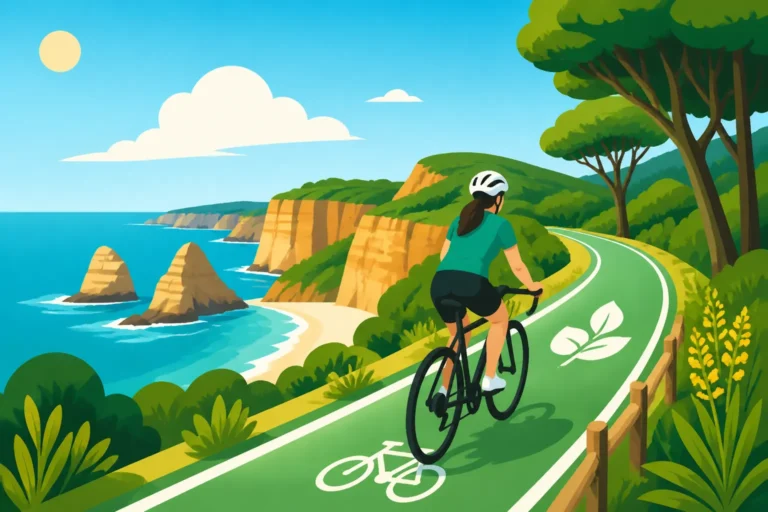
The Rota Vicentina is a network of walking routes, and its coastal branch, the Fishermen’s Trail, follows the cliff edges along paths once used by local fishermen. Some stretches are on soft sand, which is harder going than it looks, so set realistic daily distances. The payoff is extraordinary: storks nesting on sea stacks, hidden coves and almost nobody else around.
You can walk sections as day hikes or join them into a multi-day route, staying in village guesthouses along the way. Spring and autumn are ideal. Summer walking on exposed cliffs can be punishing, with little shade and strong sun. Always carry more water than you think you need, as villages can be far apart.
Respect the cliff edges. Paths sometimes run close to unstable drops, and wind gusts can be strong. Stay on marked routes and keep children close. For more on this coast, see The Costa Vicentina: Wild Beaches and Cliffs.
The Central Algarve Cliffs and Coves
This is the Algarve of the posters. Golden limestone cliffs, eroded into arches, caves and pillars, frame small coves of soft sand and clear water. It is also where the crowds are thickest, and where a little planning makes the biggest difference.
Lagos and Ponta da Piedade
Lagos is a lively historic town with a walled old centre, a marina and a youthful bar scene. Its beaches are among the most photographed in Portugal. Praia Dona Ana and Praia do Camilo are small coves reached by staircases, framed by rock formations. Camilo’s long wooden staircase is part of the experience, but count the steps before you decide to carry a cool box down.
Ponta da Piedade, a headland just south of town, is a maze of grottoes, arches and sea stacks. You can view it from clifftop paths or from the water on small boat or kayak tours that leave from the Lagos marina and nearby beaches. Seeing it from sea level, early in the morning when the light is soft, is one of the Algarve’s great experiences.
On the other side of town, Meia Praia is a long, open beach that stretches toward Alvor. It is a welcome contrast to the cramped coves, with room to spread out even in August. When the coves are rammed, I head to Meia Praia and never regret it.
Benagil, Marinha, and the Seven Hanging Valleys
The Benagil sea cave, with its round opening in the roof spilling light onto a hidden beach, has become one of the most famous sights in Portugal. Its popularity has brought congestion on the water, and access rules have changed over time. Before you go, check the current regulations with the local maritime authority or your tour operator, and do not try swimming there from Benagil beach, as boat traffic and currents make it risky.
Most visitors see the cave on a boat or kayak tour from Benagil, Portimão, Armação de Pêra or Albufeira. Platforms like GetYourGuide list many of these trips side by side, which makes it easy to compare departure points, group sizes and cancellation terms. Booking an early departure usually means calmer water and fewer boats. For a detailed walkthrough, see How to Visit the Benagil Cave in the Algarve.
If you want the cliffs on foot, walk the Seven Hanging Valleys Trail, the Percurso dos Sete Vales Suspensos. It runs along the clifftops between Praia da Marinha and Praia de Vale Centeanes, passing above Benagil and several other coves. Praia da Marinha itself, with its double arch and clear water, is reached by a path and steps from a clifftop car park. Start early in summer, because heat and crowds both build fast.
Albufeira and Falésia: Where Crowds Meet Golden Cliffs
Albufeira is the Algarve’s party capital, and I won’t pretend otherwise. The old town has charm, and the main beach, Praia dos Pescadores, is convenient, but the Strip is all neon and stag parties. If that’s your scene, wonderful. If not, use Albufeira as a base for the quieter beaches nearby, or skip it altogether.
Praia da Falésia, east of Albufeira toward Vilamoura, is one of the region’s most striking beaches. It runs for kilometres beneath red and ochre cliffs streaked with pine green. Because it is so long, you can almost always find space by walking away from the access points. It is also a superb walking beach at low tide in the shoulder months.
West of Albufeira, Praia da Galé and the beaches around Armação de Pêra offer more space and a family atmosphere. Armação de Pêra’s long town beach is sheltered and practical, with restaurants right on the sand. It lacks the dramatic arches, but it is easy, and on a busy day easy can be wonderful.
The Eastern Algarve and Ria Formosa
Head east from Faro and the cliffs give way to the Ria Formosa, a protected lagoon system of channels, salt marshes and sandy barrier islands. This is where I take visitors who want warmer, calmer water and the feeling of a desert island without leaving the mainland.
Island Beaches Reached by Ferry
The barrier islands are the jewels of the eastern Algarve. From Faro, boats run to Ilha Deserta, also called Barreta, a mostly uninhabited strip of sand with a single restaurant. Ferries from Olhão serve Culatra, home to a fishing community, and Armona, with its cluster of holiday cottages. From Fuseta, small boats cross to the island beach opposite the village.
Ferry schedules vary by season and are run by different operators, so check the current timetable at the dock or the operator’s page before you go. In summer, return boats can fill up late in the afternoon. I learned that the hard way, waiting in a long queue at Armona with a sunburned toddler. Aim to return a little earlier than everyone else.
Water taxis are another option, especially if you want to hop between islands or head back on your own schedule. They cost more than the scheduled ferries but can be a lifesaver for families. Some operators also run birdwatching and lagoon tours, which are a lovely way to see flamingos and spoonbills in the marshes.
Tavira and Praia do Barril
Tavira is the eastern Algarve’s prettiest town, with a Roman-style bridge, church towers, and a calm, unhurried feel. Its beach is on Ilha de Tavira, reached by a short ferry from the town or from Quatro Águas. The island has a long sandy beach with cafés and a campsite, and you can walk away from the crowds in either direction.
Praia do Barril, a little west of Tavira, is reached by crossing a footbridge from Pedras d’El Rei and then either walking or riding a small tourist train across the marsh. At the beach you’ll find the Cemitério das Âncoras, rows of old tuna-fishing anchors half buried in the dunes, a reminder of the area’s history. The former fishermen’s buildings now house cafés and showers.
Further east, Cabanas de Tavira offers its own ferry to the island beach, and Manta Rota and Monte Gordo have long mainland beaches near the Spanish border. These eastern towns are where you’ll hear a lot of Spanish and Portuguese families, which I take as a sign of good value and good food.
Calm Water for Families and Nervous Swimmers
The east is the best part of the Algarve for young children. The lagoon side of the islands, and many of the mainland beaches, have gentle waves and shallow water. The sand slopes gradually, so little ones can paddle without suddenly finding themselves out of their depth.
That said, calm does not mean risk-free. Tidal currents in the Ria Formosa channels can be strong, especially near the inlets between islands. Swim on the ocean-facing beaches near lifeguards, and keep children off the channel edges where boats pass. Check tide times, because the lagoon can look completely different at low tide.
If you’re travelling with kids and want more options across the country, see Family Beaches and Calm Water in Portugal. My own rule is simple: lagoon for paddling, lifeguarded ocean beach for swimming, and a shaded spot for lunch, because the eastern Algarve has little natural shade.
Beaches Beyond the Algarve
The Algarve gets the fame, but some of Portugal’s most memorable beach days happen elsewhere. If you’re based in Lisbon or Porto, or simply want fewer crowds, the rest of the coast is full of surprises.
Lisbon’s Coast: Cascais, Guincho, Caparica, Arrábida
One of the joys of living in Lisbon is being able to get to the beach by train. The Cascais line runs along the river and coast, stopping at Carcavelos, a wide surf beach, and Cascais itself, with small town coves. It’s an easy half-day, and on weekday mornings it feels almost too easy.
Beyond Cascais, Guincho is a dramatic, wind-blasted beach backed by dunes and the Sintra hills. It’s a kitesurfing and windsurfing hotspot, but swimming can be dangerous, so pay close attention to the flags. Across the river, Costa da Caparica offers kilometres of sand, with beach bars and surf schools spread along it. South of that, the Arrábida natural park has sheltered coves with clear water, such as Portinho da Arrábida and Galapinhos.
Arrábida’s popularity means access is often restricted in summer, with parking limits and seasonal shuttles. Check the latest arrangements with the Setúbal municipality before you set off. For a deeper look at the capital’s coast, see Lisbon’s Beaches: Cascais, Costa da Caparica, and Beyond.
The Alentejo Coast and the Silver Coast
The Alentejo coast is where I go when I want to disappear. Comporta and Melides have long, pale beaches backed by rice fields and pines, popular with a well-heeled Lisbon crowd but still spacious. Further south, Vila Nova de Milfontes sits at the mouth of the Mira river, offering river beaches for calm swimming and ocean beaches for waves. Zambujeira do Mar is a small cliff-top village with a beautiful cove below.
North of Lisbon, the Silver Coast runs through Ericeira, Peniche and Nazaré. Ericeira is a surf town with a lovely fishing-village centre. Peniche and nearby Baleal are surf hubs with beaches facing different directions, much like Sagres. Nazaré is famous for its giant winter waves at Praia do Norte, while its town beach is a classic summer spot.
São Martinho do Porto is my go-to recommendation for calm water on the west coast. The town sits around an almost circular bay with a narrow opening to the sea, so the water inside is sheltered. Foz do Arelho, at the mouth of the Óbidos lagoon, offers a similar mix of lagoon and ocean.
Northern Beaches and the Islands
Around Porto, Matosinhos is the city’s beach and also its seafood capital, with restaurants grilling fish on the street. Further south, Espinho and Praia da Aguda are popular with locals. The north generally has more wind and fresher water, but it compensates with green landscapes, fewer tourists and excellent food. The beaches near Esposende and Moledo, close to the Spanish border, are wonderfully low-key.
The islands offer a completely different experience. Madeira has few sandy beaches, but its volcanic natural pools, like those at Porto Moniz, are unforgettable. Porto Santo, a short hop from Madeira, has a long golden beach. In the Azores, swimming often happens in rock pools and small harbours, surrounded by black volcanic stone and green cliffs.
If you are combining the mainland with the islands, plan your beach days around island weather, which can change in hours. Local tourism offices and harbour staff are usually the best sources of information about which pools are safe on a given day.
Getting There and Getting Around the Coast
Logistics can make or break a coastal trip. Distances on the map look small, but between traffic, winding roads and limited parking, getting around the coast takes more time than you’d expect.
Trains and Coaches From Lisbon
From Lisbon, CP trains run to the Algarve, connecting to Faro and Tunes, where you can change for the regional line. That regional line runs along the Algarve between Lagos and Vila Real de Santo António, stopping at towns like Portimão, Albufeira, Loulé, Faro, Olhão and Tavira. Some stations are inland from the towns they serve, so check how far the station is from the centre before relying on it.
Coaches are often the more practical option, especially for places the train doesn’t reach. Rede Expressos and other operators run long-distance routes to the Algarve and the Alentejo coast, and local bus networks connect towns and some beaches. I like using Omio to compare train and coach options on one screen when planning a route, then double-checking schedules on the operator’s own page.
Without a car, the eastern Algarve is the easiest region to explore, because the train line, the towns and the ferries link together well. The far west and the Costa Vicentina are harder, with infrequent buses, so a car or a carefully planned base makes much more sense there.
Driving, Tolls, and the Parking Battle
A car gives you the freedom to chase the wind and find empty coves, and on the west coast it is almost essential. The A22 motorway, the Via do Infante, runs across the Algarve. Toll rules on Portuguese motorways have changed in recent years and some motorways use electronic tolls only, with no booths, so check the current position for your route and ask your rental company how it handles tolls before you set off. For details, see How Do Tolls Work in Portugal for Rental Cars?.
The bigger frustration is parking. Popular coves like Marinha, Camilo and Benagil have small car parks that fill early in summer. Arriving mid-morning in August often means circling, parking far away along a narrow road, or giving up. My rule: be there early, have a backup beach in mind, and never park in a way that blocks access roads, because emergency vehicles need them and fines do happen.
Roads to some beaches are narrow and winding, sometimes unpaved for the last stretch. Drive slowly, watch for cyclists and walkers, and be prepared to reverse for oncoming traffic. Rural petrol stations are less frequent in the far west, so fill up when you can.
Where to Base Yourself and When to Book
Choosing a base is the most important decision you’ll make. If you want nightlife and a central location, Lagos works well. If you want calm water and island trips, Tavira or Olhão are ideal. If you want surf and wilderness, Sagres or Aljezur. For a detailed town-by-town breakdown, see Beach Towns of the Algarve Compared: Lagos to Tavira.
Accommodation in summer gets booked up early, and prices rise sharply in peak season. Booking.com is useful for filtering by flexible cancellation, which I recommend for coastal trips, because weather and plans can change. In the shoulder seasons you’ll find more choice and often better value, especially in the smaller villages.
Think about how much moving you want to do. Changing bases every night eats into beach time. For a week, two bases, one in the west or centre and one in the east, often works best. That way you get to experience both sides of the Algarve without spending every morning packing.
Beach Safety, Rules, and Local Etiquette
The Atlantic deserves respect. Portugal’s beaches are generally well run, but the ocean here can turn quickly, and the cliffs that make the coast so beautiful come with their own risks.
Lifeguard Flags and the Época Balnear
Portugal’s official bathing season, the época balnear, is set by each municipality, with lifeguards on duty at designated beaches during that period. Dates vary from place to place and year to year, so check the local municipality or the signs at the beach. Outside the season, many beaches have no lifeguards at all.
The flag system is straightforward. A green flag means swimming is allowed. A yellow flag means you can paddle at the water’s edge, but you should not swim. A red flag means you must stay out of the water entirely. A checkered flag means the lifeguard post is temporarily unattended. Lifeguards take these seriously and will whistle you back if you ignore them.
Many beaches display a Blue Flag, the Bandeira Azul, an award recognising water quality, safety and services. It’s a useful indicator, but it doesn’t guarantee calm conditions on a given day. Always check the flag at the lifeguard post and, if in doubt, ask the lifeguard directly.
Cliffs, Currents, and Sun
The cliffs of the central Algarve are made of soft rock that erodes and occasionally collapses. Warning signs mark risk zones, and it’s important to keep away from both the base of the cliffs and the edges at the top. Laying your towel in the shade of a cliff is tempting, but that’s exactly where falling rock lands.
Rip currents are common on open Atlantic beaches. If you are caught in one, don’t fight it by swimming straight back to shore. Swim parallel to the beach until you’re out of the current, then head in, or float and signal for help. Swim near lifeguards, especially with children, and never swim alone on remote beaches.
The sun is intense, even when the wind makes it feel cool. Wear a hat, use high-protection sunscreen, and take shade breaks around midday. Pharmacies sell sunscreen, after-sun and rehydration salts. In any emergency, call 112, and for a fuller picture of how the system works, see Emergency Medical Care in Portugal: Calling 112 and Going to the Hospital.
Beach Culture: Umbrellas, Bolas de Berlim, and Unwritten Rules
Portuguese beach culture has its own rhythm. Families arrive mid-morning, set up their umbrellas, and stay for hours, often heading off for a long lunch before returning in the late afternoon. Many beaches have concession areas where you can rent sunbeds and umbrellas, alongside free public areas where you can set up your own.
Listen for the call of the bolas de Berlim sellers, walking the sand with boxes of sugar-dusted doughnuts, often filled with egg cream. It’s a beloved tradition. Beach bars, known as apoios de praia, serve drinks, snacks and sometimes full meals. For something more substantial, coastal towns are excellent for grilled fish, cataplana stews and, on the Costa Vicentina, percebes, goose barnacles.
A few unwritten rules: don’t play loud music, keep a respectful distance from other groups, and take all your rubbish with you, including cigarette butts. Topless sunbathing is generally tolerated, while nudity is limited to designated beaches. Above all, enjoy the slower pace. Nobody rushes a beach day here, and after a while, you won’t either.
Planning Your Coastal Trip by Season
The same beach can feel like a different place depending on when you visit. Choosing the right season matters as much as choosing the right region.
Summer Peak Reality
July and August are peak months. The weather is reliably hot and sunny, the beach bars are all open, and the atmosphere is lively. It’s also the most crowded and most expensive time to visit, with traffic and parking struggles at popular spots and busy boat tours.
If you’re travelling in peak season, adjust your rhythm. Go to the beach early in the morning, retreat to shade or your accommodation in the hottest hours, and return in the late afternoon when the light is golden and the crowds thin. Book boat trips, accommodation and car rentals well in advance.
Consider the less obvious places too. The eastern islands, the Alentejo coast and the north offer space even in August. For more on timing, see When Is the Best Time for a Beach Holiday in Portugal?.
Shoulder Season Sweet Spot
For me, late May, June and September into October are the best months. The days are warm, the crowds smaller, and accommodation easier to find. The IPMA forecast for 18 October 2026, with Faro at 21.0 to 21.4 °C and Sagres at 18.7 to 19.1 °C, shows that swimming can still be very pleasant into autumn on the south coast.
Shoulder season is also ideal for walking the Fishermen’s Trail and the Seven Hanging Valleys, when the heat is less intense. Some beach bars and lifeguard services reduce or end their operations as the season winds down, so check what’s open before you go, especially if you need lifeguards.
Pack layers, because evenings can be cool and windy, especially in the west. For a full checklist, see What to Pack for a Beach Trip in the Algarve.
Winter on the Coast
Winter on the coast is a different kind of beautiful. The beaches are nearly empty, the light is soft and clear, and the towns return to their local rhythm. It’s not swimming season for most people, but it’s perfect for long walks, cliff hikes, birdwatching in the Ria Formosa and watching the giant waves at Nazaré.
Many tourist businesses close or reduce hours in winter, particularly in smaller resort towns. Larger towns like Lagos, Faro, Tavira and Olhão stay lively year-round, with markets, cafés and restaurants catering to residents. The Olhão market on a winter Saturday morning is one of my favourite rituals.
Weather can be changeable, with rain and strong winds at times, so stay flexible. If you’re considering a longer winter stay, check accommodation in smaller villages, where you can often find a quiet base and enjoy the coast as locals do. The ocean will still be there, wilder and emptier than at any other time of year.
Disclaimer
This article is for general informational purposes only and does not constitute professional advice. Laws, prices and regulations vary by location and change over time. Consult a qualified professional for guidance on your specific situation.