What Are the Most Useful Portuguese Phrases for Tourists?
Disclosure: This article contains affiliate links. If you buy through them, we may earn a commission at no extra cost to you. Read our full disclosure.
Landing in Portugal, you might immediately feel the vibrant energy and warmth, but that initial rush can quickly turn into a slight panic when you realize how little Portuguese you understand. From trying to order a simple coffee at a local pastelaria to asking for directions when your phone's GPS decides to take a holiday too, navigating daily interactions in a foreign language can be daunting and, frankly, a bit embarrassing at times. This guide is here to alleviate that stress, offering a collection of the most useful Portuguese phrases that will empower you to communicate effectively, connect authentically with locals, and truly immerse yourself in your Portuguese adventure.
Mastering the Essentials: Greetings and Politeness
Let's face it, a little courtesy goes a long way, no matter where you are in the world. In Portugal, locals genuinely appreciate any effort you make to speak their language, even if it's just a few simple words. It shows respect for their culture and often opens doors to friendlier interactions and more helpful service. Don't be shy about trying; most Portuguese people in tourist areas will switch to English if they sense you're struggling, but starting in Portuguese is always the best approach. It validates their language and culture, which is something we expats learn to cherish deeply.
Saying Hello and Goodbye
The cornerstone of any interaction, greetings are fundamental. You’ll hear these phrases constantly, and mastering them will make your daily life smoother, whether you're stepping into a shop or just passing someone on the street. It’s not just about the words; it's about the timing and the warmth you convey.
The most common way to say hello is "Olá!" (oh-LAH!), which is universal and works at any time of day. However, being more specific adds a touch of local charm. "Bom dia" (bom DEE-ah) means "good morning" and is appropriate until around lunchtime. As the day progresses, you'll shift to "Boa tarde" (BOH-ah TAR-deh) for "good afternoon," which typically lasts until sunset. Once evening descends, "Boa noite" (BOH-ah NOY-teh) serves as both "good evening" and "good night," a versatile phrase for greeting and parting. Remember, these aren't just polite formalities; they're an integral part of how people interact here.
When it's time to part ways, "Adeus" (ah-DAY-oosh) is a straightforward "goodbye," but it can sometimes sound a bit final. For something more casual, you might hear "Até logo" (ah-TEH LOH-goo), meaning "see you soon," or "Até já" (ah-TEH ZHAH) for "see you in a bit," which are friendly and imply a possible future encounter. If you're really aiming for that local touch, "Tchau" (CHOW), borrowed from Italian, is widely used for a casual goodbye, especially among younger people or in relaxed settings. Don't underestimate the power of these simple phrases; they can transform a transactional encounter into a genuinely pleasant one, reflecting the friendly nature described in our guide on Daily Life in Portugal: Supermarkets, Language, and Cultural Etiquette.
Expressing Gratitude and Apologies
These are the social lubricants that keep interactions smooth and pleasant. You'll use them constantly, and locals will notice and appreciate your effort. It really goes a long way to show that you're not just passing through, but engaging with the culture.
To say "thank you," men use "Obrigado" (oh-bree-GAH-doo), ending with an 'o', while women use "Obrigada" (oh-bree-GAH-dah), ending with an 'a'. This gendered aspect often trips up newcomers, but it's crucial to get it right. If you're unsure, or if you're thanking multiple people, either is generally understood, but aiming for accuracy shows real dedication. For an extra touch, you can add "Muito obrigado/a" (MOO-ee-too oh-bree-GAH-doo/dah) for "thank you very much." This level of politeness is always well-received, whether you're paying for a coffee or receiving help with directions.
Apologizing is equally important. "Desculpe" (desh-COOL-peh) is the standard for "excuse me" or "sorry." You use it if you bump into someone, need to get past them in a crowded space, or even if you need to politely get someone's attention. If you're asking for forgiveness for a more significant error, "Lamento" (lah-MEN-too) or "Peço desculpa" (PEH-soo desh-COOL-pah) convey a deeper sense of regret. Knowing these phrases makes navigating crowded markets or bustling city streets much less awkward and helps maintain that lovely Portuguese civility.
Navigating Your Way: Transport and Directions
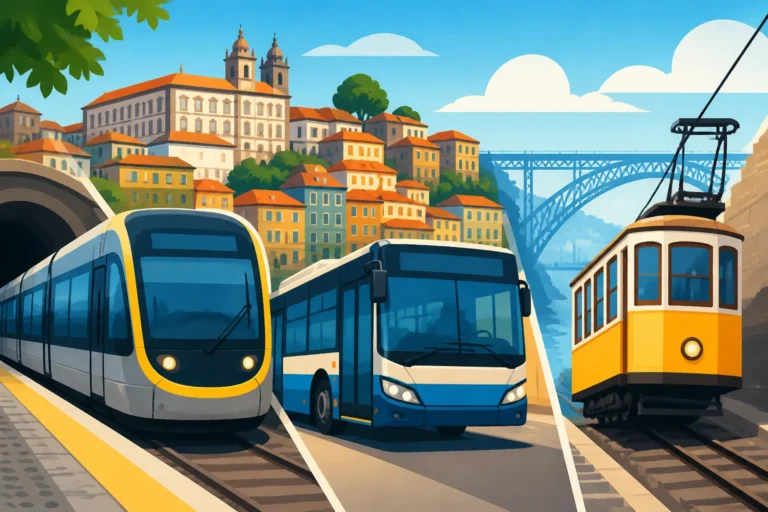
Getting around in a new place can be a little intimidating, especially if you're not confident in the local language. Portugal's public transport system is generally excellent, but knowing a few key phrases will make sure you don't end up on the wrong bus or train heading in the opposite direction from your planned adventure. Trust me, I've done it more times than I care to admit!
Asking for and Understanding Directions
When your phone battery dies or Google Maps decides to lead you down a goat path (it happens!), you'll be glad you know how to ask for help. Portuguese people are often very willing to assist, but they might not speak fluent English, especially outside of Lisbon or Porto.
"Onde é…?" (OHN-deh EH…) meaning "Where is…?" is your ultimate direction-seeking phrase. You can follow it with place names like "o centro da cidade" (oo SEN-tro dah see-DAH-deh, "the city center"), "a estação de comboios" (ah esh-tah-SAHN day com-BOY-osh, "the train station"), or "o meu hotel" (oo MEH-oo oh-TEL, "my hotel"). If you're feeling ambitious, add "por favor" (poor fah-VOR) for "please." If someone gives you directions, you might hear "à direita" (ah dee-RAY-tah, "to the right"), "à esquerda" (ah esh-KERR-dah, "to the left"), or "em frente" (eng FREN-teh, "straight ahead"). It’s a good idea to also know "perto" (PER-too, "near") and "longe" (LON-zheh, "far") to gauge distances.
Always remember that pointing is common here, so don't be surprised if people use gestures along with their words. If you're taking public transport, apps like Omio can help you book tickets and see routes, but a quick phrase at the ticket counter or to a fellow passenger can confirm you're on the right track. For more detailed information on navigating the country, you might want to check out our comprehensive guide on Public Transport and Driving in Portugal: Trains, Tolls, and Licenses.
Essential Transport Phrases
Beyond just directions, knowing how to interact with bus drivers, taxi drivers, or ticket agents makes your journey much smoother. This is especially true if you’re trying to catch a specific bus in a smaller town where the schedules might be less frequent and English speakers are harder to come by.
"Um bilhete para…" (oom bee-LYEH-teh PAH-rah…) translates to "A ticket for…" followed by your destination. If you need a return ticket, ask for "ida e volta" (EE-dah ee VOL-tah). When boarding a bus or tram, a polite "Bom dia/tarde/noite" and "Faz favor" (fahz fah-VOR, "please" or "here you go") when paying or showing your ticket will go a long way. If you're trying to figure out if this is indeed your stop, you can ask, "Esta é a paragem para…?" (ESH-tah eh ah pah-RAH-zhem PAH-rah…?, "Is this the stop for…?").
Getting taxis or ride-shares like Uber or Bolt (which are widely used here, especially in cities like Lisbon and Porto) often involves an app, but if you hail a traditional taxi, it's helpful to say "Para [destination], por favor" (PAH-rah [destination], poor fah-VOR) and confirming the fare if you're outside the city center. While Booking.com is fantastic for securing your accommodation in advance, knowing these phrases for your daily commutes will help you get to and from your hotel with ease.
Dining Out and Shopping Smart
Food and shopping are undoubtedly highlights of any trip to Portugal. From savory pastéis de nata to fresh seafood, the culinary scene is divine. However, deciphering menus and asking for specific items can be a minefield without a few key phrases. Similarly, navigating a local market or a charming boutique becomes infinitely easier (and more fun!) when you can interact a little.
Ordering Food and Drinks
Stepping into a local tasca (traditional restaurant) or a lively mercado (market) is an authentic experience, but it can also be intimidating if you're staring blankly at a menu written entirely in Portuguese. Don't let that stop you from enjoying the incredible flavors!
To start, "Eu queria…" (eh-oo kee-REE-ah…) means "I would like…" and you can follow it with anything from "uma água" (OO-mah AH-gwah, "a water") to "o menu, por favor" (oo meh-NOO, poor fah-VOR, "the menu, please"). If you're feeling adventurous and want to ask for a recommendation, "O que recomenda?" (oo kee reh-koh-MEN-dah?) means "What do you recommend?". And when you're ready for the bill, a simple "A conta, por favor" (ah CON-tah, poor fah-VOR) will do the trick. You can learn more about specific food etiquette in our guide to Portuguese Coffee Culture and Restaurant Etiquette: Ordering Like a Local.
When it comes to coffee, Portugal has a rich and complex coffee culture. Don't just ask for "coffee"; specify! "Uma bica" (OO-mah BEE-kah) is an espresso, usually served in Lisbon. In Porto, you'd ask for "um cimbalino" (oom seem-bah-LEE-noh). "Um galão" (oom gah-LAHN) is a large milky coffee, similar to a latte, while "uma meia de leite" (OO-mah MAY-ah deh LAY-teh) is half coffee, half milk. Knowing these nuances will earn you a nod of approval from any barista. And remember, unlike some other countries, tipping is often more modest here, as discussed in Tipping culture in Portugal: Do you leave 10% or just round up the bill?.
Shopping and Asking for Prices
Whether you're browsing for souvenirs or doing your weekly grocery run, being able to communicate in shops makes a huge difference. You'll avoid misunderstandings and sometimes even get a better deal if you show you're making an effort.
"Quanto custa?" (KWAN-too COOSH-tah?) means "How much does it cost?" and is probably one of the most useful phrases for any shopper. If you want to clarify a price, you can also point and ask "Isto?" (EESH-too?, "This?"). If you're looking for something specific, "Tem…?" (TENG…?) means "Do you have…?" For instance, "Tem pão?" (TENG POWN?) for "Do you have bread?". When paying, cashiers will often ask "Cartão ou dinheiro?" (car-TOW-ew oh deen-YEY-roo?) for "Card or cash?". Be aware that many smaller shops prefer cash, and some only accept Portuguese debit cards (Multibanco). Our article on Grocery Shopping in Portugal: Continente, Pingo Doce, Auchan, and Mercados provides further insights into where to shop.
For general browsing, "Só estou a ver, obrigado/a" (SO OSH-toh ah VER, oh-bree-GAH-doo/dah) which means "I'm just looking, thank you" is a polite way to deter overly eager salespeople without being rude. You might find a unique souvenir on a GetYourGuide excursion, but the true joy of shopping often comes from independent stores where a little language goes a long way.
Handling the Unexpected: Help and Emergencies
While we all hope for smooth travels, it's wise to be prepared for the unexpected. Knowing how to ask for help or articulate a problem in Portuguese can be critical in an emergency, or even in less severe but still stressful situations. Your safety and peace of mind are paramount.
Asking for Help and Explaining Problems
Sometimes, things just don't go according to plan. Whether you've lost something, need assistance, or find yourself in a tricky situation, being able to articulate your need for help is crucial. This is where basic Portuguese can truly make a difference.
"Preciso de ajuda" (preh-SEE-zoo deh ah-ZHOO-dah) means "I need help." This simple phrase is direct and universally understood. If you need to explain what's wrong, phrases like "Perdi a minha carteira" (per-DEE ah MEEN-yah car-TAY-rah, "I lost my wallet") or "Não percebo" (nown per-SEH-boo, "I don't understand") are invaluable. If you're in a situation where you need to communicate more complex information, asking "Fala inglês?" (FAH-lah een-GLESH?) for "Do you speak English?" can bridge the gap, although it's always best to try your Portuguese first.
Portuguese people are generally very compassionate, and even if they can't fully understand you, they will often try their best to assist or find someone who can. Don't be afraid to ask, even if your pronunciation isn't perfect. They will appreciate the effort. Our guide on Safety and Emergency Preparedness in Portugal for Foreign Residents offers more general advice on staying safe.
Dealing with Medical and Urgent Situations
In a medical emergency, time is of the essence, and language can be a significant barrier. While many medical professionals in larger cities speak English, it's not a guarantee, especially in smaller towns or during off-hours. Knowing basic phrases could literally save the day.
The absolute most critical phrase is "Socorro!" (soh-KOH-rroo!), meaning "Help!" (as in, emergency help). To specify, you could say "Estou doente" (ESH-tow doo-EN-teh, "I am sick") or "Tenho dor aqui" (TEN-yoo DOR ah-KEE, "I have pain here"), pointing to the affected area. If you need a doctor, "Preciso de um médico" (preh-SEE-zoo deh oom MEH-dee-koo) is the phrase. For severe emergencies, call 112, Portugal's emergency number. Remember that while dispatchers might speak some English, explaining your situation in Portuguese can be faster and clearer. Our article on Emergency Medical Care in Portugal: Calling 112 and Going to the Hospital elaborates on this process.
If it's not a dire emergency but you need medication, knowing "Onde é a farmácia?" (OHN-deh EH ah far-MAH-see-ah?, "Where is the pharmacy?") is incredibly useful. Portuguese pharmacies are highly regulated and pharmacists are often able to give minor medical advice. You can also refer to our guide on Pharmacies and Medication in Portugal: Prescriptions and OTC Drugs for more information.
Practical Phrases for Everyday Interactions
Beyond the big categories, there are always those little phrases that just make life easier. The ones you hear all the time, or the quick questions that clarify a situation. These are the small linguistic tools that allow you to seamlessly integrate, even if just for a short visit.
Understanding Numbers and Time
You'll need numbers for everything from prices, to bus times, to counting your change. Time is equally important for appointments, train schedules, and knowing when that lovely pastelaria opens its doors.
| Portuguese Number | English Translation | Pronunciation (Approx.) |
|---|---|---|
| zero | zero | ZEH-roo |
| um | one | oom |
| dois | two | DOYSH |
| três | three | TRES |
| quatro | four | KWAH-troo |
| cinco | five | SEEN-koh |
| seis | six | SAYSH |
| sete | seven | SEH-teh |
| oito | eight | OY-too |
| nove | nine | NOH-veh |
| dez | ten | DESH |
| vinte | twenty | VEEN-teh |
| trinta | thirty | TREEN-tah |
| cem | one hundred | SENG |
For telling time, "Que horas são?" (kee OH-rahsh SAH-own?) means "What time is it?". You might hear responses like "É uma hora" (eh OO-mah OH-rah, "It's one o'clock") or "São duas e meia" (SAH-own DOO-ash ee MAY-ah, "It's half past two"). The 24-hour clock is common in official settings, so "dezasseis horas" means 16:00 (4 PM). A basic grasp of these numbers and time expressions will dramatically improve your ability to schedule activities, catch your rides, and manage transactions seamlessly.
Miscellaneous Useful Phrases
Sometimes it’s the little things that make a big difference. These are phrases that might not fit neatly into a category but pop up frequently in daily interactions and can help smooth over any potential awkwardness.
"Sim" (SEENG) for "yes" and "Não" (NOWN) for "no" are non-negotiables, of course. To politely ask someone to repeat themselves, you can say "Pode repetir, por favor?" (POH-deh reh-peh-TEER, poor fah-VOR?, "Can you repeat, please?"). If you need to indicate that you don't speak much Portuguese, "Não falo muito português" (nown FAH-loo MOO-ee-too por-too-GEHS) is a good phrase to have in your pocket. Learning even a few of these little gems will make you feel more confident and less like a lost tourist. And hey, for those looking to really dive deep into the language, there are plenty of resources for Learning European Portuguese: Top Apps, Tutors, and Free Government Classes to help you beyond these basic tourist phrases.
Remember, practice makes perfect, and even imperfect attempts are usually met with kindness and appreciation. Don't be afraid to try!
Disclaimer
The information provided in this guide is intended for general informational purposes only and does not constitute professional advice. While we strive to provide accurate and up-to-date information, circumstances in Portugal, including administrative procedures, laws, and cultural norms, can change. Always verify information with official sources or local professionals before making any decisions based on the content of this article. We are not liable for any loss or damage arising from your reliance on this information.