Pharmacies and Medication in Portugal: Prescriptions and OTC Drugs
Standing in front of a locked pharmacy door at 9 PM with a feverish toddler or a pounding migraine is a rite of passage for many expats in Portugal. I remember my first winter in Lisbon, wandering the cobblestone streets of Arroios, desperately looking for a green cross that wasn't blinking "closed." This guide solves the mystery of the Portuguese pharmaceutical system, ensuring you never feel helpless when you need medicine.
Understanding the Portuguese Pharmacy System
The pharmaceutical landscape in Portugal is likely very different from what you are used to back home, especially if you are coming from North America or Northern Europe. Here, pharmacies are more than just shops; they are highly regulated healthcare hubs where the pharmacist often acts as a first line of medical advice. You won't find aisles of self-service medications in a traditional farmácia. Instead, you will find a counter, a professional in a white coat, and a system that prioritizes clinical safety over retail convenience.
Farmácia vs Parafarmácia
The first thing you need to distinguish is the difference between a "Farmácia" and a "Parafarmácia." A true Farmácia is the only place authorized to dispense prescription medications and certain "behind-the-counter" drugs. These are easily identified by the iconic green neon cross outside. In these establishments, you are dealing with licensed pharmacists who have completed rigorous university training. They have the authority to explain dosages, check for drug interactions, and in some cases, suggest alternatives if a specific brand is out of stock.
A Parafarmácia, on the other hand, is what you will often find inside large supermarkets like Continente or Pingo Doce, or as standalone shops like Wells. These stores can sell health products, skincare, bandages, and "Over-The-Counter" (OTC) medications that do not require a prescription, such as light painkillers or cough syrups. However, they are legally barred from selling anything that requires a medical script. If you are looking for specialized supplements or specific high-end skincare, iHerb is often a preferred online alternative for expats who want a wider international selection than what local parafarmácias offer.
Understanding this distinction saves you a lot of time. If you have a prescription from a doctor at a CUF hospital or a local health center, do not bother going to a Wells; head straight for the green cross. I learned this the hard way after waiting twenty minutes in a supermarket line only to be told they couldn't fulfill my basic antibiotic script.
Finding a Farmácia de Serviço
In Portugal, pharmacies follow a "Service" (Urgência) rotation to ensure that at least one pharmacy in every district is open 24/7. This is called the "Farmácia de Serviço." If your local pharmacy is closed, look at the door. By law, every pharmacy must display a sign indicating which nearby pharmacies are currently on duty. You can also check the official "Farmácias de Serviço" website or use the SNS 24 app to find the nearest open location.
When you visit a pharmacy after hours, you might find the door locked even if the lights are on. There is usually a small window or a doorbell. You ring it, and the pharmacist will assist you through a secure hatch. Be prepared to pay a small "after-hours" fee (usually around €2.50 to €5.00), although this fee is often waived if you have an urgent prescription issued that same day.
New arrivals are advised to bookmark the after-hours map immediately. In rural areas, the "service" pharmacy might be two towns over, so having a car or a reliable taxi number is essential. This is a core part of navigating Pharmacies (Farmácias) in Portugal: Green Crosses and After-Hours Service effectively.
The Role of the Pharmacist
Portuguese pharmacists are incredibly well-trained and often serve as the "neighborhood doctor" for minor ailments. If you have a mild skin rash, a lingering cold, or a minor stomach upset, it is perfectly acceptable to ask the pharmacist for their opinion. They can recommend non-prescription treatments or, more importantly, tell you when your symptoms are serious enough that you should stop by a clinic or call the SNS 24 Helpline (808 24 24 24): Triage, Advice, and Sick Notes.
This culture of consultation is why lines in Portuguese pharmacies can move slowly. The person in front of you isn't just buying toothpaste; they are likely getting a five-minute consultation on how to treat their grandmother's varicose veins. Patience is a virtue here. The upside is that when it is your turn, you get the same level of undivided attention.
Pharmacists also have the power to perform minor medical tasks. Many pharmacies offer blood pressure checks, blood glucose testing, and even basic administration of vaccines (like the flu shot) for a small fee. This makes them an invaluable resource for Healthcare in Portugal for Expats: The Complete 2026 Medical Guide.
Navigating Prescriptions in Portugal
The prescription system in Portugal, known as "Receitas," has gone almost entirely digital. Gone are the days of trying to decipher a doctor’s messy handwriting on a scrap of paper. Today, everything is linked to your tax and health ID numbers, making the process much smoother—once you understand how the digital codes work.
Public vs Private Prescriptions
Whether your prescription is issued by a public doctor at a Centro de Saúde or a private specialist at a place like Hospital da Luz, it will follow a standardized electronic format. However, the cost of the medication can vary significantly based on who wrote the script. Publicly issued prescriptions through the SNS (National Health Service) often trigger higher government subsidies (comparticipação).
If you are Registering with the Centro de Saúde: Getting Your SNS Número de Utente, your prescriptions will be tied to your health number. When the doctor prescribes medication, you will receive an SMS or an email with a "Guia de Tratamento" (Treatment Guide). This guide contains a barcode and several sets of numbers: the "Número da Receita" and the "Código de Acesso e Dispensa."
Private doctors also issue electronic prescriptions, but the subsidy might be different or non-existent unless your private insurance, such as Cigna Global, has specific agreements for reimbursement. Always show your NIF (tax number) at the pharmacy so the purchase is recorded for your annual tax deductions.
Electronic Prescriptions and SMS Codes
The SMS system is one of the best things about the Portuguese medical system. When a doctor renews a chronic prescription, you don't even have to visit the clinic. They can send the code directly to your phone. At the pharmacy, you simply show the pharmacist the SMS or the PDF on your phone. They scan the code, and your medication history pops up on their screen.
This system is particularly helpful for those Managing Chronic Illnesses: Diabetes and Hypertension Care in Portugal. If you lose the paper printout, don't panic. As long as you have the SMS or your NIF and ID, the pharmacist can usually find the prescription in the central database. However, it is wise to keep a screenshot of the codes just in case you lose cellular service inside the thick stone walls of an old pharmacy.
One quirk to remember: prescriptions have an expiry date. Most are valid for 30 days, while those for chronic conditions can last up to six months or a year. If you let a script expire, the pharmacist’s computer will physically block them from dispensing the medicine, and you will have to contact your doctor for a new code.
Foreign Prescriptions (EU vs Non-EU)
If you are a tourist or a new expat who hasn't yet entered the local system, you might wonder if your home country's prescription will work. If you have a prescription from another EU country, it is generally accepted in Portugal thanks to cross-border healthcare agreements, provided it contains specific information like the International Nonproprietary Name (INN) of the drug.
For those from the US, UK, or Canada, the situation is trickier. Portuguese pharmacists are technically not allowed to dispense medication based on a non-EU prescription. If you are Bringing Prescription Drugs to Portugal: Customs and Import Rules, make sure you have enough to last until you can see a local doctor. If you run out, your best bet is to go to a private clinic (like a CUF or Luz "Atendimento Permanente") with your original bottle and foreign script. The Portuguese doctor will then "convert" it by issuing a local electronic prescription.
We went to a private clinic, paid for a quick consultation, and had the Portuguese script in hand within an hour. It’s an extra step and an extra cost, but it's the only legal way to get regulated meds.
Over-the-Counter (OTC) Drugs and Common Ailments
Coming from a country where you can buy a 500-count bottle of Ibuprofen at a gas station, the Portuguese approach to OTC drugs can feel restrictive. In Portugal, almost all medicine is sold in small blister packs, and "behind-the-counter" really means behind the counter.
Why Painkillers are Behind the Counter
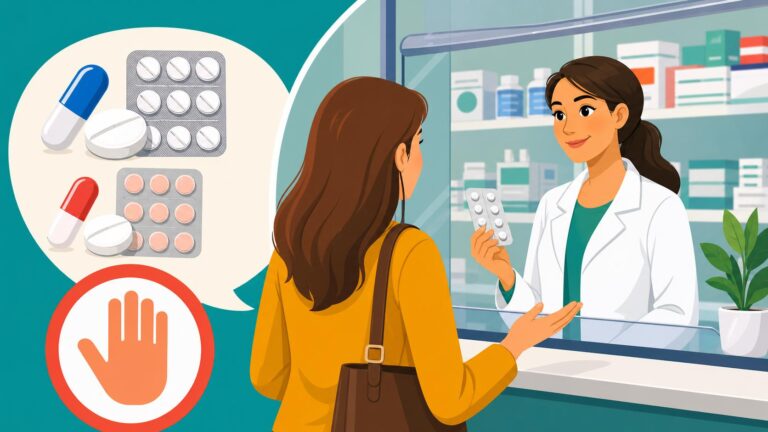
In a Portuguese farmácia, you won't see shelves of Tylenol or Advil. You have to ask the pharmacist for them. This is because the government maintains strict control over dosages and quantities to prevent self-medication issues. Even basic Paracetamol (Tylenol) is kept behind the desk.
The advantage of this is that the pharmacist will often ask you if you have any allergies or if you are taking other medications. It's a safety check that we often skip in larger retail markets. If you are looking for specific vitamins or niche wellness products that don't require this level of oversight, many expats use iHerb to ship products that are hard to find locally, such as specific melatonin dosages or organic supplements.
| Common US/UK Name | Portuguese Brand/Name | Availability |
|---|---|---|
| Tylenol / Paracetamol | Ben-u-ron | OTC (Behind Counter) |
| Advil / Ibuprofen | Brufen / Trifene | OTC (Behind Counter) |
| Aspirin | Aspirina | OTC (Behind Counter) |
| Pepto-Bismol | Gastropax (Similar) | OTC (Behind Counter) |
| Claritin / Loratadine | Claritine | OTC (Behind Counter) |
| Neosporin | Bacitracina | OTC (Behind Counter) |
| Cough Syrup | Bisolvon / Bronquisedan | OTC (Behind Counter) |
Common Portuguese Brand Names for Household Meds
When you walk into a pharmacy, asking for "Tylenol" will likely result in a blank stare. You need to know the local "hero" brands. For pain and fever, the undisputed king is "Ben-u-ron." It’s so ubiquitous that people use the name as a verb. For Ibuprofen, you’ll ask for "Brufen" or "Trifene."
If you have a cold or flu, you'll likely be offered "Cêgripe" or "Antigrippine." For a sore throat, "Maxilase" is the go-to anti-inflammatory, and "Strepsils" are available for numbing. If you are prone to allergies, "Claritine" and "Zyrtec" are available, but often under their generic names like Loratadina or Cetirizina.
One thing that surprised me was how expensive these basic meds are compared to the US. A pack of 20 Ibuprofen can cost €5-€7. This is why having a comprehensive plan from Cigna Global is so important for expats; while it may not cover a single pack of aspirin, it ensures your larger medical needs are managed so your "out-of-pocket" pharmacy spending doesn't become a burden.
Essential Supplements and Vitamins
The selection of vitamins in local Portuguese pharmacies can be a bit limited and often quite pricey. While you can find standard Vitamin C or Multivitamins (like the brand "Centrum"), more specific needs—like high-dose Vitamin D3, specialized probiotics, or specific protein powders—are often better sourced elsewhere.
Many in the expat community rely on iHerb for these items. It’s often cheaper to pay for shipping from their European hubs than to buy small bottles at the local farmácia. Just be aware that if you are ordering supplements from outside the EU, you might run into customs delays. Always try to order from the "EU-cleared" sections of sites like iHerb to ensure your package arrives at your door without a surprise trip to the CTT (post office) customs warehouse.
Costs, Subsidies, and Insurance Reimbursements
The cost of medication in Portugal is one of the most complex parts of the system to explain because it depends entirely on your residency status, your health conditions, and your insurance.
The Tiered Co-payment System (Escalões)
Portugal uses a system called "Comparticipação." The government subsidizes the cost of essential medications based on four tiers (Escalão A, B, C, and D).
- Escalão A: 90% subsidy (You pay 10%). Usually for life-saving drugs like insulin.
- Escalão B: 69% subsidy.
- Escalão C: 37% subsidy.
- Escalão D: 15% subsidy.
The tier is determined by the medication’s importance and the patient’s economic status. For example, low-income retirees or people with chronic disabilities often pay much less. This is part of how Portugal's National Health Service (SNS): How the Public System Works to keep healthcare accessible. When the pharmacist scans your script, the price is automatically calculated based on your "User Number" (Número de Utente). You don't have to do any math; the discount is applied at the point of sale.
Private Insurance and Cigna Global
If you are using Private Health Insurance in Portugal: Costs, Coverage, and Best Providers, the pharmacy process works slightly differently. Most Portuguese private insurance (like Médis or Multicare) has a direct billing system for clinical visits, but for pharmacies, you usually have to pay upfront and then submit your receipt for reimbursement.
International plans like Cigna Global are excellent for expats who want a higher level of coverage that isn't tied strictly to the Portuguese public system. If you have a high-value prescription for a specialized treatment, you would pay the pharmacy, get a "Fatura-Recibo" (which must include your NIF), and then upload it to your insurance portal. Within a few days or weeks, you get the covered percentage back in your bank account.
It is wise to keep having a digital folder on your phone for pharmacy receipts. In Portugal, the receipt is your only proof of purchase for reimbursement, and the thermal paper they use fades incredibly fast in the sun!
Using your NIF for Tax Deductions
Whether you are getting a subsidy or not, always—and I mean always—ask the pharmacist to put your NIF on the receipt. In Portugal, "Despesas de Saúde" (Health Expenses) are tax-deductible. At the end of the year, when you or your accountant files your IRS (income tax), a percentage of your pharmacy spending is deducted from your tax bill.
You can track these expenses on the "e-Fatura" website or app. Every few months, you should log in and categorize any "pending" expenses as "Saúde." If you don't provide your NIF at the counter, that money is effectively lost. This is a crucial tip for anyone navigating Taxas Moderadoras: Co-payments and Costs in the Public Health System and the wider financial landscape of living in Portugal.
Special Categories: Antibiotics, Birth Control, and Chronic Care
There are certain types of medications where the rules in Portugal are exceptionally strict, and knowing this beforehand will save you a lot of frustration.
The Strict Rules on Antibiotics
If you have a sinus infection and think you can just "convince" a pharmacist to sell you Amoxicillin, think again. Portugal has some of the strictest controls on antibiotics in Europe to combat antibiotic resistance. You cannot buy them without a valid Portuguese electronic prescription.
The pharmacists’ systems are monitored, and they can face heavy fines or lose their license for dispensing antibiotics without a script. If you are sick on a weekend and your doctor is unavailable, do not waste time going from pharmacy to pharmacy hoping for a "lenient" one. Instead, call the SNS 24 Helpline (808 24 24 24): Triage, Advice, and Sick Notes or go to a private urgent care clinic to get a proper diagnosis and the necessary prescription.
Accessing Contraception and Women's Health
Contraception is widely available and very affordable in Portugal. Many types of birth control pills can actually be bought OTC without a prescription, though it is always recommended to see a gynecologist first. If you have a prescription, the cost is often subsidized by the state.
Emergency contraception (the "morning-after pill") is available at any farmácia without a prescription. You simply ask the pharmacist for the "pílula do dia seguinte." They may take you to a more private area of the counter to explain how to use it and discuss potential side effects. This is a standard part of Women’s Health and Maternity Care in Portugal: Pregnancy and Birth services.
Managing Chronic Conditions (Diabetes/Hypertension)
For those Managing Chronic Illnesses: Diabetes and Hypertension Care in Portugal, the system is very supportive. Once you are registered with a family doctor (Médico de Família) at a Centro de Saúde, your medications for these conditions are often categorized under the highest subsidy tiers.
You will typically get a "receita crónica" which allows you to pick up your meds every month without needing a new appointment. I’ve found that Portuguese pharmacists are very diligent about checking your blood pressure if you are on hypertension meds, often offering the service for free to ensure the medication is working correctly. It’s this community-focused care that makes the Portuguese system feel much more personal than the big-box pharmacies in other countries.
Practical Tips for Expats at the Counter
After years of living here, I’ve picked up a few "pro tips" that make the pharmacy experience much smoother.
Language Barriers and Essential Phrases
While many pharmacists in major cities like Lisbon, Porto, and the Algarve speak excellent English, in smaller villages, you might need a few Portuguese phrases.
- "Tenho uma receita" (I have a prescription).
- "Alguma coisa para a tosse?" (Something for a cough?).
- "Preciso de um Ben-u-ron, por favor" (I need a Ben-u-ron, please).
- "Pode colocar o meu NIF?" (Can you put my tax number on it?).
If you are struggling to explain symptoms, don't be afraid to use Google Translate or show the pharmacist the box of the medication you usually take. They are experts at identifying active ingredients (princípio ativo) and finding the local equivalent.
Bringing Medication into Portugal (Customs)
When you first move, you’ll likely bring a supply of meds from home. This is generally fine for standard medications (a 90-day supply is the standard limit). However, for controlled substances like ADHD medication or strong painkillers, you must have a translated doctor’s letter and the original prescription.
Make sure to read Bringing Prescription Drugs to Portugal: Customs and Import Rules carefully. Customs at Lisbon airport are generally relaxed, but if you are carrying large quantities of unmarked pills, you are asking for a headache. Always keep meds in their original pharmacy packaging with the labels intact.
Disposal of Expired Meds (VALORMED)
One thing I love about Portugal is the "VALORMED" system. You should never throw old medication or empty blister packs in the regular trash. Every pharmacy has a white VALORMED bin. You simply drop your expired meds and packaging there, and they are disposed of in an environmentally friendly and secure way. It’s a small detail, but it reflects the high level of responsibility the Portuguese pharmacy system takes for public health.
If you are setting up your new home, check your first-aid kit every six months. Anything expired goes back to the green cross. It's also a good time to restock basics like bandages, antiseptic, and maybe a few extra boxes of Ben-u-ron for the next time the Atlantic winter chill hits.
Disclaimer
This guide is for informational purposes only and does not constitute medical or legal advice. Always consult with a licensed healthcare professional in Portugal before starting or stopping any medication. While we strive to keep information up to date, Portuguese laws and pharmaceutical regulations can change. For specific insurance queries, contact your provider or a qualified representative from Cigna Global. For supplements and wellness products, verify local import rules if ordering from international sites like iHerb.