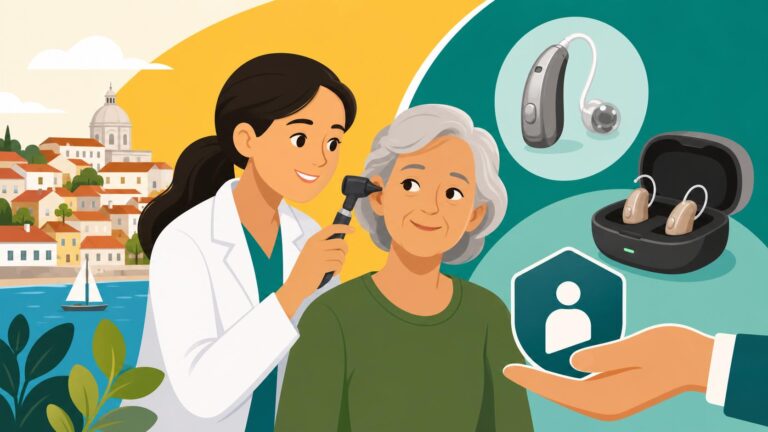
How to Choose Private Health Insurance in Portugal
Disclosure: This article contains affiliate links. If you buy through them, we may earn a commission at no extra cost to you. Read our full disclosure.
Navigating the Portuguese healthcare system often feels like trying to find a parking spot in Lisbon's Alfama district on a Saturday night—confusing, crowded, and slightly overwhelming. I remember my first year here, standing at a pharmacy counter trying to explain a chronic condition with a mix of broken Portuguese and frantic gestures. This guide simplifies the complex world of private coverage to ensure you get the care you need without the administrative headache.
Understanding the Portuguese Private Healthcare Landscape
When you first arrive in Portugal, the distinction between the public system and the private sector can be blurry. The Servico Nacional de Saude (SNS) is the state-funded system that provides universal coverage. However, as many of us have learned the hard way, the wait times for non-emergency procedures or specialist consultations in the public sector can stretch into months or even years. This is precisely why a significant portion of the expat community—and a growing number of Portuguese locals—opt for private health insurance.
Private insurance in Portugal isn't just about avoiding wait times; it is about choice and comfort. If you want to ensure your doctor speaks fluent English or if you prefer the modern amenities of facilities like Hospital da Luz and CUF: Navigating Portugal's Biggest Private Hospitals, private coverage is practically essential. The private system operates through a massive network of clinics and hospitals that often feel more like hotels than medical facilities. Having a solid policy means you can book an appointment through an app and see a specialist within days rather than waiting for a referral from a public family doctor who might not even be assigned to you yet.
Choosing a plan requires understanding the "Rede" or network. Most local insurers have agreements with specific hospital groups. If you live in the Algarve, for instance, you’ll want to ensure your provider has a strong relationship with the HPA (Hospital Particular do Algarve) group. If you’re in Lisbon or Porto, the CUF and Luz networks are the dominant players. Before signing any contract, you must verify that the clinics near your residence are actually in the provider's network, or you’ll end up paying significant out-of-pocket costs that weren’t in your budget.
Types of Private Health Insurance Policies in Portugal
There are generally three ways to approach private coverage in Portugal, and your choice depends heavily on your residency status and your lifestyle. The first is a local "Rede" (Network) plan. These are the most common and generally the most affordable. They operate on a co-payment system where the insurer pays the bulk of the cost directly to the hospital, and you pay a small fee (often between 15 and 30 Euros) at the reception desk.
The second option is an international health insurance policy, such as those offered by Cigna Global. These are often the preferred choice for digital nomads or high-net-worth expats who travel frequently. Unlike local plans, international policies often cover you in multiple countries and provide much higher coverage limits for major surgeries or cancer treatments. Cigna Global is particularly well-regarded for its flexibility, allowing you to tailor modules to your specific needs, such as adding vision or dental care.
The third, more niche option, is travel-medical insurance like SafetyWing. While SafetyWing is fantastic for digital nomads in their first few months of "scouting" Portugal, it is important to remember it is not a full-scale replacement for comprehensive long-term health insurance. It excels at emergency coverage and unexpected illnesses while you are transitioning, but once you are a settled resident, you will likely need to look at Private Health Insurance in Portugal: Costs, Coverage, and Best Providers to meet visa requirements and long-term health needs.
| Feature | Local Portuguese Insurance (e.g., Multicare) | International Insurance (e.g., Cigna Global) | Nomad Insurance (e.g., SafetyWing) |
|---|---|---|---|
| Primary Focus | In-network care within Portugal | Global coverage and high limits | Emergencies and travel mishaps |
| Typical Monthly Cost | €30 – €100 (varies by age) | €150 – €400+ | €45 – €90 |
| Co-payments | Low fixed fees (€15-€30) | Usually zero or deductible-based | Flat deductible per incident |
| Network | Specific Portuguese groups | Worldwide (usually excluding USA) | Any licensed medical provider |
| Pre-existing Conditions | Usually excluded | Can be covered (with underwriting) | Generally excluded |
Key Factors to Compare When Shopping for Coverage
The most "Portuguese" hurdle you will face when signing up for insurance is the concept of Waiting periods (Períodos de Carência) in Portuguese health insurance policies. In many local plans, you cannot use certain benefits immediately. For example, there is often a 60-day wait for basic outpatient care, a 90-day wait for hospitalizations, and a grueling 365-day wait for childbirth and maternity care. If you are planning to start a family, you cannot wait until you are pregnant to buy insurance; you need to be covered well in advance.
Another critical factor is the age limit. Most local Portuguese insurers are very hesitant to take on new clients over the age of 65 or 70. If you are moving to Portugal for retirement, you might find your options for local plans are limited or prohibitively expensive. In these cases, international providers like Cigna Global are often the only viable solution, as they frequently offer lifetime renewals and are more accustomed to insuring older expats. Always check the "Idade de permanência" (permanence age) in your contract to ensure they won't drop you just when you need the coverage most.
You must also meticulously dissect the Medical deductibles (Franquias) in Portuguese health insurance policies. Some plans look incredibly cheap on paper—perhaps only 20 Euros a month—but they come with a high deductible for surgeries. This means if you need an operation that costs 5,000 Euros, you might have to pay the first 1,000 Euros yourself. For a young, healthy individual, this might be a calculated risk. For a family with children, a plan with no deductible but a slightly higher monthly premium is usually the safer bet to avoid unexpected financial shocks.
Navigating the Top Portuguese Insurance Providers
If you decide to go the local route, you will likely be choosing between Médis, Multicare, and AdvanceCare: Comparing Top Private Insurers. These are the "Big Three" in Portugal. Multicare is owned by Fidelidade and has an massive market share, often providing the best access to the Luz and CUF networks. Médis is known for its excellent mobile app and "Médis 24" triage line, which can save you a trip to the doctor for minor issues.
When you are comparing these providers, look at the outpatient limit (Capital de Ambulatório). This is the total amount the insurer will pay for consultations, exams, and physiotherapy in a single year. In Portugal, it’s quite common for cheaper plans to have an outpatient limit as low as 2,500 Euros. If you have a year where you need multiple MRIs or specialist visits, you can hit that limit surprisingly fast. It is wise for expats to look for a plan with at least 5,000 Euros in outpatient coverage to be safe.
Finally, consider the ease of reimbursement. While "Direct Billing" (where the hospital bills the insurer) is the gold standard, sometimes you will visit a specialist who is out of network. You will want a provider that allows you to upload an invoice via an app and receive your reimbursement within a few days. Before committing, it is worth reading up on Public vs Private Healthcare in Portugal: Which One Should Expats Choose? to understand how these private plans interact with your rights under the public system, especially for emergencies where the public hospitals often have the best trauma facilities.
Practical Steps to Finalize Your Choice
Once you have narrowed down your list, the actual application process is relatively straightforward but requires a bit of paperwork. You will need your NIF (Tax Identification Number) and usually a Portuguese bank account for the direct debit. Most insurers will ask you to fill out a health questionnaire. Be honest here; if you fail to disclose a condition, they can legally refuse to pay for any related treatments later.
If you are currently going through a visa process, pay close attention to the specific Health Insurance Requirements for the D7 and D8 Visa Application. The SEF (now AIMA) officers often require specific wording or a minimum coverage amount for hospitalizations to approve your residency. Many expats find that getting a plan from Cigna Global initially is the easiest way to satisfy these requirements because their certificates are issued in English and meet international standards that Portuguese consulates recognize immediately.
Remember that insurance in Portugal is not a "set it and forget it" task. As you age, or as your family grows, your needs will change. Each year, about 30 to 60 days before your policy renews, take a moment to look at your usage. Did you hit your limits? Did your favorite doctor leave the network? If so, don't be afraid to switch. Portugal’s insurance market is competitive, and being a loyal customer doesn’t always pay off as much as being an informed one. For those who find the local market too restrictive, keeping an international policy with Cigna Global ensures that no matter how the local Portuguese regulations change, your global standard of care remains constant.
Disclaimer
The information provided in this guide is for informational purposes only and does not constitute professional medical or financial advice. Healthcare laws, insurance policy terms, and visa requirements in Portugal are subject to frequent change. Always consult with a certified insurance broker or legal professional before signing a contract or making health-related decisions. The author is an expat sharing personal experiences and research, not a licensed insurance agent.