Pharmacies (Farmácias) in Portugal: Green Crosses and After-Hours Service
You wake up at 3 AM with a splitting migraine or a child’s sudden fever, only to realize your medicine cabinet is bare. I’ve stood in the rain outside a locked shopfront in Lisbon, staring hopelessly at a closed metal shutter, wondering how on earth to get a simple bottle of ibuprofen. This guide demystifies the Portuguese pharmacy system, ensuring you never feel lost when you need medical relief.
Understanding the Green Cross: How Portuguese Pharmacies Differ
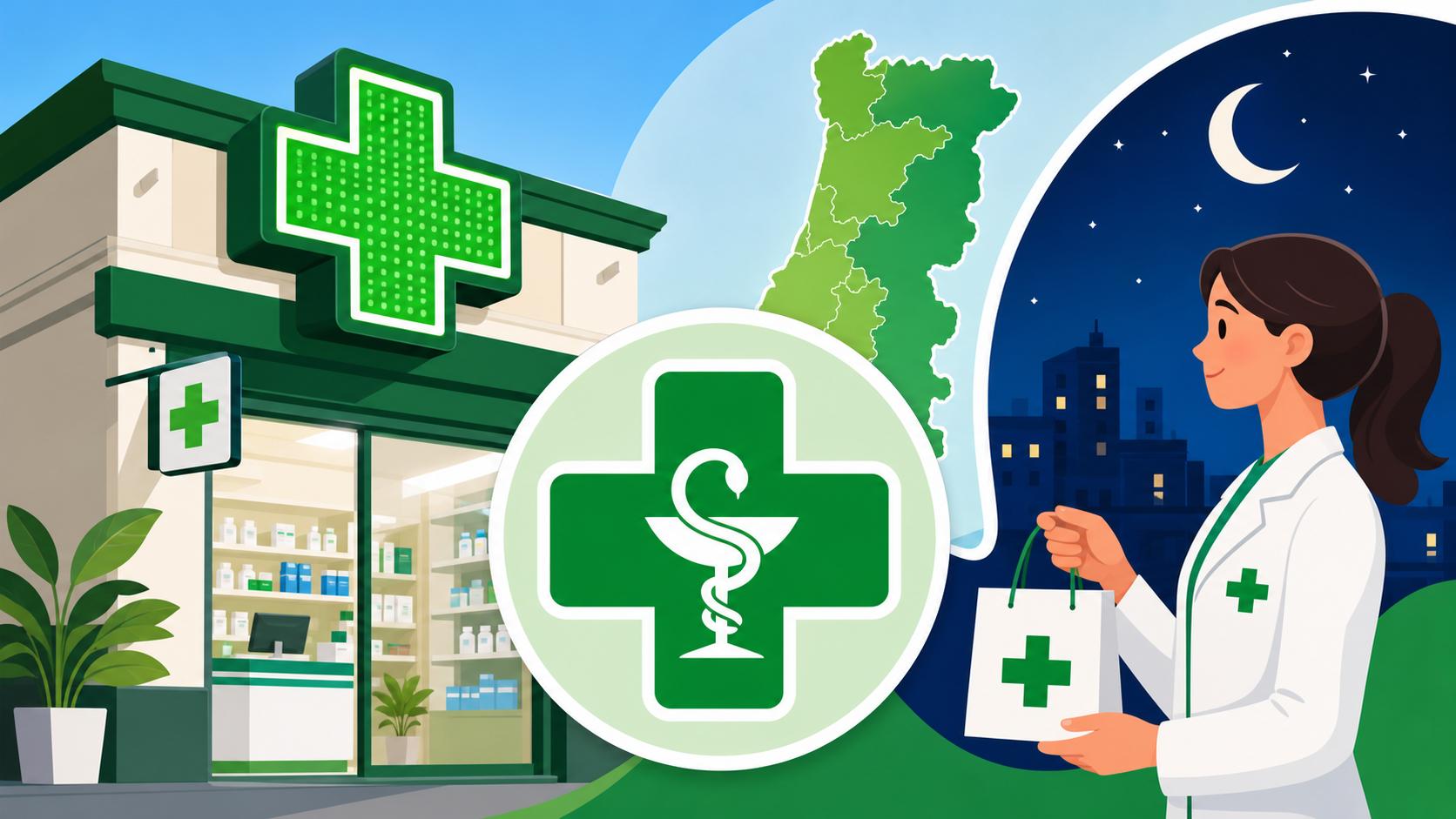
When you first arrive in Portugal, the neon green crosses glowing on nearly every street corner might look like the "green crosses" seen in parts of North America or other European countries, which often signify cannabis dispensaries. In Portugal, however, that green cross is the universal symbol of a farmácia—a highly regulated, professional medical hub. These are not just shops; they are the frontline of the healthcare system.
Identifying a Farmácia vs. a Parafarmácia
It is crucial to distinguish between a full-service farmácia and a parafarmácia. You will find para-pharmacies in supermarkets like Continente or Pingo Doce, and even in large shopping malls under brands like Wells. While they look official, they are legally prohibited from selling "Subject to Medical Prescription" (MSRM) drugs. They are great for high-end skincare, vitamins, and very basic over-the-counter (OTC) items like antiseptic cream or throat lozenges.
However, if you need a specific antibiotic, high-dosage pain relief, or anything requiring a doctor’s note, a para-pharmacy cannot help you. For that, you must look for the traditional street-side farmácia. These establishments are staffed by licensed pharmacists who have undergone years of university training. They are often more knowledgeable than a general practitioner for minor ailments and can provide direct advice on Pharmacies and Medication in Portugal: Prescriptions and OTC Drugs without you needing to wait weeks for a doctor's appointment.
The Pharmacy Counter Experience
In Portugal, you don’t typically wander the aisles picking up boxes of medicine. Most medications, even basic ones like aspirin, are kept behind the counter. When you walk in, you usually take a numbered ticket (look for a machine near the door labeled saúde or medicamentos) and wait for your turn.
The interaction is very hands-on. You will speak directly to the pharmacist, who will ask about your symptoms. Don't be surprised if they ask follow-up questions like, "Do you have high blood pressure?" or "Are you taking any other medication?" They take their role as a "filter" for the health system seriously. If you have international coverage through a provider like Cigna Global, it’s worth keeping your digital card handy, though most pharmacies deal with private insurance via reimbursement rather than direct billing at the till.
Why Certain Meds are Behind the Counter
You might be frustrated to find that even high-dose Ibuprofen (600mg) requires a prescription in Portugal, whereas it might be OTC in your home country. This is part of a national effort to reduce self-medication and liver damage. If you need something stronger than the basic 200mg or 400mg doses, the pharmacist will insist on a receita (prescription).
This is where Finding an English-Speaking General Practitioner (Médico de Família) becomes vital. For those of us used to "pill culture" where everything is available in 100-count bottles at the supermarket, the smaller, blister-pack focused Portuguese system takes some getting used to. You will rarely find "bulk" bottles here; everything is dispensed in specific quantities meant for a single course of treatment.
Prescription vs. Over-the-Counter Drugs in Portugal
The prescription system in Portugal has moved almost entirely into the digital age. This is a massive win for expats, as it eliminates the "messy handwriting" problem, but it requires you to understand how the electronic codes work.
Managing Your Prescriptions
When a doctor in Portugal prescribes medicine, you typically receive an SMS on your phone or an email with a PDF. This contains a code and a PIN. When you go to the pharmacy, you simply show them the SMS. They scan the code, and your medication history pops up on their screen. This system is linked to your Número de Utente, so it is highly recommended to finish Registering with the Centro de Saúde: Getting Your SNS Número de Utente as soon as you have your residency.
If you don't have a Número de Utente yet, don't panic. Doctors can still issue "manual" or "private" prescriptions, but you will pay the full price for the medicine. With the public number, the government subsidizes a large percentage of the cost—sometimes up to 90% for chronic conditions like diabetes or hypertension.
Bringing Foreign Prescriptions to Portugal
A common question I hear from new arrivals is whether they can use a prescription from the US, UK, or Canada at a local farmácia. Technically, the answer is usually no. Portuguese pharmacists are only legally allowed to dispense based on EU-standard prescriptions.
If you are moving here, the best move is to bring a 3-month supply of your essential meds and a letter from your home doctor. You will then need to see a local doctor to have those "transcribed" into the Portuguese electronic system. To understand the legalities of the border crossing, check our guide on Bringing Prescription Drugs to Portugal: Customs and Import Rules.
Common OTC Medications and Their Portuguese Names
One of the biggest hurdles is simply knowing what to ask for. The brand names you know—Tylenol, Advil, Excedrin—don't exist here. You need to learn the active ingredient names or the local equivalents. For example, Paracetamol is the standard for pain, and the most common brand is "Ben-u-ron."
| International Name | Portuguese Equivalent | Common Use |
|---|---|---|
| Acetaminophen / Tylenol | Ben-u-ron (Paracetamol) | Pain and Fever |
| Ibuprofen / Advil | Brufen | Inflammation and Pain |
| Aspirin | Aspirina | Pain and Heart Health |
| Cetirizine / Zyrtec | Fenistil or Zyrtec | Allergies |
| Loratadine / Claritin | Claritine | Non-drowsy Allergies |
| Hydrocortisone Cream | Pandermil | Skin Rashes |
| Antiseptic / Neosporin | Cristais de Iodo or Bepanthene | Cuts and Scrapes |
Emergency and After-Hours Service: The Farmácia de Serviço
This is where things get tricky. Portugal operates a "rotation" system for night and holiday coverage. If you live in a neighborhood with five pharmacies, only one might be open at 3 AM on a Tuesday. This is the Farmácia de Serviço.
Finding an Open Pharmacy at 2 AM
Every pharmacy is required by law to post a list in its window showing which nearby pharmacies are currently "on duty" (de serviço). If you find your local one closed, look for the white sheet of paper taped to the glass. It will list the name, address, and phone number of the open location.
For a more modern approach, you can check the SNS 24 App: Getting an English-speaking nurse for minor medical issues or the official "Farmácias de Portugal" website. However, be warned: sometimes the online data lags behind the physical reality in smaller villages. If you are in a pinch, you can also dial the national health line (808 24 24 24) and they can tell you the nearest open pharmacy.
The Service Fee and Ringing the Bell
When you arrive at a Farmácia de Serviço late at night, the doors will be locked. This is for the safety of the pharmacist. There is usually a small doorbell near the night-window (a small slot in the glass or door). You ring the bell, and the pharmacist will answer via an intercom.
There is an "availability fee" (usually around €2.50 to €5.00) added to your bill if you are buying items without an urgent prescription during these hours. However, if you have a prescription marked "Urgente" from a hospital or an ER visit, this fee is usually waived. It’s a small price to pay for the convenience of 24/7 access, but it's good to have some cash or a card ready. Most take Multibanco, but the smaller ones might occasionally have "system issues" late at night.
Essential Apps and Websites for Real-Time Locations
I highly recommend downloading the "Farmácias Portuguesas" app. It uses your GPS to show you exactly which green crosses are active and which are "closed." It also allows you to see if a specific pharmacy has stock of a certain medication, which can save you a cross-town drive only to find out they are out of your specific asthma inhaler. For those living in rural areas, this is an absolute lifesaver. You can also find more details on What is a Farmácia de Serviço and how to find one open at 2 AM in our dedicated emergency guide.
Costs, Subsidies, and Insurance Reimbursements
The cost of medicine in Portugal is generally much lower than in the United States, but it can be higher than in the UK or other northern European countries for certain OTC items.
How the SNS Subsidy System Works
The Portuguese National Health Service (SNS) uses a co-payment system called comparticipação. When you present a prescription linked to your Número de Utente, the computer automatically calculates the discount.
Medicines are categorized into groups (A, B, C, and D). Group A medicines, which are life-saving or for chronic diseases, are the most heavily subsidized. If you are a retiree or have a low income, your subsidies may be even higher. This is one of the reasons why Public vs Private Healthcare in Portugal: Which One Should Expats Choose? is such a common debate; even if you use private doctors, you can still use the public system to get your prescriptions subsidized if you have the right paperwork.
Navigating Medical Billing and Insurance Reimbursements in Portugal
If you have private health insurance (like Médis, Multicare, or an international plan like Cigna Global), you will usually pay the "private" price at the pharmacy first. You then take the paper invoice (the fatura) and upload it to your insurance provider’s app or portal to get a percentage back.
Crucially, you must ask the pharmacist to include your Tax Identification Number (NIF) on the receipt. Without your NIF, you cannot claim the expense on your annual tax return (IRS), and your insurance company might reject the claim. Portuguese pharmacists will always ask, "Contribuinte?" (Taxpayer number?). Always say "Sim" and provide your NIF. Even if you don't have insurance, these medical expenses add up to a nice tax deduction at the end of the year.
Using Private Insurance Cards
Some top-tier Portuguese insurance plans offer direct discounts at specific pharmacy chains. For example, many Médis holders get a direct discount at "Farmácias Holon" or "Farmácias Portuguesas" outlets. You just show your digital card in the app before they ring up the total. It’s always worth asking, "Tem acordo com [Your Insurance Name]?" (Do you have an agreement with…?).
Practical Tips for Foreigners and New Expats
Living here has taught me that the "social" side of the pharmacy is just as important as the medical side. The pharmacist is often the most accessible person in the village or neighborhood.
English-Speaking Staff and Communication Tips
In Lisbon, Porto, and the Algarve, you will find that almost every pharmacist speaks excellent English. In more rural areas, like the Alentejo or the Douro Valley, the older staff might only speak Portuguese. However, the names of medicines are often based on Latin roots, so writing down the active ingredient (e.g., "Amoxicilina" instead of "Amoxicillin") goes a long way.
If you are struggling with a language barrier for a complex issue, you can use the SNS 24 App: Getting an English-speaking nurse for minor medical issues to get a triage recommendation first, then show the pharmacist the result on your screen. They are generally very patient and used to the "expat mime" for various symptoms.
Buying Medical Equipment and Specialized Gear
If you need more than just pills—perhaps a knee brace, a blood pressure monitor, or more complex needs like Buying Medical Equipment: Wheelchairs, CPAP Machines, and Oxygen in Portugal—you should look for a larger Farmácia or a specialized Ortopedia.
Standard pharmacies carry basic crutches and monitors, but for customized items, they may need to order them in, which usually takes 24 to 48 hours. If you are a digital nomad or an expat who relies on specific medical tech, always have your power converters and extra supplies ready, as Portuguese pharmacies might not stock specific brands of US or UK CPAP masks, for instance.
Alternatives to Local Pharmacies for Supplements
One thing that shocked me when I moved here was the price of vitamins and supplements in the Farmácia. A bottle of Vitamin D or Magnesium can be double the price of what you’d find online. For these non-essential, non-prescription items, many expats use iHerb. They ship to Portugal from within the EU (usually via their Netherlands hub), meaning you don't have to worry about customs delays if you select the right shipping option.
Using iHerb is a great way to maintain your specific wellness routine without breaking the bank at the local green cross. This is particularly helpful during Allergy season in Portugal: Pine pollen and over-the-counter antihistamines, when you might want to stock up on bulk supplements that local pharmacies simply don't carry in large quantities.
Handling Disputes and the Yellow Book
If you ever feel you have been mistreated or overcharged, every pharmacy is legally required to have the "Yellow Book" (Livro de Reclamações). This is a formal complaint system monitored by the government. Most pharmacies will go to great lengths to avoid a entry in this book, so it’s a powerful tool for consumer rights. You can learn more about how this works at Understanding the 'Livro Amarelo' (Yellow Book) for Medical Complaints.
Important Medical Disclaimer
The information provided in this guide is for educational and informational purposes only and is not intended as medical advice. While every effort has been made to ensure the accuracy of the information regarding Portuguese pharmacies and regulations, healthcare laws and pharmaceutical availability can change. Always consult with a qualified healthcare professional or a licensed pharmacist in Portugal before starting any new medication or making changes to your current treatment plan. If you are experiencing a medical emergency, dial 112 immediately.