Health Insurance for International Students in Portugal
Disclosure: This article contains affiliate links. If you buy through them, we may earn a commission at no extra cost to you. Read our full disclosure.
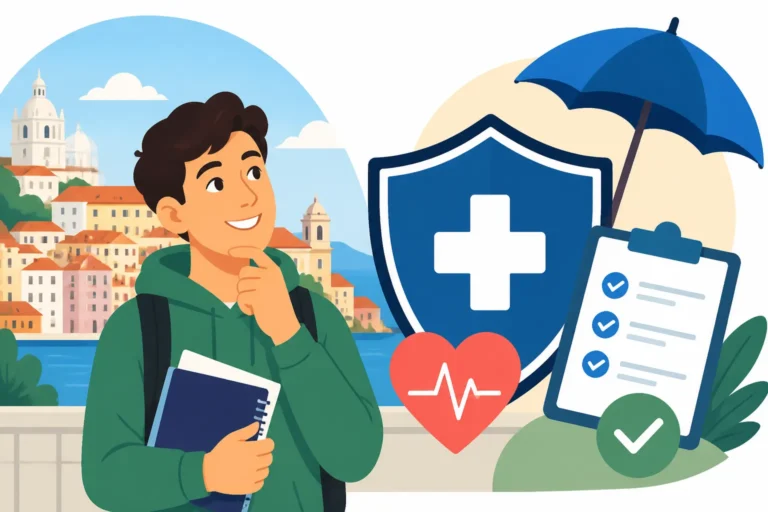
Landing in Lisbon or Porto with a backpack and a student visa is an incredible feeling, but that excitement often crashes into a wall of paperwork the moment you try to figure out how to actually see a doctor. I remember spending three days trekking between government offices just to be told I had the wrong "paper." This guide breaks down exactly how to secure residency-compliant health insurance so you can focus on your studies instead of bureaucracy.
Understanding the Legal Health Requirements for Students in Portugal
When you apply for a student visa to study in Portugal, the health insurance requirement isn't just a suggestion; it is a fundamental pillar of your application. The Portuguese authorities need to ensure that you will not become a financial burden on the state's healthcare infrastructure. This requirement varies significantly depending on whether you are an EU/EEA national or a student coming from outside the European Union.
The D4 and D5 Visa Health Insurance Mandate
For non-EU students, the D4 (Research or Higher Education) and D5 (Student Exchange) visas require specific documentation. When you visit the consulate in your home country, you must present proof of health insurance that covers "urgent medical care and repatriation." This is where many students get tripped up. They often buy a standard travel insurance policy intended for a two-week vacation, only to have it rejected because it lacks the comprehensive coverage required for a long-term stay.
A compliant policy must be valid for the entire duration of your stay or, at the very least, cover the initial period until you can register for local coverage. It’s also crucial to understand the Health Insurance Requirements for the D7 and D8 Visa Application as they share many similarities with student mandates, especially regarding the minimum coverage amounts, which usually hover around thirty thousand euros for emergency medical expenses.
EU Students and the EHIC Advantage
If you are lucky enough to be coming from an EU or EEA country, your path is much smoother. You likely already have access to the European Health Insurance Card (EHIC). This card allows you to access the Portuguese public health system under the same conditions as a local. However, it is not a complete substitute for insurance. The EHIC is designed for temporary stays and emergency situations; it won't necessarily cover a long-term chronic condition or the cost of being flown back to your home country for specialized surgery.
Many Erasmus students rely solely on their EHIC, but I always suggest looking into Using the European Health Insurance Card (EHIC) in Portugal to understand its limitations. For instance, it doesn’t cover private clinics, and if you find yourself in a city where the local public health center is overwhelmed, you might wish you had a private backup.
Why Public Coverage Alone Isn't Always Enough for Students
While Portugal has a robust public system, the reality on the ground can be frustrating for a student with a tight schedule. Public health centers, known as Centros de Saúde, are often crowded. Even as a legal resident, you might find that getting a non-emergency appointment takes weeks or even months. For a student who needs a quick certificate for a missed exam or a specialist referral for a sports injury, the public system's timeline can be a major hurdle.
This is why many international students opt for a hybrid approach. They register for the public system to have a safety net but maintain a private policy for day-to-day medical needs. Understanding Public vs Private Healthcare in Portugal: Which One Should Expats Choose? is essential before you sign any contracts, as the choice will dictate your budget for the next few years.
Navigating the Public System The SNS for Students
The Serviço Nacional de Saúde (SNS) is Portugal's tax-funded healthcare system. As an international student with a valid residence permit, you are entitled to use this system. However, "entitled" and "registered" are two very different things in the eyes of Portuguese administrators. You cannot simply walk into a hospital and show your passport; you need a specific identification number.
Getting Your SNS Número de Utente
The holy grail of Portuguese healthcare is the Número de Utente. This is your patient identification number, and without it, the public system will charge you "tourist rates," which can be surprisingly expensive. To get this number, you usually need to visit the Centro de Saúde in your neighborhood of residence. You’ll need your passport, your residence permit (or the visa sticker in your passport), and a proof of address.
Sometimes, the staff might ask for a NIF (Tax Identification Number) as well. The process can be bureaucratic, and it isn't uncommon to be told they are "at capacity" for new patients. If you're struggling, check out our guide on Registering with the Centro de Saúde: Getting Your SNS Número de Utente for tips on how to handle the "no family doctor available" response that so many of us have faced.
Costs and Taxas Moderadoras for Students
One of the biggest misconceptions is that public healthcare in Portugal is entirely free. It is "low-cost," but not always free. Most consultations and procedures involve a small co-payment called a taxa moderadora. A visit to a general practitioner might cost you around five euros, while an emergency room visit could be closer to twenty euros.
For a student on a budget, these costs are negligible, but they can add up if you require frequent blood tests or imaging. However, some groups are exempt from these fees, and it’s worth asking at the reception if your specific student status or income level qualifies you for an exemption. You can find more detail on these costs in Portugal's National Health Service (SNS): How the Public System Works.
Managing Emergencies and the SNS 24 Line
If you wake up at 2:00 AM with a high fever in your dorm room, don't immediately rush to the ER. Portugal has an excellent triage service called SNS 24. You can call 808 24 24 24 to speak with a nurse who can give you advice in English. They can even issue a digital prescription or schedule an appointment for you at a local health center, which bypasses much of the wait.
This service is a lifesaver for students who are still learning the language and feel overwhelmed by the prospect of explaining symptoms to a tired ER doctor. I highly recommend bookmarking the SNS 24 Helpline (808 24 24 24): Triage, Advice, and Sick Notes to your phone the moment you land. It’s also the primary way to get a "baixa" (sick note) if you’re too ill to attend classes.
Private Health Insurance Options for International Students
For many international students, private insurance is not just a luxury; it’s a visa requirement. Private insurance gives you access to a massive network of modern hospitals like CUF and Hospital da Luz, where English is widely spoken and waiting times are measured in minutes rather than months.
Comparing International Providers SafetyWing and Cigna Global
When looking for a policy from abroad, two names consistently come up: SafetyWing and Cigna Global. Both offer distinct advantages depending on your student lifestyle and how long you plan to stay in the country.
SafetyWing is often the "go-to" for younger students and digital nomads because it operates on a subscription model. It's incredibly flexible—you can start it while you're already traveling, and it's generally very affordable. It’s designed specifically for people living outside their home country, providing solid emergency coverage and some outpatient benefits. If you’re an Erasmus student moving around every few months, the flexibility of SafetyWing is hard to beat.
Cigna Global, on the other hand, is a more traditional, comprehensive insurance provider. They offer modular plans that allow you to add vision, dental, or outpatient care. If you have a pre-existing condition or you want the peace of mind that comes with a high-limit policy that feels like "proper" medical insurance rather than just travel protection, Cigna Global is a strong contender. They are very well-regarded by Portuguese immigration authorities, making the visa process much smoother.
Local Portuguese Insurers for Students
If you already have your residence permit and a Portuguese bank account, you might want to look at local insurers. Companies like Médis, Multicare, and AdvanceCare have specific networks of doctors. When you use a doctor within their network, you often only pay a small co-payment (usually fifteen to thirty euros) at the desk, and the insurance handles the rest.
These local plans are often cheaper than international ones, but they usually come with "waiting periods" (períodos de carência). This means you might not be covered for certain surgeries or dental work for the first six to twelve months of your policy. If you're interested in going local, read our deep dive into Médis, Multicare, and AdvanceCare: Comparing Top Private Insurers to see which network has the most doctors near your university.
Deductibles and Co-payments for Students
When choosing a plan, you need to balance the monthly premium with the "out-of-pocket" costs. As a student, a low monthly payment is tempting, but if that plan has a five-hundred-euro deductible, one trip to the doctor for a sinus infection could wipe out your grocery budget for a month.
I generally advise students to look for "fixed co-payment" plans rather than "reimbursement" plans. With a fixed co-payment, you know exactly what you’ll pay at the clinic. With reimbursement, you pay the full price of the visit (which could be ninety euros or more) and then wait weeks for the insurance company to pay you back. Chasing insurance companies for sixty euros is the last thing students want to do during finals week.
Practical Tips for Using Healthcare as a Student
Getting the insurance is only half the battle. Using it effectively requires a bit of local knowledge. From finding a doctor who speaks your language to knowing where to get your prescriptions filled, here are the practicalities of student health in Portugal.
Finding English-Speaking Doctors
One of the biggest fears for international students is the language barrier. While most young doctors in Portugal speak excellent English, the administrative staff and older nurses might not. If you are in a major city like Lisbon, Porto, or Coimbra, you have plenty of options for Finding Doctors and Specialists in Portugal: English-Speaking Medical Care.
Private hospitals like the CUF network or Hospital da Luz have websites where you can filter doctors by the languages they speak. This is incredibly helpful when you need to discuss something sensitive, like mental health or a complex diagnosis. If you’re specifically looking for a family doctor, check out Finding an English-Speaking General Practitioner (Médico de Família).
Pharmacies and Prescription Rules
Portuguese pharmacies, marked by bright green crosses, are a mix of clinical healthcare and retail. You’ll find one on almost every corner. A key thing to know is that many medications that are over-the-counter in the US or UK might require a prescription in Portugal, or they might be stored behind the counter.
If you have a prescription from the SNS, the cost of the medication is often subsidized by the state, making it very cheap. However, if you have a private prescription, you will pay the full market price unless your insurance includes a medicine module. For more on how this works, read Pharmacies and Medication in Portugal: Prescriptions and OTC Drugs. Also, keep in mind that for minor issues, the pharmacist (farmacêutico) is highly trained and can often recommend a solution without you needing to see a doctor.
Accessing Mental Health Support
Student life can be incredibly stressful, especially when you add the pressure of living in a foreign country. Finding a therapist who understands the expat experience is vital. While the public system offers some mental health services, the wait times are notoriously long.
Most students find it much better to use their private insurance or a dedicated platform to find an English-speaking psychologist. Many private plans now include a certain number of therapy sessions per year. I suggest looking at Mental Health in Portugal: Finding Therapists and Psychiatrists for Expats to find providers who specialize in culture shock and student-related anxiety.
Comparative Overview of Student Insurance Options
To help you decide, here is a breakdown of how the different types of coverage typically compare for an international student living in Portugal.
| Feature | EHIC (EU Students) | SafetyWing (Subscription) | Cigna Global (Comprehensive) | Local Private (e.g., Médis) |
|---|---|---|---|---|
| Visa Compliance | Yes (for EU) | Yes (usually) | Yes (Excellent) | Yes (with residency) |
| Access to Public SNS | Yes | No (Emergency only) | No (Emergency only) | Yes (as resident) |
| Access to Private Clinics | No | Yes (via reimbursement) | Yes (Network/Reimbursement) | Yes (via Network) |
| Monthly Cost | Free | Low ($45 – $60) | Mid-High ($80 – $150) | Mid ($30 – $70) |
| Waiting Periods | None | None | Variable | Usually 6 – 12 months |
| Best For… | Erasmus/EU Students | Nomadic/Budget Students | Long-term/Chronic Care | Established Expats |
Handling Emergencies and Dental Care
No one likes to think about it, but accidents happen. Whether it’s a fall during a night out in Bairro Alto or a sudden toothache before a big presentation, you need to know where to go.
Emergency Care and Calling 112
In a life-threatening situation, the number to dial is 112. This is the universal emergency number for all of Europe. The dispatchers generally speak English, but try to stay calm and give your exact location. For non-life-threatening emergencies, like a broken bone or a deep cut, heading to the "Urgências" of a large hospital is the standard procedure.
Be aware that public ERs use the Manchester Triage System, where you are assigned a color based on severity. If you arrive with a minor issue (Green or Blue), you could be waiting for many hours. To avoid this, many students with private insurance head to the private emergency rooms, where the wait is usually shorter. Check our guide on Emergency Medical Care in Portugal: Calling 112 and Going to the Hospital for more on what to expect.
Dental Care for Students
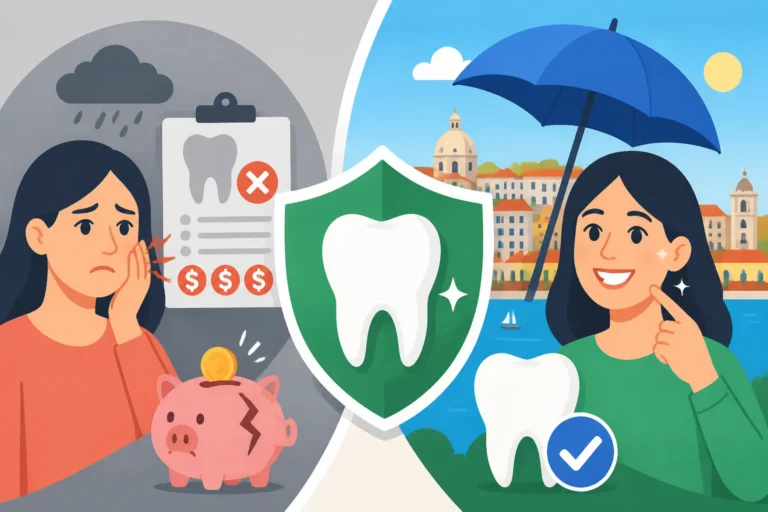
Dental care is almost entirely private in Portugal. The public system provides very little in the way of dentistry, except for specific vulnerable groups or primary school children. This means that as an international student, you will likely be paying out of pocket for cleanings, fillings, or wisdom tooth extractions.
Fortunately, dental care in Portugal is relatively affordable compared to Northern Europe or North America. A standard cleaning usually costs between forty and sixty euros. If you think you might need more extensive work, consider adding a dental rider to your private insurance. You can find a breakdown of local clinics and costs in Dental Care in Portugal: Costs, Clinics, and Private Insurance Add-ons.
Important Disclaimer
The information provided in this guide is for educational and informational purposes only and does not constitute legal, financial, or professional medical advice. Immigration laws, visa requirements, and healthcare policies in Portugal are subject to change. Always verify the latest requirements with the official Portuguese authorities (AIMA) or the nearest Portuguese consulate before making any financial or travel decisions. Prices and coverage details for insurance providers like SafetyWing and Cigna Global may vary based on individual circumstances and policy updates.