Nightlife in Lisbon: Bairro Alto and Beyond
Disclosure: This article contains affiliate links. If you buy through them, we may earn a commission at no extra cost to you. Read our full disclosure.
If you have ever stepped onto the cobblestones of Lisbon at 11:00 PM and wondered why the streets are eerily quiet, only to find them pulsating with life at 2:00 AM, you have encountered the first hurdle of Portuguese nightlife. This guide solves the confusion of where to go, when to arrive, and how to avoid the typical tourist traps while exploring the eclectic night scenes of Bairro Alto, Cais do Sodré, and the hidden industrial hubs.
The Classic Heartbeat: Bairro Alto and Cais do Sodré
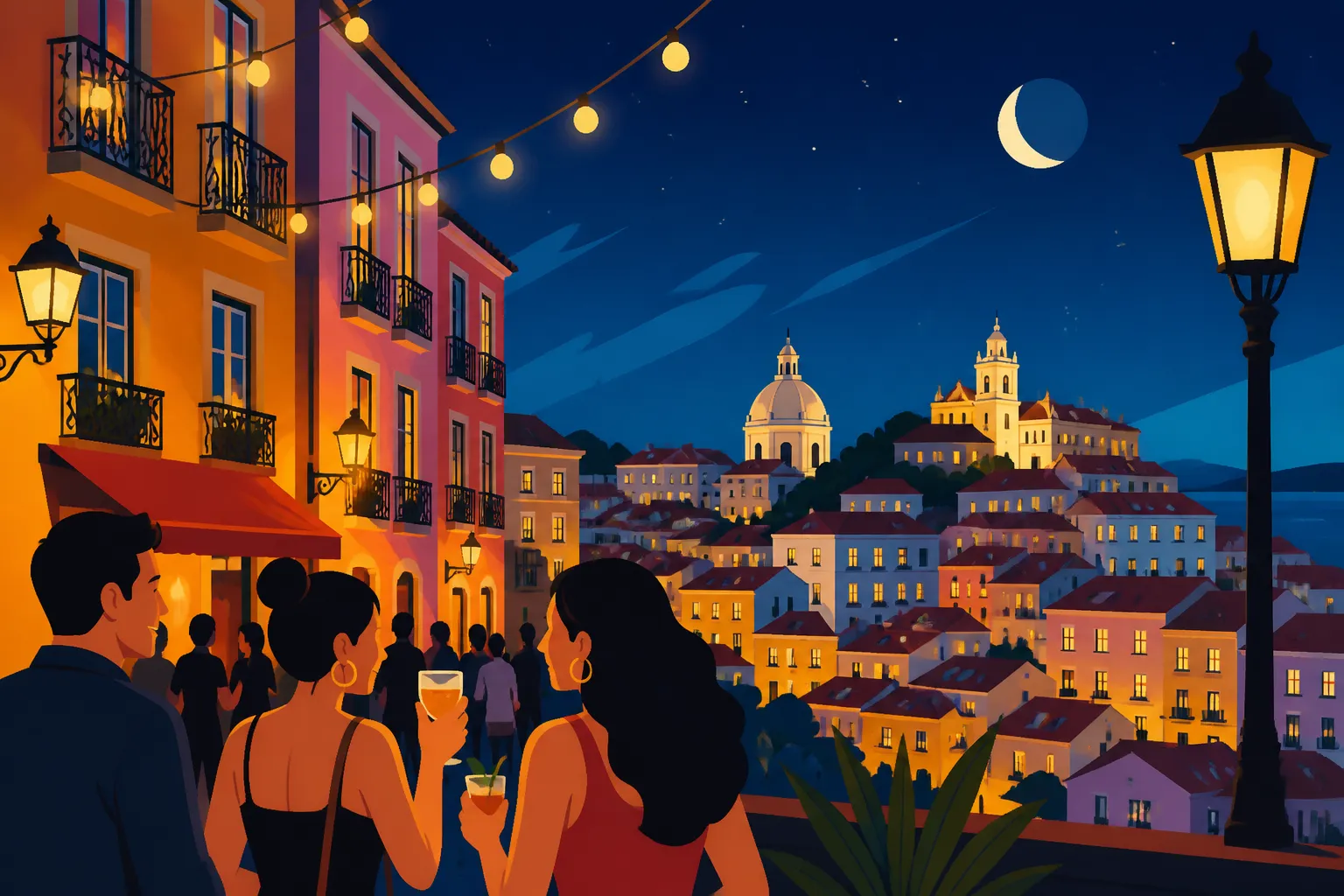
Bairro Alto is often the first place any newcomer visits, but it is a neighborhood of contradictions. During the day, it is a sleepy maze of laundry-hung balconies and elderly residents chatting across alleys. By night, it transforms into a dense, open-air party where the concept of "staying inside the bar" simply does not exist. If you are moving here, you will quickly learn that the narrow streets are the actual dance floor.
Bairro Alto: The Rite of Passage
The charm of Bairro Alto lies in its democratic nature. You can find a high-end cocktail bar right next to a "hole-in-the-wall" establishment selling liters of beer in plastic cups for a few euros. The frustration many expats feel initially is the sheer volume of people. It can be overwhelming to navigate the "corner of the world" at the intersection of Rua da Atalaia and Rua do Diário de Notícias. However, once you embrace the chaos, you realize it is the best place to start a night. Most veterans will tell you to arrive around 11:00 PM for a drink, but don't plan on staying past 2:00 AM, which is when the bars here typically shut down and the crowd migrates downhill.
While wandering, you might feel the urge to grab a quick snack. This is a great time to observe Portuguese Coffee Culture and Restaurant Etiquette: Ordering Like a Local by noticing how the late-night cafes operate differently than the midday ones. If you want to ensure you have a base nearby to retreat to after the noise becomes too much, checking options on Booking.com for the fringes of the district, such as Santa Catarina or Príncipe Real, is a wise move for both tourists and those looking for temporary expat housing.
Cais do Sodré and the Pink Street Evolution
As Bairro Alto closes, the crowd flows like a river down the hill toward Cais do Sodré. This area was once the city's gritty red-light district, a place for sailors and dockworkers. Today, it is home to the famous "Pink Street" (Rua Nova do Carvalho). While it is undeniably photogenic, locals often find it a bit too "produced" for their liking. The real gems are often found in the side streets, in bars like Povo or Pensão Amor, the latter being an old brothel turned into a multi-room lounge with burlesque decor.
The transition from Bairro Alto to Cais do Sodré is a physical one, and it is where you will see the night shift from casual beer-sipping to more serious clubbing. Many people find their favorite spots here by simply following the music. If you are planning a visit and want to see the area through a more structured lens, you can find curated pub crawls or nightlife history walks on GetYourGuide which often provide a bit of context to the neighborhood's transformation from a maritime hub to a nightlife powerhouse.
Surviving the Crowds: Local Etiquette
One thing that surprises many foreigners is the "plastic cup rule." In Lisbon’s historic districts, you are rarely allowed to take glass bottles or glasses out onto the street. Bars will give you a reusable or disposable plastic cup. It is considered polite to keep the noise levels down when you are in the residential parts of the Bairro, though this is a rule often ignored by tourists. As an expat, showing respect for the "moradores" (residents) will earn you a lot of points with the local bartenders.
Another practical tip involves safety. While Lisbon is generally very safe, the high concentration of tourists in these areas does attract petty opportunists. It is worth reading up on Safety and Emergency Preparedness in Portugal for Foreign Residents to understand how to handle minor incidents. You will likely be approached by people offering "substances" on the street; a firm "no, obrigado" is usually enough to move them along, but being aware of your surroundings is key.
Upscale Vibe and Riverside Glamour
If the crowded alleys of Bairro Alto feel a bit too youthful or chaotic, Lisbon offers a much more polished side. As you move toward the river or up the hill toward the more affluent districts, the dress code sharpens, and the views become the primary attraction.
Príncipe Real: Sophistication and Inclusivity
Príncipe Real is arguably the trendiest neighborhood in Lisbon right now. It sits just above Bairro Alto but feels worlds away in terms of atmosphere. Here, you will find beautiful 19th-century mansions converted into concept stores and sophisticated bars. It is also the heart of Lisbon’s LGBTQ+ scene, with long-standing institutions like Trumps and Finalmente Club. The nightlife here is more about "seeing and being seen" in a relaxed, elegant environment.
For those living in the city, Príncipe Real is often the go-to for a "nice" Friday night. You might start with a cocktail at Pavilhão Chinês, a bar that looks more like a museum of 20th-century curiosities than a drinking establishment. When navigating these social circles, understanding Portuguese greeting etiquette: When to use Beijinhos vs Handshakes becomes particularly relevant, as the social scene here is intimate and networking-heavy.
Alcântara and the Docas de Santo Amaro
Located under the 25 de Abril Bridge, the Docas (Docks) offer a completely different experience. These former warehouses have been converted into a long strip of restaurants and bars overlooking the marina. While it can feel a bit commercial, it is a fantastic place for a breezy summer night. Further inland in Alcântara, you will find LX Factory, a creative hub that hosts excellent late-night events and has several rooftop bars with stunning views of the bridge.
The Docas are particularly popular for groups. If you are traveling from outside the city or even from another part of Portugal to experience the Lisbon riverside, using Omio can help you coordinate your trains or buses into Santa Apolónia or Cais do Sodré stations, making the trip much smoother. The proximity to the river provides a cooler microclimate during the intense summer heat, which is a welcome relief for those not yet used to the Portuguese sun.
Santos: The Design District After Dark
Santos is often overlooked by tourists, which makes it a favorite for expats who have lived in Lisbon for a while. Known as the Design District, it has a youthful, artsy energy. The nightlife here is a mix of small, trendy wine bars and larger, more industrial clubs. It bridges the gap between the historic center and the riverside, offering a more "local" feel than Cais do Sodré.
Because Santos is home to many design schools and offices, the crowd is often a mix of creative professionals and students. If you are looking for a place to stay that is central but slightly removed from the loudest parts of the city, checking Booking.com for boutique hotels or apartments in Santos is a great strategy. You will be within walking distance of the river and the nightlife without having a bar right under your bedroom window.
Alternative Lisbon: Graça, Anjos, and Marvila
For those who find the city center too polished or too touristy, the real "cool" Lisbon has moved east and north. These areas are where the artists, musicians, and long-term expats tend to congregate, away from the neon lights of Pink Street.
The Bohemian Slope: Graça and Alfama
Graça is famous for its "Miradouros" (viewpoints). Nightlife here often begins with a bottle of wine shared at the Miradouro da Graça or the Miradouro da Senhora do Monte while watching the sunset. There is a sense of community here that you won't find in the more commercial districts. After dark, people move to small, intimate bars or "Associações" (cultural associations) that often require a tiny membership fee but offer some of the best live music in the city.
Walking through Alfama at night is also a unique experience. While it is the home of Fado (which we will discuss later), it also has tiny "tascas" where you can grab a ginjinha (cherry liqueur) and talk to neighbors. This area is a great place to get a feel for the Lisbon Neighborhood Guide: Best Areas for Expats and Digital Nomads as you decide which part of the city truly fits your personality.
Industrial Beats: Marvila’s Craft Beer and Club Scene
Marvila is Lisbon’s old industrial warehouse district, and it is currently undergoing a massive transformation. It has become the capital of craft beer in Portugal. At night, the huge warehouses open up as taprooms (like Dois Corvos or Musa) and often host DJ sets or live indie bands. It feels more like East London or Brooklyn than traditional Lisbon.
If you are a fan of electronic music, the clubs in and around Marvila and the nearby Beato area are where you will find the most serious sound systems. To get out here, you’ll likely need a rideshare, as it’s a bit far to walk from the center. For those arriving in Lisbon for a weekend of music, Omio is a great tool for comparing the cheapest ways to get from the airport or other cities directly to the eastern side of town.
The Multi-Cultural Hub: Anjos and Intendente
The area around Avenida Almirante Reis, specifically Anjos and Intendente, has moved from being "avoid at all costs" to the epicenter of Lisbon's multicultural nightlife. Casa Independente is the flagship venue here, located in a beautiful old palace with a large interior courtyard. The music here ranges from Afrobeat to Brazilian funk, reflecting the diverse population of the neighborhood.
This area is raw and authentic. It is the best place to see the "real" Lisbon of 2026—a city that is global, diverse, and constantly evolving. If you are interested in a deeper dive into this side of the city, you can find alternative street art and culture tours on GetYourGuide that often end at one of these vibrant local hubs.
Logistics: Transportation and Safety Late at Night
Navigating Lisbon after midnight requires a bit of planning, especially since the Metro shuts down at 1:00 AM. Understanding your options will save you a long, uphill walk or a frustrated wait on a street corner.
Getting Home Safely: Taxis, Rideshares, and Night Buses
Once the Metro closes, your main options are taxis, Uber, Bolt, or the "Rede da Madrugada" (night bus network). Taxis are plentiful but can be slightly more expensive than rideshare apps. However, during peak "closing time" (around 2:00 AM for Bairro Alto and 6:00 AM for clubs), rideshare prices can surge significantly.
The night buses (prefixed with "20") all depart from Cais do Sodré or Rossio and cover most of the city. They are very affordable and generally safe, though they can get crowded with rowdy revelers on weekends. If you are moving to a more suburban area, it is vital to check the Public Transport and Driving in Portugal: Trains, Tolls, and Licenses guide to see if your late-night route is feasible without a car.
Safety Tips and Common Scams
Lisbon's nightlife is generally relaxed, but you should be aware of a few things. The most common "scam" is the aforementioned street sellers offering drugs. Most of the time, what they are selling is literally bay leaves or crushed aspirin; it’s a scam specifically targeting tourists. Just ignore them.
Another thing to watch out for is pickpockets in crowded bars or on the late-night trams. For instance, the Common tourist scams in Lisbon: Pickpockets on Tram 28 and fake hash sellers guide offers excellent advice that applies even to nightlife settings. Always keep your bag in front of you and don't leave your phone on the table at a sidewalk cafe.
Late Night Eats: The Prego and Bifana Tradition
In Lisbon, you don't go for a kebab after a night out; you go for a "Bifana" (pork sandwich) or a "Prego" (beef sandwich). Establishments like A Merendinha do Arco or the various kiosks around the city stay open late to serve these garlicky, mustard-heavy delights. It is a ritual that every expat eventually adopts.
| Neighborhood | Vibe | Typical Closing Time | Price Level |
|---|---|---|---|
| Bairro Alto | Chaotic, Street Party | 2:00 AM | Budget |
| Cais do Sodré | Clubby, Trendy | 4:00 AM – 6:00 AM | Mid-range |
| Príncipe Real | Sophisticated, LGBTQ+ | 2:00 AM – 4:00 AM | High-end |
| Marvila | Industrial, Craft Beer | 2:00 AM – 4:00 AM | Mid-range |
| Santos | Artsy, Local | 3:00 AM | Mid-range |
Fado Houses and Cultural Evenings
Not every night in Lisbon has to be about loud music and cocktails. For a more traditional experience, Fado is the soul of the city. However, there is a big difference between a "tourist Fado show" and an authentic evening of song.
Understanding Fado: Vadio vs. Commercial
Commercial Fado houses usually involve a set menu (often overpriced) and a scheduled performance. While the musicians are professionals, it can feel a bit staged. "Fado Vadio" (vagrant Fado) is the amateur version. It happens in small taverns where anyone—the cook, a guest, or a local regular—might stand up and sing.
If you are looking for an authentic experience, head to the smaller spots in Alfama or Mouraria. The rule is absolute silence while the music is playing. You will often hear the shout "Silêncio, que se vai cantar o fado!" (Silence, for Fado is about to be sung!). Breaking this silence is the quickest way to identify yourself as an unwelcome tourist.
Where to Listen Without the Tourist Trap
To find the best spots, it often helps to look for places that don't have a barker outside trying to pull you in. Places like Tasca do Chico in Bairro Alto or A Baiuca in Alfama are legendary for their authentic atmosphere. Because these places are tiny, you should try to book a table in advance if they allow it, or arrive early for a better chance of getting a seat.
If you're still in the planning stages of your move, you might use GetYourGuide to find a Fado tour that includes a walk through the historic Moorish quarters, which adds a lot of depth to the music. Understanding the history of "Saudade" (a deep emotional state of nostalgic longing) is essential to appreciating the performance.
Practical Planning for Your Lisbon Night Out
Before you head out, there are a few final practicalities to consider, especially if you are new to the city or just visiting.
Comparing Neighborhood Vibes
When deciding where to spend your evening, think about your "stamina" for the night. If you want a long night that ends at sunrise, Cais do Sodré is your destination. If you want a classy dinner followed by one or two excellent cocktails, Príncipe Real is better.
For those who are in the process of relocating, exploring these neighborhoods at night is a great way to see if you could handle the noise levels of a particular street. Many expats have made the mistake of signing a lease on a beautiful apartment in Bairro Alto only to realize they can't sleep until 3:00 AM. Using Booking.com to stay in different neighborhoods for a few nights each can be a very effective "research" strategy for long-term living.
Booking Accommodations and Experiences
If you are coming into Lisbon from the Algarve or the North, your logistics will be the backbone of your trip. Omio is incredibly useful for booking your Alfa Pendular (high-speed train) tickets into Oriente or Santa Apolónia stations. From there, the city is your oyster.
Don't forget that many of the best clubs, like Lux Frágil, have a very selective door policy. It isn't always about how much money you have; it's about the "vibe" and not being in a large group of clearly intoxicated people. Arriving in smaller groups and dressing with a bit of "Lisbon cool"—which is usually understated and creative—will give you a much better chance of getting past the bouncers.
Disclaimer
This guide is for informational purposes only. Nightlife venues, transportation schedules, and local regulations in Portugal are subject to change. Always verify current opening hours and safety guidelines locally. The author is not responsible for any incidents or changes in service that may occur during your travels.