How to See Roman Ruins in Évora and Beyond
Disclosure: This article contains affiliate links. If you buy through them, we may earn a commission at no extra cost to you. Read our full disclosure.
It’s easy to get swept up in Portugal’s undeniable charm, from its stunning coastlines to its vibrant city life, and even its melancholic Fado. But for those of us who appreciate the deeper layers of history, it can sometimes feel like the Roman influence, while significant, takes a back seat to the Age of Discoveries or the medieval period. If you’ve been longing to connect with Portugal’s ancient past and walk among the ghosts of gladiators and emperors, you’re in for a treat. This guide will take you far beyond the usual tourist trails to uncover the incredible Roman ruins scattered across the country, focusing particularly on Évora and some other truly remarkable sites.
Évora: A Glimpse into Roman Lusitania
Ah, Évora. Just thinking about it brings back memories of scorching summer days and the incredible feeling of stepping back in time. This UNESCO World Heritage city in the Alentejo region isn't just about the Chapel of Bones or its charming squares; it's a treasure trove of Roman history that often surprises visitors. For expats living in Portugal, it's a relatively easy day trip or a relaxing weekend getaway, offering a fantastic contrast to the bustling cities.
The Majestic Temple of Diana (Templo Romano de Évora)
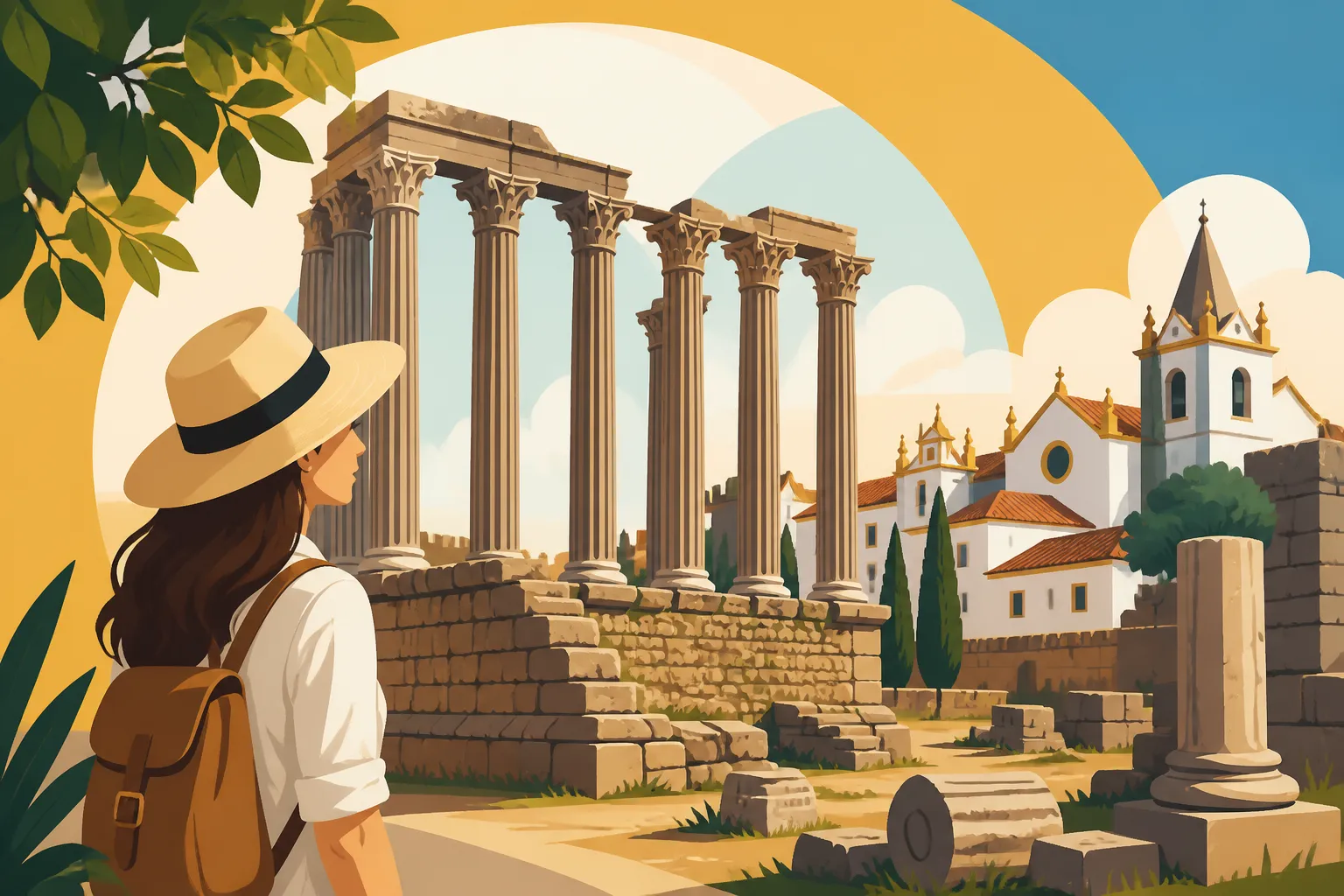
Let’s be honest, when you first stumble upon the Roman Temple of Évora, commonly, though inaccurately, known as the Temple of Diana, it’s a bit of a head-scratcher. There it stands, magnificent and proud, right in the middle of a city square, surrounded by buildings from later eras. It’s not neatly tucked away in a dedicated archaeological park, which is what makes it so uniquely Portuguese – history just is here, woven into the fabric of daily life. This isn’t Rome, where everything is grandly preserved; here, a pagan temple survives next to a medieval cathedral and a modern café.
Dating back to the 1st century AD, this Corinthian-style temple was actually dedicated to the imperial cult, not Diana. Imagine the bustling forum that once surrounded it, the heart of the Roman city of Liberalitas Julia. Today, eleven columns remain, their granite bases and marble shafts still conveying a sense of monumental scale and enduring power. What I find truly fascinating is that it survived because it was repurposed over the centuries – first as a fortress, then as a medieval slaughterhouse (can you imagine the smell?!), which inadvertently protected its structure. Standing there, you can almost hear the echoes of Roman sandals on cobblestones and the murmur of Latin being spoken. It’s a powerful reminder that while the Romans came, they also built, and left behind a legacy that literally stands the test of time, even when the locals didn't always quite know what to do with it. Don't just snap a quick photo and move on; take a moment to sit on one of the benches nearby, observe the details of the columns, and let your imagination wander. It’s an experience that really brings history alive, making you appreciate the sheer resilience of ancient construction and the fascinating evolution of urban spaces in Portugal.
Uncovering Évora's Roman Baths and Aqueduct
Beyond the famous temple, Évora hides more Roman secrets beneath its charming surface. One of the most significant recent discoveries has been the Roman Baths located within the Câmara Municipal (City Hall) building. It's truly incredible how often you find ancient ruins just casually popping up when someone digs for a new foundation here! Discovered during renovations in the 1980s, these baths include a well-preserved caldarium (hot room) with its domed ceiling still intact, which is quite rare. You can actually descend into the subterranean ruins, feeling the cool, damp air that once enveloped Roman bathers. It’s a wonderfully intimate experience, far from the grand scale of some other Roman sites, offering a tangible connection to the daily lives of ancient Évorans. Check the city hall's opening hours, as access can sometimes be limited or require a guided visit, but it's absolutely worth the effort.
Then there’s the impressive Aqueduto da Água de Prata, or the Silver Water Aqueduct. While much of what you see today is a 16th-century reconstruction commissioned by King João III, its origins are firmly Roman. The original Roman aqueduct was crucial for supplying water to Liberalitas Julia, a testament to Roman engineering prowess. What makes this aqueduct particularly striking is how it integrates with the modern (or at least, post-Roman) city. You can walk alongside it, under its arches, and marvel at sections where houses have literally been built into the aqueduct itself. Imagine living in a house where your back wall is a 2000-year-old Roman structure! It’s a bizarre and beautiful fusion of past and present. For a fantastic walk and some unique photo opportunities, start from the city walls and follow the aqueduct outward. It’s a great way to explore Évora’s quieter corners and appreciate the continuous flow of history and utility.
Beyond Évora: Portugal's Other Roman Treasures
While Évora offers a concentrated dose of Roman history, Portugal has more to reveal to the intrepid explorer. Venturing out can be an adventure, especially if you're comfortable with navigating the local transport system or Public Transport and Driving in Portugal: Trains, Tolls, and Licenses. Sometimes, the journey itself through the rolling hills of the Alentejo or the green landscapes of Central Portugal feels like a trip through time.
Conimbriga: Portugal's Premier Roman City
If Évora's Roman ruins are an appetizer, Conimbriga is the main course – a full, expansive archaeological site that truly brings a Roman city to life. Located just a short drive from Coimbra, this is arguably the best-preserved Roman settlement in Portugal and a must-visit for any serious history enthusiast. Forget fragmented ruins; here, you walk through streets, past reconstructed houses, and gaze upon stunning mosaics that still vibrant after nearly two millennia.
The site of Conimbriga was continuously inhabited from the Iron Age, but it flourished under Roman rule, becoming a significant city in Lusitania. Its decline came with the barbarian invasions, leading to its abandonment. This abandonment, ironically, helped preserve it. The sheer scale is impressive. You can wander through the intricate floor plans of wealthy Roman villas, such as the Casa dos Repuxos (House of Fountains), with its beautiful gardens and elaborate water features. The mosaics are truly the star of the show here – geometric patterns, mythological scenes, and delicate animal figures are incredibly detailed and colorful, making you wonder what life was like for the people who walked on these very floors. They illustrate the sophistication and artistry that the Roman elite brought to this corner of their empire.
The site also features public baths, an aqueduct, a forum, and even defensive walls built in a hurry as the empire began to crumble. There's a fantastic museum on site that houses smaller artifacts, sculptures, and provides vital context to what you're seeing. It’s an essential stop before or after your walk through the ruins, giving you a deeper understanding of the daily lives, economy, and societal structure of Roman Conimbriga. Plan a good half-day, if not more, for your visit, and be sure to wear comfortable shoes because there’s a lot to explore. It’s a truly immersive experience that helps piece together the grandeur of Roman life in Portugal, far from the hustle and bustle you might find when exploring Where to Live in Portugal: Lisbon, Porto, Algarve, and Silver Coast Compared.
Lisbon's Hidden Roman Gems
Even in modern, bustling Lisbon, the Romans left their mark, though often deeply buried beneath centuries of subsequent construction and the devastating 1755 earthquake. Unlike Évora or Conimbriga, Lisbon's Roman remnants are less about grand structures and more about hidden layers, requiring a bit more detective work to uncover.
The most famous, and perhaps most elusive, are the Galeria Romana da Rua da Prata (Roman Galleries of Rua da Prata). These subterranean galleries, part of a cryptoporticus that supported Roman Olisipo's main forum, are only open to the public a few days a year, usually in April or September, for very limited hours. If you happen to be in Lisbon during these rare openings, it’s an absolute must-do. The experience of descending into the cool, dark passages, often with water still trickling through the ancient brickwork, is utterly atmospheric. It’s a vivid reminder that the city we see today stands atop a far older foundation. Keep an eye on the municipal website for announced opening dates – tickets disappear fast.
Another significant site is the Roman Theatre Museum, nestled near the Sé Cathedral in the Alfama district. This wasn't fully excavated until the 1960s after its discovery in the 18th century. Today, you can explore the remnants of the theatre's seating tiers (cavea), stage, and other structures. The adjacent museum provides a comprehensive overview of Roman Lisbon, displaying artifacts and explaining the theatre's history and the daily life of Roman citizens. It’s a quieter, more intimate glimpse into Olisipo's past, contrasting sharply with the vibrant, almost medieval feel of the Alfama above it. When you're wandering through the charming streets of the Lisbon Neighborhood Guide: Best Areas for Expats and Digital Nomads, remember that these ancient foundations are just below your feet.
Other Notable Roman Vestiges Across Portugal
Beyond these major sites, smaller fragments of Roman life are scattered across Portugal, often in unexpected places. These smaller sites might not warrant a dedicated trip on their own, but they are fascinating additions if you find yourself in the vicinity.
One such site is Mirobriga, near Santiago do Cacém in the Alentejo. While less visited than Conimbriga, Mirobriga offers a very authentic glimpse into a Roman provincial town. Here you’ll find the ruins of a Roman hippodrome (chariot racing track), baths, and a residential area, all set against the serene landscape of the Alentejo. It's a peaceful place to explore, allowing for a more reflective experience without the crowds.
Further north, near Coimbra, you can also explore the Villa Romana do Rabaçal, another rural villa famous for its exquisite mosaics, particularly those depicting the seasons and hunting scenes. It’s a smaller, well-maintained site that offers a lovely side trip if you're in the Coimbra cost of living: Why expats and students are moving to this city area. Even just a simple Roman bridge, like the one in Chaves, or remnants of Roman roads found throughout the interior, speaks volumes about the extent of Roman influence and infrastructure. These enduring structures are a testament to the fact that wherever the Romans went, they built with an eye for permanence and practicality, leaving a deep imprint on the land that we can still appreciate today.
Planning Your Roman Adventure in Portugal
Embarking on a journey to explore Portugal’s Roman past requires a bit of planning, especially if you want to make the most of your time and truly immerse yourself in the history. It's not always as straightforward as you might hope, but that's part of the adventure of living in and exploring Portugal!
Getting There and Around
Portugal is a relatively small country, but its public transport network, while extensive, might not always take you directly to every archaeological site. For popular destinations like Évora, you can easily catch a train or bus from Lisbon. For example, a Rede Expressos bus can get you from Lisbon to Évora in about 1.5 to 2 hours, making it a very feasible day trip. You can often check schedules and book tickets conveniently through platforms like Omio, which aggregates various transport options, simplifying your journey planning.
However, for sites further afield or less directly connected by public transport, like Conimbriga or Mirobriga, renting a car often provides the most flexibility. Driving in Portugal is generally pleasant, especially outside the major city centers, and allows you to explore at your own pace. Just be prepared for toll roads and remember to plan your route in advance. Many expats find having a car essential for truly discovering the country's hidden gems. Remember to brush up on Public Transport and Driving in Portugal: Trains, Tolls, and Licenses for insights into navigating the country's roads and public transit. If you're staying in a city like Lisbon or Porto, taxis or ride-sharing apps like Bolt or Uber can get you to local sites, though costs can add up for longer distances.
Enhancing Your Experience: Tours and Resources
While self-guided exploration is rewarding, a good tour can elevate your understanding of these ancient sites significantly. Many local companies offer guided tours to Évora, often combining the Roman Temple with other historical attractions and wine tasting in the Alentejo region. For Conimbriga, you might find tours departing from Coimbra or even day trips from Lisbon that bundle it with other central Portugal highlights. Websites like GetYourGuide are excellent for finding and booking these types of excursions, often providing reviews from other travelers to help you choose the best fit. A knowledgeable guide can bring the stones to life, sharing stories and historical context that you might otherwise miss.
For those who prefer to explore independently, make sure to do your research beforehand. Look for information on the official websites of the archaeological sites (which might be in Portuguese, so be ready with Google Translate!) and consider picking up a good guidebook. Sometimes, local tourism offices also offer pamphlets or audio guides. For accommodation near these sites, especially if you plan an overnight stay to truly soak in the atmosphere, Booking.com offers a vast array of options, from charming boutique hotels in Évora's historic center to guesthouses near Conimbriga. Planning where to stay can be a crucial part of an enjoyable and stress-free trip, ensuring you have a comfortable base to return to after a day of historical immersion.
Essential Tips for Visiting Roman Sites
Here are a few pointers from an expat who’s learned a few things the hard way (like getting lost in a labyrinthine Roman ruin with no water!):
- Wear Comfortable Shoes: You’ll be doing a lot of walking, often on uneven terrain, ancient cobblestones, or dirt paths.
- Hydrate: Especially in the warmer months, bring plenty of water. Portugal can get surprisingly hot, even outside the Algarve.
- Check Opening Hours: These can vary by season, day of the week, and public holidays. Always double-check before you go to avoid disappointment.
- Consider the Season: Spring and autumn offer pleasant weather for exploring. Summer can be very hot, making midday visits challenging, while winter can be damp.
- Embrace the Language: While major sites might have English information, smaller ones might only be in Portuguese. Having a translation app handy or knowing a few basic phrases will be a huge help. It’s also a great way to practice if you're working on Learning European Portuguese: Top Apps, Tutors, and Free Government Classes.
- Respect the History: These are ancient, fragile sites. Stick to designated paths, don't climb on structures, and leave no trace.
- Patience is a Virtue: Things sometimes move at a slower pace in Portugal, including ticket lines or finding information. Just breathe and enjoy the journey!
Here's a quick overview of some of Portugal's key Roman sites:
| Site Name | Location | Primary Features | Best For |
|---|---|---|---|
| Roman Temple of Évora | Évora, Alentejo | Imperial cult temple, 1st century AD columns, forum ruins | Urban exploration, historical ambiance |
| Roman Baths of Évora | Évora, Alentejo | Well-preserved caldarium within City Hall | Intimate subterranean exploration |
| Conimbriga | Condeixa-a-Nova | Extensive city ruins, stunning mosaics, forum, baths, aqueduct, museum | Immersive Roman city experience, archaeology buffs |
| Roman Theatre Museum | Lisbon, Alfama | Theatre remains, museum artifacts, Roman Olisipo context | Hidden history in the capital, urban archaeology |
| Galeria Romana | Lisbon, Baixa | Subterranean cryptoporticus (limited access) | Unique, rare historical insight |
| Mirobriga | Santiago do Cacém | Hippodrome, baths, residential area, temple | Off-the-beaten-path, tranquil exploration |
By taking the time to uncover these incredible Roman ruins, you'll gain a much richer appreciation for the layers of history that make Portugal such a fascinating place to live and visit. It's a reminder that this land has been a crossroads of cultures for millennia, long before the first caravels set sail. Enjoy your journey back in time!
Disclaimer
The information provided in this guide is for general informational purposes only and is subject to change. While we strive to keep the content up-to-date and accurate, opening hours, access rules, and specific details about historical sites, transport services, and tour availability can vary. Always verify details with official sources before planning your trip. We do not assume any liability for errors or omissions.