How to Learn About the Age of Discoveries in Lisbon
Disclosure: This article contains affiliate links. If you buy through them, we may earn a commission at no extra cost to you. Read our full disclosure.
Stepping into Lisbon, especially for us expats, it can feel like history hits you from every corner, a beautiful, confusing whirlwind. But if there’s one period that truly defines Portugal and dramatically shaped the world, it’s the Age of Discoveries. Trying to grasp its magnitude can be daunting, right? You want to understand the spice routes and the epic voyages, but where do you even begin in this bustling city? This guide is going to cut through the noise and show you exactly how to dive deep into that incredible era right here in the capital, helping you trace the footsteps of legends.
The Epicenter of Exploration: Belém's Enduring Legacy
If you're serious about understanding Portugal's Age of Discoveries, your pilgrimage absolutely must begin in Belém. This isn't just a pretty riverside district; it's practically an open-air museum dedicated to the bold spirits who sailed into the unknown. The very air here hums with stories of departure, discovery, and monumental returns. It's where the Tagus River meets the Atlantic, a symbolic gateway to the world that once beckoned Portugal's caravels. Getting to Belém is straightforward – a scenic tram ride on the 15E from Praça da Figueira or Cais do Sodré, or a quick train from Cais do Sodré on the Cascais line, will drop you right into the heart of it. You can even find convenient transport options using services like Omio to plan your journey across Lisbon or from further afield.
Architectural Marvels: Jerónimos Monastery and Belém Tower
The Jerónimos Monastery, or Mosteiro dos Jerónimos, isn't just a building; it's a colossal monument to Portuguese maritime triumph, funded directly by the riches of the spice trade that flowed back to Lisbon. Built in the unique Manueline style, an ornate Portuguese Gothic that weaves maritime motifs like ropes, armillary spheres, and sea creatures into its stone, it stands as a testament to the nation's newfound wealth and religious devotion. When you walk through its magnificent cloisters, you can almost hear the echoes of monks praying for safe passage and successful voyages. It's a place where the grandeur of empire feels incredibly tangible.
Inside the monastery, you'll find the tomb of Vasco da Gama, the intrepid explorer who first sailed directly to India. Standing before his sarcophagus, you can't help but feel a profound connection to the man who opened up the sea route to the East, forever altering global trade and geopolitics. It's a poignant reminder of the immense risks and rewards of the Age of Discoveries. Across the road, still very much part of the riverfront spectacle, is the iconic Belém Tower (Torre de Belém). This fortress, also a UNESCO World Heritage site and an exquisite example of Manueline architecture, wasn't just a defensive outpost guarding the entrance to the Tagus; it was often the last sight of home for sailors embarking on epic journeys and the first sight upon their triumphant return. Climb to the top for panoramic views of the river and a sense of the strategic importance of this location, imagining the caravels departing or arriving laden with spices. For those who prefer a guided experience, many tours, often booked through platforms like GetYourGuide, will combine these two masterpieces, offering invaluable historical context.
Honoring the Pioneers: Padrão dos Descobrimentos
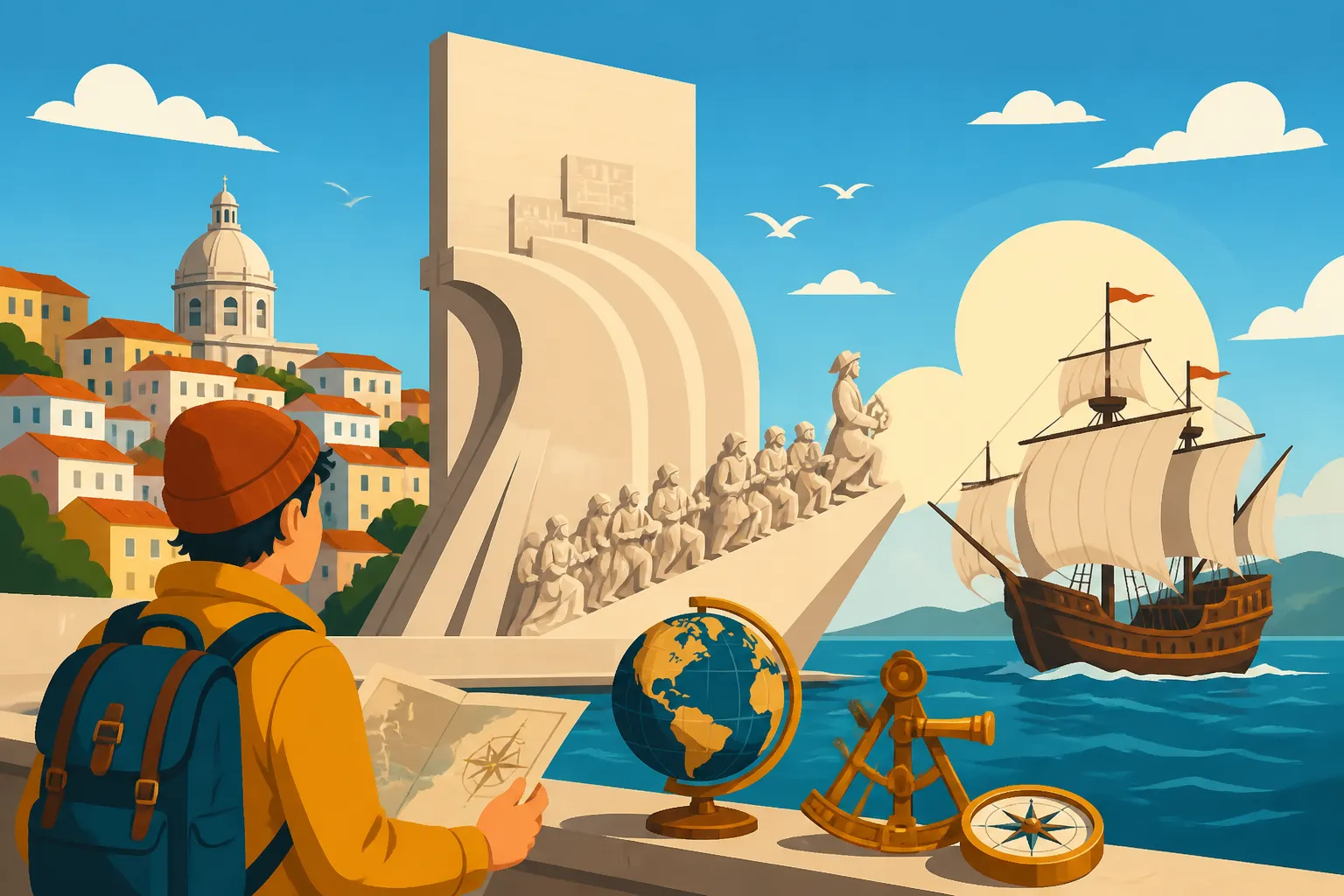
Just a short, pleasant stroll along the riverside promenade from Jerónimos and Belém Tower, you'll encounter the Padrão dos Descobrimentos, or Monument to the Discoveries. This imposing, ship-prow-shaped monument was actually built relatively recently, in 1960, to commemorate the 500th anniversary of the death of Henry the Navigator, the visionary prince who kickstarted Portugal's Age of Discovery. While it's not as ancient as the monastery or tower, its message is undeniably powerful and beautifully executed.
The monument features a dramatic lineup of 33 key figures from the Age of Discoveries, led by Henry himself, standing proudly on both sides of the "ship." You'll recognize figures like Vasco da Gama, Pedro Álvares Cabral (who "discovered" Brazil), Ferdinand Magellan (whose expedition first circumnavigated the globe), and many other navigators, cartographers, missionaries, and monarchs who played crucial roles. Take your time to walk around and identify these historical personalities; it’s like a stone encyclopedia of the era. At the base of the monument, a massive marble compass rose, a gift from South Africa, details the routes of Portuguese discoveries across the globe, providing a stunning visual representation of the vastness of their reach. You can even take an elevator to the top for another breathtaking perspective over Belém, the Tagus, and the impressive compass rose below. It truly brings home the sheer ambition and global impact of these Portuguese pioneers.
Delving Deeper into Maritime History: Museums and Exhibits
While the grand monuments of Belém provide a magnificent overview and emotional connection to the Age of Discoveries, to truly understand the nuts and bolts, the ingenuity, and the daily lives of these explorers, you need to step inside Lisbon's specialized museums. This is where the practicalities of navigation, the evolution of shipbuilding, and the intricate details of life at sea truly come alive. These institutions offer a more academic, yet equally fascinating, deep dive into Portugal's maritime past.
The Naval Museum (Museu de Marinha): A Journey Through Time
Nestled within the western wing of the Jerónimos Monastery, the Naval Museum (Museu de Marinha) is an absolute treasure trove for anyone fascinated by maritime history. It’s not just a collection of dusty artifacts; it’s a comprehensive narrative of Portugal’s relationship with the sea, stretching from the earliest wooden vessels to modern naval power. Here, you’ll find an incredible array of ship models, actual navigation instruments used by explorers, ancient maps, and fascinating relics from voyages.
Imagine standing next to a meticulously crafted model of a 15th-century caravel, the very type of ship that carried the likes of Vasco da Gama across uncharted oceans. You'll see how these relatively small, agile vessels were built, understand the challenges of sailing them, and gain an appreciation for the bravery of their crews. The museum also boasts an impressive collection of royal barges and ceremonial boats, offering a glimpse into the more ornate aspects of seafaring. You'll find intricately detailed globes, astrolabes, and compasses, explaining the navigational advancements that allowed Portuguese mariners to pinpoint their positions and chart new routes with increasing accuracy. Each exhibit tells a story, and together they weave a rich tapestry of technological innovation, human courage, and national endeavor that defined the Age of Discoveries. It's a place where you can easily spend hours getting lost in the sheer detail of Portugal's seafaring prowess.
Experiencing the Discoveries: Interactive and Thematic Spaces
Beyond the grand Naval Museum, Lisbon offers other avenues to engage with the Age of Discoveries, sometimes in less traditional ways. While a dedicated "Age of Discoveries interactive park" might not exist, the spirit of exploration permeates various smaller cultural centers and even the city's approach to its history. For instance, the Museu do Oriente (Orient Museum), although primarily focused on the relationship between Portugal and Asia, often features exhibitions that directly connect to the spice trade and the cultural exchanges initiated by the Age of Discoveries. It's a fantastic place to understand the impact of those voyages on both sides of the world, showcasing the fusion of art, religion, and daily life that resulted from these encounters. It provides a crucial counterpoint, moving beyond just the "discovery" narrative to explore the vibrant, complex interactions that followed.
For a more immersive, albeit less historical, feel, consider exploring the Lisbon Story Centre in Praça do Comércio. While it covers Lisbon's entire history, it offers engaging, multimedia exhibits that touch upon the city's golden age during the discoveries, including its growth and the devastating 1755 earthquake that reshaped it. It’s a good starting point for a broader historical context, placing the Age of Discoveries within the sweep of Lisbon's epic narrative. These places, along with simply walking the historic streets, help you piece together a vivid picture of Lisbon's past.
Beyond Belém: Other Echoes of the Golden Age in Lisbon
While Belém is undoubtedly the heart of Lisbon's Age of Discoveries experience, the echoes of this transformative era reverberate throughout the entire city, shaping its very fabric, its cultural identity, and even its daily rhythms. It's not just about grand monuments; it's about understanding how the wealth and influence of those voyages permeated every corner of Portuguese life. To truly appreciate this, you need to step out of Belém and explore the older parts of Lisbon, where the past still feels incredibly present.
Alfama and the Old City: Traces of the Past
Wandering through the narrow, winding streets of Alfama, Lisbon's oldest district, you're treading on ground that has witnessed centuries of history, including the bustling prosperity brought by the Age of Discoveries. While the grandeur of Belém speaks of royal patronage and ambitious expeditions, Alfama, with its close proximity to the Tagus and its ancient port, tells a story of everyday life influenced by global trade. Imagine the cargo ships arriving from India, Brazil, and Africa, laden with exotic spices, precious metals, and new goods. The Alfama district, located just behind the commercial hub of Praça do Comércio (which was once the Ribeira Palace and a key port area), would have felt the immediate impact of this influx.
The wealth from the spice trade didn't just fund monasteries; it transformed Lisbon into one of Europe's richest cities. This economic boom led to significant urban development, and while much of the city was rebuilt after the 1755 earthquake, the street patterns and historical markers in areas like Alfama and the Baixa still hint at this past. You can almost picture merchants haggling over peppercorns and silks, sailors returning with tales from distant lands, and the vibrant, multicultural atmosphere that Portugal's global reach created. Even the presence of different architectural styles or the names of certain streets can often be traced back to the diverse influences brought home by the explorers. When you're lost in Alfama's labyrinthine alleys, take a moment to reflect on how this seemingly humble neighborhood was once at the very heart of a global empire.
Understanding the Context: Portuguese Culture and its Legacy
The Age of Discoveries isn't merely a historical period; it's indelibly woven into the very DNA of Portuguese culture, shaping everything from its language and cuisine to its national identity and artistic expressions. This era profoundly instilled a sense of saudade – that unique Portuguese melancholy and longing – for a glorious past and distant lands. It also cemented a deep connection to the sea and a spirit of resilience and adventure. You’ll find this sentiment reflected in literature, art, and even the soulful strains of Fado music, which often speaks of longing and distant horizons.
Beyond the emotional impact, the practical legacy is enormous. The Portuguese language, for example, spread across continents, leaving its mark in Brazil, Angola, Mozambique, and Goa. This global reach means that as an expat trying to learn European Portuguese: Top Apps, Tutors, and Free Government Classes, you're not just learning a language, but connecting to a vast historical legacy. The introduction of new foods and spices through the trade routes also revolutionized Portuguese cuisine, which to this day often features ingredients and flavors brought back from Asia and Africa. Take a moment to savor a simple pastel de nata in a cafe after visiting a historical site; even this iconic pastry has roots in the monastery kitchens of the past. For practical day-to-day living, understanding this historical backbone helps you appreciate so much of daily life in Portugal: Supermarkets, Language, and Cultural Etiquette, from the traditional markets to the rhythm of local interactions. It’s a culture born from exploration, and that adventurous spirit, though subtly, still defines Portugal today.
Here's a quick overview of the key sites in Belém to help you plan your day:
| Attraction | Primary Focus | Estimated Visit Time | Typical Entry Fee (2026) | Key Highlight | Getting There |
|---|---|---|---|---|---|
| Jerónimos Monastery | Grand Manueline architecture, royal tombs | 1.5 – 2 hours | €12 (Church Free) | Cloisters, Vasco da Gama's tomb | Tram 15E, Train (Belém station) |
| Belém Tower | Defensive fortress, Manueline style, riverside views | 45 mins – 1 hour | €8 | Rooftop views, historical carvings | Short walk from Jerónimos |
| Padrão dos Descobrimentos | Monument to explorers, global routes | 45 mins – 1 hour | €6 (Top access) | Compass rose mosaic, statues of navigators | Short walk from Jerónimos |
| Naval Museum (Museu de Marinha) | Maritime history, ship models, navigation tools | 1.5 – 2 hours | €6.50 | Royal barges, caravel models, ancient maps | Adjacent to Jerónimos Monastery |
Remember, prices can vary and sometimes combination tickets are available. You might even consider purchasing the Lisboa Card if you plan on visiting multiple museums and using public transport extensively, which can be easily navigated using apps or physical passes described in our guide on Public Transport and Driving in Portugal: Trains, Tolls, and Licenses. For getting around the city, and especially if you're tired after a day of walking, using Bolt vs Uber in Portugal: Which ride-hailing app is cheaper? can be a good option. Many people choose to extend their stay in Lisbon to fully explore its historical and cultural offerings; you can find excellent accommodation options on Booking.com. For general budgeting, our guide on the cost of living in Portugal 2026: Detailed Budgets for Singles and Families can help you plan your trip.
Disclaimer
Please note that while this guide is crafted with the utmost care and based on extensive experience and current information, details such as opening hours, ticket prices, and transport schedules can change. We always recommend checking official websites for the most up-to-date information before planning your visit. This content is for informational purposes only and should not be considered professional travel or historical advice.