Greater Lisbon: Sintra, Cascais, and the Setúbal Peninsula
Disclosure: This article contains affiliate links. If you buy through them, we may earn a commission at no extra cost to you. Read our full disclosure.
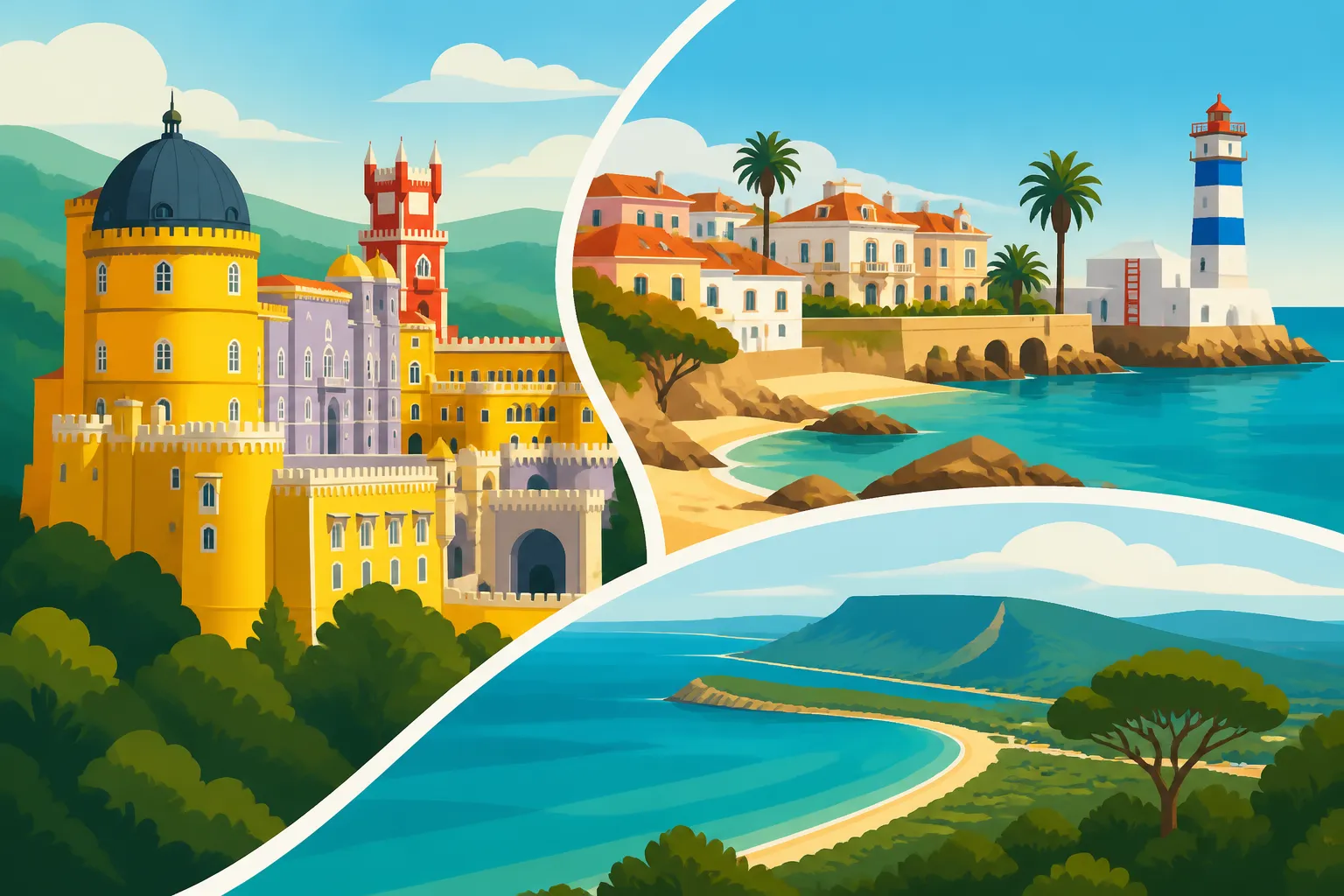
Most visitors plan Greater Lisbon by looking at a map, then lose half a day queuing for the Sintra bus or circling Cascais looking for parking. Three regions sit within easy reach of the capital, and each one needs a different approach. This guide covers how to reach Sintra, Cascais, and the Setúbal Peninsula, when to go, and how to combine them without wearing yourself out.
Understanding the Lay of the Land Around Lisbon
The first time I looked at a map of the Lisbon region, I thought I could do Sintra in the morning, Cascais at lunch, and Arrábida for sunset. They are all close together, so the plan looked sensible. It wasn’t. I spent the day in transit, ate a sad sandwich on a train platform, and saw the inside of the Pena Palace through a crowd of selfie sticks. Greater Lisbon rewards slow, focused days, and you plan better once you see how the three areas relate to each other.
The Three Zones at a Glance
Sintra lies northwest of Lisbon, in hilly, forested country that holds its own damp microclimate. Cascais and Estoril sit due west along the coast where the Tagus estuary meets the Atlantic. The Setúbal Peninsula lies south, across the river. You reach it by bridge or ferry, and it feels like another country. It is quieter, more rural, and full of locals rather than tour groups.
What surprises newcomers is that Sintra and Cascais connect to each other directly through the Sintra-Cascais Natural Park, while the Setúbal side connects to neither without going back through or around Lisbon. In practice you can pair Sintra and Cascais on a long day, but the peninsula needs its own day.
Comparing the Regions Side by Side
| Feature | Sintra | Cascais and Estoril | Setúbal Peninsula |
|---|---|---|---|
| Main appeal | Palaces, gardens, misty forest | Seaside town, coastal promenade, beaches | Natural park, wild beaches, seafood, dolphins |
| Best transport from Lisbon | Train from Rossio station | Train from Cais do Sodré | Ferry to Cacilhas, Fertagus train, or car |
| Car recommended | No, parking is very difficult | Optional | Yes, for Arrábida and Cabo Espichel |
| Crowd level | Very high in summer and weekends | High in summer, relaxed off-season | Moderate, busy on summer weekends |
| Ideal visit length | One full day, ideally an overnight | Half day to full day | One to two days |
| Weather quirk | Often cooler and foggy | Breezy, sunnier | Sheltered, warm coves |
Keep the weather row in mind. Sintra can sit under fog while Lisbon is sunny, so bring a layer even in July. For a wider look at what else is within reach of the capital, see Best Day Trips From Lisbon.
How Locals Actually Use These Places
My Portuguese neighbours treat these places very differently from tourists. Cascais is where Lisboetas go for a Sunday walk and a long lunch. Sintra is somewhere they take visiting relatives and otherwise avoid in August. The Setúbal Peninsula, especially Sesimbra and the Arrábida beaches, is their summer playground, and on hot weekends the roads south fill up with families carrying cool boxes and parasols. Copy the locals and you’ll eat better and queue less.
Sintra: Palaces, Forest, and Crowd Strategy
Sintra is the place everyone wants to see and the place most likely to frustrate you. It is a UNESCO-listed cultural landscape of romantic palaces, Moorish ruins, and gardens draped over a granite ridge. It is beautiful. It is also steep, crowded, and badly set up for people who arrive at eleven in the morning expecting to stroll.
Getting There Without the Stress
The train is the only sensible way in for most visitors. Suburban trains leave from Rossio station in central Lisbon, a gorgeous neo-Manueline building near Restauradores, and run to Sintra station at the end of the line. The journey is short and the trains are frequent. Rechargeable transit cards work on this line, so you rarely need to queue for a paper ticket if you already carry one.
Do not drive into Sintra. The historic centre has narrow one-way lanes, the roads up to the palaces are restricted, and the few car parks fill early. If you do have a car for the wider trip, leave it at your accommodation or at a station car park outside town and take the train.
From Sintra station, local buses run a circuit up to the Moorish Castle and Pena Palace, and another heads towards Cabo da Roca and on to Cascais. The palace bus queues can be long by mid-morning. Walking is an option, but the climb to Pena is steep and long, so it suits fit walkers with good shoes rather than anyone in sandals. Tuk-tuks wait near the station and the village centre too. They cost more, but they save your legs. For a detailed one-day plan, see How to Visit Sintra From Lisbon in a Day.
Choosing Which Palaces to See
You cannot see everything in one day, and trying is the most common mistake. Choose two, three at most. My honest breakdown:
- Pena Palace is the bright red and yellow fairytale on the hilltop. It is the icon, the most crowded, and the one with timed entry. Book ahead.
- Quinta da Regaleira has the famous Initiation Well, a spiral staircase sinking into the earth, plus tunnels and grottoes. It sits close to the village centre, so you can walk there easily.
- The Moorish Castle has ancient walls snaking along the ridge with sweeping views. It is less ornate but fantastic on a clear day.
- Monserrate Palace is my personal favourite. It is quieter and further out, with exotic gardens and an elegant Moorish-inspired interior.
- The National Palace of Sintra sits right in the village square, with its two giant conical chimneys and stunning tilework.
If you love architecture and tilework, pair the National Palace with Regaleira and stay low. If you want views and drama, do Pena and the Moorish Castle together, since they share the hilltop. Pena gets its own deep-dive in How to Visit the Pena Palace in Sintra.
Timed tickets for Pena sell out on busy days, so buy them online in advance from the official site. Some visitors prefer a guided small-group tour that handles transport and entry together. GetYourGuide lists plenty of these departing from Lisbon. They make most sense if you only have one day and don’t want to deal with bus queues.
Timing, Weather, and Staying Overnight
Arrive on the first trains of the morning. By late morning the tour coaches have arrived and the village lanes turn into a slow-moving river of people. Weekdays outside summer are best. Winter visits can be magical, with mist curling through the forest and half-empty palace rooms, though it can be cold and wet.
My strongest advice is to spend a night in Sintra. Once the day-trippers leave in the late afternoon, the village goes quiet, the light softens, and you can walk the lanes almost alone. The next morning you’re first in line at whatever you missed. Booking.com has a good range of guesthouses and quintas in and around the village, from simple rooms above cafés to restored manor houses in the hills. For a full itinerary built around the highlights, see Sintra in a Day: Palaces and Practical Tips.
Don’t leave without trying travesseiros, puff pastry pillows filled with almond and egg cream, and queijadas, small cheese tarts. The famous pastry shops have queues, but they move fast, and you’ll want the sugar after climbing to Pena.
Cascais, Estoril, and the Atlantic Coast
Cascais is where Sintra’s chaos gives way to sea air and long walks. It was a fishing village before the Portuguese royal family made it their summer retreat, and it still mixes old harbour charm with polished, slightly upmarket seaside living. Estoril, right next door, has the casino, grand hotels, and a faded elegance.
The Train Ride Is Part of the Experience
The Cascais line runs from Cais do Sodré station along the river and then the coast, passing Belém, Oeiras, Carcavelos, and Estoril before ending in Cascais. Sit on the left-hand side heading out for water views most of the way. Trains run frequently, and the trip is short enough that you can decide on a whim to go for lunch.
You can also hop off along the way. Carcavelos has one of the region’s best surf beaches and a lively, young atmosphere. São Pedro do Estoril and Parede have smaller beaches popular with locals. Estoril station puts you right by the beach and the gardens leading up to the casino. To get to Cais do Sodré from elsewhere in the city, see Getting Around Lisbon: Metro, Trams, and the Famous 28.
What to Do Once You Arrive
Cascais town is compact and easy to walk. The old centre has cobbled lanes, the traditional wave-patterned pavements, small squares, and plenty of cafés. The marina and the Cidadela fortress area are worth a stroll. Museums cluster near the Parque Marechal Carmona, including the Casa das Histórias Paula Rego, whose distinctive red pyramid towers are hard to miss.
The real joy is the coast. A promenade, the Paredão, runs between Cascais and Estoril, perfect for a sunset walk or a morning run. Heading the other way, a walk or bike ride takes you past Boca do Inferno, a dramatic cliff formation where waves crash into a collapsed cave. Cascais has offered free or low-cost municipal bikes in the past, so check what’s on offer when you arrive.
Further west, Guincho beach is wild, windswept, and stunning, beloved by kitesurfers and windsurfers. It is not a calm swimming beach, so respect the flags and the currents. For a full breakdown of beaches along this coast and across the river, see Lisbon’s Beaches: Cascais, Costa da Caparica, and Beyond.
Linking Cascais With Sintra
Here’s the trick that turns two half-days into one excellent full day. Start early in Sintra, then take the bus that runs through the natural park towards Cabo da Roca, the westernmost point of mainland Europe. The cliffs are dramatic, the wind is fierce, and the lighthouse makes a great photo. From Cabo da Roca, buses continue down to Cascais, where you can have a late seafood lunch or early dinner by the water before taking the coastal train back to Lisbon.
The loop works best clockwise, Sintra first and Cascais second, because Sintra’s crowds build through the day while Cascais is lovely in the evening. Check bus timetables carefully, especially outside summer, since services through the park thin out. More on the town itself in How to Visit Cascais and Estoril From Lisbon.
The Setúbal Peninsula: Lisbon’s Best-Kept Secret
If I could send every visitor to just one underrated corner of Greater Lisbon, it would be this one. The Setúbal Peninsula has the Arrábida Natural Park, with limestone mountains dropping straight into turquoise water, plus the fishing towns of Setúbal and Sesimbra, the windswept Cabo Espichel, and the endless Costa da Caparica beaches. It feels a world away from the tourist trail even though Lisbon is just across the water.
Crossing the River
Most people never cross the Tagus, and they miss out. You have several options:
- Take the ferry from Cais do Sodré to Cacilhas. It’s a short, scenic crossing with great views back over Lisbon. Cacilhas has excellent seafood restaurants, and from there buses and the local tram system reach further into the peninsula.
- Take the Fertagus train across the Ponte 25 de Abril. It runs from Lisbon stations such as Roma-Areeiro, Entrecampos, and Sete Rios across the lower deck of the bridge and on to Setúbal. Crossing the bridge by train is a thrill in itself.
- Drive across either the Ponte 25 de Abril or the long Vasco da Gama Bridge further upriver. Tolls apply in one direction, and traffic heading south on summer weekends can be slow.
- From Setúbal, take the ferry across the Sado estuary to the Tróia peninsula, which has long sandy beaches and Roman ruins.
For a deeper look at the river crossings and the different routes, see Taking the ferry in Lisbon: Cacilhas, Trafaria, and Barreiro routes.
Arrábida, Sesimbra, and Cabo Espichel
This is where a car really earns its keep. Public transport reaches Setúbal and Sesimbra, but the beaches and viewpoints of Arrábida are scattered along a winding mountain road with patchy bus service. The drive itself, along the ridge with the sea glittering far below, is one of the most beautiful in Portugal. Pull over at the viewpoints and take your time.
The Arrábida beaches, including Portinho da Arrábida, Galapinhos, and Figueirinha, have clear, calm, sheltered water that feels almost Mediterranean. In peak summer, road access and parking to some of these beaches is controlled, and seasonal shuttles may run from car parks further away. Arrive early, and check the local municipality’s seasonal arrangements before you go. If your rental car needs a toll transponder or you want to understand insurance options before heading south, see Renting a Car in Portugal: Tolls, Insurance, and Driving Tips.
Sesimbra is a working fishing town with a busy beach, a castle on the hill, and some of the best grilled fish I’ve eaten anywhere in the country. Further west, Cabo Espichel is an eerie, windswept headland with a lonely sanctuary church, a lighthouse, and sheer cliffs. Dinosaur footprints have been found in the rock layers nearby. Go late in the afternoon for the light, and keep well back from the cliff edges, where there are few barriers.
Setúbal, Dolphins, and Food
Setúbal city is unpretentious and real. Its covered market, the Mercado do Livramento, is one of the best in Portugal, full of fish, cheeses, and fruit. The local speciality is choco frito, fried cuttlefish, and you should order it at any of the casual restaurants near the waterfront. The surrounding area produces Moscatel de Setúbal, a sweet fortified wine, and the creamy Azeitão sheep’s cheese. The village of Vila Nogueira de Azeitão has wine cellars you can visit.
The Sado estuary is home to a resident population of bottlenose dolphins, and boat trips leave from Setúbal harbour to look for them. Sightings are common but never guaranteed, so pick an operator that follows responsible wildlife viewing practices. GetYourGuide carries several of these trips, as well as jeep tours through Arrábida if you’d rather not drive the mountain road yourself. For more on choosing a trip, see How to See Dolphins in the Algarve or Setúbal.
The peninsula deserves at least one overnight stay, ideally in Setúbal or Sesimbra, so you can enjoy a sunset dinner without worrying about the last ferry back.
Planning Your Greater Lisbon Itinerary
With the three regions laid out, the real question is how to fit them into your trip without exhausting yourself. I’ve hosted enough visiting friends to have strong opinions here.
Sample Itineraries by Trip Length
| Days Available | Suggested Plan | Who It Suits |
|---|---|---|
| One day | Sintra in the morning, bus via Cabo da Roca, evening in Cascais, train back to Lisbon | First-timers who want the highlights |
| Two days | Day one Sintra with an overnight stay, day two Cabo da Roca and Cascais | Travellers who hate crowds |
| Three days | Sintra, then Cascais and the coast, then a car day through Arrábida and Sesimbra | Balanced pace with nature and towns |
| Four or more days | Add an overnight in Setúbal, a dolphin trip, and an Azeitão wine visit | Slow travellers and food lovers |
If you’re coming from Porto or another city and want to fit Greater Lisbon into a wider route, Omio is handy for comparing train and bus connections into Lisbon before you lock in your dates. Once you’re in Lisbon, the suburban trains to Sintra and Cascais are simple turn-up-and-go services, so there’s no need to pre-book those.
Seasonal Considerations
Summer brings long days and beach weather, but also the heaviest crowds, especially in Sintra and on the Arrábida roads on weekends. Spring and early autumn are ideal: comfortable temperatures, flowers in the Sintra gardens, and swimmable sea by late spring on the sheltered Setúbal coast. Winter is quiet and atmospheric, with lower accommodation demand, though Sintra can be cold, wet, and foggy, and some bus routes run less often. For strategies that work across the country, see How to Avoid the Crowds in Portugal’s Peak Season.
A practical tip: plan around Portuguese public holidays and long weekends, when Lisbon families head out to exactly the places you’re visiting. Traffic towards the Setúbal beaches can back up badly on these days.
Eating Well Across the Region
Food is one of the best reasons to explore beyond the city. In Sintra, the pastries are the stars. In Cascais and along the Estoril coast, seafood restaurants line the harbour, though prices lean higher than in Lisbon’s neighbourhood tascas. Across the river, Cacilhas, Sesimbra, and Setúbal serve grilled fish fresh off the boats at honest prices. Look for the places where Portuguese families crowd the outdoor tables on a Sunday afternoon. For more on what to order, see Seafood in Portugal: Bacalhau, Sardines, and More.
Lunch is the main meal for many locals, and kitchens often close in the late afternoon before reopening for dinner. If you arrive hungry at an odd hour in a smaller town, you may find only snacks available, so plan your big meal around lunchtime when you’re out exploring.
Practical Packing and Safety Notes
A few things worth remembering before heading out:
- Wear proper walking shoes. Sintra’s hills and the cobbled lanes everywhere are hard on feet and ankles.
- Carry a light jacket, because Sintra and the western capes can be cool and windy even when Lisbon is warm.
- Pack sunscreen and water for Arrábida. The coves are sheltered and the sun is strong.
- Swim only at lifeguarded beaches on the open Atlantic coast, such as Guincho, where currents can be dangerous.
- Keep a close eye on bags in crowded spots like the Sintra bus queues and the Cascais train.
- Download offline maps, because mobile signal can drop in parts of the Arrábida hills and the Sintra forest.
Greater Lisbon rewards patience. Give each region the time it deserves, start early, sleep over where you can, and cross the river at least once. That’s when you stop being a day-tripper and start seeing why so many of us who moved here never wanted to leave.
Disclaimer
This article is for general informational purposes only and does not constitute professional advice. Laws, prices and regulations vary by location and change over time. Consult a qualified professional for guidance on your specific situation.