Northern Portugal: Porto, the Douro, and the Minho
Disclosure: This article contains affiliate links. If you buy through them, we may earn a commission at no extra cost to you. Read our full disclosure.
Many travelers arrive in Portugal and never make it past the sun-drenched plazas of Lisbon or the crowded beaches of the Algarve, leaving the country’s true soul—the rugged, mist-shrouded North—entirely unexplored. This guide solves the logistical headaches of navigating the steep hills of Porto, the winding roads of the Douro Valley, and the ancient granite cities of the Minho, providing a veteran expat’s perspective on how to truly experience Northern Portugal without getting lost in the tourist traps.
Porto: More Than Just a Gateway to the North
When people talk about Porto, they often focus on the postcard-perfect Ribeira, but as someone who has spent many foggy mornings wandering its steep "escadas," I can tell you that the city’s heart beats in its contradictions. It is a city of granite and gold, where laundry flutters over medieval alleys just steps away from high-end boutiques. For expats considering a move, the Lisbon vs Porto for Tech Workers: Salaries, Startups, and Lifestyle debate is a frequent topic of conversation, but for the visitor, Porto is simply a place that demands a slower pace and a sturdy pair of walking shoes.
Navigating Ribeira and the Historic Center
The Ribeira district is the historic soul of Porto, but it is also the most prone to tourist saturation. To see it properly, you have to wake up early—before the tour groups descend from the cruise ships. The narrow streets are a labyrinth where Google Maps often fails you due to the high stone walls. It is worth suggesting starting at the Sé Cathedral and working your way down the Escadas do Codeçal. These stairs offer some of the most intimate views of the Douro River and the Luís I Bridge, far from the selfie-stick crowds.
Finding accommodation in this area can be tricky. While many use Booking.com to find charming guesthouses in the center, be aware that many of these historic buildings lack elevators and can be quite damp in the winter. If you are staying long-term, you’ll quickly realize that the Cost of living in Porto 2026: Rent, groceries, and eating out breakdown reveals a city that is becoming more expensive, yet still retains a gritty charm that Lisbon has arguably lost to gentrification.
The Port Wine Lodges of Vila Nova de Gaia
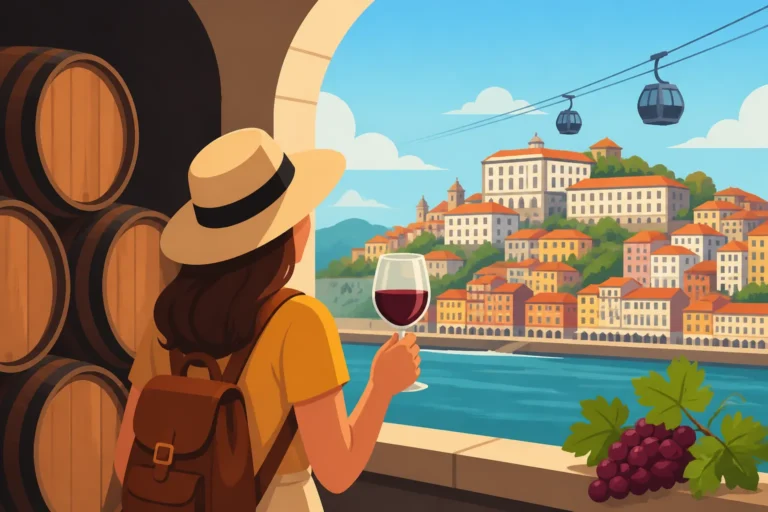
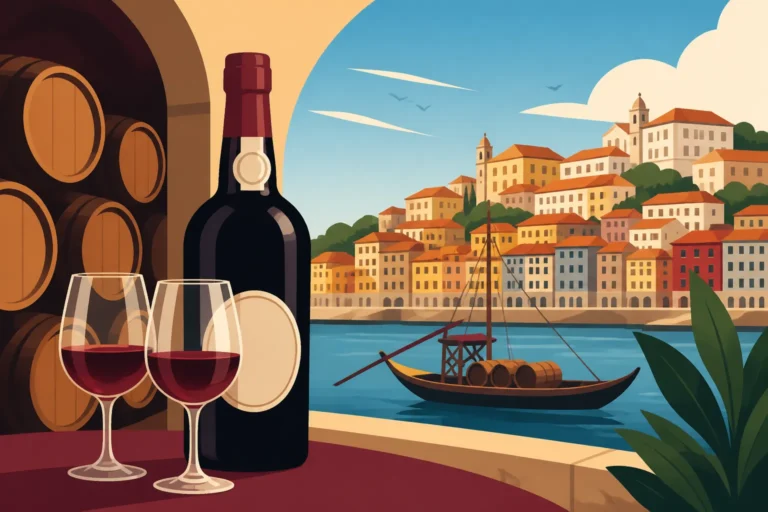
Technically, when you cross the bridge to visit the wine cellars, you aren't in Porto anymore; you are in Vila Nova de Gaia. This is a distinction the locals take very personally. The "caves" (cellars) are where the world-famous Port wine is aged. Every major house—Graham’s, Taylor’s, Sandeman—offers tours, but the experience can feel a bit like a conveyor belt if you don't choose wisely.
It is wise to book a smaller, more intimate tour through GetYourGuide to avoid the massive groups. Some of the smaller lodges offer a much deeper dive into the history of the Douro's "demarcated region," which was the first of its kind in the world. After a few tastings, you might find yourself needing a coffee to reset. Understanding Portuguese Coffee Culture and Restaurant Etiquette: Ordering Like a Local is essential here, as ordering a "café" means a shot of espresso, and anything else requires a specific vocabulary.
Living in Porto: A Local Perspective on the Housing Crisis
For those looking to stay longer than a weekend, the reality of Porto’s housing market can be sobering. While the city is incredibly welcoming, the influx of digital nomads has put a strain on local resources. You’ll see the "Livro Amarelo" (Yellow Book) in many establishments, which is used for formal complaints, but it won't help you find an affordable T1 apartment in Bonfim.
Expats often struggle with the administrative side of living here. Whether it's finding an Emergency dentist in Porto or Lisbon: What to do for severe tooth pain or navigating the local health centers, the North requires a bit more patience than the capital. However, the reward is a sense of community that is hard to find elsewhere. In neighborhoods like Cedofeita or Foz do Douro, the shopkeepers will actually get to know your name, and you’ll start to feel the true "Tripeiro" (Porto local) spirit.
The Douro Valley: A Journey Through Liquid Gold
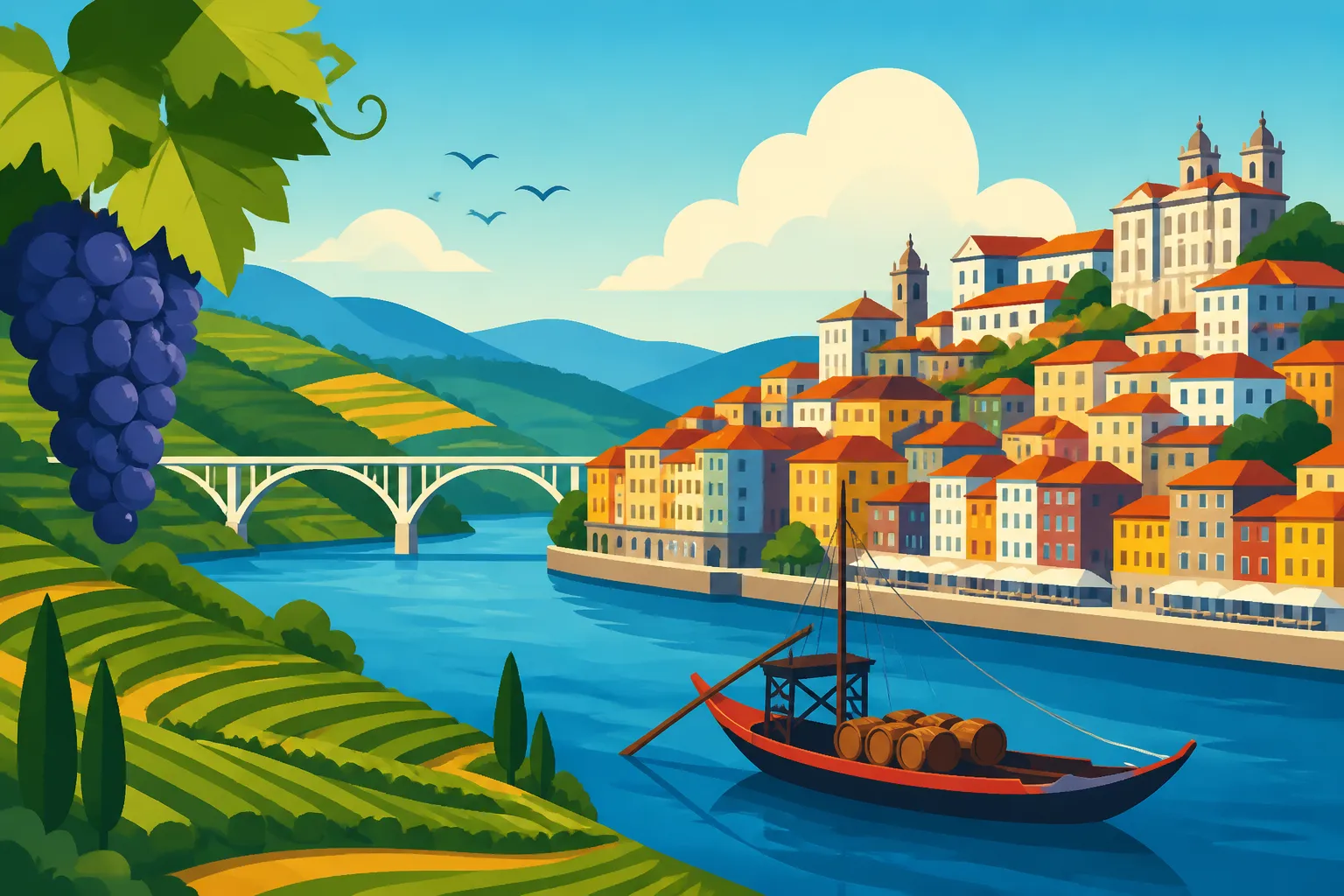
Leaving Porto and heading east into the Douro Valley is like entering another dimension. The Douro is not just a river; it is a monumental feat of human engineering, where generations of farmers have carved terraces into the schist mountains to grow grapes. It is breathtakingly beautiful, but it can also be a logistical nightmare if you don't plan your transport carefully.
Choosing Between Train, Boat, and Car
Most tourists opt for a boat cruise from Porto, but as a veteran, I find the 6-hour upstream boat ride a bit tedious. The train, however, is one of the best-kept secrets in Europe. The Linha do Douro, starting from the iconic São Bento station in Porto, follows the riverbank so closely that you feel like you could touch the water. If you are planning this trip, Buying train tickets online with Comboios de Portugal (CP) app is the most efficient way to secure your seat, especially for the historic steam train that runs in the summer.
For those who want more freedom, driving is the way to go, but be warned: the roads in the Douro are not for the faint of heart. They are narrow, winding, and often lack guardrails. If you are an expat who hasn't yet managed Driving in Portugal: Exchanging Your Foreign License to a Portuguese One, you might want to stick to the train or hire a driver. The N222 road, which runs from Peso da Régua to Pinhão, is often cited as the most beautiful drive in the world, but your eyes should stay on the road, not the vineyards.
The Best Quintas for Authentic Wine Tasting
The word "Quinta" basically means a farm or estate, and in the Douro, these are the centers of wine production. While the large estates near Pinhão are stunning, they can be quite commercial. It is worth suggesting to people to head further upriver toward the Douro Superior, near the border with Spain. Here, the landscape is drier and the wines are more robust.
When visiting a Quinta, it’s not just about the wine; it’s about the "Azeite" (olive oil) and the local honey. Many of these estates have been in the same family for centuries. You can book stays at these estates using Booking.com, which I highly recommend for at least one night. There is nothing quite like waking up to the sun rising over the terraced hills, with nothing but the sound of the river and the occasional train whistle in the distance.
Hidden Miradouros and the N222 Road
If you are driving, you must seek out the "miradouros" (viewpoints). Places like São Salvador do Mundo or the Miradouro de Casal de Loivos offer perspectives that you simply cannot get from a boat or train. These spots are often overlooked by the standard tours you find on GetYourGuide, but they provide the best photography opportunities in the entire country.
The Douro is also a region of incredible food. While Porto has its Francesinha, the Douro is all about slow-roasted kid (goat) and "Arroz de Cabidela." If you find yourself in a small village like Provesende, don't be afraid to walk into a restaurant that looks like someone's living room. As long as you know the basics of Grocery Shopping in Portugal: Continente, Pingo Doce, Auchan, and Mercados, you’ll understand that the quality of raw ingredients in the North is unsurpassed.
The Minho Region: Portugal's Green Heart
If Porto is the granite city and the Douro is the golden valley, then the Minho is the emerald heart of Portugal. This is the wettest part of the country, which results in a lush, green landscape that looks more like Ireland than the Mediterranean. The Minho is where Portugal was born, and it remains the most traditional and religiously observant region in the country.
Braga: The City of Archbishops and Steps
Braga is often called the "Portuguese Rome" because of its sheer number of churches. But don't let the religious reputation fool you; it’s also a vibrant university city with a thriving tech scene. The most famous landmark is Bom Jesus do Monte, a sanctuary at the top of a monumental zig-zagging stairway. You can take a funicular—the oldest in the world powered by water counterbalancing—if you don't want to climb the steps.
Living in Braga is a very different experience than living in Porto. When people ask about Braga vs Guimarães: Which northern Portuguese city is better for families?, they are usually looking for a balance between modern amenities and traditional safety. Braga offers excellent schools and a slightly lower cost of living than Porto, though the rainfall in the winter can be a significant deterrent for some. For getting there, checking routes on Omio can help you find the most frequent bus connections from Porto.
Guimarães: Where Portugal Was Born
Just a short distance from Braga is Guimarães, a UNESCO World Heritage site and the birthplace of Afonso Henriques, the first King of Portugal. Walking through the Largo da Oliveira feels like stepping back into the 12th century. The castle and the Palace of the Dukes of Braganza are impeccably preserved and provide a deep look into the nation's founding.
Guimarães is smaller than Braga and feels more like a lived-in museum. It’s a great place to experience the "festas" (festivals) that define northern life. If you are traveling between these cities, Using Comboios de Portugal (CP) Trains and the Navegante Pass is possible, though the regional bus network is often faster for these short hops. The locals are incredibly proud of their history, and you’ll often see signs saying "Aqui Nasceu Portugal" (Portugal was born here).
Viana do Castelo and the Wild Northern Coast
Most people stop their northern journey at Braga, but that is a mistake. Continuing north to Viana do Castelo brings you to the wild, Atlantic coast. Viana is famous for its intricate filigree gold jewelry and the Santa Luzia sanctuary, which looks out over the mouth of the Lima River. The beaches here are windy and cold, making them a haven for kitesurfers rather than sunbathers.
The Minho is also home to the Peneda-Gerês National Park, the only national park in Portugal. It is a land of wild ponies, hidden waterfalls, and ancient stone villages like Sistelo. Navigating Gerês requires a car and a lot of patience, as the roads are essentially paved goat paths. If you ever find yourself in a medical pinch while exploring these remote areas, knowing how to find Finding Doctors and Specialists in Portugal: English-Speaking Medical Care is vital, although in the deep Minho, you might need a translator.
Transport and Logistics Across the North
Navigating Northern Portugal requires a mix of traditional methods and modern apps. While the infrastructure is generally good, the topography of the region creates some unique challenges that can catch even seasoned travelers off guard.
| Route | Recommended Transport | Duration (Approx.) | Why? |
|---|---|---|---|
| Porto to Douro (Pinhão) | Train (CP) | 2h 15m | Incredible river views, no stress of winding roads. |
| Porto to Braga | Urban Train / Bus | 55m | Frequent, cheap, and drops you in the city center. |
| Braga to Guimarães | Regional Bus | 25m | Faster than the train, which requires a detour. |
| Porto to Viana do Castelo | IC Train / Omio Bus | 1h 15m | Coastal views via train; Omio offers great bus deals. |
| Exploring Peneda-Gerês | Rental Car | N/A | Impossible to see the park's highlights via public transit. |
Mastering the Comboios de Portugal Network
The national rail company, CP, is the backbone of northern travel. The "Alfa Pendular" is the high-speed train that connects Porto to Lisbon, but for the North, you’ll mostly be using "Intercidades" (IC) or "Regionais" (R). The urban trains in Porto are excellent for reaching places like Braga, Guimarães, and Aveiro.
It is wise for newcomers to download the CP app early. It allows you to buy tickets in advance—often at a significant discount—and check for the inevitable "greves" (strikes) that can disrupt travel. If you are moving here, the Using Comboios de Portugal (CP) Trains and the Navegante Pass system is something you'll need to learn, though the Navegante is primarily for Lisbon; Porto uses the "Andante" card, which works on a zoning system that can be confusing at first.
Car Rentals and the Reality of Northern Driving
Renting a car gives you the most freedom, but it comes with the "Via Verde" toll system. Most rental cars come with a transponder that tracks your highway usage. Do not try to avoid these tolls manually; the fines are astronomical and the system is entirely electronic. Northern drivers are also known for being "assertive," particularly on the roundabouts.
If you are planning to drive into the Douro or the Minho, make sure your rental is a manual or you book an automatic well in advance, as automatics are rare and more expensive. Also, consider the size of the car. Many streets in the historic centers of Porto and Guimarães were built for donkeys, not SUVs. You will find yourself folding in your side mirrors more often than you’d like.
Connecting the Dots with Regional Buses
While the train is great for the main arteries, the bus network (often Rede Expressos or FlixBus) covers the gaps. I frequently use Omio to compare prices and times, especially for routes like Viana do Castelo or crossing the border into Galicia, Spain. The bus stations (Rodoviárias) in the North can be a bit chaotic, and they aren't always located near the train stations, so give yourself plenty of buffer time for transfers.
Cultural Nuances and Practical Tips for the Northerner
The North of Portugal is often described as the place where people "work," while the South is where they "play." This is an oversimplification, but it speaks to the industrious and straightforward nature of the people. They are incredibly hospitable, but their honesty can sometimes be mistaken for rudeness by those used to more superficial politeness.
Northern Gastronomy: Beyond the Francesinha
You cannot talk about the North without talking about food. The "Francesinha" is the famous sandwich of Porto—steak, ham, and sausage covered in melted cheese and a spicy beer-and-tomato sauce. It is a heart attack on a plate, and every local has a "best spot." But real northern food is more diverse.
In the Minho, look for "Caldo Verde," a potato and kale soup that is the ultimate comfort food. In the Douro, the focus is on game meats and heavy stews. If you have dietary restrictions, the North is catching up, but it can still be difficult to find vegan options in rural villages. Understanding Portuguese Coffee Culture and Restaurant Etiquette: Ordering Like a Local will help you navigate the menus, which are often written only in Portuguese.
Festivals and Traditions: Romarias and Festas
The North is the land of the "Romaria"—a religious pilgrimage that usually turns into a massive street party. The "Festas de São João" in Porto on the night of June 23rd is the biggest of them all. People hit each other with plastic hammers and release hot-air balloons into the sky. It is pure, joyful chaos.
In Viana do Castelo, the "Romaria de Nossa Senhora d'Agonia" in August features women wearing kilograms of traditional gold jewelry. These festivals are not "staged" for tourists; they are deeply felt cultural expressions. If you attend one, be prepared for loud music (often "Pimba" music), plenty of grilled sardines, and wine served in ceramic bowls.
Language and Dialect: The Northern Charm
Northern Portuguese has a distinct accent—more "sh" sounds and a faster cadence. Even if you have studied Portuguese in Lisbon, you might find yourself nodding and smiling while having no idea what a person from a village in the Minho just said. Don't worry; they often feel the same way about people from the South.
Learning a few phrases in the local dialect can go a long way. The word "fixe" (cool) is universal, but in the North, you’ll hear "meco" or "ganas" used in ways that are unique to the region. The people are patient with those who try, and as long as you show respect for their traditions and their "terra" (land), you will be welcomed with open arms.
Disclaimer
This guide is for informational purposes only. While every effort has been made to ensure the accuracy of the information provided, travel conditions, transport schedules, and local laws in Portugal can change frequently. The author is an expat sharing personal experiences and research, not a licensed travel agent or legal advisor. Always verify specific details such as visa requirements, health insurance coverage, and official transport updates through official government channels or reputable service providers before making travel or relocation arrangements.