Buying train tickets online with Comboios de Portugal (CP) app
Disclosure: This article contains affiliate links. If you buy through them, we may earn a commission at no extra cost to you. Read our full disclosure.
Standing in a humid queue at Santa Apolónia or Porto Campanhã while the minutes tick toward your departure is a rite of passage every expat eventually rejects. I remember my first month in Lisbon, sweating through a linen shirt because the ticket machine wouldn't accept my foreign card and the line for the teller was twenty people deep. This guide solves the frustration of physical ticketing by mastering the Comboios de Portugal (CP) app, ensuring you never miss a train again.
Getting Started with the CP App: Setup and Registration
The first thing you need to realize about living in Portugal is that "digital first" is a philosophy the government is trying hard to implement, but the user experience can still feel a bit "2010." The CP app is surprisingly functional, but the registration process is where most foreigners get tripped up. Don't wait until you are standing on the platform to download it; do this from the comfort of your living room while your Airalo eSIM provides a steady connection.
Downloading and Initial Configuration
The app is available on both iOS and Android. Once you open it, the language usually defaults to Portuguese. Look for the three horizontal lines (the "hamburger" menu) and find the settings to switch it to English if your Portuguese isn't quite there yet. While you are at it, consider how this fits into your broader Cost of Living in Portugal 2026: Detailed Budgets for Singles and Families. Saving a few Euros on every train trip by using app-only promos adds up over a year of residency.
When you register, you will be asked for a Tax Identification Number (NIF). For many expats, this is the first "administrative wall" they hit. If you haven't moved here yet and are still in the planning stages, you might be looking into How to get an NIF remotely using services like Bordr, Anchorless, or e-residence. While you can technically skip the NIF in the CP app, I highly recommend including it. In Portugal, including your NIF on your receipts is how you get tax deductions at the end of the year. This applies to your Portuguese Taxes for Expats: IRS, Tax Residency, and Filing Deadlines, where transportation costs can sometimes be part of your deductible expenses.
Setting Up Your Profile and Payment Methods
The profile section is where the magic happens for long-term residents. You can save your frequent passengers—like your spouse or children—which saves a massive amount of time during the checkout process. If you are Moving to Portugal with Kids: Schools, Childcare, and Family Life, you’ll want to have their birth dates saved in the app because the system automatically calculates the 50% discount for children.
For payment, the app accepts major credit cards and MB Way. If you have already managed the task of Opening a Bank Account in Portugal: Best Banks for Foreigners and Expats, you should absolutely link your account to MB Way. It is the gold standard for payments here. Using a foreign card in the app can sometimes trigger a "3D Secure" failure depending on your home bank’s relationship with Portuguese payment gateways. Having a local account makes the CP app experience seamless.
Navigating the Booking Process Like a Local
Once you are logged in, the interface is fairly intuitive, but the terminology can be confusing for newcomers. You aren't just buying a "train ticket"; you are choosing a specific level of service that dictates your comfort and travel time. This is a core part of Public Transport and Driving in Portugal: Trains, Tolls, and Licenses.
Understanding Train Types: Alfa Pendular vs. Intercidades
When you search for a route, say Lisbon to Faro, you will see two main options: AP and IC.
- Alfa Pendular (AP): This is the high-speed "tilting" train. It’s the flagship of the CP fleet. It has free Wi-Fi (which actually works most of the time), power outlets at every seat, and a cafeteria car. If you are a digital nomad working from your phone using an Airalo data pack, this is your best bet for productivity.
- Intercidades (IC): These are the "inter-city" trains. They are slightly slower, have more stops, and the carriages are a bit older. However, they are significantly cheaper.
For those living in the suburbs, you might also see "Urbanos" (U) or "Regional" (R) trains. You cannot always buy Urbanos tickets through the app because they are often integrated into local transit passes. For example, if you live in the capital, you are likely using the Navegante Pass Lisbon: How to get the €40 monthly unlimited transit card for your daily commute. The app is primarily designed for the longer-distance AP and IC routes.
The Secret of the Promo Ticket (Bilhete Promo)
This is the "insider" tip that separates the savvy expats from the tourists. If you book your tickets through the app at least 5 to 14 days in advance, you can often find "Promo" tickets that are up to 65% off the standard price. I have traveled from Lisbon to Porto for as little as €9.50 on an Alfa Pendular just by booking two weeks ahead.
In the app, look for the little "star" icon or the word "Promo" next to the price. These tickets are non-refundable and have strict change policies, but the savings are immense. If you are frequently traveling between major hubs while Finding a Job in Portugal: Top Industries, Portals, and Strategies, mastering the timing of these bookings is essential for your budget.
| Train Type | Speed | Typical Price (Lisbon-Porto) | Best For |
|---|---|---|---|
| Alfa Pendular (AP) | High (up to 220 km/h) | €35 – €45 (Standard) | Business, Comfort, Speed |
| Intercidades (IC) | Medium (up to 200 km/h) | €25 – €30 (Standard) | Budget-conscious long distance |
| Regional (R) | Slow (Multiple stops) | €15 – €20 | Rural areas, Scenic routes |
| Urbano (U) | Commuter | €2 – €5 | Daily commute within city limits |
Managing Your Journey and Troubleshooting
The beauty of the CP app isn't just in the buying; it's in the "having." Gone are the days of frantically searching for a crumpled thermal paper ticket at the bottom of your bag.
Using the Digital Ticket and Seat Selection
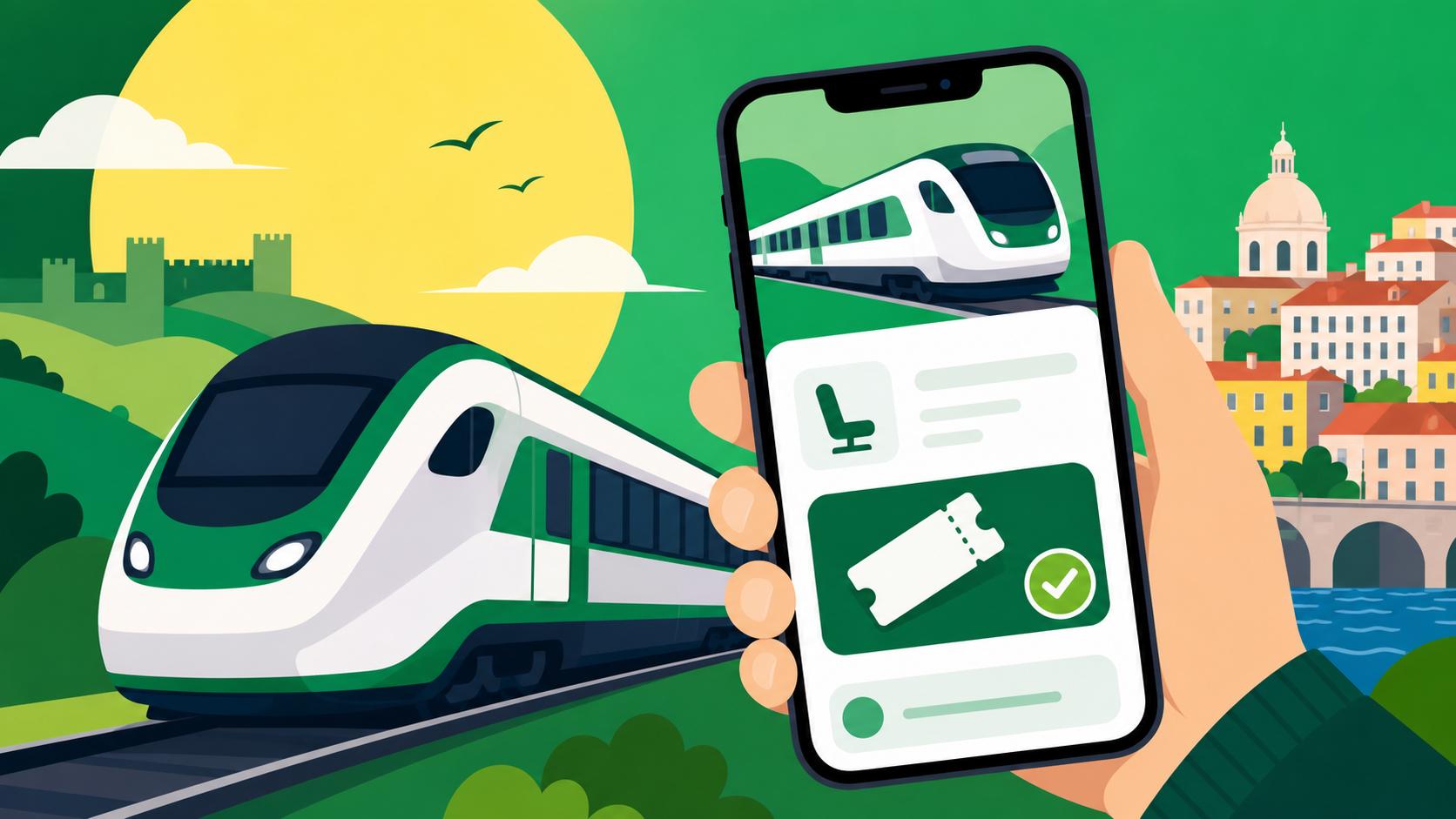
Once you purchase a ticket, it appears in the "Your Tickets" section of the app. It generates a QR code that the conductor will scan. You don't need to print anything. A pro-tip from my years of commuting: take a screenshot of the QR code as soon as you buy it. While Portugal has great 5G, some stretches of the Alentejo or the northern mountains are dead zones. You don't want to be the person frantically refreshing the app while the conductor stares at you impatiently.
The app also allows for seat selection on AP and IC trains. The interface shows a map of the carriage. Avoid seats near the "Bar" (cafeteria) if you want a quiet trip, as that’s where people congregate to talk loudly over espresso. If you have bulky luggage because you’ve been ordering home essentials from Amazon Spain, try to pick a seat near the end of the carriage where the large luggage racks are located.
Handling Delays and the Livro de Reclamações
Let’s be realistic: Portuguese trains are generally reliable, but strikes (greves) and infrastructure delays do happen. The app has a "Train Times" feature that provides real-time updates on whether your train is running late.
If you experience a significant delay (usually over 30 minutes for an AP train), you may be entitled to a partial refund. While the app is getting better, you might still need to use the physical ticket office for complex refund claims. If you feel you’ve been treated unfairly or a service was unacceptably poor, every station has a "Livro de Reclamações" (Complaint Book). You can also find this online. Understanding The 'Livro Amarelo' (Yellow Book) for Medical Complaints is a similar concept in the healthcare sector, but for transport, the standard complaint book is your strongest tool for consumer rights.
Useful Tips for the Modern Expat Traveler
Living in Portugal means embracing a slower pace of life, but your logistics don't have to be slow. Integrating your train travel with other digital tools will make your transition much smoother.
Connectivity and Logistics
It is wise for new arrivals to set up their digital ecosystem immediately. This means having your Airalo eSIM active so you can book your CP tickets the moment you land. If you are staying in a temporary rental found through Uniplaces while you look for a permanent home, you’ll likely be using the train to scout different neighborhoods.
For instance, if you are currently staying in Lisbon but want to check out the Silver Coast, you can use the CP app to book a trip to Caldas da Rainha. It’s much more relaxing than navigating the tolls on the A8 highway, which you can read about in our guide on Navigating the Portuguese Toll System: Via Verde and Electronic Tolls.
Beyond the Train Station
Once you arrive at your destination, you might need to bridge the "last mile" to your apartment. In cities like Porto, your CP ticket doesn't automatically cover the metro. You’ll need to understand Using the Andante card in Porto: Zones, top-ups, and ticket validation fines to get around the city center.
Similarly, if you are heading to a rural village, you might find that the "station" is actually 5 kilometers from the town center. Always check your destination on a map before booking. Many expats arrive in "Coimbra-B" thinking they are in the heart of the city, only to realize they need another short shuttle train to "Coimbra-A" to actually be in the historic center. The CP app usually handles these "transfer" tickets as one single booking, provided you select the correct final destination.
Moving Toward Residency and Long-Term Savings
As you move from a "tourist" mindset to an "expat" mindset, your use of the CP app will change. You'll stop buying full-price tickets and start planning your life around the "Promo" windows. You'll also start looking at the bigger picture of your Housing & Living expenses.
If you eventually decide to buy a car, you'll be comparing train costs against the high price of fuel and the IUC Tax, Inspections (IPO), and High Vehicle Costs. For many of us, the train remains the superior choice for travel between Lisbon, Porto, and the Algarve. It allows you to skip the traffic, save money, and actually enjoy the stunning Portuguese landscape—from the cork forests of the Alentejo to the terraced vineyards of the Douro Valley.
Mastering the CP app is more than just a convenience; it’s a small but significant victory in your journey to feeling like a local. It’s one less line to stand in, one less "lost in translation" moment at a ticket window, and one more step toward a stress-free life in this beautiful country.
Disclaimer
This guide is provided for informational purposes only. While every effort has been made to ensure the accuracy of the information regarding Comboios de Portugal (CP) and its application in 2026, transport policies, pricing, and app interfaces are subject to change by the provider. The author is an independent expat and is not affiliated with CP. Always verify your travel details and terms of service directly on the official CP website or app before purchasing.