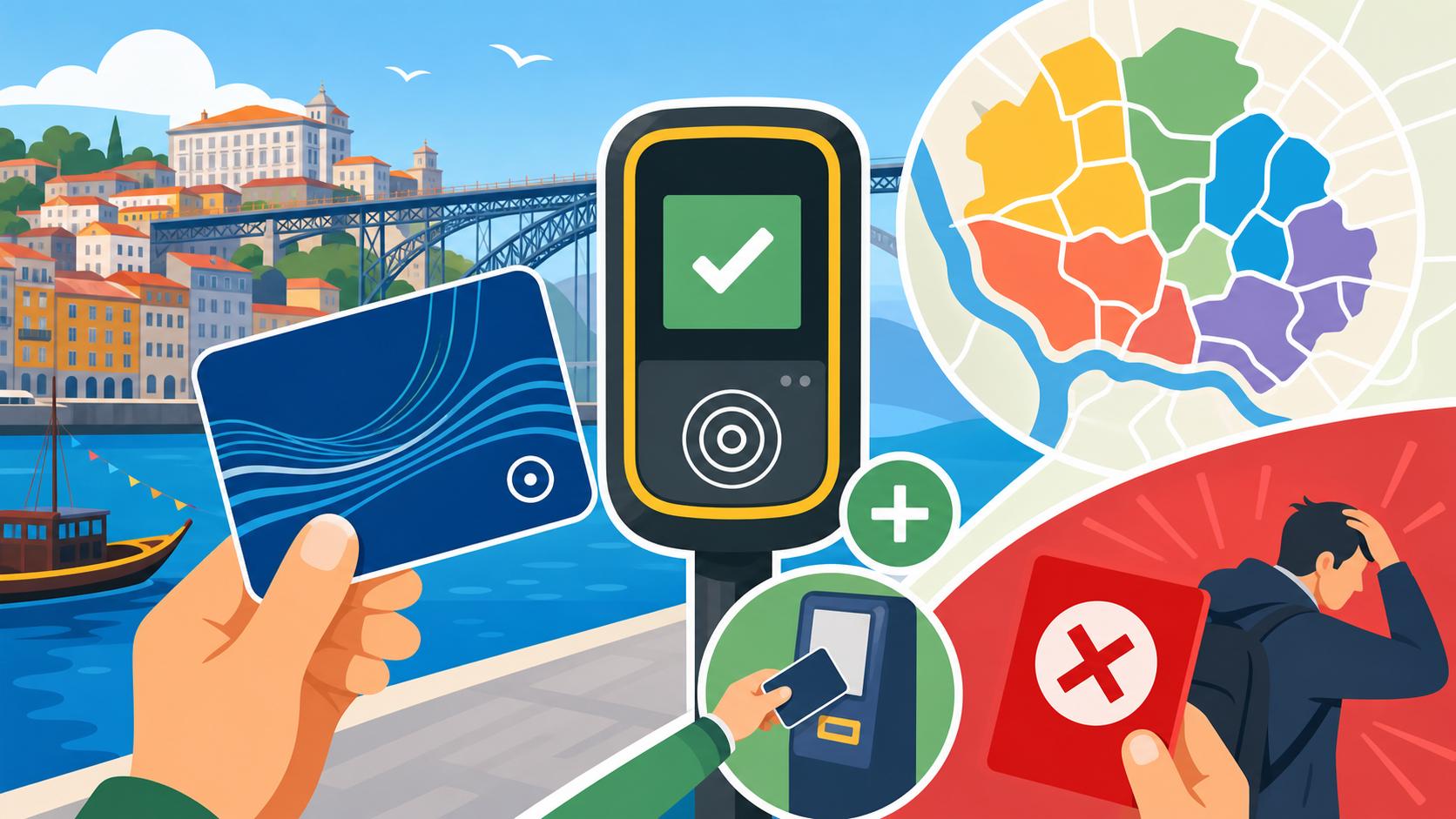
Using the Andante card in Porto: Zones, top-ups, and ticket validation fines
Disclosure: This article contains affiliate links. If you buy through them, we may earn a commission at no extra cost to you. Read our full disclosure.
The first time I stood in front of a yellow Andante machine at the Trindade station, I felt like I was trying to crack a Cold War code. I actually missed three metro trains just staring at the zone map, terrified I’d buy the wrong ticket and end up with a massive fine. This guide clears up that confusion entirely.
Understanding the Andante System: Blue vs. Silver Cards
The Andante system is the backbone of Porto's public transport, covering the Metro do Porto, STCP buses, and CP urban trains. It is a contactless system, but the nuances between the different physical cards can be a headache for newcomers. If you are just arriving and staying in a temporary rental found through Uniplaces, you will likely start with the basic paper-based card, but understanding the hierarchy is essential for long-term savings.
The Andante Azul (The Occasional Card)
The Andante Azul is a blue, flexible cardboard card designed for occasional users. You pay a small fee for the card itself, and then you "top it up" with titles (trips). The most important thing to remember—and the thing that trips up every expat at least once—is that this card can only hold one type of journey at a time. If you load it with Z2 trips, you cannot load a Z3 trip until the Z2s are completely used up. I learned this the hard way when I tried to head out to the airport (a Z4 journey) while still having two Z2 trips on my card; the machine simply wouldn't let me add the new fare.
If you are following a Living in Portugal Guide 2027: The Complete Relocation Manual for Expats, you will know that efficiency is key. For the Blue card, always buy exactly what you need for the day, or carry two separate blue cards—one for your standard city center hops and one for longer journeys to the periphery. This avoids the frustration of being stuck at a machine while your bus pulls away.
The Andante Silver (The Monthly Subscription)
For those who have settled into a permanent home, perhaps after consulting a Porto Neighborhood Guide: Where to Live for Culture, Tech, and Family, the Andante Silver (Monthly Pass) is the gold standard. This is a hard plastic card with your photo and personal details. Unlike the blue card, this allows for unlimited travel within your chosen zones for a fixed monthly fee.
The Silver card is essential if you want to benefit from the social discounts or the "Metropolitano" pass, which covers the entire Porto metropolitan area for a surprisingly affordable rate. To get one, you need to visit an Andante shop (Loja Andante), which are usually located in major hubs like Trindade, Casa da Música, or Campanhã. Bring your ID and a passport-sized photo, though many shops can now take your photo on the spot for a small fee.
The Anda App: The Digital Alternative
In the last couple of years, the "Anda" app has revolutionized how we move around Porto. It uses Bluetooth and NFC to track your journeys automatically. You just walk onto the bus or metro, and the app calculates the cheapest possible fare for your travel at the end of the month. To make this work smoothly, I highly recommend getting a reliable data connection immediately upon arrival. Using an eSIM from Airalo is a great way to ensure you have the connectivity required for the app to "check in" at the start and end of your trips.
However, be warned: the app requires your phone to stay alive. If your battery dies mid-trip, you technically do not have a valid ticket. It is wise to carry a small power bank, which you can easily find on Amazon Spain, to ensure you aren't caught off guard by a dead phone and an aggressive ticket inspector.
Navigating Porto’s Zones: The Infamous Z Logic
Porto’s transport map looks like a colorful honeycomb. These hexagons represent zones, and the "Z" number on your ticket (Z2, Z3, Z4, etc.) refers to how many zones you can travel through, starting from the zone where you first validate. This is often the most confusing part of Public Transport and Driving in Portugal: Trains, Tolls, and Licenses.
How the Zone Count Works
A common mistake is thinking Z2 means you can only stay in two specific neighborhoods. In reality, Z2 means you can travel within your starting zone and any zone that touches its border. If you travel to a zone that is two "hops" away from your starting point, you need a Z3. The system is designed to be concentric, but because the geography of Porto is irregular—squeezed between the hills and the Douro river—the zones can feel counter-intuitive.
For example, if you are living in the city center (Zone PRT1) and want to go to the beach in Matosinhos (Zone MAT1), you only need a Z2 ticket because those two zones are contiguous. However, if you were to travel from the airport (Zone VCD8) to the center, you would be crossing through several zones, requiring a Z4. When in doubt, look at the giant alphabetical list of stations on the yellow ticket machines; next to each station name, it will tell you exactly which "Z" level you need from your current location.
Time Limits and Transfers
Your Andante ticket isn't just for a single ride; it is a timed entry into the network. For a Z2 ticket, you generally have 60 minutes of travel time. Within that hour, you can switch from the metro to a bus, or from one bus to another, as many times as you like, provided you validate every single time you board a new vehicle. As long as your last validation happens within that 60-minute window, you are legal.
The time limit increases as the "Z" number goes up. A Z4 ticket, for instance, gives you significantly more time to reach your destination. This is particularly helpful for those managing their Cost of Living in Portugal 2026: Detailed Budgets for Singles and Families, as it allows you to run a quick errand and potentially return home on the same ticket if you are fast enough.
| Ticket Type | Zones Included | Typical Duration | Best Use Case |
|---|---|---|---|
| Z2 | Starting + Contiguous | 60 Minutes | City center hops, Ribeira to Matosinhos |
| Z3 | Starting + 2 Hops | 60 Minutes | Travel to suburbs like Gondomar or Maia |
| Z4 | Starting + 3 Hops | 75 Minutes | Airport to City Center transfers |
| Z5-Z12 | Regional | 90-120 Minutes | Long-distance travel to the edges of the metro area |
Top-Ups and Validation: Avoiding the Fiscal Agent's Wrath
The Portuguese take ticket validation very seriously. In Porto, the inspectors (often called "Picas") are known for their efficiency and lack of leniency toward "clueless tourists." Validation is not optional, even if you have a monthly pass with unlimited trips.
Where to Top Up Your Card
You can top up your Andante card at any yellow vending machine found in metro stations. These machines accept cash and most international debit cards. If you find the station machines too crowded, look for "Ponto Andante" signs in local kiosks and tobacco shops. These are often much faster and allow you to interact with a human if the machine is being temperamental.
Another pro-tip for expats: the Multibanco ATM system. If you have a Portuguese bank account, you can actually top up your monthly Silver card at almost any ATM in the city. This is a lifesaver during the first few days of the month when the lines at the Loja Andante are out the door. You can also buy card protectors on Amazon Spain to keep your card's chip from getting scratched, which often causes the machines to reject them.
The Golden Rule of Validation
You must validate your card before every single journey. On the metro, the validators are the yellow poles standing at the entrance to the platforms. There are no turnstiles, which leads many foreigners to mistakenly walk right past them. On buses, the validator is located next to the driver. When you tap your card, look for the green light and a single "beep." If the light is red and you hear two beeps, your card is either empty, expired, or carries the wrong zone for that journey.
If you are transferring from the metro to a bus, you must validate again on the bus. This second validation does not "eat" a new trip from your card, provided you are still within the time limit of your original ticket. It simply tells the system that you are continuing your journey. Failure to validate on a transfer is one of the most common reasons expats get fined, even when they technically have a valid, paid-for trip on their card.
Fines and What to Do if You Get One
If an inspector catches you without a validated ticket, the fines are steep. Typically, the fine is 100 times the price of a standard ticket, often ranging from €120 to over €350 depending on the severity of the infraction. They will ask for your ID and your NIF (tax number). If you are new and don't have your NIF yet, they will use your passport number.
If you believe you were fined unfairly—for example, if the validation machine was broken—you can use the "Livro de Reclamações" (Complaint Book) available at any Andante office. However, be aware that "I didn't understand the zones" is almost never accepted as a valid excuse. The inspectors see thousands of people a day and have heard every story in the book. It’s better to be overly cautious and buy a Z4 when you might only need a Z3 than to risk a fine that equals a week’s worth of groceries.
Expat Practicalities: Integration and Housing
Choosing where to live in Porto often depends on the metro lines. Since the Andante system makes commuting so easy, you can often find better value for money by moving one or two zones out of the city center. This is a common strategy discussed in Where to Live in Portugal: Lisbon, Porto, Algarve, and Silver Coast Compared.
Public Transport and Your Residence Area
If you live in Gaia, for example, you’ll be crossing the bridge frequently. While it’s just a short walk, if you’re using the metro, you’re moving between PRT1 and VNG1. If you are staying in a neighborhood like Paranhos, you are centrally located for the university, but you might find that certain bus routes are more direct than the metro. Always check your "home" zone.
When you first arrive, if you have picked up a Getting a Portuguese SIM card at Lisbon Airport: Vodafone vs NOS vs MEO, use Google Maps or the "Moovit" app. They integrate perfectly with the Andante timings. In the rain—and Porto gets a lot of rain—knowing exactly when the 601 bus is coming to take you back to your Uniplaces apartment is the difference between a good day and a soaked, miserable one.
Cultural Etiquette on Porto Transit
Porto’s transit system is a point of pride for the locals (Tripeiros). It is clean, efficient, and generally quiet. You’ll notice that people usually let passengers off the train before attempting to board, and it’s polite to offer your seat to the elderly or pregnant women. If you are unsure about a stop, don't be afraid to ask the driver or a fellow passenger. Even if they don't speak perfect English, the word "Andante" and a confused look will usually trigger a helpful response.
Understanding Portuguese greeting etiquette: When to use Beijinhos vs Handshakes might not seem relevant on a bus, but a simple "Bom dia" to the driver as you validate your card goes a long way in feeling like a local rather than a tourist. Integrating into the daily rhythm of the city starts with mastering the small things, like the click of the validator and the sway of the yellow metro cars crossing the Dom Luís I Bridge.
Disclaimer
This guide is for informational purposes only. Transportation rules, zone boundaries, and fine amounts in Porto are subject to change by the authorities (Transportes Intermodais do Porto). Always verify current prices and regulations at an official Loja Andante or on the official Andante website before traveling. The author is an expat sharing personal experiences and does not represent the transit authority.