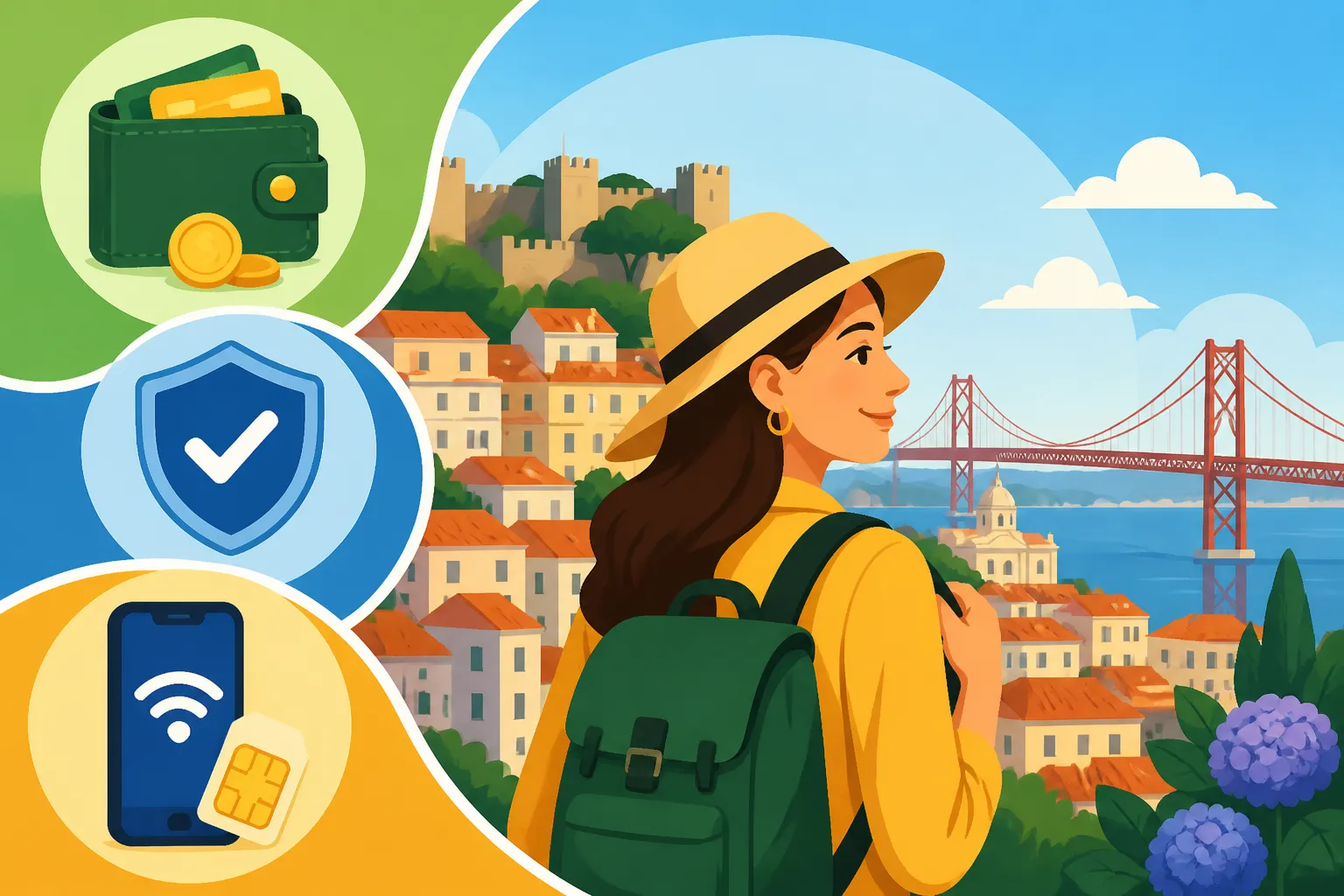
Travel Logistics in Portugal: Money, Safety, and Connectivity
Disclosure: This article contains affiliate links. If you buy through them, we may earn a commission at no extra cost to you. Read our full disclosure.
Your card gets declined at a tiny tasca in Alfama, the ATM offers a strange “guaranteed rate,” and your phone loses signal halfway up a mountain road in Gerês. These are the small logistics problems that turn into stressful days in Portugal. This guide covers money, safety, and connectivity so you can handle each one calmly and get back to enjoying the trip.
Money in Portugal: Cash, Cards, and the Multibanco Network
Portugal is mostly card-friendly, but it has its own payment habits that catch visitors off guard. During my first month in Lisbon I carried far too little cash, then far too much, before I found the balance. Most of the confusion comes from the national ATM network and from how small, family-run places still prefer to be paid.
How Multibanco ATMs Differ From Euronet and Independent Machines
Portugal’s main ATM network is called Multibanco. You will spot the blue-and-white MB logo on machines built into the walls of real banks such as Caixa Geral de Depósitos, Millennium bcp, Santander, and Novobanco. Multibanco itself does not add a withdrawal charge. Any fee you pay comes from your own bank at home, so check your bank’s foreign withdrawal terms before you fly.
Independent machines are a different story. In tourist zones like Rua Augusta in Lisbon, Ribeira in Porto, and the old town of Lagos, you will see standalone ATMs, often branded Euronet. They are not part of the bank network in the same way, and they usually add their own operator fee on top of whatever your bank charges. They are convenient, which is exactly why they sit on every busy corner.
My personal rule is simple. I walk an extra block or two to find a machine attached to a bank branch. If you want more detail on spotting these machines and avoiding their charges, see How to avoid ATM withdrawal fees from Euronet machines in tourist areas.
When Cash Still Wins: Cafés, Markets, and Small-Town Portugal
In big supermarkets like Continente and Pingo Doce, chain restaurants, museums, and train stations, cards work everywhere. The picture changes once you step into a neighborhood pastelaria, a village café in the Alentejo, or a fruit stall at Mercado do Bolhão. Some small businesses set a minimum spend for card payments, and a few simply prefer cash.
Imagine you are in Monsaraz after a long drive, wanting a coffee and a pastel de nata. The owner points at a handwritten sign saying cards are accepted only above a certain amount. You will not want to argue in broken Portuguese, so keep a small stash of coins and low-value notes for exactly these moments.
I suggest withdrawing a modest amount at a bank ATM on arrival and topping up only when needed. Large notes can be awkward in tiny shops early in the morning, so break them at supermarkets. For a deeper look at when to pay which way, see Cash vs Card in Portugal and Using Multibanco.
Card Payments, Contactless, and the Currency Conversion Trap
Contactless payments with cards and phone wallets are now normal across Portuguese cities, including on Lisbon’s metro gates and many Porto buses. Visa and Mastercard are widely accepted. American Express is far less reliable outside hotels and larger restaurants, so carry a backup card on a different network.
The real trap is dynamic currency conversion. A card terminal or ATM may ask whether you want to pay in your home currency instead of euros, often presenting it as a helpful “guaranteed rate.” That rate is set by the machine operator, not your bank, and it is usually worse. Always choose euros.
You will also hear about MB Way, the Portuguese mobile payment app that locals use to split bills and pay friends. It is tied to Portuguese bank accounts and phone numbers, so most short-term visitors cannot use it. A travel card from a provider like Wise or Revolut can be handy, but check their own pages for current fees and limits.
Everyday Spending Etiquette for Visitors
Money in Portugal is not just about machines. There are quiet social rules around bills, tips, and small charges that nobody explains to newcomers. Getting these right saves you from awkward moments at the table and from feeling quietly overcharged.
Tipping, Rounding Up, and Reading the Bill
Tipping in Portugal is modest and never aggressive. At a café counter, most people simply leave the small coins from their change. In sit-down restaurants, rounding up or leaving a little extra for good service is appreciated but not expected the way it is in North America. Nobody will chase you down the street for leaving nothing.
Before you tip, read the bill properly. When you sit down, waiters often bring bread, butter, olives, cheese, or small petiscos. This is the couvert, and it is charged if you eat it. You can politely send it back if you do not want it. For the full explanation, see What Is the Couvert on a Portuguese Restaurant Bill?.
To ask for the bill, say “a conta, por favor.” Waiters rarely bring it unprompted, because rushing diners is considered rude. For more on how much to leave and where, see Tipping in Portugal: When, Where, and How Much.
Tourist Taxes, Deposits, and Booking Platforms
Lisbon, Porto, and several other municipalities charge a nightly tourist tax per adult guest. Some hotels and guesthouses include it in your online price, while others collect it on arrival, occasionally in cash only. The first time this happened to me, I was standing at a guesthouse reception in Porto at midnight hunting for coins.
When booking through Booking.com, read the fine print in the property’s policies section. It usually tells you whether the city tax is included, whether a security deposit is required, and which payment methods the property accepts at check-in. Using the free cancellation filter also gives you flexibility if your plans shift.
Short-term apartment rentals sometimes ask for a refundable deposit or ask you to fill in a guest registration form with your passport details. This registration is a legal requirement for accommodation providers, so do not be alarmed. Just make sure you are entering details on the platform or directly with the host, not on a random link.
Tax-Free Shopping and Keeping Receipts
If you live outside the European Union, you may be able to reclaim VAT on larger purchases at participating stores. Look for tax-free signs in shop windows along Avenida da Liberdade in Lisbon or in malls such as Colombo and NorteShopping. You need your passport at the time of purchase.
The process involves getting a tax-free form from the shop, then validating it before you leave the EU, usually at the airport. Leave yourself extra time at Lisbon or Porto airport, because the validation queues can be slow. For step-by-step guidance, see Tax-Free Shopping in Portugal for Non-EU Visitors.
Keep every receipt even if you are not claiming a refund. Cashiers will often ask “com contribuinte?” meaning whether you want a tax number on the invoice. As a visitor, you can simply say no.
Staying Safe in Portugal’s Cities
Portugal is a genuinely safe country by European standards, and violent crime against tourists is rare. The problems you are realistically likely to meet are petty theft and street hustles in crowded tourist areas. Knowing where they happen makes them easy to avoid.
Pickpockets on Trams, Viewpoints, and Busy Squares
The famous Tram 28 in Lisbon is beautiful, crowded, and a favorite workplace for pickpockets. The same goes for the Santa Justa Lift queue, Rossio and Praça do Comércio, the Bairro Alto at night, and the São Bento station area in Porto. Thieves work in teams, often creating a distraction while someone else lifts a phone.
One afternoon on Tram 28, I watched a man gently press against a tourist’s backpack while his partner asked for directions. Nothing dramatic, just smooth teamwork. Wear backpacks on your front in crowds, keep phones in zipped pockets, and never leave your phone on a café table next to the street.
At viewpoints like Miradouro de Santa Luzia or Senhora do Monte, people put phones down to take photos of each other. That is the moment to stay alert. For a fuller rundown of tactics, see Avoiding Pickpockets and Scams in Portugal.
Street Hustles and the Fake Drug Sellers of Baixa
Walk through Baixa or Bairro Alto in Lisbon and someone will quietly offer you hashish or cocaine. This surprises almost every first-time visitor. What they sell is usually fake, often bay leaves or flour, and buying anything from them only invites trouble. A firm “não, obrigado” and continuing to walk is all you need.
Other common hustles include people pushing sunglasses or selfie sticks, friendly strangers offering to help at ATMs, and unofficial “guides” near major monuments. Treat anyone who approaches you near an ATM with suspicion, and cover the keypad when entering your PIN.
Taxi overcharging also happens occasionally, especially from airports late at night. Use the official taxi rank, make sure the meter is running, or use a ride-hailing app with a fixed upfront fare. For Lisbon-specific tricks, see Common tourist scams in Lisbon: Pickpockets on Tram 28 and fake hash sellers.
What To Do If Your Wallet or Passport Disappears
Losing a wallet or passport abroad is horrible, and the panic is completely understandable. The key is to act in the right order rather than all at once. Here is the sequence I follow and recommend to friends.
- Freeze or cancel your cards through your banking apps immediately.
- Change passwords for email and banking if your phone was taken.
- File a police report at the nearest PSP station, or in Lisbon at the tourist police station on Praça dos Restauradores.
- Contact your embassy or consulate in Lisbon if your passport was lost.
- Notify your travel insurer and keep copies of every document.
The police report matters because your insurer and embassy will usually ask for it. Keep a digital copy of your passport, insurance policy, and emergency contacts in a secure cloud folder before you travel. For the passport replacement process, see What to Do If You Lose Your Passport in Portugal.
Nature, Weather, and Outdoor Safety
Some of the real risks in Portugal have nothing to do with people. The Atlantic is powerful, summers can be fiercely hot, and the hilly cities are slippery in ways that surprise newcomers. These risks are manageable with a little respect and preparation.
Atlantic Beaches, Rip Currents, and Flag Colors
The Portuguese coast is gorgeous, but the Atlantic is not a calm lake. On the west coast, around Ericeira, Nazaré, Costa da Caparica, and the Costa Vicentina, waves and rip currents can be strong even on sunny days. The south-facing Algarve beaches tend to be gentler, though conditions still change.
Lifeguarded beaches use a flag system. Green means swimming is allowed, yellow means you can paddle but should not swim out, and red means no entering the water at all. A checkered flag indicates the beach is temporarily unsupervised. Take the flags seriously, because rescues happen every summer.
If you are caught in a rip current, do not fight it by swimming straight back to shore. Swim parallel to the beach until you are out of the current, then head in. On wild, unsupervised beaches, swim only if you are confident and never alone.
Summer Heat, Wildfire Season, and Civil Protection Alerts
Inland Portugal can bake in summer. The Alentejo, the Douro Valley, and the interior around Castelo Branco regularly see intense heat waves. Plan sightseeing for morning and evening, carry water, and follow the Portuguese habit of resting during the hottest hours.
Wildfire season is a real concern in rural areas during the hot, dry months. Fires can close roads and affect air quality. If you are driving or hiking in forested areas, check local alerts and respect any closures. Never light fires or discard cigarettes outdoors.
The national civil protection authority issues warnings during fires, storms, and heat events, and you may receive alert messages on your phone. For how to follow these updates, see Earthquake and wildfire risks in Portugal: How to stay informed via Prociv.
Cobblestones, Hills, and Getting Around on Foot
Portuguese calçada, the decorative limestone paving, is beautiful and dangerously slippery when wet or polished by years of feet. Lisbon’s hills, especially in Alfama, Graça, and Chiado, become small ski slopes after rain. Twisted ankles are a far more common hazard for visitors than stolen phones.
Wear shoes with real grip, not smooth soles or flimsy sandals. Use the elevadores and funiculars, like Elevador da Bica or the Guindais funicular in Porto, to save your knees. Allow more time than the map suggests, because distances that look short often involve steep climbs.
Crossing streets also requires attention. Cars generally stop at zebra crossings, but motorbikes and delivery scooters can appear suddenly. Make eye contact with drivers before stepping out, especially on busy roads.
Health Support and Emergency Numbers
Nobody plans to get sick on holiday, but knowing which number to call makes a frightening moment much calmer. Portugal has a clear system: one number for emergencies and a separate helpline for non-urgent medical advice.
Calling 112 and Using the SNS 24 Line
For a true emergency, such as a serious accident, chest pain, a fire, or a crime in progress, call 112. This is the European emergency number and connects you to police, ambulance, and fire services. Dispatchers in tourist areas can often handle English. For more detail, see Calling 112: Do Portuguese emergency dispatchers speak fluent English?.
For anything that is worrying but not life-threatening, such as a high fever, a stomach bug, or an infected cut, call the SNS 24 helpline on 808 24 24 24. As of October 2026, clinical triage runs 24 hours a day, and calls cost the same as a call to a landline. A nurse assesses your symptoms and tells you where to go.
Calling SNS 24 first can save you a long, unnecessary wait in an emergency room. For how the triage process works, see SNS 24 Helpline (808 24 24 24): Triage, Advice, and Sick Notes.
| Situation | Who to Contact | What Happens Next |
|---|---|---|
| Serious accident, fire, crime, or life-threatening symptoms | 112 | Emergency services are dispatched |
| Worrying but non-urgent symptoms | SNS 24 on 808 24 24 24 | A nurse triages you and advises where to go |
| Minor ailments like colds, allergies, or blisters | Local pharmacy with a green cross | A pharmacist advises and sells suitable medication |
| Late-night medication needs | Farmácia de serviço | The on-duty pharmacy listed on any pharmacy door serves you |
| Theft or lost documents | PSP police station | You receive a report for insurance and embassy use |
Pharmacies and After-Hours Help
Portuguese pharmacists are highly trained and often the best first stop for minor problems. Look for the green cross sign. Many common medicines, including some painkillers, are kept behind the counter, so you will need to ask. Antibiotics require a prescription, so pharmacists will not hand them over just because you ask.
At night, pharmacies operate a rotating duty system. Each pharmacy posts a notice on its door listing the nearest farmácia de serviço open late. For how to find one quickly, see What is a Farmácia de Serviço and how to find one open at 2 AM.
Bring any prescription medication in its original packaging with a copy of your prescription. Make sure your travel insurance covers medical treatment, as private hospital care can be expensive without it. For guidance on choosing a policy, see Travel Insurance for Trips to Portugal.
Staying Connected: SIM Cards, eSIMs, and Wi-Fi
A working phone is your map, translator, ticket wallet, and lifeline. Portugal has good mobile coverage in cities and along the coast, but your setup depends on where your phone plan comes from and how far off the beaten track you go.
EU Roaming Versus Non-EU Phones
If your mobile plan comes from another European Union country, EU roaming rules generally let you use your normal allowance in Portugal without extra charges. Just check your provider’s own terms for any fair-use limits, especially on longer stays.
Visitors from the UK, the US, Canada, Brazil, or elsewhere face a different situation. Roaming packages from home carriers can be convenient but expensive. Before you fly, compare your carrier’s travel pass with buying a local SIM or an eSIM.
Turn off automatic data roaming before you land if you are not sure of your plan. There are many reports of visitors returning home to a shocking phone bill after a single day of maps and messages.
Buying a Local SIM or eSIM on Arrival
The three main mobile networks in Portugal are MEO, NOS, and Vodafone. All three have shops in Lisbon and Porto, and you will find stores or kiosks at Lisbon airport. Prepaid tourist SIMs are easy to buy, and staff usually ask to see your passport, so keep it handy.
An eSIM is often the simplest option if your phone supports it. You can install a data plan before departure and land already connected, keeping your home number active for banking texts. For a comparison of options, see Mobile Data and eSIMs for Travel in Portugal.
Whichever route you choose, check the provider’s own page for current pricing, data allowances, and validity periods. Make sure your phone is unlocked before you travel if you plan to use a physical SIM.
Coverage Gaps in Rural Portugal and Offline Backups
Coverage is strong in cities and along major highways, but there are dead zones. Deep valleys in Peneda-Gerês National Park, parts of Serra da Estrela, remote Alentejo farmland, and stretches of the Rota Vicentina hiking trail can lose signal entirely.
Before heading into rural areas, download offline maps and save your accommodation address in Portuguese. Screenshot train tickets, booking confirmations, and emergency contacts. A small power bank also makes a big difference on long days.
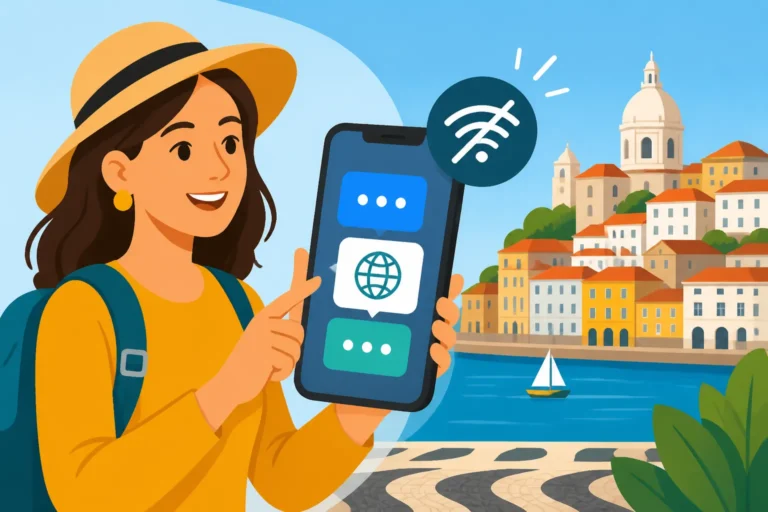
Free Wi-Fi is common in cafés, hotels, and shopping centers. It is fine for browsing, but avoid logging into banking apps on open networks. A translation app with downloaded offline language packs is useful too; see Using Translation Apps in Portugal: What Works Best.
Transport Apps and Booking Logistics
Getting from place to place is where money, safety, and connectivity all come together. A charged phone, the right apps, and a payment method that works will smooth out most of the journey.
Trains, Buses, and Comparing Routes
Comboios de Portugal, known as CP, runs the national rail network, from fast Alfa Pendular trains between Lisbon and Porto to slow regional lines through the Douro Valley. Rede Expressos and FlixBus cover long-distance bus routes, often reaching towns trains do not serve.
When I plan a multi-city trip, I use Omio to compare train and bus options side by side, then check CP or the bus company directly for final details. Book long-distance trains early during summer and around public holidays, because popular routes fill up.
On regional trains and urban transit, validate tickets before boarding where required. Inspectors do check, and fines for invalid tickets are issued on the spot.
Ride-Hailing, Taxis, and Transit Cards
Bolt and Uber both operate in Lisbon, Porto, and the Algarve, and they are popular with locals. They show an estimated fare upfront, which removes the worry about meters. Official taxis are also reliable, and the cream-and-black or black-and-green cars are easy to spot at ranks.
In Lisbon, the reusable Viva Viagem card works on the metro, Carris buses, trams, and some ferries. In Porto, the Andante card covers the metro and many buses. Keep the card after your first trip, because you can top it up instead of buying a new one each time.
Contactless card payments now work on many urban transit gates, but not everywhere, so a transit card is still the safer bet. If you are hiring a car, understand the electronic toll system before you drive; see How Do Tolls Work in Portugal for Rental Cars?.
Booking Tours and Rooms Without Headaches
Popular sights like Pena Palace in Sintra, Jerónimos Monastery in Belém, and Livraria Lello in Porto can have long queues or timed entry. Booking ahead saves frustration, especially in peak season.
I often use GetYourGuide for timed tickets and day trips to places like Sintra or the Douro Valley, because the booking details stay on my phone and the cancellation terms are clearly shown. Always check the meeting point carefully, since Lisbon’s old streets can make a simple pickup spot surprisingly hard to find.
For accommodation, check the location on a map, not just the neighborhood name. A charming apartment “near Alfama” may involve a steep climb with luggage up stairs. Read reviews mentioning noise, stairs, and check-in times, and message the host before arrival to confirm how you will get the keys.
Disclaimer
This article is for general informational purposes only and does not constitute professional advice. Laws, prices and regulations vary by location and change over time. Consult a qualified professional for guidance on your specific situation.