Hidden and Quiet Beaches in Portugal
Disclosure: This article contains affiliate links. If you buy through them, we may earn a commission at no extra cost to you. Read our full disclosure.
Fighting for a square meter of sand on the overcrowded beaches of Cascais, Albufeira, or Vilamoura can quickly ruin what was supposed to be a tranquil day by the ocean. Endless traffic queues, expensive parking, and wall-to-wall tour groups often turn Portugal’s world-famous coastline into a stressful endeavor. This comprehensive guide reveals Portugal’s best-kept secret and quiet beaches, giving you the exact local knowledge needed to escape the tourist crowds and experience pristine, serene shores.
Tucked Away Havens along the Algarve Coastline
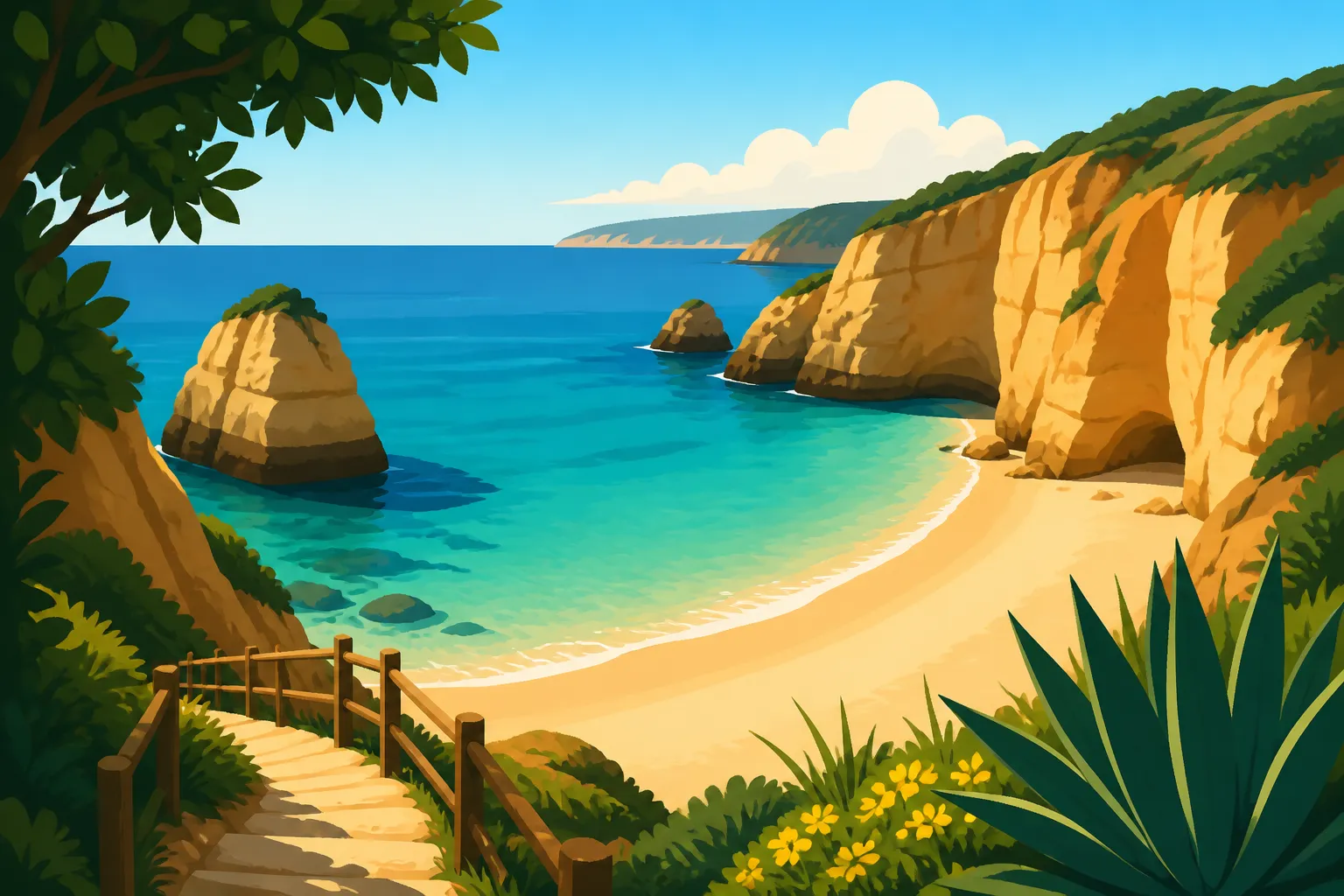
The Algarve is globally famous for its dramatic golden cliffs, sea caves, and turquoise waters. However, most visitors cluster around a handful of easily accessible resort areas, leaving vast stretches of magnificent coastline practically empty. If you know where to look, you can still find pristine coves framed by sandstone cliffs where the only sound is the rhythmic crashing of Atlantic waves.
Navigating the southern coast requires moving beyond the standard tour itineraries. While postcard favorites like Benagil Cave draw thousands of visitors daily, slipping around a headland or descending an unmarked flight of wooden stairs often reveals a completely different world.
Escaping the Crowds near Western Algarve
The western stretch of the Algarve, spanning from Carvoeiro past Lagos toward Sagres, is famous for its fractured limestone coastline. To find quiet sand here, you must seek out beaches protected by steep cliffs that deter casual holidaymakers. Praia dos Caneiros, situated near Ferragudo, offers a tranquil retreat compared to its bustling neighbors. Framed by towering ochre cliffs and anchored by a striking sea stack offshore, it remains surprisingly calm outside the peak afternoon hours.
Another exceptional option is Praia do Vale de Centeanes, specifically if you hike away from the main entrance along the cliff paths toward lesser-known inlets. Many of these tiny pocket beaches, known locally as algares, are accessible via narrow goat paths or small ocean channels at low tide. When planning a day exploring these tucked-away spots, keep in mind that living on the coast offers a distinct experience compared to urban centers, a contrast detailed in our Living in Portugal Guide 2027: The Complete Relocation Manual for Expats.
Visiting these hidden Western Algarve coves requires basic preparation. Parking lots are often tiny, unpaved patches of dirt, so arriving early in the morning is crucial. Furthermore, because these beaches lack commercial infrastructure, you will not find rows of plastic sun loungers or loud beach bars, giving you an unfiltered connection to Portugal’s natural beauty.
Barrier Islands and Secluded Coves of Eastern Algarve
Eastern Algarve presents a completely different landscape, dominated by the calm, warm waters of the Ria Formosa natural park. Instead of dramatic cliffs, this region features sweeping sandspits and barrier islands that protect delicate salt marshes and lagoons. Because accessing these beaches requires crossing the lagoon by boat or walking across tidal flats, they naturally filter out the dense crowds seen elsewhere.
Praia da Fábrica, located near the picturesque village of Cacela Velha, is a prime example of an idyllic eastern escape. At low tide, you can wade through the warm, knee-deep waters of the lagoon to reach an endless expanse of fine white sand that faces the open Atlantic. At high tide, local fishermen operate small traditional boats to ferry visitors across for a nominal fee.
Further west in the Ria Formosa, Ilha da Barreta—often referred to as Ilha Deserta—holds true to its name. Accessible via a scenic ferry ride from Faro, this uninhabited island features miles of untouched shoreline. You can easily find local excursion options and boat transfers on GetYourGuide to secure your transport across the lagoon. If you prefer to stay overnight in the charming nearby towns of Tavira or Olhão to explore these islands at sunrise, searching for boutique guesthouses on Booking.com provides excellent bases close to the ferry docks.
Key Differences Between Southern and Western Algarve Waters
Understanding the distinction between the southern coast and the western coast of the Algarve is essential for planning the perfect beach day. The southern shore, extending from Vila Real de Santo António to Sagres, benefits from shelter against northern Atlantic winds. The water here is noticeably calmer and slightly warmer, making it ideal for relaxed swimming and stand-up paddleboarding.
In contrast, as soon as you round Cape St. Vincent and head north toward Aljezur, you enter a wilder marine ecosystem. Here, the ocean currents are driven directly by the open Atlantic Ocean. Water temperatures drop significantly, swells become powerful, and high winds are common. The following comparison highlights what you can expect when choosing between these two distinct coastal experiences:
- Southern Algarve Coves: Warm water temperatures, gentle swells, soaring sandstone cliffs, excellent for swimming, higher density of hidden coves.
- Western Algarve Atlantic Coast: Cooler water temperatures, strong ocean swells, dramatic slate and schist cliffs, exceptional for surfing, vast open expanses of sand.
- Eastern Barrier Islands: Warmest water in mainland Portugal, ultra-calm lagoon waters, flat sand dunes, requires boat access, virtually no commercial developments.
Wild and Untamed Strands of the Costa Vicentina
Stretching along the southwestern coast of Portugal, the Costa Vicentina represents one of the last preserved coastal wildernesses in Southern Europe. Protected within the Southwest Alentejo and Vicentine Coast Natural Park, this region strictly prohibits large-scale resort developments, high-rise hotels, and intrusive commercial projects. The result is a dramatic, wind-swept coastline where majestic cliffs tumble directly into roaring Atlantic waves.
For expats and travelers looking to trade manicured beach clubs for raw, natural power, the Vicentina coast offers unparalleled freedom. Here, beaches stretch uninterrupted for miles, framed by dark slate formations and wild floral scrubland.
Finding Solitude in the Southwest Alentejo National Park
Within the natural park, finding a quiet beach is less about hiding from crowds and more about choosing how much space you want for yourself. Praia do Malhão, located just north of Vila Nova de Milfontes, is a stunning stretch of fine sand backed by sweeping dune systems. Because the beach extends for several kilometers, a short ten-minute walk from the dirt parking area guarantees you an empty spot, even during the height of summer.
Further south near Zambujeira do Mar lies Praia da Samoqueira, a smaller, highly romantic bay featuring natural rock pools, stone arches, and deep crevices carved by ocean tides. At low tide, these limestone formations create sheltered swimming holes that shield bathers from the powerful ocean surf.
For those exploring the region in depth, the local dynamics are deeply tied to the relaxed lifestyle of the southern provinces, as discussed in our guide to The Algarve for Expats: Lagos, Faro, and Tavira Compared. The Vicentina coast captures that same laid-back spirit but elevates the sense of wild adventure.
Navigating Steep Trails and Unpaved Access Roads
The primary reason the Costa Vicentina remains so peaceful is its rugged accessibility. Reaching the most breathtaking strands frequently involves navigating long, unpaved dirt tracks riddled with potholes, followed by steep descents down wooden staircases or loose rocky paths.
If you are renting a vehicle to explore this coastline, ensure your rental agreement covers travel on unpaved roads, as standard policies often exclude undercarriage damage. When driving through these remote areas, it helps to be comfortable navigating rural Portuguese roadways. If you are new to the country, reviewing the requirements for Driving in Portugal: Exchanging Your Foreign License to a Portuguese One will help ensure you remain fully compliant while exploring remote regions.
Walking down to beaches like Praia da Bordeira or Praia do Cordoama requires sturdy footwear. Flipping-flops are ill-suited for the steep, gravelly descents. Carrying a backpack with all your daily necessities is essential, as trekking back up a cliff to fetch a forgotten water bottle is a grueling exercise.
Essential Safety Guidelines for Wild Atlantic Swimming
While the raw beauty of the Costa Vicentina is mesmerizing, the Atlantic Ocean along this western facing coast demands deep respect. Unlike the tranquil bays of the Mediterranean, these waters are governed by powerful offshore currents, sudden drop-offs, and strong rip tides that can catch even experienced swimmers off guard.
Many of the quietest beaches in this national park are unpatrolled, meaning there are no lifeguards on duty (praia não vigiada). Bathers should follow these critical safety precautions:
- Observe Rip Currents: Look for channels of calm, churning, or discolored water pushing out to sea through the breaking waves. Never swim directly into these zones.
- Stay Clear of Cliff Bases: The slate and shale cliffs along the Vicentina coast are prone to erosion and unexpected rockfalls. Always set up your towel at least as far from the cliff base as the height of the cliff itself.
- Check Tide Charts: Some small coves completely disappear at high tide, potentially leaving bathers trapped against cliff faces without an exit path. Always know when the tide is rising.
Secret Coastal Treasures of the Silver Coast and Central Region
Moving north from Lisbon brings you to the Silver Coast (Costa de Prata), a region renowned for its traditional fishing villages, historic monasteries, and impressive oceanic landscapes. Because many international tourists head straight to the south, the central coast retains a distinctly authentic Portuguese feel.
The beaches here are expansive, clean, and often bordered by dense pine forests planted centuries ago to stabilize coastal dunes. While famous spots like Nazaré draw crowds to watch heavy big-wave surfing, neighboring stretches of coastline remain remarkably empty and peaceful.
Uncrowded Sands near Peniche and Ericeira
While Ericeira and Peniche are global hubs for surf culture, their popularity is concentrated around specific break points like Supertubos and Ribeira d’Ilhas. Squeezing past these main surfing hubs reveals quiet coastal nooks that offer serenity and protection from heavy winds.
Praia da Ursa, located near Cabo da Roca—the westernmost point of continental Europe—is widely considered one of the most visually stunning beaches in Portugal. Reaching it requires a challenging 30-minute hike down a steep, winding cliff trail, which keeps heavy tourist crowds at bay. The reward at the bottom is an otherworldly landscape featuring massive, jagged rock needles projecting out of the ocean.
Further north toward Peniche, Praia de Vale Frades provides a vast expanse of golden sand framed by low cliffs and agricultural fields. It is a peaceful option for bathers who want to escape the crowded bays of nearby Baleal while enjoying pristine sea breezes. Expats considering settling in this scenic, budget-friendly corridor can discover more about local life in our article on the Silver Coast (Costa de Prata): Affordable Expat Living Outside the Cities.
Pine Forests and Empty Dunes of the Central Coast
As you travel past Figueira da Foz toward Aveiro, the coastal landscape transforms into a long, continuous strip of fine white sand bordered by the Pinhal de Leiria (Leiria Pine Forest). This region offers some of the most vast, uncrowded dune beaches in Western Europe.
Praia de Dunas de Mira and Praia da Leirosa are standout choices for those seeking pure solitude. At these spots, you can walk along the shoreline for hours without encountering large groups. In several small villages along this stretch, local fishermen still practice Arte Xávega, a traditional method of net-fishing using small, crescent-shaped wooden boats pulled onto the sand by tractors.
The atmosphere along the central coast is profoundly relaxing. The ocean air is fresh and scented with pine resin, and the vast open horizon provides a sense of quiet calm that is increasingly difficult to find in Southern Europe.
Public Transport and Driving Logistics for Day Trips
Reaching the secret beaches of the Silver Coast from major metropolitan areas like Lisbon or Porto is remarkably straightforward if you plan your route ahead of time. While having a car offers the greatest flexibility for exploring remote dirt roads, public transportation covers major regional hubs efficiently.
When organizing a coastal day trip, checking bus and rail connections on Omio allows you to easily compare regional options. Express buses connect Lisbon to Peniche, Caldas da Rainha, and Figueira da Foz in under two hours. From these transit hubs, local taxis or ride-hailing services can easily take you to the quieter, outlying strands.
If you plan to drive your own vehicle along the A8 motorway or secondary coastal routes, be aware of Portugal’s electronic toll system. Understanding how payment portals work before setting off will help you avoid unexpected administrative fines. You can read all about managing toll accounts in our guide to Navigating the Portuguese Toll System: Via Verde and Electronic Tolls.
Hidden Gems of Northern Portugal and the Island Archipelagos
Northern Portugal and the Atlantic archipelagos of Madeira and the Azores offer coastal experiences that diverge dramatically from the golden sandstone coves of the south. In the north, granite landscapes, ancient river estuaries, and vibrant green hills meet a cool, energetic ocean. Meanwhile, the islands present dramatic volcanic black sands, natural basalt tide pools, and lush tropical foliage.
For those who prioritize natural grandeur over high water temperatures, these northern and island beaches represent the pinnacle of quiet coastal exploration.
Secret River Beaches and Ocean Bays in the North
The coastline north of Porto, extending up to the Spanish border at Caminha, is characterized by wide ocean beaches backed by historic coastal towns and pine-clad hills. Praia de Moledo, located near the mouth of the Minho River, offers breathtaking views across the water to Spain and out toward the 17th-century island fortress of Forte da Insua. Despite its dramatic beauty, its location in the far north keeps it free from heavy tourist congestion.
In addition to ocean beaches, Northern and Central Portugal feature a fantastic network of inland river beaches, known locally as praias fluviais. Nestled along crystal-clear rivers in mountain valleys, these inland havens provide calm, fresh water swimming completely free of ocean tides and salt.
A prime example is Praia Fluvial de Loriga, set within a glacier-carved valley in the Serra da Estrela mountains. Featuring clear mountain spring water surrounded by steep granite peaks, it offers a pristine swimming experience that feels worlds away from the coast.
Volcanic Coves of Madeira and the Azores
The island archipelagos offer some of Portugal’s most visually unique coastal environments. On Madeira, dramatic topography means natural sand beaches are rare, but volcanic black sand coves and natural lava pools are abundant.
Seixal Beach, situated on the northern coast of Madeira, features soft, natural black sand framed by emerald green mountains and cascading waterfalls that drop directly into the ocean. Because most tourists stay on the southern side of the island near Funchal, Seixal maintains a quiet, peaceful atmosphere, particularly during early morning hours.
In the Azores, the island of São Miguel boasts hidden gems like Praia da Viola, a quiet black sand cove accessible via a hiking trail that weaves past historic watermills and trickling streams. For an in-depth look at island logistics, lifestyle nuances, and property dynamics, explore our dedicated resource on Madeira and Azores: Island Living, Costs, and Expat Communities.
Comparing Northern Atlantic Waters with Southern Coastal Climates
Choosing between a beach day in Northern Portugal and one in the south comes down to personal preferences regarding weather, landscape, and water temperature. The ocean along the northern coast is refreshed by cold Atlantic currents, meaning water temperatures are invigorated year-round.
The climate in the north is also subject to the Nortada—a strong summer wind that sweeps down from the north-northwest. While this wind keeps coastal air clean and refreshingly cool during hot summer months, it requires bathers to bring appropriate wind protection.
| Region | Average Water Temp | Access Difficulty | Ideal For |
|---|---|---|---|
| Southern Algarve | Moderate (19°C – 22°C) | Easy to Moderate | Swimming, Paddleboard |
| Costa Vicentina | Cool (15°C – 18°C) | Moderate to Strenuous | Surfing, Wilderness |
| Silver Coast | Cool (15°C – 17°C) | Easy to Moderate | Walking, Dune Scenery |
| Northern Portugal | Cold (14°C – 16°C) | Easy | Fresh Air, Landscapes |
| Azores & Madeira | Warmest (20°C – 24°C) | Moderate | Scuba, Volcanic Pools |
Practical Expat Tips for Enjoying Unfrequented Beaches
Venturing off the beaten path to explore Portugal’s secret beaches requires a different mindset than visiting managed resort areas. Unserviced beaches lack commercial amenities, meaning self-reliance, environmental stewardship, and safety awareness are essential for a successful day out.
With a small amount of preparation, you can enjoy these quiet natural treasures comfortably while ensuring they remain preserved for local communities and wildlife.
Packing Essentials for Unserviced Coastal Spots
When visiting wild beaches (praias não vigiadas), you must bring all necessities with you. There are no beachfront kiosks to buy forgotten cold drinks, sunblock, or snacks.
Key items to pack for an unserviced beach day include:
- Wind Protection: A sturdy beach umbrella and a traditional Portuguese windbreak (paravento) are indispensable on open Atlantic beaches.
- Hydration and Nutrition: Pack more drinking water than you think you will need, along with non-perishable snacks, as coastal sun and wind accelerate dehydration.
- Shade Shelter: On beaches backed by cliffs, you cannot rely on cliff shadows for shade due to rockfall risks. Bring a freestanding pop-up sun tent.
- Waste Bags: Bring dedicated trash bags to pack out every piece of garbage, including organic food waste like fruit peels.
Before heading out to remote coastal regions, you can order durable outdoor gear, compact beach umbrellas, and portable coolers on Amazon Spain for convenient home delivery anywhere in mainland Portugal.
Respecting Environmental Reserves and Local Maritime Laws
Many of Portugal’s quietest beaches are situated within protected natural parks, such as the Parque Natural da Arrábida or the Parque Natural do Sudoeste Alentejano e Costa Vicentina. These regions enforce strict environmental regulations designed to protect fragile ecosystems, coastal sand dunes, and nesting bird populations.
Wild camping and overnight parking for campervans outside designated parque de campismo sites are strictly illegal across Portugal and carry heavy fines enforced by the Maritime Police (Polícia Marítima) and the GNR. Always park only in designated dirt areas and never drive across dune vegetation.
Noise pollution is also taken seriously in pristine natural areas. Playing loud music on portable speakers disrupts local wildlife and detracts from the serene atmosphere that draws bathers to these wild spots. Maintaining a quiet footprint respects both nature and fellow visitors. If you are adjusting to broader Portuguese social expectations and local rules, read our article on Quiet hours in Portuguese apartments (Lei do Ruído): Handling noisy neighbors for insight into local noise customs.
Weather Tracking and Tide Planning Tools
Ocean conditions along the Portuguese coast can change rapidly over the course of a single day. A sunny morning can quickly give way to coastal sea fog (nevoeiro de espelho) or rising sea swells that swallow small coves.
To avoid unpleasant surprises, locals rely on specialized weather and marine apps before setting out:
- IPMA (Instituto Português do Mar e da Atmosfera): The official Portuguese meteorological service provides accurate local weather warnings, UV index levels, and sea state forecasts.
- Windguru / Magicseaweed: Essential apps for checking wind directions, swell heights, and wave periods—crucial for both surfers and casual bathers avoiding windy days.
- Tabor / Tide Charts: Always verify local high and low tide times, particularly when visiting narrow pocket beaches along the Algarve or Silver Coast where access trails can become submerged.
Understanding your local environment and planning for your overall lifestyle needs will make your time in Portugal effortless. For a broader overview of living costs and budgeting across different regions, check out our guide on the Cost of Living in Portugal 2026: Detailed Budgets for Singles and Families.
Whether you prefer the dramatic sandstone coves of the south, the sweeping wild dunes of the Vicentina coast, or the volcanic shores of the Atlantic islands, Portugal offers endless opportunities to disconnect from the crowds. By respecting the raw power of the ocean, leaving no trace behind, and preparing for rugged access, you can enjoy some of the most serene coastal landscapes in Europe.
Disclaimer
This article is for general informational purposes only and does not constitute professional advice. Laws, prices and regulations vary by location and change over time. Consult a qualified professional for guidance on your specific situation.