How to Behave at a Portuguese Family Meal
Getting invited to a Portuguese family meal is truly one of the greatest compliments you can receive as an expat or tourist in Portugal. It means you’ve been welcomed into the inner circle, a place of warmth, incredible food, and lively conversation. However, it can also be a minefield of unspoken rules and cultural nuances that can leave even the most seasoned traveler feeling a bit lost. This guide is here to walk you through the delightful intricacies of Portuguese family dining etiquette, ensuring you can relax and truly savor the experience without constantly worrying about making a faux pas.
Before You Arrive: The Art of the Invitation and Thoughtful Gestures
The journey to a successful Portuguese family meal begins long before you even knock on the door. Understanding the invitation itself and how to respond, along with preparing a small token of appreciation, sets the stage for a wonderful evening. It's not just about showing up; it's about showing you care and respect the host's efforts.
Responding to the Invitation and Punctuality
First things first, when you receive an invitation, express your enthusiasm! A simple "Muito obrigado, adoraria!" (Thank you very much, I'd love to!) goes a long way. If you have any dietary restrictions, this is the time to subtly mention them, but be prepared for a generous Portuguese host to potentially ignore them in the name of hospitality. For example, if you say you don't eat meat, they might still offer you a bacalhau dish (codfish), which they might not consider "meat" in the traditional sense. It's often best to be flexible and try a little bit of everything if you can, rather than create a fuss.
Now, let's talk about time. Punctuality in Portugal can be a bit more fluid than in, say, Germany or Switzerland. While being drastically late is impolite, arriving exactly on time can sometimes catch your hosts off guard, especially if they're still in the midst of last-minute preparations. A general rule of thumb is to aim to arrive about 10-15 minutes after the stated time. This gives them a buffer and shows you're relaxed, not rushing them. For instance, if they say "come at 7 PM," arriving around 7:10 PM or 7:15 PM is often considered perfectly acceptable and even preferred. However, if it's a very formal dinner, a more punctual arrival might be expected. Trust your gut and the specific context of your hosts.
Bringing a Thoughtful Host Gift
Bringing a small gift for your hosts is always a lovely gesture and much appreciated. It shows gratitude for their effort and hospitality. The key here is "thoughtful," not necessarily expensive.
- Wine: This is almost always a safe bet. A nice bottle of Portuguese wine, perhaps from a region you know they enjoy, or a robust Douro red, is a classic. Avoid bringing wine that is too cheap, but also don't feel the need to break the bank. A mid-range bottle that you'd enjoy yourself is perfect. You might even consider bringing a bottle of vinho verde for a lighter, refreshing start, especially if it's a warm evening.
- Pastries or Sweets: Portugal is famous for its incredible pastries! A box of pastéis de nata (if you can find fresh ones on your way) or another regional sweet from a good pastelaria is always a hit. This is a gift that can be shared and enjoyed by everyone, perhaps with the post-meal coffee. Don't worry about contributing to the main dessert, as your host will almost certainly have something prepared. You can explore Portuguese Coffee Culture and Restaurant Etiquette: Ordering Like a Local for more insights into local treats.
- Flowers: A beautiful bouquet of fresh flowers is another excellent choice. However, be mindful of colors and types. While less common in Portugal than in some other cultures, avoid chrysanthemums, as they are often associated with funerals. Any other vibrant bouquet will be lovely. Present them unwrapped or in simple paper, so your host can easily place them in water.
- Something from your home country: If it's your first time being invited, a small, non-perishable item that represents your home country can be a unique and personal touch. Perhaps some specialty tea, coffee, or a local delicacy. This sparks conversation and adds a personal touch to your contribution.
What to avoid? Generally, don't bring anything that implies your host's home or cooking isn't good enough, like a gourmet spice blend (unless specifically requested). And while cash might be acceptable in some cultures, it's not appropriate as a host gift here.
At the Table: Navigating the Culinary Journey
Once you've arrived, exchanged pleasantries, and your host has taken your thoughtful gift, it's time for the main event: the meal itself. Portuguese family meals are typically a multi-hour affair, a celebration of food, family, and conversation. There's an unspoken rhythm to it all.
Seating, Serving, and "Servi-te à Vontade"
Upon entering, greet everyone present with the customary two kisses on alternating cheeks (beijinhos) for women and close male friends/relatives, and a handshake for men you don't know well or older gentlemen. This is a crucial part of Portuguese greeting etiquette: When to use Beijinhos vs Handshakes. Don't just stand there; make your rounds! If children are present, a gentle ruffle of the hair or a light squeeze on the shoulder is fine.
Your hosts will indicate where you should sit. Don't just plop down anywhere. Often, guests are seated prominently, and older family members or the head of the household will sit at the ends of the table. Wait until everyone is seated before you begin to eat. It's polite for the host or hostess to initiate the meal.
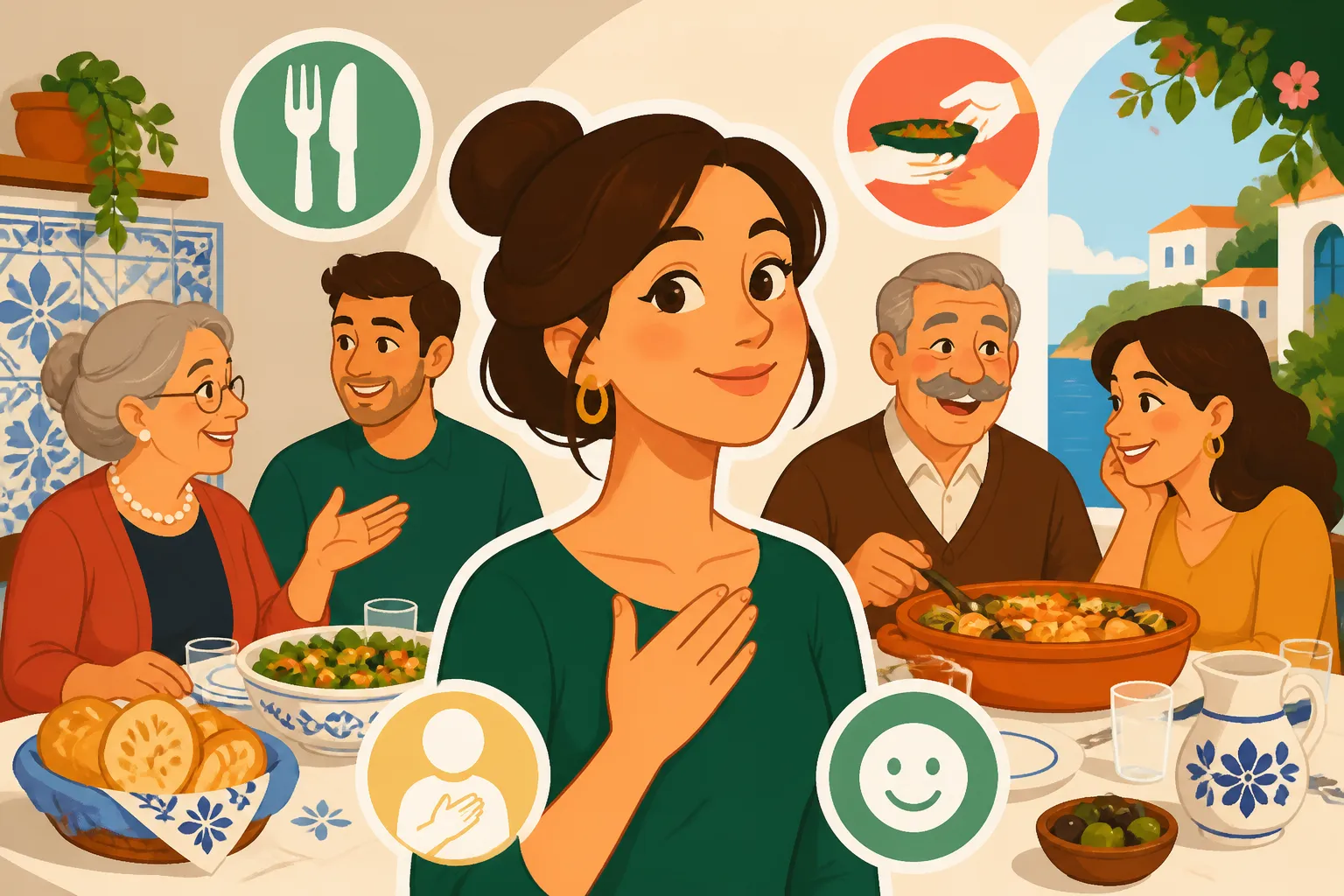
Food will be served generously, often family-style in large platters. Don't be shy, but also don't pile your plate high on the first pass. There will always be more food. When offered food, it's perfectly acceptable to say "um bocadinho, por favor" (just a little, please) initially. You'll often hear "servi-te à vontade" which literally means "serve yourself at will" or "make yourself comfortable and help yourself." While this sounds like an open invitation to devour everything, it's more about permission to be at ease. Still, observe others. Wait for the host to offer or for a general signal that it's okay to reach for more. It's traditional for the host to encourage guests to eat more, often with phrases like "Come mais um pouco!" (Eat a bit more!) or "Está tão magrinho!" (You're so thin!). Don't feel pressured to overeat, but politely declining too many times might be seen as not enjoying the food. A good strategy is to take small portions and accept a second small portion if offered.
The table will likely have a basket of fresh bread (pão), often a mix of different types. This is for soaking up delicious sauces and olive oil. Don't be afraid to use your bread to scoop up every last drop of the amazing molho (sauce) – it's a sign of appreciation for the cooking!
Toasts, Conversation, and Lingering
Wine, water, and sometimes soft drinks will flow freely. When a toast is made, usually with "Saúde!" (To health!) or "Tim-Tim!", raise your glass, make eye contact with everyone at the table if possible, and take a sip. Don't clink glasses too vigorously.
The conversation at a Portuguese family meal is often lively and can jump from topic to topic. Family gossip, local news, politics (sometimes heated but usually good-natured), and discussions about the food itself are common. Don't be afraid to engage, but also know when to listen. Portuguese families love to share stories. If your Portuguese isn't fluent, don't worry. Many younger Portuguese speak English, and even older generations will appreciate your efforts, no matter how small. You can show interest by asking questions and smiling. A little effort goes a long way, and learning some phrases from Learning European Portuguese: Top Apps, Tutors, and Free Government Classes will definitely earn you points.
One important thing to remember is that dinner isn't just about eating; it's about spending time together. Meals can last for hours, moving from the main course to cheese, then dessert, and finally coffee and digestivos. There's no rush. Embrace the slower pace and enjoy the company.
Common Dishes and What to Expect
While every family has its specialties, there are some staples you're likely to encounter:
| Course/Dish Type | Common Examples | Notes for Guests |
|---|---|---|
| Appetizers | Pão (bread), azeitonas (olives), queijo (cheese), chouriço (sausage) | Help yourself, but save room! Bread is for everything. |
| Main Course | Bacalhau à Brás (codfish with eggs and potatoes), Arroz de Pato (duck rice), Cozido à Portuguesa (boiled meats and vegetables), grilled fish/meat with batatas a murro (smashed potatoes) | Expect generous portions. Don't be afraid to try, even if it looks unfamiliar. Fish is common even on meat-heavy tables. |
| Sides | Arroz branco (white rice), batatas fritas (fries), salada (simple salad) | These are meant to complement the main dish. Don't overlook the humble white rice; it's perfect with sauces. |
| Dessert | Arroz Doce (rice pudding), Baba de Camelo (camel's drool mousse), Pudim Flan (flan), fresh fruit, bolo de bolacha (biscuit cake) | Often very sweet and rich. Always accept a small piece, even if just to try. |
| Drinks | Vinho tinto/branco (red/white wine), water, sumos (juices), cerveja (beer) | Wine and water are typically on the table. Feel free to request other drinks if they are available. |
Post-Meal Rituals: Coffee, Digestives, and Gracious Departure
Just when you think the eating is done, there's another delightful chapter to a Portuguese family meal. The transition from savory to sweet, and then to the grand finale of coffee and spirits, is as much a part of the experience as the main course.
The Coffee and Digestivo Hour
After the main dishes are cleared and dessert has been savored, the coffee will appear. This is almost always a strong espresso, or bica if you're in Lisbon, or cimbalino in Porto. This is a moment to linger, chat, and help digest the incredible amount of food you've just consumed. Many Portuguese homes have a specific coffee machine, and serving coffee is a ritual.
Following coffee, especially if it's an evening meal, will come the digestivos. These are stronger alcoholic beverages meant to aid digestion and prolong the conversation. Common options include aguardente (a potent grape brandy), licor Beirão (a popular herbal liqueur), or perhaps homemade ginjinha (cherry liqueur). You'll be offered a small glass. It's polite to accept, even if you only take a tiny sip. This is another opportunity for the family to share a bit of their culture and hospitality.
This post-meal period is often the most relaxed, with laughter and deeper conversations. Don't rush to leave immediately after coffee. It's considered rude to bolt as soon as the last sip of aguardente is taken. Embrace the long, slow wind-down.
Offering to Help and Saying Goodbye
As the evening draws to a close, it's polite to offer to help clear the table or wash dishes. Your hosts, almost universally, will refuse your help with a firm "Não, não, estás em casa!" (No, no, you are at home!) or "Deixa estar, já faço eu" (Leave it, I'll do it). Insisting too much can actually be seen as impolite, as it suggests you don't trust their hospitality or their ability to manage. A single, sincere offer is usually enough. If they genuinely insist you help with something small, like carrying plates, then accept, but don't force the issue.
When it's finally time to leave, prepare for another round of goodbyes. You'll likely go through the two-kisses-on-the-cheek ritual with every family member again, possibly several times if you encounter them in different rooms. Express your sincere thanks for their hospitality, the delicious food, and the wonderful company. Say "Muito obrigado/a pela vossa hospitalidade, estava tudo delicioso!" (Thank you very much for your hospitality, everything was delicious!). Make sure to thank both the host and the hostess specifically for their efforts.
It's not uncommon for guests to exchange parting words at the door for another 10-15 minutes, or even longer. This is simply the Portuguese way of stretching out the enjoyable moments. Don't worry about being kept; it's a sign they enjoyed your company too. You might also want to leave a small thank you message the next day, particularly if you have their contact information.
Cultural Nuances: Beyond the Plate
While the food and the table are central, understanding some broader Portuguese cultural values will help you navigate the entire experience with more confidence and authenticity.
The Importance of Family and Respect for Elders
Family is the absolute bedrock of Portuguese society. These meals are not just about food; they are about reinforcing familial bonds, catching up, and celebrating togetherness. As a guest, you are temporarily welcomed into this intimate circle. Show respect, especially towards older family members. They are often the matriarchs and patriarchs, holding a revered position. Listen when they speak, offer them the first choice of food, and engage them in conversation.
Children are also an integral part of family gatherings. They often stay up late, playing nearby or even joining the adult table for parts of the meal. They are cherished and included, not shooed away. If you have children, it's generally fine to bring them, but always confirm with your hosts first.
Language and Directness
While English is widely spoken in urban areas and among younger generations, particularly in cities like Lisbon and Porto, making an effort to speak Portuguese, even a few phrases, will be deeply appreciated. Your hosts will value your effort more than your perfect grammar. Using simple phrases like "bom dia," "boa tarde," "boa noite," "obrigado/a," "por favor," and "com licença" (excuse me) shows respect. Don't be afraid to try! You can gain some confidence by knowing how to ask for things at the table.
Portuguese communication can be direct, but often tempered with politeness. Family discussions can get animated, but it's usually out of passion rather than anger. Avoid overly sensitive topics unless the family explicitly brings them up, especially politics or deeply personal finances. Stick to lighter, more universally pleasant subjects like travel, food, culture, or your experiences in Portugal.
Remember, a Portuguese family meal is an immersion experience. It's a chance to see and feel the heart of Portuguese culture firsthand. Go with an open mind, a curious palate, and a warm heart, and you're sure to have an unforgettable time. And if you're ever looking for more ways to integrate into daily life, consider looking at guides like Daily Life in Portugal: Supermarkets, Language, and Cultural Etiquette to help you along your journey.
Disclaimer
The information provided in this guide is for general informational purposes only and is based on common cultural practices and personal experiences. Etiquette can vary slightly from region to region and family to family. It's always a good idea to observe your hosts and other guests and adapt accordingly. When in doubt, politeness and a genuine smile are universally understood.