How to Find Authentic Restaurants in Portugal (Not Tourist Traps)
Disclosure: This article contains affiliate links. If you buy through them, we may earn a commission at no extra cost to you. Read our full disclosure.
One of the biggest heartbreaks for any food-loving expat or tourist in Portugal is stumbling into what looks like a charming, traditional restaurant, only to be served lukewarm, overpriced food clearly designed for the masses. It's a common and genuinely frustrating experience, especially when you're longing for that authentic taste of Portugal. But don't despair! This guide is here to arm you with all the insider knowledge you need to bypass those culinary cons and find the truly delicious, local spots where Portuguese families actually eat.
The Subtle Art of Spotting a Tourist Trap
It’s an unfortunate reality of popular destinations: where there are tourists, there will be establishments looking to capitalize on quick, easy sales rather than culinary excellence. Portugal is no exception. However, with a bit of awareness, you can learn to distinguish the genuine article from the cleverly disguised impostor.
Red Flags: Warning Signs of an Unauthentic Eatery
Imagine you’re strolling through Lisbon's Baixa or Porto's Ribeira, stomach rumbling, and a restaurant catches your eye. Before you even look at the menu, scan for these tell-tale signs that scream "tourist trap!"
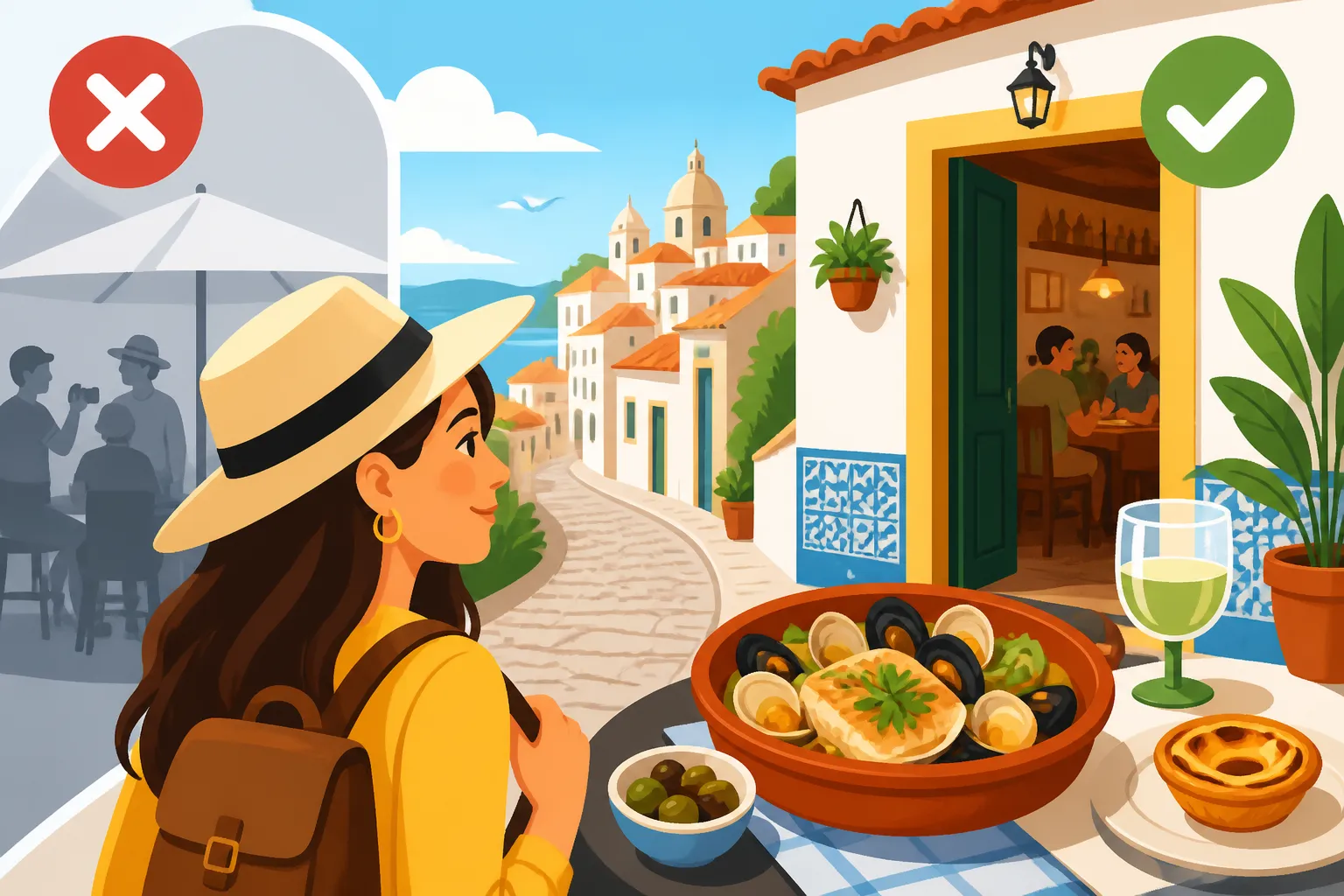
First, a menu with laminated photos of every dish, often looking less appetizing than the real thing, is a massive red flag. Locals know what a Bacalhau à Brás or a Francesinha looks like; they don't need a glossy picture to explain it. These menus are designed for international audiences who might be unfamiliar with Portuguese cuisine, and they often signal a kitchen that prioritizes speed and volume over flavor and freshness. Similarly, a menu boasting an overwhelming variety of international dishes—pizza, pasta, burgers, and traditional Portuguese fare—is another warning sign. A truly authentic Portuguese restaurant specializes in what it does best, usually a focused selection of regional or national dishes.
Secondly, location, location, location. While some excellent restaurants exist in prime tourist areas, a place right on a major square like Praça do Comércio or next to a famous monument is inherently more likely to cater to passersby. They don't need repeat local business as much, so the incentive to deliver exceptional quality might be lower. Often, these spots will also have aggressively enthusiastic touts outside trying to pull you in, sometimes even offering "deals" that seem too good to be true. A truly good restaurant doesn't need to beg for customers; its reputation speaks for itself.
Finally, pay attention to the patrons. If you see only other tourists, hear mostly English or other foreign languages, and notice servers effortlessly switching between five languages, you're likely in a tourist-focused establishment. While it's great that they're accommodating, it doesn't bode well for authenticity. Prices that seem a bit too high for simple, traditional fare, especially compared to places just a few blocks away, are also a strong indicator.
Green Flags: What True Local Haunts Get Right
Now, let's talk about the good stuff – how to spot a genuinely fantastic local eatery. These are the places that make eating in Portugal such a joy.
Look for handwritten menus, often scrawled on a whiteboard or a piece of paper, sometimes only in Portuguese. This signals daily specials based on fresh ingredients, a hallmark of Portuguese cooking. It also means they expect you to be familiar enough with the language, or adventurous enough, to ask questions. Don’t be shy! A friendly query about the "prato do dia" (dish of the day) is a perfect icebreaker.
The presence of locals, especially families and older generations, is your golden ticket. If you peek inside and see Portuguese grandmothers having lunch or groups of workers on their almoço (lunch) break, you’re almost certainly in the right place. These establishments rely on loyal local customers, meaning consistent quality and fair prices are paramount. The atmosphere might be a bit more bustling, louder, and less polished than a fine-dining establishment, but that's part of its charm. You might also notice a television playing a football match or a news channel – a common sight in traditional Portuguese restaurants.
Often, authentic spots have a small, curated menu, focusing on a few core dishes they prepare exceptionally well. For example, a "marisqueira" will focus on seafood, a "churrasqueira" on grilled meats, and a traditional "tasca" will have daily rotation of home-style Portuguese cooking. This specialization is a sign of pride in their craft. You might also notice large, shared portions, as communal eating is a big part of Portuguese culture.
| Feature | Tourist Trap Indicators | Authentic Restaurant Indicators |
|---|---|---|
| Menu | Laminated, full of photos, many languages, diverse cuisine. | Handwritten, Portuguese-only (sometimes), focused on daily specials. |
| Location | Right on main squares, near major landmarks, high foot traffic. | Off the beaten path, tucked away on side streets, residential areas. |
| Patrons | Mostly other tourists, foreign languages overheard. | Predominantly locals, families, workers, Portuguese spoken. |
| Service | Touts outside, overly eager to pull you in, rushed service. | More relaxed, friendly, attentive without being intrusive. |
| Prices | Noticeably higher for standard dishes. | Fair, competitive, often including a "prato do dia" value meal. |
| Atmosphere | Generic decor, often a bit sterile or too "themed." | Bustling, lively, simple, often a TV playing, unpretentious. |
| Food Quality | Often bland, pre-made, reheated, inconsistent. | Fresh, flavorful, homemade, consistent, generous portions. |
Navigating Portugal's Culinary Landscape Like a Local
Finding these gems requires a bit of effort and a willingness to step outside your comfort zone. But trust me, the reward is more than worth it.
Venturing Beyond the Postcard Views
This is perhaps the most crucial piece of advice: escape the main drag. The charming cobbled streets of Alfama or the bustling avenues of Baixa are wonderful for sightseeing, but their immediate vicinity is saturated with places catering to a fleeting tourist crowd. To find the real deal, you need to walk a few extra blocks, turn into a less-traveled alley, or even hop on a bus or metro for a few stops.
Think about areas where people actually live and work. For example, in Lisbon, neighborhoods like Campo de Ourique, Estrela (away from the basilica), Arroios, or even parts of Areeiro, Marvila, or Alvalade, are rich with local tascas and cafés that serve incredible food. In Porto, venture into Cedofeita (away from the main shopping street), Paranhos, or even some of the smaller towns across the Douro River, like Vila Nova de Gaia, especially the more residential parts. If you're using a tool like Booking.com to find accommodation, consider searching for stays in these slightly more residential, less central areas. This inherently positions you closer to authentic dining experiences.
Sometimes, the best places are literally just around the corner from a major attraction, but hidden from plain sight. Instead of eating directly in front of the Jerónimos Monastery in Belém, for example, walk a few blocks inland towards the residential streets. You might find a simple, unassuming restaurant serving the best arroz de pato you've ever tasted. This principle applies across Portugal, from the busiest cities to the smallest villages. Getting around might involve a quick trip on public transport, which you can easily plan using resources like Omio if you're traveling between cities or even looking up local transit options.
Tapping into the Wisdom of the Locals
Who knows the best food better than the people who live there? This is where your social skills come in handy.
- Ask for recommendations: Don't be afraid to ask hotel staff, shopkeepers, your Airbnb host, or even that friendly elderly person you see walking their dog. The key is to ask for "a restaurant where you eat" or "a good, traditional, and not too expensive place for Portuguese food." Avoid asking for "the best restaurant" or "a restaurant for tourists," as this will defeat the purpose. They might even draw you a little map or point you in the right direction with a flourish.
- Observe and listen: While sitting at a pastelaria for your morning coffee and tosta mista, listen to the conversations around you. Locals often chat about where they had a great meal or where they're planning to go for lunch. Pay attention to the places they mention with a knowing nod or a satisfied sigh.
- Follow your nose: Seriously, sometimes the best guide is the aroma of garlic, olive oil, and simmering stews wafting from an open doorway. If it smells incredible, it often is. This is especially true for churrasqueiras (grilled chicken places) or places specializing in hearty, slow-cooked dishes.
- The "Prato do Dia" Culture: Most traditional Portuguese restaurants offer a "prato do dia" (dish of the day) at lunchtime. This is usually a generous, home-style meal at an incredibly affordable price, often including a drink, bread, and coffee. It's a fantastic way to experience authentic Portuguese cooking and get great value. These dishes are prepared fresh daily, ensuring quality. Don't be afraid to ask for it, even if you don't see it explicitly listed. Many places have it as a given.
Learning a few basic Portuguese phrases will go a long way in these interactions. Even a simple "Olá, tudo bem? Queria uma sugestão de restaurante português, um sítio que os locais gostam," (Hello, how are you? I'd like a suggestion for a Portuguese restaurant, a place locals like) can open doors. For more help with this, you might find articles like Learning European Portuguese: Top Apps, Tutors, and Free Government Classes helpful.
Digital Tools and Underrated Resources
While relying solely on popular review sites can sometimes lead you astray (as tourist traps often game these systems), they can still be useful if you know how to filter.
- Google Maps and Local Reviews: Instead of just looking at the star rating, delve into the reviews themselves. Look for reviews written in Portuguese, and see what locals are saying. Are they praising specific dishes? Mentioning the atmosphere? Comparing prices? Also, check the photos. Do they look like authentic Portuguese food, or something more generic? Small, unpretentious places with hundreds of positive local reviews are often excellent indicators.
- Specialized Blogs and Forums: Seek out expat forums or local Portuguese food blogs (you might need Google Translate for the latter). These communities often share incredibly detailed and trustworthy recommendations, precisely because they're looking for the same authentic experiences.
- Food Tours (with caution): While many food tours found on platforms like GetYourGuide can sometimes be a bit superficial, some are run by passionate locals who genuinely want to introduce you to hidden gems. Do your research, read reviews carefully, and look for tours that emphasize small, family-run businesses and local markets. Even if you only do one, it can be a great starting point to discover a neighborhood you'd otherwise miss, giving you ideas for independent exploration later.
- Social Media Exploration: Instagram can be surprisingly useful. Search for hashtags like #restaurantesportugueses, #tascaportuguesa, #comidaportuguesa, or specific city names like #lisboafood or #porto_insta. Look for photos from non-influencers, real people sharing their meals. Often, smaller, authentic places are tagged by proud locals.
Embracing the Portuguese Dining Experience
Once you've found your authentic spot, knowing a little about Portuguese dining culture will enhance your experience significantly. It's not just about the food; it's about the entire rhythm of the meal. You'll find that much of this aligns with general Daily Life in Portugal: Supermarkets, Language, and Cultural Etiquette advice.
Deciphering the Menu: Must-Try Dishes and Daily Specials
Portuguese cuisine is incredibly diverse, reflecting its rich history and geography. Don't limit yourself to just bacalhau (codfish), although there are hundreds of delicious ways to prepare it!
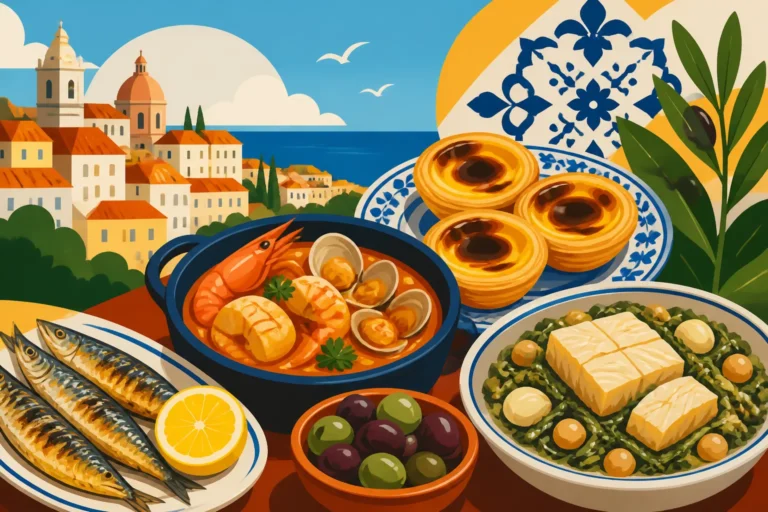
- Bacalhau: Yes, try it! Bacalhau à Brás (shredded cod with onions, potato straws, and scrambled eggs) is a classic. Bacalhau com Natas (cod with cream) is another rich, comforting dish. Bacalhau à Lagareiro (roasted cod with punch potatoes and olive oil) is divine.
- Francesinha (Porto specialty): If you're in Porto, you must try a Francesinha. It's a beast of a sandwich with different meats, sausage, covered in melted cheese and a rich tomato and beer sauce, often topped with a fried egg. Not for the faint of heart, but incredibly satisfying.
- Arroz de Pato: A hearty duck and rice dish, often baked with chorizo. It’s pure comfort food.
- Polvo à Lagareiro: Tender octopus roasted with garlic, olive oil, and "punch potatoes" (small potatoes smashed and roasted with their skins on).
- Caldo Verde: A simple, yet incredibly flavorful potato and kale soup, typically served with a slice of chorizo. Perfect as a starter, especially on a chilly evening.
- Sardinhas Assadas: If you’re visiting in summer, especially around June (Saint Anthony’s in Lisbon or Saint John’s in Porto), grilled sardines are a seasonal must-have. They're served simply with boiled potatoes and a salad.
- Pastéis de Nata: While often thought of as a quick snack, a warm pastel de nata after a meal, perhaps with a bica (espresso), is the perfect sweet ending. You can delve deeper into this aspect with Portuguese Coffee Culture and Restaurant Etiquette: Ordering Like a Local.
When faced with a Portuguese-only menu, don't panic. Ask the server for the "prato do dia" or if they have any "especiais." Many servers in even the most local places will speak at least a little English, or will appreciate your effort and patience. If all else fails, Google Translate is your friend, but try to engage first!
Understanding Dining Etiquette and the Couvert
Portuguese dining is a relaxed affair. Lunch (almoço) is typically between 12:30 PM and 2:30 PM, and dinner (jantar) starts late, usually after 7:30 PM, with many locals not eating until 8:30 PM or 9:00 PM. Don't expect a rush.
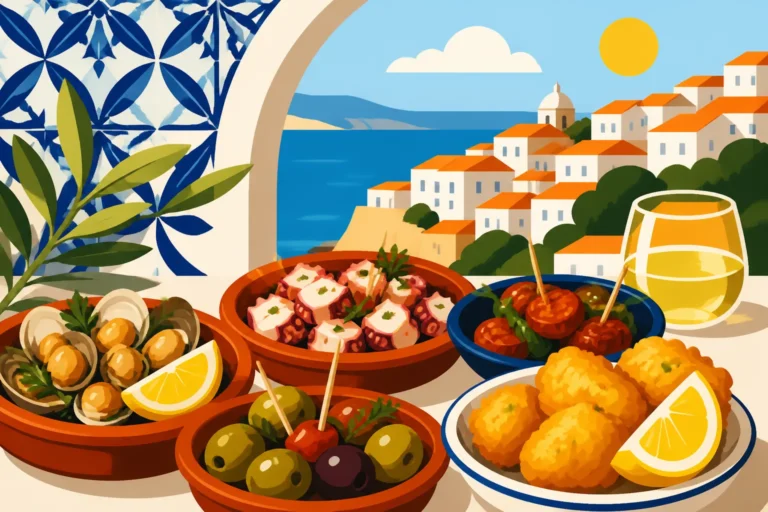
One common practice that often confuses foreigners is the couvert. When you sit down, a selection of small appetizers like bread, butter, olives, pâté, or cheese might be placed on your table. These are not free. You are only charged for what you eat. If you don't want them, simply say "Não, obrigado" (no, thank you) and the server will remove them. Don't be shy about this; it's perfectly normal. However, if you're truly in an authentic spot, these couvert items can be incredibly fresh and delicious, a lovely way to start your meal. Just know they add a small charge to your bill.
Service in Portugal is generally attentive but not overbearing. You often need to catch your server's eye to order or ask for the bill (a conta, please). Tipping is appreciated but not mandatory. Rounding up the bill or leaving a few euros for good service is common, but 10-15% is usually reserved for exceptional service in higher-end restaurants. For more on this, check out Tipping culture in Portugal: Do you leave 10% or just round up the bill?.
Expect your meal to be a leisurely event, especially dinner. There's no rush to turn tables. Savor the flavors, enjoy the company, and soak in the atmosphere. This is Portugal, after all – life moves at a different pace.
My Personal Picks (and How to Find Yours)
Many expats find that the most memorable meals are often found when you least expect them.
Regional Delicacies You Shouldn't Miss
Beyond the national dishes, Portugal boasts incredible regional specialties. Don't stick to just Lisbon and Porto!
- Alentejo: Think hearty, rustic dishes like açorda (bread stew), migas (fried bread crumbs), and incredible pork dishes (carne de porco à Alentejana is pork with clams). The wine from Alentejo is also phenomenal.
- Algarve: Known for its fresh seafood and shellfish. Try Cataplana de Marisco (a seafood stew cooked in a copper clam-shaped pot) or simple grilled fish.
- Central Portugal: Robust mountain cuisine, often involving game, cured meats, and cheeses. Chanfana (goat stew) is a classic from the Coimbra region.
- Minho (North): More vibrant, fresh flavors. Arroz de Sarrabulho (a rice dish with various meats and pig's blood, sounds intense but is delicious!) and rojões (marinated pork chunks).
Each region offers a unique twist on Portuguese gastronomy. Don't be afraid to travel a little to taste these authentic flavors. Consider a train journey using Omio to a less-visited town where the culinary traditions run deep.
Cultivating Your Own Culinary Compass
Ultimately, the best way to find authentic restaurants is to trust your instincts and be open to adventure. Walk, explore, and don't be afraid to take a chance on a small, unassuming place that looks busy with locals. Sometimes, the best meals are found in the most unexpected corners.
Talk to people. Whether it's the friendly barista who served you your morning galão or a new acquaintance from an expat meetup group, locals are usually thrilled to share their favorite dining spots. These personal recommendations are almost always gold. If you're settling in, look for local expat groups or community events as a way of Making Friends and Networking in Portugal: Expat Groups and Meetups – you’ll inevitably discover some fantastic foodie companions.
Remember, finding authentic restaurants isn't just about avoiding tourist traps; it's about diving deeper into the heart of Portuguese culture. It’s about savoring the flavors, experiencing the warmth of local hospitality, and creating memories that are truly, deliciously Portuguese. Bom apetite!
Disclaimer
Please note that while this guide provides general advice and information based on common expat experiences, restaurant quality and policies can change. It is always recommended to verify current details and rely on recent local feedback for the most up-to-date dining recommendations.