How to Take the Ferry to Madeira or the Azores
Disclosure: This article contains affiliate links. If you buy through them, we may earn a commission at no extra cost to you. Read our full disclosure.
So, you're dreaming of that idyllic island escape to Madeira or the mystical Azores, perhaps picturing yourself leisurely sailing across the Atlantic on a ferry from the Portuguese mainland, much like you might hop between Greek islands? It’s a wonderfully romantic notion, and one often heard from newcomers to Portugal. However, the reality of inter-island travel here is quite a bit different from that postcard fantasy. This guide is here to shed light on why a direct passenger ferry from mainland Portugal to these archipelagos isn't a viable option and, more importantly, to arm you with the realistic and practical ways to reach these breathtaking islands.
The Reality: No Direct Passenger Ferries from Mainland Portugal
Let's get straight to it: for regular passenger travel, there is currently no direct ferry service from mainland Portugal (Lisbon, Porto, or any other port) to either Madeira or the Azores. I know, it's a bit of a shocker for many expats who envision a vibrant network of maritime routes like in other European countries. You might scour websites, ask in expat forums, and come up empty-handed, wondering if you're missing some secret local tip. You're not. This isn't a case of "if you know, you know" – it simply doesn't exist for the vast majority of travelers.
The sheer geographical distance is the primary hurdle. Madeira is located about 1,000 kilometers (around 620 miles) southwest of Lisbon, deep in the Atlantic. The Azores archipelago is even further, stretching nearly 1,500 kilometers (about 930 miles) west of the mainland. These aren't short hops across a strait; these are significant oceanic journeys that would take upwards of 24-48 hours, depending on the vessel and sea conditions. The demand for such a long, relatively slow passenger service, especially when compared to the speed and cost-efficiency of air travel, simply hasn't been strong enough to sustain a dedicated route over the years. Plus, the North Atlantic can be quite a beast, especially outside the summer months, making regular, comfortable ferry crossings challenging and often unpleasant.
Many newcomers arrive with this misconception, and it's totally understandable. In a country so rich in maritime history, it feels counter-intuitive that such services aren't readily available. But alas, commercial passenger lines have long since prioritized speed over the romantic allure of a multi-day sea voyage to these distant shores.
Why Air Travel Dominated the Routes
The rise of commercial aviation fundamentally changed how people travel to and from Portugal's Atlantic islands. Flights offer a journey of just under two hours to Madeira from Lisbon and about 2.5 hours to the closest Azorean islands like São Miguel. When you weigh the time, comfort, and increasingly competitive prices, it becomes clear why flying quickly overshadowed any potential long-distance ferry ventures.
The infrastructure for air travel is well-established, with multiple daily flights from Lisbon and Porto to Funchal (Madeira) and Ponta Delgada (São Miguel, Azores), as well as connections to other islands in both archipelagos. This efficiency means that for the typical tourist or expat, the idea of spending a day or two at sea on a conventional ferry holds little appeal when they could be enjoying a delicious espetada in Madeira or hiking the volcanic landscapes of the Azores within a few hours of leaving the mainland. The logistics of operating a ferry service for such distances, including fuel costs, crew, port fees, and maintenance, simply don't make economic sense in the face of readily available flights.
Your Realistic Options: Flying is King for Island Travel
Given that a direct passenger ferry from the mainland is off the table, let's talk about the absolute best and most practical way to reach Madeira and the Azores: by air. This is how virtually everyone travels, and honestly, it’s a quick and relatively painless process once you get the hang of booking.
Major Airlines and Routes to the Archipelagos
You'll find several airlines operating regular flights to both Madeira and the Azores. The main hubs on the mainland are Lisbon (LIS) and Porto (OPO), with more frequent and often cheaper options from Lisbon.
-
To Madeira (Funchal – FNC):
- TAP Air Portugal: As the national carrier, TAP offers multiple daily flights from Lisbon. They often have good connection options if you're flying in from further afield.
- easyJet & Ryanair: These low-cost carriers provide competitive prices, especially if you book in advance and are flexible with your dates. They also fly from Porto, offering more options.
- Other seasonal carriers: During peak seasons, you might find other European airlines offering direct flights, but for consistent year-round travel from Portugal, TAP, easyJet, and Ryanair are your go-to.
-
To the Azores (Ponta Delgada – PDL on São Miguel, Lajes – TER on Terceira, etc.):
- Azores Airlines (SATA): This is the regional airline and your primary choice for flights to all nine Azorean islands. They have frequent connections from Lisbon and Porto to São Miguel (Ponta Delgada) and Terceira (Lajes), and then connecting flights to the smaller islands.
- TAP Air Portugal: Also offers direct flights from Lisbon to Ponta Delgada and Terceira.
- Ryanair & easyJet: These budget airlines have opened up more affordable routes to Ponta Delgada, especially from Lisbon and Porto, making the Azores much more accessible than they used to be.
When you're searching for flights, I highly recommend using platforms like Omio. While they might be more known for train and bus travel in Europe, they're surprisingly good for comparing flight prices across different airlines for these routes, giving you a clear overview of the quickest and cheapest options. Sites like Booking.com are also fantastic for comparing prices and often allow you to bundle flights with accommodation, which can sometimes save you a bit of cash.
Inter-Island Ferries: Island Hopping Once You've Arrived
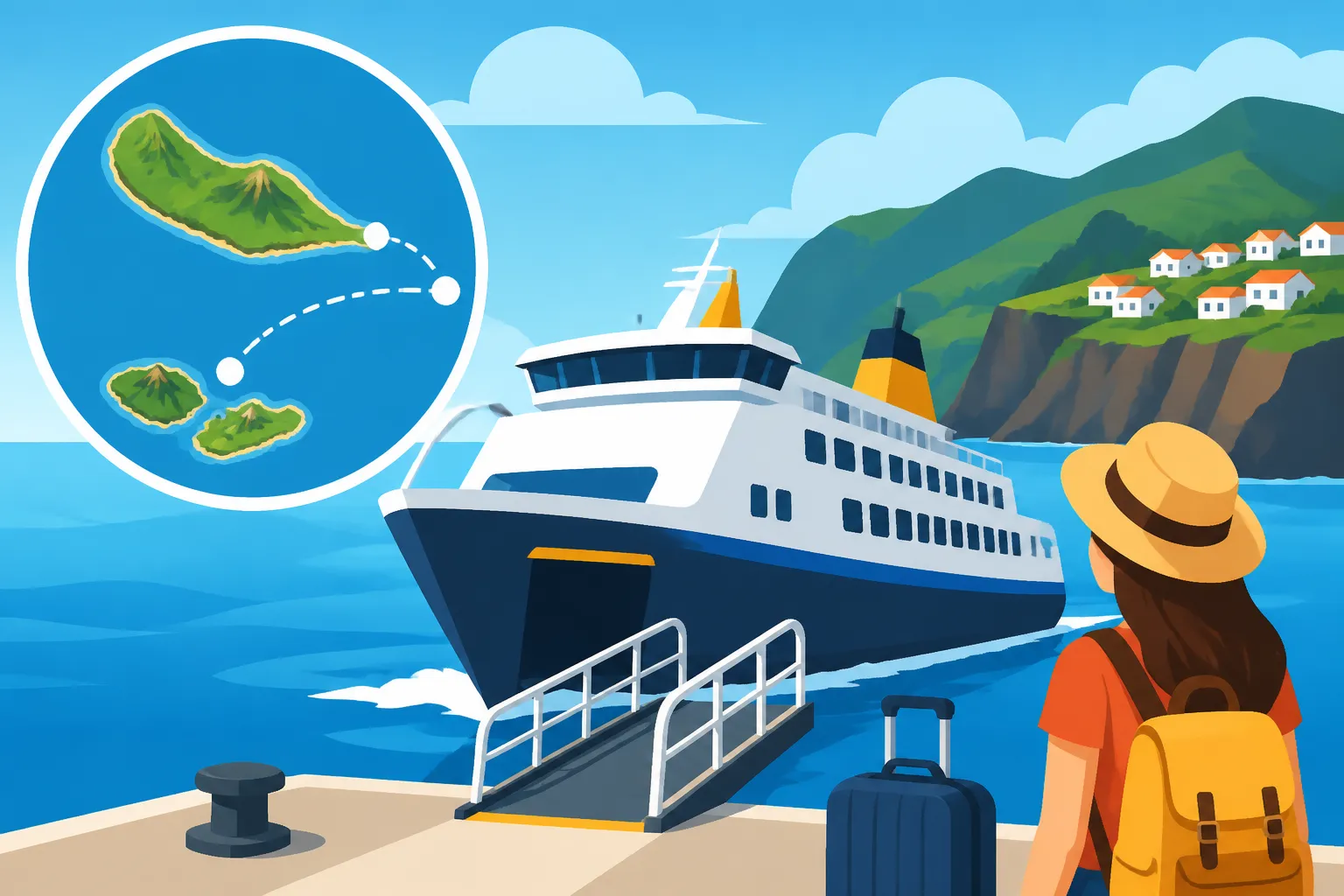
Now, while you can't ferry from the mainland, once you're on the islands, inter-island ferry services become a crucial part of exploration, especially in the Azores.
-
Madeira: The ferry system here is primarily focused on connecting Madeira Island with its smaller, charming neighbor, Porto Santo. The "Lobo Marinho" ferry is a comfortable and popular choice, offering daily crossings that take about 2.5 hours. It's a fantastic day trip or a way to experience the golden sands of Porto Santo if you're staying in Funchal. Booking this in advance, especially during summer, is a smart move.
-
Azores: This is where inter-island ferries truly shine. The Atlânticoline company operates seasonal (typically May to September/October) ferry routes connecting most of the nine islands. They categorize routes into different groups:
- Green Group (Grupo Verde): São Miguel, Santa Maria
- Central Group (Grupo Central): Terceira, Graciosa, São Jorge, Pico, Faial
- Western Group (Grupo Ocidental): Flores, Corvo
The crossings can vary significantly in length, from short 30-minute jumps between Faial and Pico to several hours between São Miguel and Terceira. If you're planning an Azorean island-hopping adventure, integrating these ferries is key. During the off-season, inter-island flights with Azores Airlines (SATA Air Açores) are the only way to move between islands, which can be more expensive. Planning your trip around the ferry schedules can greatly enhance your experience and budget.
It’s crucial to remember that while the ferries within the Azores are essential for exploration, they can be impacted by weather, especially outside the calmest summer months. Always check the forecast and be flexible with your plans.
| Travel Method | Pros | Cons | Estimated Time (Mainland to Islands) | Estimated Cost (One-Way) | Best For |
|---|---|---|---|---|---|
| Direct Flights | Fast, convenient, relatively affordable | Less scenic than sea, environmental impact | 1.5 – 3 hours | €30 – €200+ (depending on booking) | All travelers, time-efficient |
| Inter-Island Ferries (once arrived) | Scenic, unique experience, often cheaper than flights between islands | Slower, weather-dependent, not from mainland | 0.5 – 8 hours (between islands) | €15 – €60+ | Island hopping within archipelagos |
| Cargo Ship (Niche) | Truly unique, slow travel, eco-conscious (potentially) | Highly specialized, no regular passenger service, spartan conditions | 24 – 48+ hours | €200 – €500+ (very approximate, if even available) | Adventurous, flexible travelers with specific connections |
| Cruise Ship (Niche) | Luxurious, visits multiple islands, all-inclusive | Not point-to-point transport, often expensive, rigid itinerary | Days (part of a larger cruise) | Varies wildly, often €1000+ per person for cruise | Vacationers who want to visit, not necessarily 'get there' |
Exploring Niche & Non-Traditional Sea Alternatives
While scheduled passenger ferries from the mainland are a no-go, there are a couple of very niche, non-traditional ways to reach these islands by sea. These aren't for the faint of heart, the time-constrained, or those seeking a budget option, but they exist for the truly adventurous or those with very specific needs.
Cargo Ships with Limited Passenger Capacity
Believe it or not, some cargo ships do accept a very limited number of passengers. This isn't a "ferry" in the conventional sense, but rather a working vessel that might have a few cabins available. This is far from a luxurious cruise; you'll be traveling alongside freight, adhering to the ship's schedule, and the amenities are usually basic. Think less "cruise director" and more "ship captain will nod at you when you pass."
Finding these options is like finding a needle in a haystack. There's no central booking platform like Omio or Booking.com for cargo ship travel. You typically need to contact shipping companies directly, often months in advance, and even then, there's no guarantee. The routes are dictated by cargo needs, not passenger convenience, so schedules can change at the last minute. This route is typically chosen by hardcore slow travelers, maritime enthusiasts, or those with an extreme aversion to flying. The cost, surprisingly, isn't always cheap, as these berths are considered a specialty. It's a genuine adventure, but one that requires immense flexibility, patience, and a willingness to embrace the unpredictable nature of cargo logistics.
Cruise Ships: Visiting, Not Transporting
Cruise ships frequently visit both Madeira and the Azores as part of their itineraries, especially transatlantic crossings or European tours. Funchal (Madeira) is a very popular port of call, and Ponta Delgada (São Miguel) in the Azores also sees its fair share of cruise liners.
However, it's vital to understand that this isn't a point-to-point transportation method. You're not buying a ticket from Lisbon to Funchal with the intention of disembarking permanently. You're booking a cruise that includes these islands as stops. While you get to experience the islands for a day or two, you'll be expected to return to the ship and continue with its itinerary. If your goal is to relocate or spend an extended period on either archipelago, a cruise is not the way to go. It's a wonderful way to get a taste of the islands and see if you'd like to return for a longer stay, but it doesn't solve the core problem of long-term transport. Platforms like GetYourGuide are excellent for booking shore excursions and activities if you decide to take a cruise that stops in Madeira or the Azores, allowing you to make the most of your brief visit.
Private Yacht Charters or Sailboats
For those with a significantly larger budget and a true love for the open sea, chartering a private yacht or arranging passage on a sailboat delivery is technically an option. This is, of course, the most expensive and exclusive way to travel by sea. Yacht charters can run into the thousands or tens of thousands of euros, and finding a sailboat delivery that aligns with your schedule and desired destination is pure serendipity.
These are not "ferry" options by any stretch of the imagination, but they do offer an oceanic passage. You'd be looking at a journey of several days, offering unparalleled views of the Atlantic, but also requiring careful planning regarding provisions, safety, and experienced crew. This is a dream for some, but certainly not a practical consideration for the vast majority of expats or tourists.
Planning Your Island Adventure: Logistics and Considerations
So, with the ferry fantasy debunked, let's focus on how you will realistically plan your incredible trip to Madeira or the Azores. It requires a bit of logistical savvy, but the rewards are truly worth it.
Best Time to Visit and What to Pack
Both archipelagos boast mild climates, but their weather patterns can differ significantly from mainland Portugal.
-
Madeira: Often called the "island of eternal spring," Madeira is pleasant year-round. Summers (June to September) are warm and dry, ideal for hiking and swimming. Winters (December to February) are mild but can be wetter, especially in the north. The famous New Year's Eve fireworks are legendary, attracting huge crowds. Pack layers, as the weather can change quickly, especially if you venture into the mountains. Comfortable walking shoes are a must for exploring Funchal's cobbled streets or tackling the levada walks.
-
Azores: The Azores are known for their "four seasons in one day" weather. It can be sunny, then rainy, then foggy, all within an hour. Summers (June to September) are the warmest and driest, but rain is still possible. Winters are mild but can be very wet and windy. If you're planning to use the inter-island ferries, stick to the summer months. Pack waterproofs, sturdy hiking boots (essential for the dramatic volcanic landscapes), and plenty of layers. Don't forget swimwear, as there are many natural swimming pools and hot springs to enjoy!
Accommodation and Local Transport
Once you've sorted your flights, your next big step is accommodation. Booking.com is an indispensable tool here, offering everything from charming guesthouses and B&Bs to luxury hotels and self-catering apartments across all the islands. Booking well in advance, especially for peak season or smaller islands, is highly recommended. You don't want to arrive in Flores or Graciosa without a place to stay!
Local transport on the islands is also key.
-
Madeira: Funchal has a decent public bus system that can take you to many points of interest. However, for exploring the entire island, renting a car is almost essential. The roads can be winding and steep, but the freedom it offers to discover hidden viewpoints and villages is invaluable. Taxis are also readily available, and ride-hailing apps like Bolt are growing in popularity in Funchal. For those looking for guided tours, GetYourGuide offers a wide array of options, from jeep safaris to levada walks with transport included.
-
Azores: A rental car is practically mandatory for exploring most of the Azorean islands, particularly São Miguel, Terceira, and Faial. Public transport is less comprehensive and often designed for locals, not tourists. Having your own wheels allows you to chase the good weather, discover secluded viewpoints, and move at your own pace. Be prepared for narrow roads, especially in the more rural areas. Always book your rental car far in advance, especially during the summer, as availability can be limited and prices can soar. For specific activities and excursions, like whale watching tours or canyoning, booking ahead through platforms like GetYourGuide will ensure you secure your spot.
Cultural Etiquette and Language
While both archipelagos are part of Portugal, they have their own distinct sub-cultures and traditions, influenced by their isolation and unique histories. The Portuguese spoken in Madeira and the Azores also has its own charming nuances and accents.
-
Madeira: The Madeirans are proud of their island and its traditions. Politeness and respect go a long way. English is widely spoken in tourist areas like Funchal, but a few basic Portuguese phrases (like olá, obrigado/a, por favor) will be greatly appreciated. Explore the local markets, try the poncha (a traditional alcoholic drink), and embrace the slower pace of island life.
-
Azores: The Azorean culture is deeply connected to its volcanic landscape and the sea. The pace of life is generally slower than on the mainland, and a relaxed attitude is key. Again, English is common in tourist hotspots, but learning a bit of Portuguese will enrich your interactions. Be prepared for strong community ties and a genuine warmth from the locals. Remember to respect nature, as conservation is a big deal across these islands.
Embracing the adventure of reaching these islands by air, and then exploring their unique charms, is truly part of the expat experience in Portugal. It might not be the ferry ride you initially imagined, but the journey to these Atlantic gems is every bit as rewarding. For more general advice on navigating life here, you might find our guide on Living in Portugal Guide 2027: The Complete Relocation Manual for Expats helpful, or perhaps a deep dive into Portuguese Work Culture: Hours, Communication, and Office Etiquette if you're mixing pleasure with business. And if you’re concerned about staying connected, there’s always advice on Home Internet and Mobile Plans: Vodafone, MEO, and NOS Compared.
Disclaimer
The information provided in this guide is for general informational purposes only and is subject to change. While we strive to keep the content up-to-date and accurate, travel regulations, flight schedules, ferry operations, and local conditions can evolve. It is always recommended to verify details with official sources, airlines, ferry companies, and local authorities before making any travel plans.